
By ProHobby™ | Ecological Systems Authority
Scale rot — bacterial erosion of individual scales and the underlying tissue — sits in a diagnostic gap that causes consistent mismanagement. It is routinely confused with early dropsy because both involve scale abnormalities, and with fin rot because both are gram-negative bacterial infections involving tissue erosion. The distinction matters: scale rot is a localised infection at specific injury sites, not systemic fluid accumulation. It is treatable when caught early. Identifying it correctly, treating with gram-negative antibiotics, and addressing the primary wound cause produces meaningful recovery — including scale regeneration in most cases.
Table of Contents
- What Causes Scale Rot — The Bacteria and the Entry Point
- Symptoms — Early, Progressive and Advanced Presentations
- Differential Diagnosis — Scale Rot vs Dropsy vs Fin Rot
- Treatment — Step by Step
- Will Scales Grow Back?
- Scale Rot in Specific Species
- After Treatment — Preventing Recurrence
- India and Delhi NCR — Specific Considerations
- Frequently Asked Questions
1. What Causes Scale Rot — The Bacteria and the Entry Point
Scale rot is caused by opportunistic gram-negative bacteria — primarily Aeromonas hydrophila, Pseudomonas fluorescens, and Flavobacterium columnare — colonising damaged or compromised scale tissue. These are the same bacteria responsible for fin rot, popeye, and septicaemia. They are present in every established aquarium at subclinical levels. Scale rot develops when a specific localised event creates an entry point:
- Physical injury — collision with sharp décor, net damage during handling, aggression from other fish removing scales
- Parasitic damage — anchor worm removal sites, external protozoan damage to the epithelium
- Chemical burns — medication overdosing or substrate contact
- Fin rot spread — bacterial infection advancing from fin tissue into adjacent body scale tissue
Water quality failure is the permissive condition. Without the immune suppression produced by ammonia, nitrite, or chronic stress, the bacteria cannot establish even in the presence of a wound. The stress-immunity mechanism: The Science of Fish Stress.
2. Symptoms — Early, Progressive and Advanced Presentations
Early scale rot:
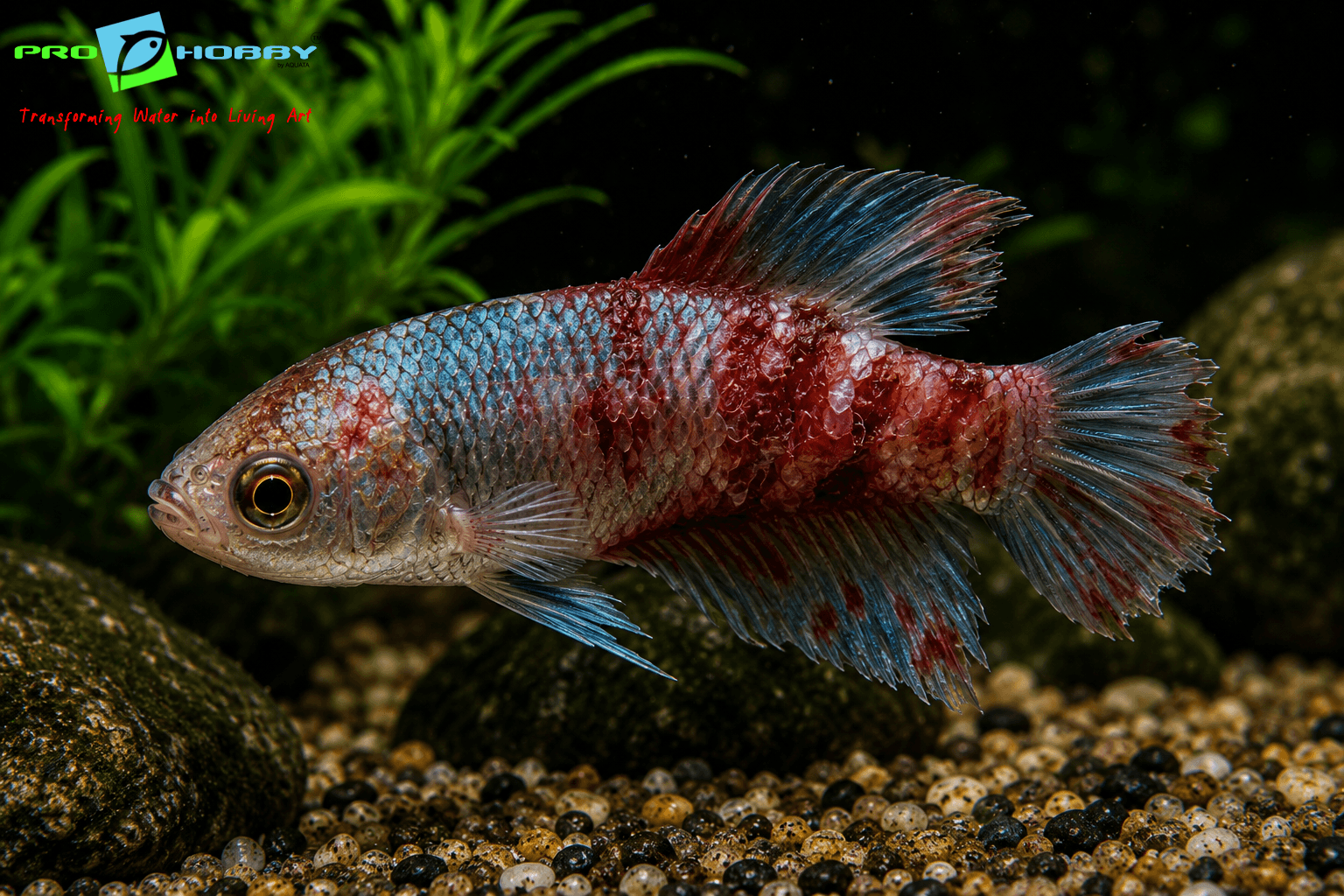
- One or several scales appear raised, opaque, or discoloured (whitish, grey, or yellow) relative to surrounding healthy scales
- Localised redness or mild haemorrhaging around the base of affected scales
- The lesion is clearly localised — a specific area with normal scales surrounding it
Progressive scale rot:
- Scales detach from affected areas, leaving raw ulcerated tissue beneath
- The ulcerated area has a concave or cratered appearance — tissue erosion producing a depression in the body surface
- Reddening and haemorrhaging of surrounding tissue with a defined margin between affected and healthy skin
Advanced scale rot:
- Deep ulceration penetrating through muscle tissue
- Secondary infection with multiple bacterial species at the ulcer site
- Signs of systemic illness — reduced appetite, lethargy, colour fading — if ulceration is extensive or secondary septicaemia is developing. If red haemorrhagic streaking appears around the ulcer edge, treat as a septicaemia emergency immediately.
3. Differential Diagnosis — Scale Rot vs Dropsy vs Fin Rot
Scale rot vs dropsy: Dropsy produces generalised scale protrusion across the entire body — the pinecone appearance — from fluid accumulation beneath the skin throughout. Scale rot produces localised scale abnormality at specific sites, with healthy normal scales surrounding the lesion. If scales are raised uniformly across the whole body, it is dropsy. If scales are raised or damaged in one area surrounded by normal scales, it is scale rot.
Scale rot vs fin rot: Fin rot affects fin membrane between fin rays — erosion from the fin edge inward. Scale rot affects body scales and underlying tissue. Both respond to the same gram-negative antibiotic treatment. Both may occur simultaneously in the same fish.
Scale rot vs physical injury: A fresh physical injury (scale knocked off by collision) appears as a clean, sharply defined scale loss with no discolouration and minimal redness — the fish typically recovers without intervention if water quality is good. Scale rot lesions have discolouration, raised scale edges, and surrounding redness indicating bacterial colonisation.
4. Treatment — Step by Step
Step 1: Test water parameters. Ammonia, nitrite, pH. Address any parameter issues in the main tank while setting up treatment. Scale rot in compromised water will recur regardless of antibiotic success.
Step 2: Isolate in a hospital tank. Removes the fish from potentially compromised main tank water and allows topical wound treatment and targeted antibiotic dosing.
Step 3: Topical wound treatment (for accessible, early-stage lesions). Under brief sedation with clove oil (1–2 drops per 10 litres until the fish slows and can be lifted without struggling), apply diluted povidone-iodine solution (1:10 with water) directly to the lesion using a cotton bud. Return the fish to the hospital tank immediately after application. This direct wound disinfection is adjunct to — not a replacement for — systemic antibiotics.
Step 4: Gram-negative antibiotic treatment:
- Kanamycin sulphate at 40–50 mg/L in the hospital tank
- Or nitrofurazone at manufacturer’s recommended dose
Remove activated carbon before adding any medication.
Step 5: Salt at 2–3g/L in the hospital tank reduces osmotic stress on damaged tissue and provides mild adjunct antibacterial support.
Step 6: Monitor ammonia daily. Antibiotics damage biological filtration. Test and manage with water changes as covered in Ammonia in Aquariums. How to Clean an Aquarium Filter Without Killing Bacteria.
Step 7: Continue antibiotics for 7–10 days minimum. Keep the fish in the hospital tank until the ulcer has measurably reduced in size and the wound edges show active healing — pink, healthy tissue replacing white necrotic tissue.
5. Will Scales Grow Back?
Yes — in most cases. Scales regenerate actively after successful treatment of the underlying bacterial infection, typically becoming visible within several weeks. The new scales may initially appear smaller, differently shaped, or slightly different in colour — this is normal and often normalises over subsequent weeks as the scales mature.
Exceptions: Deep ulceration that has destroyed the scale-forming cells (chromatophores and scale papillae) in the underlying dermis may produce permanent scarring without full scale regeneration. This is cosmetic only — the fish is healthy, the scar is not infectious, and there is no functional impairment.
6. Scale Rot in Specific Species
Goldfish: Particularly susceptible due to their tendency to be kept in under-filtered or under-maintained setups, and their slow-moving nature making them easy targets for aggression in mixed groups. Goldfish Care Guide.
Bettas: Long-fin varieties develop scale rot at the base of the elaborate fin tissue, where fin rot that has been left untreated advances into the body scale tissue. Betta Fish Care Guide.
Cichlids: Aggression-related scale damage in cichlid communities is a consistent scale rot trigger. Oscar Fish Care and Flowerhorn Cichlid Care cover aggression management.
Post-anchor worm removal sites: Any fish that has had anchor worm manually removed has a wound site highly vulnerable to scale rot. Topical disinfection immediately after removal and close monitoring during healing is essential. Anchor Worm Treatment Guide.
7. After Treatment — Preventing Recurrence
Scale rot recurrence signals either ongoing water quality failure or a persistent physical cause of wounds.
- Remove all sharp décor — any protrusion or edge that fish swim near is a wound risk
- Manage aggression — if scale damage is from fin-nipping or territorial attacks, separate incompatible fish
- Address fin rot promptly before it spreads to body scale tissue
- Treat anchor worm infestations fully — ongoing parasite presence creates repeated wound sites
- Maintain water quality consistently — Complete Water Chemistry Guide
- Quarantine all new fish before introduction — Quarantine vs Medication
8. India and Delhi NCR — Specific Considerations
Summer temperature and bacterial virulence: Aeromonas and Pseudomonas bacteria are more virulent at higher temperatures — the same dynamic that accelerates Columnaris and septicaemia in Indian summer conditions. A scale rot lesion in a tank at 30°C in Delhi NCR summer will progress faster than the same lesion at 26°C. Act promptly. Aquarium Water Temperature in Indian Summer.
Sharp décor in Indian market tanks: Mass-produced artificial décor widely sold in Indian pet markets often has sharp edges, protruding points, or rough surfaces that cause scale damage to fish passing near them. This is a consistent and overlooked source of the initial wounds that scale rot colonises. Inspect all décor for sharp edges before placing in the tank — smooth, rounded surfaces are the standard. Aquarium Shop Delhi NCR.
Frequently Asked Questions
My fish has raised discoloured scales in one area — is it dropsy? Probably scale rot rather than dropsy. Dropsy produces generalised pineconing across the whole body from systemic fluid accumulation. Scale rot produces localised scale abnormality at specific sites with healthy normal scales surrounding the lesion. Treat with gram-negative antibiotics (kanamycin or nitrofurazone) in a hospital tank.
Will my fish’s scales grow back after scale rot? Yes in most cases. Scales regenerate after successful treatment, typically becoming visible within several weeks. New scales may initially appear smaller or different in texture, often normalising over time. Deep ulceration may leave permanent cosmetic scarring without affecting the fish’s health or function.
My fish has a deep hole in its body — how do I treat this? Advanced scale rot or bacterial ulcer disease. Isolate in a hospital tank immediately. Apply diluted povidone-iodine to the wound under brief sedation. Begin gram-negative antibiotic treatment. Monitor closely for red haemorrhagic streaking around the ulcer edge — this indicates the infection may be entering the bloodstream as septicaemia, which requires same-day emergency treatment.
What is the difference between scale rot and fin rot? Fin rot affects fin membrane tissue between fin rays, eroding from the fin edge inward. Scale rot affects body scales and the underlying tissue. Both involve the same gram-negative bacteria and respond to the same antibiotic treatment. Both may occur simultaneously — a fish with fin rot at the fin bases may also develop scale rot in the adjacent body tissue.
Can scale rot become septicaemia? Yes. Untreated scale rot with deep ulceration provides a direct pathway for bacteria to enter the bloodstream. Red haemorrhagic streaking appearing around the ulcer edge is the warning sign of systemic spread — at this point treat as a septicaemia emergency alongside continuing the scale rot treatment.