
by ProHobby™ | Ecological Systems Authority
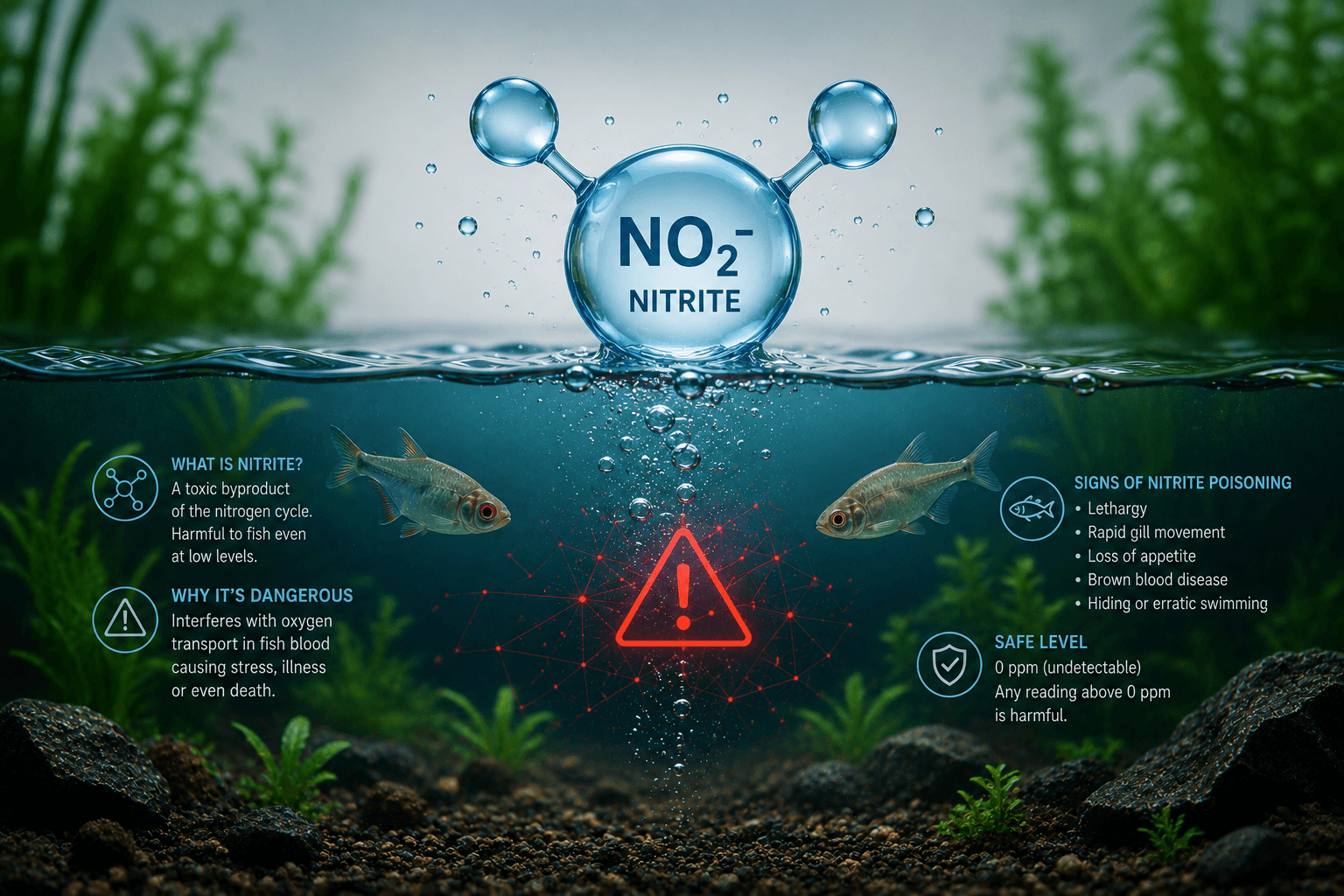
Nitrite in aquariums is the least understood of the three nitrogen cycle compounds — less discussed than ammonia, less visible than nitrate, and responsible for a specific and preventable form of fish death that is frequently misdiagnosed as disease. Unlike ammonia, which attacks gill tissue directly, nitrite enters the bloodstream and interferes with the blood’s ability to carry oxygen. A fish in nitrite-poisoned water can suffocate even when dissolved oxygen levels are entirely normal — the oxygen is in the water, the fish simply cannot use it.
Nitrite sits at the centre of the nitrogen cycle — the second stage in the conversion of ammonia waste into the far less toxic nitrate that water changes export. The Nutrient Cycles in Nature and Captivity cornerstone article covers the complete framework of this cycle. Nitrite’s presence in detectable concentrations in any established aquarium is a signal of system instability — the biological processing chain has been disrupted. The Aquarium Stability Is Not Balance cornerstone article explains why these disruptions occur and what they mean for the closed aquatic ecosystem.
Nitrite contributes to total dissolved solids alongside all other dissolved compounds — the complete guide to what TDS measures and its relationship to individual parameters is Aquarium TDS — Complete Guide.
Table of Contents
- What Nitrite Is and Where It Comes From
- How Nitrite Kills Fish — The Haemoglobin Mechanism
- Brown Blood Disease — The Visual Diagnostic
- Nitrite Toxicity — What Makes It Better or Worse
- 4a. Species Sensitivity — the 50× Range
- 4b. The Chloride Protective Effect
- 4c. pH and Temperature Effects
- Symptoms and Diagnosis
- Testing for Nitrite — Kits, Methods, and False Readings
- Causes of Nitrite Elevation
- 7a. The New Tank Nitrite Phase
- 7b. The Protracted Nitrite Phase — Why Nitrite Lingers After Ammonia Clears
- 7c. Nitrite Spikes in Established Tanks
- 7d. Filter Damage and Biofilm Disruption
- Emergency Response — Right Now
- The Salt Treatment — Mechanism, Dose, and Protocol
- Recovery Timeline — Nitrite vs Ammonia
- Long-Term Prevention
- Nitrite in Marine and Brackish Systems
- India-Specific Nitrite Considerations
- Frequently Asked Questions
1. What Nitrite Is and Where It Comes From
Nitrite (chemical formula NO₂⁻) is the intermediate compound in the two-stage biological oxidation chain that converts toxic ammonia into less harmful nitrate in aquarium systems.
Stage One: Ammonia-oxidising microorganisms — primarily Nitrospira species performing complete ammonia oxidation (comammox), as well as more specialised ammonia-oxidising bacteria — convert ammonia (NH₃/NH₄⁺) to nitrite (NO₂⁻).
Stage Two: Nitrite-oxidising bacteria, also predominantly Nitrospira in aquarium biofilms, oxidise nitrite (NO₂⁻) to nitrate (NO₃⁻).
In a healthy, mature aquarium with adequate biological filtration capacity, both stages proceed rapidly enough that neither ammonia nor nitrite accumulate in detectable concentrations in the water column. The entire conversion happens within the filter and substrate biofilm — continuously, invisibly, and without any intervention from the hobbyist.
Detectable nitrite means the second stage is not keeping pace with the first. Either:
- The nitrite-oxidising community is not yet established (new tank, mid-cycle)
- The nitrite-oxidising community has been damaged (filter disruption, chemical exposure, extreme temperature)
- The ammonia load has increased faster than the nitrite-oxidising community can adapt (overstocking event, feeding accident, dead fish)
- The nitrite-oxidising community is oxygen-limited (poor filter flow, power cut, clogged media)
Understanding which cause is driving the nitrite elevation determines the correct response.
2. How Nitrite Kills Fish — The Haemoglobin Mechanism
This is where nitrite toxicity diverges fundamentally from ammonia toxicity — and where most aquarium guides stop explaining.
Ammonia crosses the gill epithelium and acts directly on gill tissue, causing physical damage — lamellar hyperplasia, mucus accumulation, and reduced gas exchange capacity. Ammonia toxicity is fundamentally respiratory and structural: damaged gills cannot extract oxygen from the water.
Nitrite uses a completely different entry route and a completely different mechanism.
The uptake pathway: Nitrite (NO₂⁻) enters fish through the same active transport channels that the gills use to absorb chloride ions (Cl⁻) from the water. This is a normal physiological process — gill chloride uptake maintains the fish’s ionic balance. Nitrite is chemically similar enough to chloride that it is actively transported through the same channels rather than being excluded. This is why higher chloride concentrations in the water reduce nitrite toxicity: the two ions compete for the same uptake mechanism.
Once inside the bloodstream, nitrite reacts with haemoglobin — the oxygen-carrying protein in red blood cells. Nitrite oxidises the iron in haemoglobin’s haem groups from the ferrous (Fe²⁺) state to the ferric (Fe³⁺) state. This reaction converts oxyhaemoglobin (normal, functional) to methaemoglobin (non-functional).
The consequence: Methaemoglobin cannot bind or release oxygen. A red blood cell containing methaemoglobin is carrying no oxygen to the tissues. As nitrite exposure continues and a larger proportion of haemoglobin is converted to methaemoglobin, the blood’s oxygen-carrying capacity falls — the fish becomes progressively more anaemic in the most literal biochemical sense.
The critical distinction from low dissolved oxygen: A fish experiencing severe nitrite toxicity is suffocating in chemically well-oxygenated water. The dissolved oxygen in the tank may be perfectly adequate — 7 or 8 mg/L — and the fish’s gills may be extracting it normally. But the oxygen extracted at the gills cannot be delivered to the tissues because the blood has no functional transport mechanism. Adding surface agitation or an airstone does not resolve nitrite poisoning because the problem is not oxygen availability in the water; it is oxygen transport capacity in the blood.
This is why nitrite toxicity produces fish gasping at the surface even in tanks with strong surface agitation and normal dissolved oxygen readings — and why it is so frequently misdiagnosed as an oxygen problem or gill disease. Nitrite is the intermediate stage. When biological filtration is fully established, nitrite converts to nitrate — the endpoint compound that accumulates gradually and requires management through water changes. The complete nitrate guide is Aquarium Nitrate.
3. Brown Blood Disease — The Visual Diagnostic
A classic and diagnostically important feature of severe nitrite poisoning is visible blood and gill colour change.
Brown blood: Normal fish blood is bright red — the colour of oxyhaemoglobin. Blood with significant methaemoglobin content is distinctly brown or chocolate-coloured. In fish experiencing severe nitrite poisoning, this colour change can sometimes be seen when the fish is examined closely — blood visible at fin bases, gills, or around small wounds appears brown rather than red. Where this is visible, it is unambiguous confirmation of nitrite poisoning.
Brown gills: Normal fish gills are bright pink to deep red from the highly vascularised gill lamellae. Gills perfused with methaemoglobin-rich blood appear brownish or dusky rather than the normal vivid red. If a deceased fish can be examined, the gill colour provides a retrospective diagnostic clue.
Who coined it: “Brown blood disease” is the aquaculture and fish pathology term for nitrite poisoning — used professionally in fish farming contexts where nitrite management is critical economics. The term is more accurate and more mechanistically descriptive than “nitrite toxicity” and is worth knowing because it describes exactly what you are looking for.
Nitrite causes brown blood disease by converting haemoglobin to methaemoglobin, which cannot carry oxygen — fish suffocate in well-oxygenated water because their blood cannot transport what their gills absorb. The complete dissolved oxygen guide — including why fish gasp in adequately oxygenated tanks — is Aquarium Dissolved Oxygen — Complete Guide.
4. Nitrite Toxicity — What Makes It Better or Worse
4a. Species Sensitivity — the 50× Range
Species sensitivity to nitrite varies enormously across the aquarium hobby — far more than sensitivity to ammonia. The approximate threshold concentrations at which different species begin showing significant stress (LC₅₀ values — the concentration lethal to 50% of test subjects over a 96-hour exposure — are higher, but sub-lethal stress begins well below):
| Species type | Approximate stress threshold (NO₂⁻ mg/L) |
|---|---|
| Goldfish and koi | 0.1–0.2 mg/L |
| Trout and salmonids (coldwater) | 0.1–0.5 mg/L |
| Neon and cardinal tetras | 0.3–0.5 mg/L |
| Most tropical community fish | 0.5–1.0 mg/L |
| Live-bearers (guppies, platies, mollies) | 1.0–2.0 mg/L |
| Danios | 1.0–2.0 mg/L |
| Most cichlids | 2.0–5.0 mg/L |
| Bettas | 3.0–5.0 mg/L |
| Brackish and euryhaline species | Higher — naturally high chloride provides protection |
The range is approximately 50× between the most sensitive (goldfish at 0.1 mg/L) and the more tolerant species. This is not academic — it means a nitrite reading of 1.0 mg/L is an emergency for goldfish and a nuisance for most cichlids. The appropriate urgency of response depends on what fish are in the tank.
The goldfish specificity: Goldfish (Carassius auratus and Carassius carassius) are exceptionally sensitive to nitrite for a specific reason — they have a lower capacity for methaemoglobin reduction compared to many tropical species. Most fish have methaemoglobin reductase enzymes that can convert methaemoglobin back to functional haemoglobin, providing some recovery capacity during ongoing exposure. Goldfish have comparatively lower reductase activity, meaning methaemoglobin accumulates faster and the safety margin is smaller.
Like ammonia, nitrite toxicity is influenced by water pH — and the pH crashes caused by KH depletion can alter the balance of nitrification intermediates in the water. The complete pH management guide is Aquarium pH — Complete Diagnosis and Fix Guide.
4b. The Chloride Protective Effect
This is the mechanistic basis for the genuine therapeutic use of salt in nitrite toxicity — one of the few contexts where salt in freshwater aquariums has a specific, scientifically sound mechanism rather than a generalised claim.
Chloride ions (Cl⁻) and nitrite ions (NO₂⁻) are taken up by the same active transport channels in fish gill epithelium. At the molecular transport level, the two ions compete for the same uptake sites. Higher chloride concentration in the surrounding water reduces nitrite uptake because more of the uptake sites are occupied by chloride rather than nitrite.
The relationship is approximately linear at relevant concentrations: Each milligram per litre of chloride ion in the water reduces nitrite uptake by approximately the same proportion across the relevant range. Raising chloride from very low (soft water, minimal Cl⁻) to 1,000 mg/L (approximately 1.5 g/L table salt, since NaCl is ~60% chloride by mass) reduces nitrite uptake substantially.
This means:
- Fish in hard, mineral-rich water (higher baseline chloride) have some natural protection against nitrite compared to fish in soft water
- Salt addition in a nitrite emergency has a genuine mechanism, specific dose-response, and is not the same as the general “salt is good for fish” myth
- Fish already living in salt-supplemented water (certain live-bearer setups) have better nitrite tolerance
The section on salt treatment with specific dosing is in Section 9.
4c. pH and Temperature Effects
pH: Nitrite toxicity is significantly less pH-dependent than ammonia toxicity. At standard aquarium pH ranges (6.5–8.5), the proportion of nitrite in the more toxic un-ionised form remains relatively constant. This contrasts with ammonia, where toxicity varies by 8–10× across the same pH range. For nitrite, pH adjustment is not a meaningful therapeutic intervention.
Temperature: Higher temperatures moderately increase nitrite toxicity through two mechanisms: faster uptake across gill membranes at higher temperatures, and reduced blood oxygen-carrying capacity at higher temperatures (haemoglobin saturation curves shift). At 30°C vs 20°C, nitrite is approximately 20–30% more toxic at equivalent concentrations. This means nitrite events during Indian summer in warm tanks carry somewhat higher risk than the same concentration in a cooler tank.
5. Symptoms and Diagnosis
Behavioural symptoms:
- Gasping at the surface — the classic sign, caused by the oxygen transport failure described in Section 2. Often misidentified as low dissolved oxygen
- Rapid gill movement — the fish is attempting to compensate for reduced blood oxygen capacity by increasing ventilation rate
- Lethargy, listlessness, gathering near the surface or in corners
- Loss of coordination, erratic swimming, loss of equilibrium in severe cases
- Reduced or absent feeding response
Physical symptoms:
- Brown or dark-tinged gills (visible if the operculum is gently lifted on a sedated or deceased fish)
- Brown-tinged blood visible at fin bases or wounds
- Pale or faded colouration from reduced blood oxygenation
- Visible stress lines or banding on some species
Differential diagnosis:
The symptoms of nitrite poisoning overlap significantly with several other conditions:
| Condition | Key distinguishing feature |
|---|---|
| Low dissolved oxygen | Surface agitation resolves symptoms; DO testing confirms |
| Ammonia poisoning | Ammonia tests positive; gill damage visible as inflammation |
| Nitrite poisoning | Nitrite tests positive; DO is normal; salt treatment reduces gasping |
| Gill disease/parasites | One or few fish affected; gill examination shows parasites or inflammation |
| CO₂ excess | pH is low; gasping is worst during CO₂ injection period |
The critical test is water chemistry: nitrite at any detectable level alongside the symptom pattern above confirms the diagnosis. DO testing additionally confirming normal oxygen levels eliminates oxygen depletion as a confounding variable.
6. Testing for Nitrite — Kits, Methods, and False Readings
Standard hobby test kits: Most use the Griess reagent chemistry — nitrite reacts with sulfanilic acid and a coupling reagent to produce a pink-to-purple colour measured against a reference chart or by colorimeter. This chemistry is reliable and specific for nitrite across the normal aquarium range.
Liquid test kits vs test strips:
Liquid test kits (API, Salifert, Sera, JBL) provide reliable, reproducible results across the 0–5 mg/L range typical in aquarium testing. They are the appropriate tool for nitrite monitoring.
Test strips are less reliable for nitrite than liquid kits, particularly at low concentrations where the colour difference between “zero” and “0.5 mg/L” is subtle and highly dependent on colour perception, lighting, and wet finger contamination of the strip. For diagnosing a potential nitrite problem, always confirm with a liquid test kit.
The false zero problem — a critical and rarely mentioned limitation:
Some nitrite test kits using Griess reagent chemistry can give falsely low or falsely zero readings in certain water chemistry conditions:
High chloride concentration: Very high chloride levels (water with added salt, hard water with high chloride, or especially brackish/marine water) can interfere with the Griess reaction, producing colour development that under-reads actual nitrite concentration. This is mechanistically related to the same chloride-nitrite competition at the molecular level described in Section 4b. In tanks where salt has been added therapeutically for nitrite, the test kit may read lower than the actual nitrite concentration — creating a falsely reassuring result. Retest without salt dilution effects or use a separate control sample.
Very low pH: Below approximately pH 6.0, the Griess reaction proceeds differently and may underestimate nitrite. Not typically a concern in standard aquarium ranges but relevant for very soft-water, low-pH biotope setups.
Implication: In any situation where nitrite poisoning symptoms are present but the test reads zero or very low — particularly in hard water or salt-treated tanks — do not assume the test is correct. Treat the symptoms and consider the test kit’s chemistry limitations as a confounding variable.
7. Causes of Nitrite Elevation
7a. The New Tank Nitrite Phase
This is the most common cause of nitrite and the one every cycling guide covers. During the nitrogen cycle establishment, the ammonia-oxidising community (Stage One) typically establishes before the nitrite-oxidising community (Stage Two). There is a characteristic sequence:
- Week 1–2: Ammonia rises, no nitrite yet
- Week 2–3: Ammonia peaks, nitrite begins appearing as Stage One bacteria produce it faster than Stage Two can process it
- Week 3–5: Ammonia drops toward zero as Stage One is established; nitrite rises and peaks — this is the nitrite phase
- Week 4–6: Nitrite drops toward zero as Stage Two establishes; nitrate begins accumulating
The complete process and how to confirm completion is in How to Cycle a Fish Tank.
7b. The Protracted Nitrite Phase — Why Nitrite Lingers After Ammonia Clears
This is one of the most frustrating experiences in cycling and one of the least explained.
Many hobbyists test their cycling tank, see ammonia reaching zero, expect nitrite to clear soon — and then watch nitrite remain elevated for another two to four weeks, sometimes longer, while ammonia stays at zero. The natural conclusion is that something is wrong. Usually, nothing is wrong. This is the normal biology of the two-stage process.
Why it happens: The ammonia-oxidising bacteria (Stage One) in mature biofilms are Nitrospira performing comammox — they can do both stages of the oxidation. But during early biofilm establishment in a new tank, the community is diverse and the two functional groups (ammonia oxidisers and nitrite oxidisers) colonise at different rates depending on surface availability, local oxygen gradients, and the organic chemistry of the media.
The ammonia-oxidising capacity may be sufficient to drive ammonia to zero before nitrite-oxidising capacity is sufficient to drive nitrite to zero. The system is cycling — ammonia is being converted to nitrite reliably — but the second conversion is still catching up.
In Delhi NCR hard water specifically: The high KH provides pH stability throughout cycling, which is beneficial. However, Nitrospira nitrite oxidisers have slightly different optimal pH conditions than the ammonia-oxidising group. In very alkaline water (pH above 8.0), the second-stage bacteria may establish slightly more slowly, prolonging the nitrite phase.
What to do: Maintain the cycling conditions — avoid overdosing ammonia, maintain temperature, do not disrupt the filter. The nitrite phase resolves as Stage Two bacteria colonise. Patience is the correct response. A protracted nitrite phase lasting three to four weeks in a new tank is normal; if it extends past six to eight weeks with no declining trend, investigate temperature and oxygen supply to the filter media.
7c. Nitrite Spikes in Established Tanks
Nitrite appearing in an established tank that has previously tested zero is more urgent than nitrite in a cycling tank — because it indicates the biological filter is failing in a system that was previously handling its load.
The specific causes:
Filter disruption — cleaning filter media in tap water, replacing all biological media simultaneously, or running antibiotic treatment through the display tank kills the nitrite-oxidising community. Nitrite spikes appear 24–72 hours after the event. This is the most common cause of established tank nitrite events and the most commonly misattributed — the water change that accompanied the filter cleaning gets blamed rather than the filter cleaning itself.
Acute bioload increase — adding a substantial number of fish rapidly, particularly fish with high bioload (large cichlids, goldfish), can outpace the existing biological capacity. The nitrite-oxidising community expands to meet new load, but this adaptation takes days to weeks. During the adaptation period, nitrite accumulates.
Dead fish not found promptly — a deceased fish decomposing in a tank produces an acute ammonia load that rapidly overwhelms the existing biological system. This produces an ammonia spike followed by a nitrite spike as the system processes the sudden organic load. Always check for dead fish when ammonia or nitrite appears unexpectedly in an established tank.
Oxygen limitation — the nitrite-oxidising community requires dissolved oxygen. An extended power cut, a severely clogged filter intake, or very high temperatures reducing DO can create oxygen-limited conditions in the filter where Stage Two bacteria are selectively impaired. The full impact on biofilm function from power cuts and oxygen deprivation is in Biofilms — The Invisible Engine of Every Aquarium.
Medication — many common aquarium treatments are toxic to nitrifying bacteria, particularly broad-spectrum antibiotics. Any medication course run in the display tank should be followed by careful monitoring of ammonia and nitrite for several weeks as the biofilm community recovers.
7d. Filter Damage and Biofilm Disruption
The relationship between filter maintenance errors and nitrite spikes is the same as with ammonia but with a specific timing nuance: Stage Two bacteria (nitrite oxidisers) are typically somewhat more sensitive to disruption than Stage One bacteria, meaning partial biofilm damage from an incorrect maintenance event can produce elevated nitrite without elevating ammonia — the ammonia-to-nitrite conversion continues while the nitrite-to-nitrate conversion is impaired.
This produces the confusing pattern of ammonia reading zero while nitrite is elevated in an established tank — not a cycling tank but a mature one that has had recent maintenance. The filter was disrupted; Stage One survived; Stage Two was partially damaged.
The same nitrification process that converts nitrite to nitrate also depletes KH over time — the complete KH depletion framework is in Aquarium KH — Carbonate Hardness Complete Guide. For the complete guide to filtration, filter maintenance, and the specific disruptions that cause parameter failures, see Aquarium Filtration: The Complete Science and Practice Guide.
8. Emergency Response — Right Now
If nitrite is elevated and fish are showing symptoms:
Immediately: water change. A 30–40% water change with properly dechlorinated, temperature-matched water dilutes the nitrite concentration by the changed percentage. This is the fastest available response. For fish in severe distress (gasping, loss of coordination), a second 30% change within a few hours is appropriate.
Add salt. The specific mechanism and dose are in Section 9. Adding salt is appropriate as an immediate concurrent action alongside the water change.
Increase surface agitation. While surface agitation does not address the core mechanism (blood oxygen transport rather than water DO), fish experiencing nitrite poisoning have elevated respiratory demand. Maximum oxygen availability in the water reduces the secondary stress load.
Do not feed. Feeding adds to ammonia load and increases the biological demand on the system that is already failing to process nitrite at adequate rate.
Identify the cause. A water change addresses the symptom; identifying and correcting the cause prevents recurrence. Review Section 7 and determine which cause applies to your situation. For the complete guide to why established tanks develop acute parameter problems, see Why Do My Aquarium Fish Keep Dying.
Monitor daily. After the emergency response, test nitrite (and ammonia) daily until both read zero for at least three consecutive days. If nitrite remains elevated despite daily partial water changes, the biofilm community has been substantially damaged and the tank may need to be treated as a partial recycle.
9. The Salt Treatment — Mechanism, Dose, and Protocol
Salt (sodium chloride, NaCl) is one of the few treatments in freshwater aquariums that has a specific, documented mechanism for a specific problem. For nitrite toxicity, the mechanism is competitive inhibition of nitrite uptake at gill chloride channels — covered in Section 4b. This is not the general “salt is good for fish” claim but a specific physiological intervention.
The dose:
The target is to raise chloride concentration in the water to a level that meaningfully competes with nitrite for gill uptake. The relevant metric is chloride ion concentration (Cl⁻), not salinity or specific gravity.
Table salt (NaCl) is approximately 60% chloride by mass:
- 1 g NaCl per litre provides approximately 0.6 mg/L chloride
- To raise chloride by 500 mg/L requires approximately 830 mg NaCl per litre of tank water (0.83 g/L)
Practical target: 1–3 g NaCl per litre of tank water, applied gradually, provides meaningful chloride competition against nitrite. This is a low salinity — approximately 0.1–0.3% salt — well below any level that would cause osmotic stress to freshwater fish.
The protocol:
- Calculate the tank volume in litres
- Weigh out 1 g NaCl per litre as a starting dose (a 100-litre tank = 100 g salt)
- Dissolve the salt in a cup of tank water before adding — never add dry salt directly to the tank
- Add the solution slowly over 30–60 minutes, not all at once
- A second dose of 1 g/L can be added after 24 hours if nitrite remains elevated and fish are still symptomatic
- Maximum effective dose: 3 g/L — beyond this, freshwater fish begin experiencing osmotic stress
Important caveats:
- Do not use salt in planted tanks at these concentrations — most freshwater plants experience osmotic stress at 1–3 g/L and damage accelerates above 1.5 g/L
- Do not use salt with scaleless fish (loaches, many catfish including Corydoras) at these concentrations without careful monitoring — they are more sensitive to salt than scaled species
- Salt added during a nitrite emergency can interfere with nitrite test kit readings (Section 6) — interpret test results with this in mind during and after treatment
- Remove salt progressively through water changes rather than abruptly — as nitrite normalises, perform water changes with unsalted water to gradually dilute the salt back out
Water changes during nitrite recovery should be chemistry-matched to avoid compounding osmoregulatory stress — the role of GH and calcium-magnesium balance during physiological stress is in Aquarium GH — General Hardness Complete Guide.
10. Recovery Timeline — Nitrite vs Ammonia
Understanding the recovery timeline from nitrite exposure shapes how hobbyists should manage the post-event period.
Methaemoglobin recovery: Once nitrite exposure is eliminated, fish red blood cells gradually convert methaemoglobin back to functional oxyhaemoglobin through the enzyme methaemoglobin reductase. This is a relatively rapid process — depending on severity of exposure, significant haemoglobin function can be restored within 24–72 hours of nitrite removal.
This means: a fish that was gasping, lethargic, and showing obvious distress from nitrite toxicity may show visible improvement within hours of successful treatment and can recover substantially within a few days if nitrite is kept at zero.
This contrasts with ammonia gill damage, where the physical destruction of gill tissue requires days to weeks of tissue regeneration. A fish recovering from significant ammonia exposure may continue showing respiratory difficulty for one to two weeks after ammonia normalises. A fish recovering from nitrite toxicity, in a tank where nitrite has been successfully eliminated, typically recovers much faster.
What this means practically: If fish continue to show distress 48–72 hours after nitrite has reached zero and salt treatment has been applied, the cause is either that nitrite is still being produced by an ongoing filter disruption (keep testing daily) or that the fish has a concurrent condition — secondary bacterial infection opportunistically exploiting the stress period, or ammonia exposure that was also occurring. Test both ammonia and nitrite, and if both are zero, consider the possibility of secondary infection in fish that were severely stressed.
11. Long-Term Prevention
Maintain biological filter health. The single most effective prevention for nitrite events is never disrupting the biofilm community. Never clean filter media in tap water. Never replace all biological media at once. Never run antibiotics through the display tank. Never combine filter cleaning and water changes on the same day.
Stock conservatively and gradually. The biological filter adapts to bioload over days to weeks. Any stocking increase beyond approximately 20–30% of existing bioload at one time risks outpacing the nitrite-oxidising community’s adaptive capacity. Use the framework in Carrying Capacity in Aquariums to assess how close the current stocking is to the filter’s biological capacity before adding fish.
Monitor after all disruptions. After any filter maintenance event, any medication course, any power cut exceeding two hours, any significant stocking addition, or any event that might have disrupted the biofilm community: test ammonia and nitrite daily for one week. Catching an emerging nitrite problem at 0.25 mg/L is dramatically easier to manage than discovering it at 2.0 mg/L when fish are symptomatic.
Check for dead fish promptly. Daily observation of all fish is the simplest prevention for the “dead fish decomposing” nitrite event. A fish missing from its normal position should be located, not assumed to be hiding.
12. Nitrite in Marine and Brackish Systems
Marine aquariums: Nitrite toxicity in marine systems is significantly less acute than in freshwater for one specific reason: seawater contains approximately 19,000 mg/L of chloride ions. The competitive inhibition mechanism that salt provides in freshwater (Section 9) is already fully operative by default in seawater at concentrations thousands of times higher than the therapeutic dose in freshwater. Marine fish have substantially more natural protection against nitrite uptake through the gill chloride channel competition.
This does not mean nitrite is harmless in marine tanks — it can still cause stress and contributes to general water quality deterioration — but marine fish at the same nitrite concentration are significantly less acutely affected than freshwater fish. The standard marine cycling process still produces a nitrite phase, but this phase is less urgently dangerous to fish than the equivalent freshwater cycling nitrite phase.
Brackish aquariums: The protective effect scales with chloride concentration. A brackish tank at specific gravity 1.005–1.010 has meaningfully higher chloride than freshwater but substantially less than marine water. Species in this range have moderate natural protection but are not as resilient as marine fish. Monitor nitrite during cycling as in freshwater, with the caveat that sensitive species may tolerate somewhat higher readings before showing acute symptoms.
13. India-Specific Nitrite Considerations
Hard water and the nitrite phase duration in Delhi NCR: Delhi tap water with KH 8–15 dKH provides excellent pH buffering during cycling — the nitrite phase proceeds at stable pH, which is beneficial. However, at pH 8.0+ (typical of Delhi tap water), the nitrite-oxidising community (Nitrospira Stage Two organisms) may establish somewhat more slowly than in neutral-pH water. This can extend the nitrite phase of cycling in Delhi compared to tanks cycled with neutral soft water. Expect the nitrite phase to run 2–4 weeks in Delhi summer conditions; patience is appropriate before investigating alternative causes.
Chloramine releasing ammonia — the nitrite cascade: Delhi’s municipal chloramine supply releases ammonia with every water change when standard dechlorinators are used. This ammonia dose from dechlorination adds to the system load — in a cycled tank, it is processed through the nitrogen cycle, meaning it generates additional nitrite as it passes through Stage One. In a tank where the Stage Two community is already near its processing limit (close to full stocking capacity), the recurring ammonia dose from chloramine-incompetent dechlorinators can sustain chronically low-level nitrite that never quite reaches the threshold for visible symptoms but chronically stresses fish. Full-spectrum dechlorination that handles chloramine eliminates this nitrite load from water changes.
Summer heat and nitrite oxidation: At temperatures above 32°C, nitrite-oxidising bacteria experience heat stress at a rate comparable to ammonia-oxidising bacteria. In heavily stocked tanks reaching 32–34°C during Delhi summer, both stages of nitrification are running below optimal — while fish metabolisms and ammonia production are elevated. The compound risk during summer is meaningful. For the complete summer thermal management protocol, see Aquarium Water Temperature in Indian Summer.
Power cuts and Stage Two vulnerability: Extended power cuts cause oxygen starvation of the biofilm community. The nitrite-oxidising bacteria (Stage Two) appear to be somewhat more sensitive to oxygen deprivation than the ammonia-oxidising community in some studies — consistent with the observed pattern where post-power-cut parameter events often show nitrite elevation alongside or slightly after ammonia elevation. Run a battery-powered airstone through all power cuts, particularly during the cycling period and in heavily stocked tanks.
14. Frequently Asked Questions
What is the safe nitrite level for aquarium fish? Zero is the target for an established aquarium. In a cycling tank, nitrite will pass through elevated levels as a normal phase — this is expected and managed rather than immediately eliminated. In any tank with fish already present, zero is the target and any positive reading requires investigation and management. “Acceptable” nitrite is not a useful concept for stocked tanks — even low concentrations cause measurable physiological stress in sensitive species.
Is nitrite or ammonia more dangerous? Both are acutely dangerous at concentrations that can occur during cycling or filter disruption events. Nitrite is often underestimated relative to ammonia because it is the second stage of the nitrogen cycle and receives less attention in beginner guides. At typical crisis concentrations, ammonia tends to produce faster acute mortality in most species. Nitrite at moderate concentrations can cause chronic haemoglobin compromise over days before producing acute death — making it sometimes more insidious. Both require the same urgency of response when elevated in a stocked tank.
My tank has been cycled for months. Why is there nitrite now? In an established tank, nitrite appearing from zero almost always indicates recent filter disruption — filter cleaning in tap water, antibiotic use, power cut, simultaneous filter cleaning and water change — or a sudden acute bioload event such as a dead fish decomposing unnoticed. Review all events from the preceding 72 hours. Also check for any fish missing from their normal locations.
My fish are gasping but nitrite is zero. Is nitrite still the cause? If the test reads zero, nitrite poisoning is unlikely as the current cause. However, consider: the test may be affected by high chloride or salt (Section 6), giving a false low reading. If other explanations for gasping (low dissolved oxygen, ammonia, gill disease) are also ruled out, consider whether salt was recently added or the water is unusually hard, and test with a fresh kit or distilled-water-diluted sample. For the complete gasping diagnosis across all causes, see Fish Gasping at the Surface of an Aquarium.
How long does it take for nitrite to drop after a water change? The water change itself immediately dilutes the nitrite by the percentage of water changed — a 40% change reduces nitrite from 2.0 mg/L to approximately 1.2 mg/L immediately. Whether it then continues dropping depends on whether the biological filter is processing the remaining nitrite faster than new nitrite is being produced. If the filter was damaged (the likely cause of the spike), nitrite will continue rising between water changes until the biofilm community recovers. Daily water changes maintain survivable levels while the biology recovers.
Can nitrite cause permanent damage to fish? Methaemoglobin itself is reversible — blood returns to normal function relatively quickly after nitrite is removed (Section 10). Secondary infections that establish during the immune-suppressed stress period are the main cause of lasting damage or death after nitrite events. Fish that survive the acute nitrite event in clean, well-oxygenated water typically recover without permanent damage from the nitrite itself. Fish that develop secondary bacterial infections during recovery require appropriate diagnosis and treatment.
Does the salt from treating nitrite need to be removed after treatment? Yes, but gradually. As nitrite normalises and fish are recovering, perform water changes with unsalted replacement water. This progressively dilutes the salt concentration back toward zero over several changes. Removing salt abruptly with a large freshwater change could create an osmotic shift. Gradual reduction over five to seven days of normal water changes is appropriate.
Is nitrite a problem in a heavily planted tank? Aquatic plants can absorb nitrite from the water column as a nitrogen source — some research suggests modest uptake rates that could provide minor supplementary processing alongside the biofilm. However, this uptake is not reliable enough to maintain nitrite at zero in a cycling tank or during a biofilm disruption event. Do not rely on plants as a substitute for biological filtration for nitrite control.