
Aquarium Vastu Shastra & Feng Shui
Quick Reference
Question Answer Best direction for fish tank North, North-East, or East — verified by compass for your specific space How many fish as per vastu 9 fish is the classical formula — count depends on your specific dosha and intent Luckiest fish for home Goldfish & Arowana — species depends on tank size, placement, and what you are remedying Aquarium in bedroom? Avoid — with very specific exceptions Fish died — bad luck? No. It protected you. Replace it immediately. Feng shui wealth corner for aquarium South-East Bagua zone or North Career zone Vastu vs feng shui — which to follow? Both are valid; they largely agree; conflicts resolved through synthesis, not preference
The Problem with Vastu Doshas — and Why Most People Cannot Fix Them
Every home and commercial space has a vastu condition. Some are auspicious — the right elements in the right directions, energy flowing freely, the space actively supporting the health, wealth, and relationships of its occupants. Many are not.
A vastu dosha is an energetic imbalance in the built environment — caused by the wrong element in the wrong direction, a structural feature blocking positive energy, or an architectural configuration that creates elemental conflict. The consequences of living or working in a space with unaddressed vastu doshas are not subtle and they are not metaphorical.
- Families in South-West-heavy homes describe years of financial difficulty that lifts the moment the dosha is corrected.
- Businesses in South-facing commercial spaces with misaligned water elements report persistent stagnation — declining footfall, deals that do not close, staff relationships that chronically deteriorate — that cannot be explained by the market alone.
- Homes with toilets in the North-East, the most sacred water zone in vastu, are associated in clinical practice with a specific pattern of health challenges and financial drainage that recurs regardless of how much the occupants change their circumstances.
The standard vastu remedy for a structural dosha is structural correction — demolish the toilet in the North-East, rebuild the kitchen away from the fire-water conflict zone, relocate the entrance. For the vast majority of Indian homeowners and business owners — particularly those in apartments, commercial tenancies, or established buildings — this is not a realistic option. You cannot knock down walls. You cannot move staircases. You cannot relocate a toilet that is already plumbed into a 14-storey residential tower.
This is where the aquarium becomes not merely auspicious but essential. A correctly specified aquarium — the right size, the right species, the right placement, drawing on the full diagnostic depth of both vastu shastra and feng shui — is the most powerful non-structural remedial tool available. It introduces the water element, all five Pancha Bhuta elements simultaneously, and a living energy source that actively works to counterbalance existing doshas without requiring a single structural change to the building. Nothing else in the vastu or feng shui toolkit — no crystal, no mirror, no wind chime, no yantra — achieves this. An aquarium is not a supplement to structural correction. For most people, it is the structural correction.
But an incorrectly specified aquarium makes everything worse. An aquarium in the wrong direction does not sit neutrally — it generates the energetic opposite of what was intended. An aquarium in the South-West of a home that already has earth element instability does not correct the dosha — it compounds it. We have assessed homes where a well-intentioned but incorrectly placed aquarium was the primary source of the household’s vastu problems, and the family had lived with the consequences for years before anyone examined the tank.
The ProHobby™ Approach: The Only Outfit in India Combining Both Sciences
Most consultants work from a single tradition. A vastu consultant prescribes a direction and a fish count. A feng shui practitioner maps the Bagua and recommends the wealth corner. They hand you a prescription and leave. Neither builds the tank. Neither knows what the other system says about the same space. And neither has the expertise to resolve the conflicts that arise when both systems are applied to the same floor plan — which they inevitably do.
ProHobby™ is, to our knowledge, the only outfit in India that practises both vastu shastra and feng shui at the depth required to synthesise them into a single, coherent prescription for a specific space — and then designs and builds the aquarium that fulfils it.
We are not practitioners of one system who have read an introduction to the other. We understand both sciences at the level where their internal logic becomes visible: why the North-East is auspicious in vastu (the Ishan kona, zone of divine water energy, governed by Ishvara), and why the North is auspicious in feng shui (the Career zone, the Bagua’s natural home of the Water element, governed by the trigram Kan). These are different reasons arriving at the same direction — and understanding both reasons is what allows us to serve clients who follow one tradition, both, or neither, and design the most effective possible remedial setup for their specific space.
When the two systems agree — as they do on most fundamentals — the alignment amplifies the result. One tank, two activations, compounded effect. When they conflict — as they do in specific placement scenarios for specific floor plans — we resolve it through the actual energetic logic of both systems, not through a coin flip or a preference for one tradition. That diagnostic synthesis is something no single-system practitioner can provide. And then we build the tank — to the exact specification the combined prescription demands, in Delhi NCR and across India.
ProHobby™ consultations are paid engagements. Because the prescription that protects your home, stabilises your business, or corrects a dosha that has quietly undermined your household for years is not something that should be left to guesswork — or to a generic guide written for no space in particular.
Table of Contents
Part 1 — Vastu Shastra
- What is Aquarium Vastu Shastra?
- Why a Fish Tank is the Most Powerful Vastu Remedy
- The Direction Principle — and Why It Is Not Simple
- Where to Place Aquarium in Your Home — Room by Room
- How Many Fish as Per Vastu — The Principle Behind the Number
- Which Fish is Lucky — and Why Species Selection Matters
- Aquarium Shape, Size & Setup — What Gets It Wrong
- Freshwater vs Saltwater as Per Vastu
- Aquarium Decor, Plants & Lighting
- Maintenance as a Vastu Practice
- What Does Fish Dying in Aquarium Mean?
- Aquarium as a Vastu Dosha Remedy
Part 2 — Feng Shui
- 13. What is Feng Shui? The Framework Explained
- 14. Feng Shui Aquarium Placement — Bagua, Wealth Corner & Career Zone
- 15. The Dragon Fish — Arowana in Feng Shui
- 16. Feng Shui Fish Count, Colour & the Five Elements
- 17. Feng Shui Aquarium for Offices & Commercial Spaces 18. Fish Statues, Figurines & Symbols in Feng Shui
Part 3 — Where Both Traditions Meet
- 19. Vastu Shastra vs Feng Shui — Differences, Convergences & Synthesis
- 20. Aquarium Benefits — Science, Vastu & Feng Shui Combined
- 21. Why Getting It Wrong Costs More Than Getting It Right
- 22. Frequently Asked Questions
PART 1 — VASTU SHASTRA
1. What is Aquarium Vastu Shastra?
Aquarium vastu shastra is the practice of placing, designing, and maintaining a fish tank in alignment with vastu shastra — the ancient Indian science of spatial harmony that governs the flow of positive and negative energy (prana) through any built environment.
Vastu shastra is not a modern wellness trend — it is the same science that governed the architecture of India’s ancient temples, structures that have channelled uninterrupted positive energy for thousands of years and still do.
Vastu shastra divides space using eight cardinal and inter-cardinal directions and organises them according to the five primordial elements — earth, water, fire, air, and space (Pancha Bhuta). Every direction governs a specific element and deity, and every element carries specific energetic qualities that affect the health, wealth, relationships, and spiritual wellbeing of those who occupy the space.
An aquarium introduces the water element — Jal — into a living or working space. Water in vastu governs prosperity, emotional clarity, intuition, and abundance. When placed in a direction whose governing energy is compatible with water, an aquarium becomes the most powerful single remedy available. When placed where water conflicts with the governing element, it creates the most damaging elemental disharmony in the space.
The principles of vastu shastra are ancient, internally consistent, and remarkably precise when applied correctly. The challenge — and the reason expert assessment matters — is that correct application requires reading the actual space, not applying a universal template to it.
2. Why a Fish Tank is the Most Powerful Vastu Remedy
Among all vastu remedies — mirrors, crystals, wind chimes, yantras, colour therapy — a correctly placed aquarium is consistently ranked as the most powerful. The reasons are specific and worth understanding, because they also explain why a badly placed or poorly maintained aquarium is one of the most damaging things you can introduce into a space.
It is the only living vastu remedy
Every other vastu remedy is passive and static. An aquarium is alive. Fish breathe, move, generate heat, produce oxygen, and interact with the water around them continuously. This living quality means the aquarium generates prana — life energy — 24 hours a day, every day. A crystal sits. A fish tank pulses.
It contains all five Pancha Bhuta elements simultaneously
No other single object achieves this complete elemental balance:
- Water (Jal) — the tank water itself, flowing continuously through filtration
- Earth (Prithvi) — gravel, substrate, and rocks at the bottom
- Fire (Agni) — the aquarium lighting and the vibrant warm colours of the fish
- Air (Vayu) — the surface agitation from the filter, dissolved oxygen, and live aquatic plants
- Space (Akasha) — the open water column
Because it holds all five elements, the aquarium can address imbalances across multiple zones of a space simultaneously — making it uniquely versatile. This is something feng shui also recognises: a complete five-element aquarium in feng shui is considered a self-contained energetic system regardless of where it is placed. Both sciences arrive at the same observation through different frameworks — which is one of the reasons ProHobby designs tanks with the five-element balance of both traditions in mind, not just one.
Mythological foundation
According to Hindu mythology, Lord Vishnu’s first avatar on earth was Matsya — the fish — who protected the sacred Vedas and saved humanity from the great flood. Fish carry a sacred status in Hindu cosmology and are believed to have an extraordinary capacity to absorb evil, negative energy, and misfortune on behalf of those they serve. Every fish in a vastu aquarium is a living protector.
Movement is prosperity
In vastu, stagnant water represents stagnant fortune and blocked opportunity. Moving water — agitated by a filter and animated by active fish — represents prosperity in continuous flow. The more active the fish, the more positive chi they generate. This is a principle feng shui states in precisely the same terms — an early indication of the deep structural convergence between the two sciences.
3. The Direction Principle — and Why It Is Not Simple
The direction in which you place an aquarium is the single most important vastu decision. The water element belongs in the North, North-East, and East — directions whose governing energies are compatible with and amplified by water. In directions where water conflicts with the governing element, the result is elemental disharmony with measurable consequences.
What most guides do not tell you is that identifying the correct wall in your specific space is far less straightforward than it sounds.
In Indian apartments and commercial buildings, the facing direction of the building is almost never a reliable indicator of the internal compass orientation of any given room. A building that faces East may have individual flats whose living rooms face any of the eight directions depending on the floor, the wing, and the unit layout. Only a compass measurement from the centre of the room gives you the truth.
Beyond simple direction, real spaces introduce complications that no generic guide can resolve:
- Irregular floor plans — L-shaped, T-shaped, and cut-corner layouts create missing vastu zones that change the energetic map of the space entirely. In feng shui, these same irregular shapes are assessed through the Bagua overlay — sometimes differently from vastu’s directional assessment. When both assessments are applied to the same irregular space, the synthesis can reveal a placement that satisfies both systems simultaneously, or a conflict that requires a deliberate priority call.
- Structural columns — a column in the North or North-East blocks free energy flow in vastu. In feng shui, the same column may create sha chi through its hard edges. Both problems, resolved together, typically produce a different solution than either system would prescribe independently.
- Existing doshas — a toilet in the North-East, a kitchen in the North, or a staircase in the centre all change what the aquarium needs to do and where it needs to be
This is why ProHobby™ begins every consultation with a compass assessment and floor plan review — reading the space through both lenses before any recommendation is made.
** NOTE: ProHobby’s vastu, feng shui, and therapeutic aquarium consultation visits are paid engagements and charges apply.
4. Where to Place Aquarium in Your Home — Room by Room
🛋️ Living Room / Drawing Room / Hall ✅ Highest Priority
The living room is the single best room in the home for a vastu aquarium. It is where the household gathers, where guests are received, where the dominant social and energetic pulse of the home is concentrated. An aquarium here affects every family member and every visitor — not just the occupant of a single room.
Both vastu and feng shui agree on this. Vastu prescribes the North or North-East wall by compass. Feng shui prescribes the North Bagua zone (Career) or South-East Bagua zone (Wealth). In most living room layouts these are different walls — which is precisely where dual-system assessment adds value, identifying the placement that activates the most beneficial zone from both perspectives simultaneously.
→ Aquarium in Living Room as Per Vastu — Exact Placement Guide
🚪 Near Main Entrance ✅ Recommended
Placed to the left of the main entrance as you enter, an aquarium absorbs negative energy from all visitors before it spreads through the home. In feng shui terms, this placement is at the “mouth of chi” — the point where all energy enters the space. Both traditions agree on the value of filtering energy at the entry point. Vastu specifies left of the entrance; feng shui is more flexible about exact side, focusing instead on not placing it directly opposite the door where chi rushes in and immediately back out.
🏢 Office, Shop & All Commercial Spaces ✅ Highly Recommended
An office aquarium on the North or North-East of the reception area is one of the most powerful business vastu activations available — activating the career and wealth zones while absorbing competitive or negative energy from all incoming visitors. The same principle applies across every commercial context: shops, showrooms, clinics, hospitals, spas, hotels, restaurants, factories, schools, co-working spaces, and hospitality outlets — with placement specifics that vary by the orientation and layout of each space.
→ Office, Shop & Commercial Aquarium Vastu & Feng Shui — Complete Guide
📚 Study Room ✅ Recommended
A study room aquarium on the North or East wall is associated in vastu with improved concentration and reduced mental stress. Feng shui concurs — the North activates Career and focused mental energy; the East activates the Family and Health zone which in feng shui governs both physical vitality and the sustained effort that learning requires. The scientific literature on aquariums and cognitive performance aligns with both prescriptions.
🛏️ Children’s Room ⚠️ Conditional
A small, quiet aquarium in the East or North-East corner of a child’s room can improve concentration, emotional regulation, and a sense of nurturing responsibility. The conditions matter: tank size, filter noise, the child’s age, and the room’s overall vastu situation. This is not a blanket recommendation — it requires assessment.
🛏️ Master Bedroom ❌ Avoid
A bedroom aquarium does not simply underperform — it actively damages the space it occupies. In vastu, the water element in a bedroom creates a sustained excess of yin energy that both traditions associate with deteriorating sleep quality, chronic fatigue, emotional instability, and in many cases the gradual erosion of the relationship sleeping in that room. These effects build slowly and are almost never attributed to the aquarium until significant damage has been done. We have assessed homes where a bedroom aquarium was the primary and unidentified source of years of relationship difficulty and persistent health problems. The prohibition in both vastu and feng shui is not cautionary — it is categorical. Specific exceptions exist, but they are rare, highly conditional, and require expert assessment to determine safely.
🍳 Kitchen ❌ Avoid
The kitchen is governed by the fire element in both vastu (Agni kona) and feng shui. Placing water here does not create balance — it creates direct elemental warfare. Both traditions associate this conflict with persistent domestic disharmony, health problems originating from food and digestion, and a destabilised home atmosphere that affects every meal prepared and consumed in the space. The effects are not subtle and they do not resolve on their own.
🪜 Under Staircase ❌ Avoid
Under staircase placement is one of the most common mistakes we see — and one of the most insidious, because the negative effects accumulate gradually and are almost always attributed to other causes. Both vastu and feng shui identify the space beneath stairs as energetically compromised — carrying suppressed, downward-flowing energy that an aquarium does not correct but amplifies. Families who have lived with under-staircase aquariums for years frequently describe a persistent sense of stagnation — in finances, in opportunities, in household mood — that lifts only after the tank is relocated. That said, specific spatial configurations and vastu conditions can change this assessment entirely. Whether your specific under-stair space is workable is not a question this page can answer. It is precisely the kind of assessment ProHobby’s consultation is designed for.
🚽 Bathroom / Toilet ❌ Strictly Avoid
An aquarium in a bathroom does not neutralise the space — it absorbs and concentrates the heavy inauspicious energy of the toilet zone and radiates it outward through the water element into the wider home. In both vastu and feng shui, this is one of the most damaging possible placements. There are no exceptions and no compensating remedies for this one.
5. How Many Fish as Per Vastu — The Principle Behind the Number
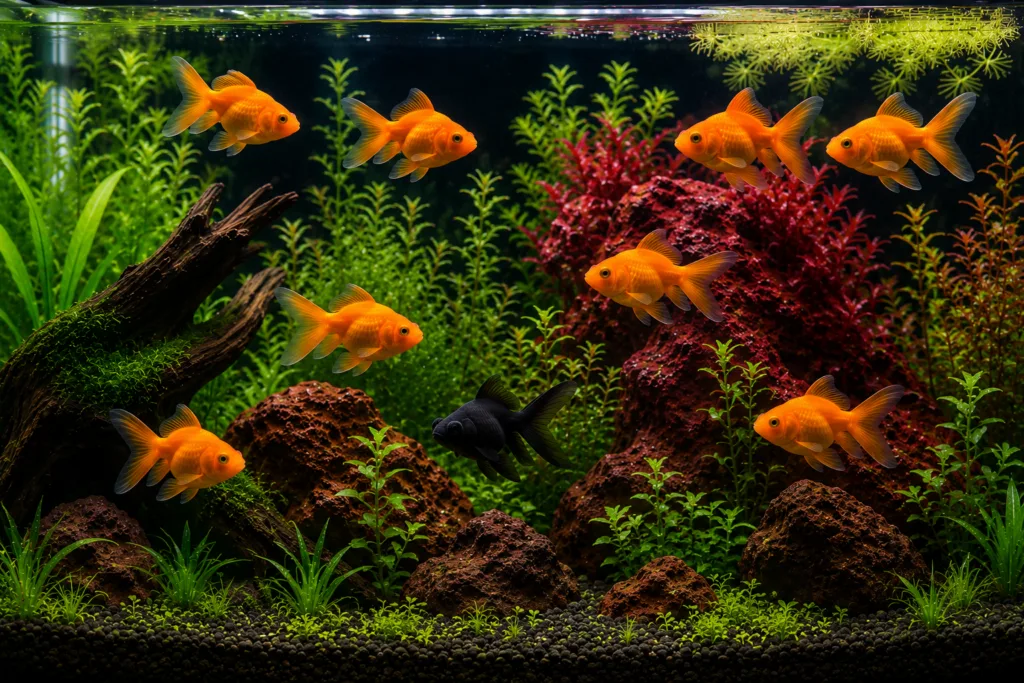
In vastu shastra, 9 is the most auspicious number of fish — representing completion, the fullest expression of positive energy, and the balance of generative and protective forces within the tank. The classical formula combines fish of specific colours in a specific ratio: fish that generate and attract positive energy alongside a fish selected specifically for its capacity to absorb all negative energy entering the space.
What is notable — and what demonstrates the deep structural alignment between vastu and feng shui — is that feng shui arrives at exactly the same number through entirely different reasoning. In vastu, 9 is auspicious because it is the number of Brahma and represents the fullest creative expression. In feng shui, 9 is the highest single digit — the number of the emperor, of heaven luck, of maximum yang energy. Different cosmologies, same prescription.
The protective fish — typically a Black Moor Goldfish — is arguably the most important fish in the tank from a vastu perspective. Feng shui also prescribes a black fish for the same absorptive function, though it is less rigidly mandated than in vastu. When we design a dual-system aquarium, we retain the black fish as a non-negotiable — it satisfies both traditions and serves an energetic function that no other fish replicates.
What the number alone does not tell you: which species to use, what tank size the count requires, whether a different count better serves your specific intention, or whether your vastu dosha calls for a modified formula. Fish count is one variable in a multi-variable system that requires expert assessment.
6. Which Fish is Lucky — and Why Species Selection Matters
Different fish carry different energetic signatures in vastu. Species, colour, size, behaviour, and temperament all contribute to what a fish does within the system — and this is one of the areas where reading both vastu and feng shui simultaneously produces the richest species guidance.
Goldfish are the universal vastu fish for Indian homes — their gold and orange colouring embodies the fire element (wealth, vitality, recognition) and they are active, social chi generators. Feng shui values them identically — the phonetic similarity between the Chinese word for fish (鱼, yú) and the word for abundance makes goldfish a centuries-old symbol of prosperity in Chinese culture. Both traditions, same fish, different reasons. When two independent 4,000-year-old systems agree on a species, the prescription is worth taking seriously.
Arowana (Dragon Fish) is where feng shui adds something vastu does not have an equivalent for — a fish whose cultural and cosmological significance is so specific and so powerful that it changes the category of aquarium entirely. Covered in full in Part 2.
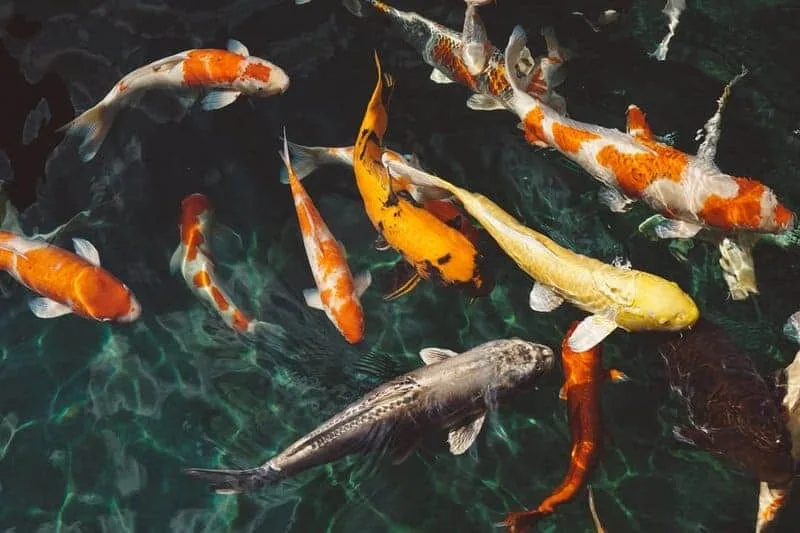
Koi represent perseverance, longevity, and sustained abundance in both traditions — the koi-into-dragon mythology of Chinese culture aligns closely with vastu’s association of koi with the capacity to overcome sustained obstacles. Both systems recommend koi specifically for households or businesses navigating extended difficulty or seeking long-term rather than immediate abundance.
Turtles carry extraordinary weight in both traditions — Kurma (Vishnu’s second avatar) in vastu and Xuan Wu (the Black Turtle, guardian of the North) in feng shui. A live turtle in water in the North-East serves both traditions simultaneously, combining Kurma’s stability and protection with the Black Turtle’s career and longevity energy in the North zone.
Species selection requires expertise because the wrong combination — incompatible species, wrong temperature requirements, predatory mixing — produces a stressed or dying tank that generates negative rather than positive energy. A stressed Arowana in an undersized tank is not activating anything positive. It is suffering, and suffering generates sha chi.
→ Complete species guide — Goldfish, Arowana, Koi, Turtle, Black Moor & more
7. Aquarium Shape, Size & Setup — What Gets It Wrong
Shape
Rectangular tanks are most auspicious in both vastu (stability, grounded energy) and feng shui (clear, unobstructed chi flow). Circular or oval tanks are excellent in both traditions — the circle represents continuous, uninterrupted energy in vastu and smooth chi circulation in feng shui. Triangular tanks create sha chi through sharp corners in feng shui and introduce the fire element through triangular form in vastu — a double problem. Avoid them regardless of placement.
Size
The tank must be proportionate to the room and to the species being kept. A tank too small generates weak, diluted energy. A tank too large creates overwhelming water energy in a small space. The correct size requires knowing the room dimensions, the species being kept, and the specific vastu or feng shui goal the tank is serving — a remedial tank prescribed for a severe dosha is typically sized larger than an auspicious tank placed for general prosperity.
What most self-installed vastu setups get wrong
The most consistent failures we see:
The most consistent failures we see, in order of how damaging they are:
- Wrong direction — an aquarium on the South or South-West wall is not a neutral error. It is actively generating the opposite of what was intended. Financial stress, health decline, and relationship deterioration have all been documented as consequences in both traditions. Many families live with these effects for years before anyone examines the aquarium.
- Wrong species combination — aggressive fish predating tank mates in your North-East corner generates fear, suffering, and death energy in the most sacred vastu zone of your home. The energetic output is not diminished prosperity. It is active harm.
- Undersized tank — overcrowded, stressed fish produce anxiety and distress energy continuously. Every hour the tank runs, it is working against the household rather than for it.
- Insufficient filtration — a tank that clouds within weeks becomes a vessel of stagnant, decaying energy. In vastu, this is not a maintenance lapse. It is an active source of the exact conditions the aquarium was meant to prevent.
- No maintenance system — beautiful in month one; a source of sustained negative energy by month three. The decline is gradual enough that most people do not connect it to the aquarium. We do.
A declining, neglected aquarium in the wrong location is one of the most damaging objects that can occupy a home or business. The cost is not the tank. It is what the tank does to the space — and to the people in it — every day it sits there uncorrected.
8. Freshwater vs Saltwater as Per Vastu
Freshwater aquariums are the traditional and overwhelmingly preferred choice in vastu shastra. The water element in vastu is inherently clean, fresh, and life-giving — the Ganges, rivers, sacred kunds. A freshwater aquarium embodies this directly.
Saltwater aquariums are not prohibited — the ocean (Samudra) holds a central place in Hindu cosmology and feng shui alike. However, marine systems are significantly more complex to maintain, and maintenance failures in saltwater setups create more severe and rapid energetic and physical collapse than equivalent freshwater issues.
For vastu and feng shui purposes: a thriving freshwater tank reliably outperforms a struggling marine one. If a marine aquarium is desired, the design and maintenance standard must be elevated accordingly.
9. Aquarium Decor, Plants & Lighting
Substrate
Natural river gravel or sand in earth tones reinforces the earth element at the base of the tank — Prithvi in vastu, the Earth element in feng shui. Black substrate strengthens the protective energy of the black fish. Bright artificial-coloured substrate, particularly dominant red or orange, introduces fire element conflict within the water zone — a problem both systems identify, from different elemental frameworks, with the same conclusion.
Plants
Live aquatic plants introduce the Wood element — valued in both traditions. In vastu, wood feeds the space’s growth energy. In feng shui, wood is the element of the East (Family, Health) and South-East (Wealth) — a thriving planted aquarium literally grows the wood element within the tank, directly feeding the Bagua zones most associated with abundance. Lucky bamboo extending above the waterline achieves this in the most visible and symbolically potent way both traditions recognise.
Ornaments
Smooth river rocks, natural driftwood, and unobtrusive natural elements are appropriate in both systems. Skulls, sunken ships, and decay-themed decorations introduce inauspicious imagery in vastu and sha chi in feng shui. Sharp, jagged cave structures create negative energy arrows in feng shui and inauspicious pointed forms in vastu. Both traditions reach the same conclusion through different vocabulary.
Lighting
The aquarium light represents the Fire element within the tank — completing the Pancha Bhuta balance in vastu and the five-element feng shui balance simultaneously. It should run on a timer for 10–12 hours daily. A permanently dark tank is energetically inert in both systems. Bright, warm lighting that makes fish colours vivid is not merely aesthetic — it is the activation of the Fire element within the water zone, a deliberate elemental design choice.
10. Maintenance as a Vastu Practice
Clean water = clear finances. In vastu, the clarity of the aquarium water directly reflects the financial and energetic clarity of the household or business. Feng shui makes the identical statement in different terms: murky water is blocked chi; clear, circulating water is flowing abundance.
Moving water = moving prosperity. The filter must run continuously — 24 hours a day, 7 days a week. Both traditions agree, without reservation, that stagnant water is stagnant fortune. Turning the filter off at night to save electricity creates stagnant water in both the physical and energetic senses.
A dead fish left in the tank is the single most energetically damaging maintenance failure. Remove immediately — the instruction is identical in vastu and feng shui.
For homes and businesses that want the energetic benefit without the maintenance responsibility, ProHobby™ offers scheduled maintenance visits across Delhi NCR.
11. What Does Fish Dying in Aquarium Mean?
A fish dying in your aquarium is not bad luck for you. This is the most consistently misunderstood aspect of vastu aquarium practice — and the anxiety it creates is understandable, because the instinctive interpretation runs in entirely the wrong direction.
In vastu shastra, fish absorb negative energy from the household environment continuously. When a fish — particularly the black fish, which carries the heaviest protective load — has absorbed a critical concentration of negativity, it dies. The death signifies that the fish intercepted a negative energy, illness, or misfortune that was approaching the household.
Feng shui states this in different terms but with identical meaning: fish absorb negative chi on behalf of the household, and when a fish dies, it has completed that function. The fish is not an omen. It is a protector whose sacrifice was successful.
The practical caveat, stated honestly: the majority of fish deaths in Indian homes are fishkeeping problems — ammonia spikes, pH imbalance, temperature shock — not vastu events. Before any spiritual interpretation, check water parameters. Address the physical cause first, always.
→ Complete guide — fish dying: vastu and feng shui meaning, causes, and exactly what to do
12. Aquarium as a Vastu Dosha Remedy
A vastu aquarium used as a dosha remedy — a corrective measure for a structural, directional, or architectural flaw that cannot be physically altered — is one of the most powerful applications of aquarium vastu, and one of the most nuanced.
The principle is clear: because an aquarium contains all five elements and introduces powerful, living water energy into a space, it can counterbalance elemental and directional imbalances that structural renovation cannot fix.
What a generic guide cannot tell you is how severe your specific dosha is, which placement most effectively counterbalances it, what size and species combination is required for remedial rather than merely auspicious effect, and whether the aquarium alone is sufficient or must be combined with other remedies.
What ProHobby™ adds to a remedial brief is the feng shui lens on the same dosha. A toilet in the North-East is a vastu dosha. In feng shui terms, the same toilet is draining energy from the Knowledge zone — a different diagnostic, potentially pointing to a different compensatory placement. Reading both assessments together produces a more complete prescription than either alone.
** NOTE: ProHobby’s vastu, feng shui, and therapeutic aquarium consultation visits are paid engagements and charges apply.
PART 2 — FENG SHUI
13. What is Feng Shui? The Framework Explained
Feng shui (風水 — literally “wind and water”) is the ancient Chinese practice of arranging the built environment to optimise the flow of chi — life force energy — through a space. Rooted in Taoist philosophy and more than 4,000 years old, feng shui is a complete science of spatial energy with its own internal logic, directional system, elemental framework, and diagnostic tools.
Where vastu shastra uses absolute compass directions and the Pancha Bhuta (five Indian elements), feng shui uses two primary tools:
The Bagua (八卦) — the eight-trigram energy map overlaid on any floor plan from the main entrance. Each of the eight zones governs a specific life area: Career, Knowledge, Family, Wealth, Fame, Relationships, Children, and Helpful People. The centre governs Health. The Bagua is a relative map — it is always oriented from the entrance of the space, regardless of compass direction.
The five Chinese elements — Wood, Fire, Earth, Metal, and Water — each governing specific Bagua zones, colours, shapes, seasons, and energetic qualities. The interactions between elements — productive, destructive, and controlling cycles — determine whether the energy of a space is harmonious or conflicted.
An aquarium introduces the Water element into a space. Water is the natural element of the North Bagua zone (Career) and the most effective activator of the South-East zone (Wealth, where water feeds Wood). This makes an aquarium the single most frequently prescribed feng shui remedy for both career growth and financial abundance — the same two life areas that vastu’s North placement activates through Kubera’s wealth energy. Two sciences, different frameworks, same destination.
14. Feng Shui Aquarium Placement — Bagua, Wealth Corner & Career Zone
Mapping the Bagua in Your Space
Stand at the main entrance of your home or office facing inward. The Bagua overlays the floor plan from this position:
| Bagua Zone | Life Area | Element | Aquarium Suitability |
|---|---|---|---|
| North (directly ahead) | Career & Life Path | Water | ✅ Excellent — water’s natural zone |
| South-East (far right) | Wealth & Abundance | Wood | ✅ Excellent — water feeds wood |
| East (middle right) | Family & Health | Wood | ✅ Good — water feeds wood |
| North-East (near left) | Knowledge & Self-Cultivation | Earth | ⚠️ Conditional |
| South (far centre) | Fame & Reputation | Fire | ❌ Water extinguishes fire |
| South-West (far left) | Relationships & Love | Earth | ❌ Water erodes earth |
| West (middle left) | Children & Creativity | Metal | ⚠️ Conditional |
| North-West (near right) | Helpful People & Travel | Metal | ⚠️ Conditional |
The Wealth Corner (South-East) — The Most Searched Feng Shui Placement
The South-East Bagua zone governs Wealth and Abundance. Water placed here feeds the Wood element that governs this zone, activating and amplifying financial luck and the sustained inflow of wealth energy. An Arowana in the South-East Bagua corner of a home or business is considered the most powerful single wealth activation in classical feng shui.
Here is where dual-system expertise becomes essential. The South-East Bagua position corresponds in most homes to the compass South-East — which is the Agni (fire) zone in vastu shastra, where water is specifically contraindicated. This is the most significant practical conflict between vastu and feng shui for aquarium placement.
The resolution is not “choose one system.” The resolution requires assessing the dominant elemental condition of the specific space. If the space already has excess fire energy — a south-facing entrance, a kitchen in the South-East, significant red in the decor — adding water to the compass South-East aggravates an existing imbalance. In this case, redirect to the North, where both systems agree without reservation, and compensate the wealth activation through species selection — a Red Arowana or 9 goldfish placed in the North activates both Kubera’s wealth energy (vastu) and the Career zone’s abundance potential (feng shui). If the space has neutral or cool elemental energy overall and the South-West earth zone is already stable and strong, the fire conflict in the South-East is manageable and the feng shui wealth activation can take precedence.
This kind of diagnostic thinking — reading both systems against the actual energetic conditions of a specific space — is what ProHobby™ brings to a dual-system consultation.
The Career Zone (North) — Where Both Systems Agree
The North Bagua zone governs Career, Life Path, and the flow of opportunity. Water is the natural element of this zone — placing an aquarium here is placing water in water’s own home. The North is also the direction of Kubera in vastu — the god of wealth and the treasurer of the gods. It is the one direction where vastu’s compass rule and feng shui’s Bagua both point to the same wall and prescribe the same remedy. When both systems agree without reservation, the energetic effect is compounded.
An aquarium in the North of a home or business activates career energy, professional opportunity, financial flow, and the circulation of beneficial relationships and contacts — simultaneously and through both systems at once.
15. The Dragon Fish — Arowana in Feng Shui
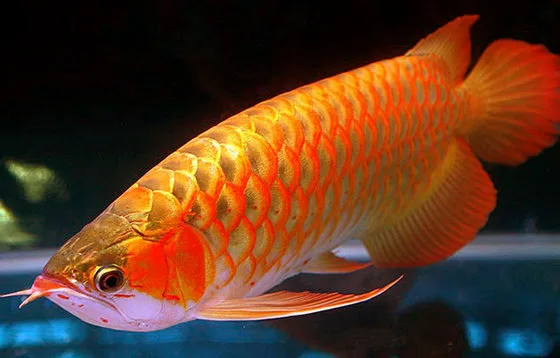
The Asian Arowana holds a position in feng shui that no other fish can match — and no equivalent exists in any other tradition anywhere in the world.
The Dragon Symbolism
The Arowana’s long, powerful, horizontal body, large metallic scales that reflect light like armour, and commanding presence as it moves through water make it the living embodiment of the Chinese dragon (龙, lóng) — the most auspicious creature in Chinese mythology, associated with heaven luck, imperial power, extraordinary wealth, and divine protection. It is called “dragon fish” (龙鱼, lóng yú) throughout East and South-East Asia — not as a metaphor, but as a literal description of what it is believed to represent.
In feng shui, to keep an Arowana is to keep a living dragon in your home or business. The energy it brings is the energy of the dragon: authority, power, abundant wealth, and protection from misfortune.
In vastu, the Arowana is best understood through the Matsya avatar lineage — a large, powerful, sacred fish that commands respect and carries divine protection. The fusion of dragon energy (feng shui) and divine fish energy (vastu) in a single species is one of the strongest cross-system alignments in aquarium practice.
Arowana Colour and Their Feng Shui Significance
| Colour | Significance |
|---|---|
| Red Arowana | Supreme wealth and imperial power; the most auspicious colour |
| Gold Arowana | Sustained wealth and long-term financial abundance |
| Silver Arowana | Career success, clarity, and metal element energy |
| Green Arowana | Growth, new beginnings, and regeneration |
| Platinum / Albino | Rare luck, purity, unexpected windfalls |
Which colour serves your specific space, Bagua zone, and vastu direction is determined in consultation. The colour selection for a specific client’s setup depends on which Bagua zone the tank will occupy and which vastu direction aligns with the room. ProHobby™ selects the Arowana colour that serves both systems for the specific placement — not the most expensive or visually dramatic option.
Practical Considerations
Arowana are large predators — they cannot share a tank with goldfish, koi, or any smaller fish. They require specialist tank design, precise water parameters, and expert-level ongoing care. They are subject to CITES regulations; sourcing must be from legal, captive-bred stock. ProHobby™ sources legal Arowana and designs purpose-built setups for residential and commercial display.
16. Feng Shui Fish Count, Colour & the Five Elements
Fish Count in Feng Shui
Feng shui shares vastu’s emphasis on 9 as the most auspicious fish count — the highest single digit, representing maximum positive energy and completion. The formula of 8 prosperity-generating fish plus 1 protective black fish is as central to feng shui practice as it is to vastu. That two independent ancient sciences from different civilisations arrived at the identical formula through different reasoning is not a coincidence — it is a convergence that ProHobby™ treats as a strong signal that the prescription is correct.
Additional auspicious numbers in feng shui:
| Number | Feng Shui Significance |
|---|---|
| 6 | Heaven luck; mentors, helpful people, divine support |
| 8 | Wealth and infinity; phonetically close to “prosper” (发, fā) in Mandarin |
| 9 | ⭐ Most auspicious; completion and maximum positive energy |
Numbers to avoid: 4 (phonetically linked to “death,” 死, sǐ, in Mandarin and Cantonese).
Fish Colour in Feng Shui
In feng shui, fish colour corresponds to the five elements and should be selected based on the Bagua zone where the tank is placed and the specific energy being activated:
| Fish Colour | Element |
|---|---|
| Gold / Orange / Red | Fire |
| Black | Water |
| White / Silver | Metal |
| Blue | Water |
| Green | Wood |
Which colour combination is right for your specific tank, zone, and intention is part of the ProHobby species prescription.
The Five Elements in a Feng Shui Aquarium
A complete feng shui aquarium deliberately embodies all five elements — making it a self-contained energetic system. This is the identical five-element principle that vastu identifies through the Pancha Bhuta framework. Different names, different cosmological origins, same structural insight:
| Feng Shui Element | Vastu Equivalent | Representation in Tank |
|---|---|---|
| Water | Jal | Tank water with active filtration |
| Wood | (Vayu adjacent) | Live plants, driftwood, lucky bamboo |
| Fire | Agni | Vibrant fish colours, aquarium lighting |
| Earth | Prithvi | Natural gravel, smooth rocks, substrate |
| Metal | (Akasha adjacent) | Filter housing, metal frame, or a small metal element within the setup |
When ProHobby™ designs a dual-system aquarium, the five-element balance is specified through both frameworks simultaneously — each element chosen to satisfy both the Pancha Bhuta requirement and the feng shui elemental prescription for the specific Bagua zone.
17. Feng Shui Aquarium for Offices & Commercial Spaces
In feng shui, commercial environments must maintain active, circulating chi for opportunities to flow in continuously. Stagnant chi in an office is stagnant business — declining leads, slow sales, blocked contracts. An aquarium is the single most effective tool for keeping chi actively moving in a commercial space.
Reception Area
The reception is the “mouth of chi” in feng shui — the point through which all energy enters the business. An aquarium in the North or South-East of the reception area activates career or wealth energy at the business’s primary entry point while absorbing the competitive or anxious energy of incoming visitors. Vastu prescribes the same placement for identical reasons, through different vocabulary. Both systems, both applied, produce a prescription that reinforces itself.
MD / Owner’s Cabin
The owner’s cabin is where the business’s most consequential decisions are made. Feng shui strongly recommends an aquarium here — specifically to the side of or facing the desk, never behind the owner’s chair. Water behind the seated person in feng shui creates instability — the person lacks the solid “mountain” energy that feng shui prescribes for any position of authority.
Vastu does not use the mountain metaphor explicitly but arrives at the same conclusion through its prescription that the wall behind a decision-maker should be solid and load-bearing — the most stable structural energy. Both systems are telling the owner the same thing: do not put water at your back.
Wealth Corner Activation
For businesses whose primary goal is financial growth, an aquarium in the South-East Bagua zone — ideally with an Arowana or 9 goldfish — directly activates the business’s wealth energy field. Where the South-East Bagua zone aligns with the compass South-East (a potential vastu conflict), ProHobby™’s dual-system assessment determines the optimal resolution for the specific commercial space.
→ Complete guide — offices, shops, clinics, restaurants, factories, hotels & all commercial spaces
** NOTE: ProHobby’s vastu, feng shui, and therapeutic aquarium consultation visits are paid engagements and charges apply.
18. Fish Statues, Figurines & Symbols in Feng Shui
For spaces where a live aquarium is not practical, both feng shui and vastu recognise fish symbols and figurines as alternatives — less powerful than a living aquarium, but meaningful when paired correctly with a water element.
Arowana statue (gold or silver): A gold-finished Arowana on an elevated surface is one of the most widely used feng shui wealth activations for spaces that cannot accommodate a live tank. Vastu recognises the auspicious fish figurine tradition through the Matsya avatar lineage.
Koi fish pair: Two koi figurines — in jade, crystal, or ceramic. Represents sustained abundance and conjugal harmony in both traditions. The pair symbolises balanced, harmonious energy flow.
Double fish symbol: One of the eight auspicious symbols of Buddhism — present in both Chinese feng shui tradition and the Hindu Ashtamangala (as Matsyayugma). As a wall decoration or artwork, it is auspicious in both traditions simultaneously — one of the rare symbols that carries identical meaning across two independent ancient sciences.
Crystal turtle on water: A blue or jade crystal turtle on a small dish of fresh water carries Xuan Wu energy (feng shui) and Kurma energy (vastu) simultaneously. Both traditions, one object, compounded effect.
The critical rule for all figurines in both traditions: Always pair fish or turtle figurines with a water element — a small dish of fresh water changed weekly, or a small tabletop fountain. A dry fish statue is decorative. A fish figurine beside moving or fresh water is activating.
PART 3 — WHERE BOTH TRADITIONS MEET
19. Vastu Shastra vs Feng Shui — Differences, Convergences & Synthesis
Both vastu shastra and feng shui have been practised continuously for thousands of years across different civilisations, and both arrive at remarkably similar conclusions about aquariums — despite rooted in entirely different cosmological frameworks. This convergence is significant. When two independent ancient sciences prescribe the same thing through different reasoning, the prescription is worth taking seriously.
The Core Differences
| Factor | Vastu Shastra 🇮🇳 | Feng Shui 🇨🇳 |
|---|---|---|
| Origin | India; 5,000+ years; Vedic/Hindu cosmology | China; 4,000+ years; Taoist philosophy |
| Primary framework | 8 absolute compass directions + Pancha Bhuta | Bagua relative to entrance + 5 Chinese elements |
| Direction reference | Absolute compass (North is always North) | Relative to entrance (Bagua overlay) |
| Best aquarium zone | North-East (Ishan); North; East | North (Career Bagua) or South-East (Wealth Bagua) |
| Fish count | 9 fish; generative + protective formula | 9 fish; identical formula, different reasoning |
| Black fish rule | Strongly mandated | Recommended; less rigidly prescribed |
| Top wealth fish | Goldfish (universal); Arowana (premium) | Arowana is supreme |
| Dead fish meaning | Fish absorbed negativity on your behalf | Fish absorbed negative chi; protective act |
| Bedroom aquarium | Strongly discouraged | Also discouraged; identical reasoning |
| Turtle | Kurma avatar; extremely auspicious | Xuan Wu; North guardian; cardinal protector |
| Key conflict zone | South-East = fire (Agni), avoid water here | South-East = Wealth Bagua, place water here |
Where Both Traditions Converge — The Universal Rules
These are the points of complete agreement — the rules that hold regardless of which tradition you follow, and which therefore represent the strongest possible prescriptions:
- North is always excellent — Kubera’s wealth zone in vastu; the Career Bagua zone and Water element’s natural home in feng shui
- Bedroom is always to be avoided — excess yin energy in both traditions
- 9 fish is the most auspicious count — arrived at independently by both systems
- Moving water is essential — stagnation is negative in both traditions without exception
- Dead fish replaced promptly — protective function completed; continuity must be restored
- Clean, clear water is mandatory — murky water is murky energy in both systems
- Rectangular tanks preferred — stability in vastu; clear chi flow in feng shui
- Black fish serves a protective function — mandated in vastu; recognised in feng shui
- Arowana is the premier wealth fish — the most consistent cross-system recommendation
The Synthesis Approach
The most powerful aquarium setup for any space is not the one that follows vastu perfectly or feng shui perfectly. It is the one that draws on everything both traditions offer — activating zones and energies that both systems identify as beneficial, resolving conflicts through genuine diagnostic thinking rather than arbitrary preference, and executing the physical result to a standard that keeps the energetic prescription intact for years.
This synthesis is not a compromise between two systems. It is a deeper reading of spatial energy than either system alone can provide — because when both a compass-based absolute directional science and a relative Bagua-based energy map point to the same wall and prescribe the same remedy, the confidence in that prescription is compounded. And when they point to different walls, understanding why each system says what it says is what allows an expert to make the right call for the specific space.
That is what ProHobby™ brings. Not a preference for one ancient tradition over another. A genuine command of both — and the ability to build what the combined prescription calls for.
20. Aquarium Benefits — Science, Vastu & Feng Shui Combined
The effectiveness of a vastu and feng shui aquarium is supported not only by ancient tradition but by a growing body of modern scientific research. That three independent frameworks — an ancient Indian science, an ancient Chinese science, and contemporary Western clinical research — all arrive at the same conclusions about the effect of fish and water on human wellbeing is not a coincidence. It is convergent evidence.
Blood pressure and heart rate: Research from the University of Exeter and the National Marine Aquarium found that watching fish in an aquarium reduces blood pressure by up to 7% and measurably lowers heart rate. What vastu calls peace and cleared negative energy, and feng shui calls smooth-flowing sheng chi, clinical research calls measurable physiological calm. Three frameworks, one observation.
Anxiety and cortisol reduction: Fish observation reduces stress hormone levels. Documented in dental clinics (patients required less anaesthetic when an aquarium was present), Alzheimer’s care settings (residents were calmer and ate better), and general healthcare waiting rooms. The vastu and feng shui prescription of aquariums for reception and waiting areas is validated by measurable improvement in visitor state of mind. The consultation value of that insight is ProHobby™’s.
Focus and directed attention: Moving water and fish create what psychologists call “soft fascination” — attentive calm that restores the capacity for focused, deliberate thinking. Study rooms and offices with aquariums show improved concentration and more productive work. Vastu prescribes study room aquariums for this reason. Feng shui prescribes North zone activation for career and mental performance. Modern psychology validates both.
Connection and responsibility: Caring for a living ecosystem creates a sense of connection and purpose that is independently associated with improved personal wellbeing and reduced loneliness. The practice of maintaining a vastu aquarium — checking on the fish daily, performing weekly water changes, observing the ecosystem — is itself a practice of attention, care, and engagement with living systems that has wellbeing benefits beyond the energetic ones.
→ Aquarium Therapy — The Full Science of Calm and Wellbeing
21. Why Getting It Wrong Costs More Than Getting It Right
A vastu or feng shui aquarium placed in the wrong direction does not simply fail to generate positive energy. In the South-West — the earth zone in vastu, the Relationship zone in feng shui — water erodes the governing element and drains the governing life area. An aquarium on the South-West wall is not neutral. It is actively damaging in both systems.
A tank with the wrong species combination — stressed fish, predation, incompatible temperatures — generates fear and anxiety energy rather than prosperity. An Arowana in an undersized tank is suffering. Suffering generates sha chi. The energetic output is the opposite of what was intended.
An unresolved conflict between vastu and feng shui — a South-East Bagua wealth corner on the compass South-East, approached without diagnosis, with a tank placed there based on feng shui guidance that ignores the vastu fire conflict — produces an aquarium that partially cancels its own effect. Some clients experience this as the aquarium “not working” when the actual problem is that two prescriptions were applied without synthesis.
A well-specified, incorrectly maintained tank — cloudy water, dead fish not replaced for three days, filter switched off over a long weekend — generates stagnant, decaying negative energy that is significantly worse than no aquarium at all.
The cost of getting it wrong is not just the cost of the tank. It is the sustained energetic cost in your home or business — plus the eventual cost of diagnosis, removal, and reinstallation of a correctly specified setup – Sunny Banerjee, ProHobby™
ProHobby™ consults on vastu shastra and feng shui aquarium requirements with genuine command of both sciences, and builds fully compliant, remedial-grade setups for homes, apartments, offices, shops, showrooms, factories, schools, hospitals, spas, hospitality outlets, and every other context across Delhi NCR — from compass assessment and Bagua mapping to dosha diagnosis, species selection, tank build, placement, energising, and ongoing maintenance.
Book a Vastu & Feng Shui Dual-Science Aquarium Consultation*
** NOTE: ProHobby’s vastu, feng shui, and therapeutic aquarium consultation visits are paid engagements and charges apply.
22. Frequently Asked Questions
Which direction is best for aquarium as per vastu shastra? North, North-East, and East are the most auspicious compass directions. The correct direction for your specific room depends on a compass assessment of that room — not the building’s facing direction. The North is where both vastu and feng shui agree without reservation and is ProHobby™’s default recommendation for most spaces.
Which direction is best for aquarium as per feng shui? The North Bagua zone (Career & Life Path) and South-East Bagua zone (Wealth & Abundance) are the two most auspicious feng shui placements. Where these align with the vastu-auspicious compass directions, the energetic effect is compounded. Where they conflict, the resolution requires assessment of the specific space.
How many fish should be in the aquarium as per vastu and feng shui? 9 fish — a formula arrived at independently by both vastu and feng shui. The formula balances fish that generate positive energy with a black fish that absorbs negative energy. The right count and species for your specific space depends on tank size, the dosha or activation being addressed, and which elements need strengthening.
Which is the luckiest fish for home in India? Goldfish are the universally auspicious choice across both traditions — prescribed for the same reasons by two independent ancient sciences. Arowana is the most powerful feng shui wealth fish and highly significant in vastu. The right species for your setup depends on your space, your vastu situation, and your goal.
Is aquarium in bedroom bad as per vastu and feng shui? Yes — both traditions discourage bedroom aquariums for the same essential reason (excess yin energy, elemental imbalance) expressed in different terms. The prohibition is consistent and strong across both systems.
My fish died. Is it bad luck? No. In both vastu and feng shui, a dead fish has absorbed a negative energy on behalf of the household — an act of protection, not an omen. Remove it immediately, replace it promptly. Full guide linked in the related reading below.
Can I follow both vastu and feng shui for my aquarium? Yes — and most ProHobby™ consultations draw on both. The systems are largely complementary. Where they conflict, the resolution comes from understanding what each system is actually prescribing and why — and applying diagnostic thinking to the specific space. This is what genuine dual-system expertise produces.
What is the most significant conflict between vastu and feng shui for aquariums? The South-East Bagua wealth corner (feng shui) corresponding to the compass South-East Agni zone (vastu). Feng shui says place water here for wealth activation. Vastu says avoid — water and fire conflict. The resolution depends on the dominant elemental condition of the specific space and is a diagnostic call, not a preference for one system.
Is an aquarium in the office good as per vastu and feng shui? Yes — highly recommended in both traditions for the same reasons (career and wealth activation; absorption of competitive negative energy). Vastu prescribes North or North-East by compass. Feng shui prescribes North (Career) or South-East (Wealth) by Bagua. Where these align, the result is compounded. Full commercial guide linked below.
Get a Vastu & Feng Shui Aquarium Built Right, the First Time
ProHobby™ consults on vastu shastra and feng shui aquarium requirements with genuine command of both sciences, and builds fully compliant, remedial-grade setups for homes, apartments, offices, shops, showrooms, factories, schools, hospitals, spas, hospitality outlets, and every other context across Delhi NCR — from compass assessment and Bagua mapping to dosha diagnosis, species selection, tank build, placement, energising, and ongoing maintenance.
📞 WhatsApp us: +91 81303 16186 🐟 Book a Dual-Science Consultation → 🔧 View Custom Aquarium Setups →
Related reading: Aquarium Therapy — The Science of Calm · Fish Dying in Aquarium — Vastu & Feng Shui Meaning · Best Fish for Vastu Aquarium · Living Room Aquarium Vastu · Office & Commercial Aquarium Vastu & Feng Shui