
by ProHobby™ | Ecological Systems Authority
The most important thing to understand about aquarium filtration is that the filter itself does almost nothing. The ceramic rings, the sponge blocks, the hollow fibre media, the lava rock — none of these actually filter your water. They are surfaces.
The filtering is done by the biofilm community that colonises those surfaces. Billions of bacteria, archaea, protozoa, and other microorganisms living in structured, layered communities on every surface inside your filter. This community converts ammonia — the primary waste product of every fish in your tank — through a chain of oxidation reactions into progressively less harmful compounds. Without this community, your filter is a water pump. With it, your filter is a biological reactor sustaining every living organism in the tank.
This distinction — biofilm as filter, media as surface — changes how you understand every aspect of filtration: why filters need weeks to become functional, why cleaning them wrongly destroys their capacity instantly, why adding more media does not automatically improve performance, and why an undersized filter cannot be rescued by any amount of cleaning.
Aquarium filtration is part of the broader nutrient cycling process of the closed aquatic system. The Nutrient Cycles in Nature and Captivity cornerstone article covers the complete nutrient cycle framework of which biological filtration is the primary processing component. The filtration capacity of your tank is one of the four constraints determining how many fish and how much bioload the system can support — the Carrying Capacity in Aquariums framework provides the full model.
Table of Contents
- What Filtration Actually Does — The Biology
- 1a. The Nitrogen Cycle in the Filter
- 1b. What Nitrifying Bacteria Need to Function
- 1c. The Maturation Timeline
- The Three Functional Layers
- 2a. Mechanical Filtration — Protection, Not Cleaning
- 2b. Biological Filtration — The Actual Work
- 2c. Chemical Filtration — Supplementary Tool, Not Staple
- Residence Time: The Variable That Determines Whether Filtration Works
- Why the Turnover Rate Rule Is Wrong
- Filter Types — Matched to Systems
- Filter Flow and Sensitive Species
- Seeding a New Filter — Methods and Honest Assessment
- Planted Tank Filtration Considerations
- Media Selection — What Actually Matters
- Maintenance That Protects Rather Than Damages
- Running Without Power — How Long Fish Survive and What to Do
- What Goes Wrong — Filtration Failure Patterns
- Troubleshooting — Symptom to Cause to Action
- India-Specific Filtration Challenges
- Frequently Asked Questions
1. What Filtration Actually Does — The Biology
1a. The Nitrogen Cycle in the Filter
Fish excrete ammonia continuously — primarily through their gills as a direct byproduct of protein metabolism. Ammonia is acutely toxic to fish even at very low concentrations. In a natural river or lake, it is diluted instantly into vast volumes of water. In an aquarium, there is no dilution. Without something converting it, ammonia accumulates to lethal concentrations within days of adding fish to a new tank.
The biological filter converts ammonia through a two-stage oxidation chain:
Stage One: Nitrospira and related ammonia-oxidising bacteria (AOB) convert ammonia (NH₃/NH₄⁺) to nitrite (NO₂⁻). Nitrite is also toxic to fish, though through a different mechanism — it binds to haemoglobin and prevents oxygen transport.
Stage Two: Nitrospira and nitrite-oxidising bacteria (NOB) convert nitrite to nitrate (NO₃⁻). Nitrate is far less toxic at typical aquarium concentrations and is removed through regular water changes.
The result: ammonia enters the filter, nitrate exits. Provided this chain is functioning at a rate matching the ammonia production of your stocking, the water column maintains zero ammonia and zero nitrite at all times.
The critical detail that most guides miss: the dominant nitrifying organisms in aquarium biofilms are not Nitrosomonas and Nitrobacter as traditionally taught — these are free-living bacteria. The attached biofilm community is dominated by Nitrospira, a genus that can perform both oxidation steps (complete ammonia oxidation, or “comammox”) and is far more relevant to aquarium filtration. This matters because Nitrospira has different oxygen requirements and is more sensitive to certain maintenance disruptions than the free-living species. The detailed microbiology of biofilm communities is in Biofilms — The Invisible Engine of Every Aquarium.
1b. What Nitrifying Bacteria Need to Function
Understanding the operational requirements of the biological filter community tells you everything about why filters fail, what they need to stay healthy, and what conditions allow them to be overwhelmed.
Oxygen — non-negotiable. Nitrifying bacteria are obligate aerobes. They require dissolved oxygen to perform ammonia oxidation. Without a continuous supply of oxygenated water flowing through the media, the community begins dying within hours. This is the direct mechanism behind power cut crashes — when the filter pump stops, water movement stops, dissolved oxygen in the filter media depletes rapidly, and the biofilm community begins dying. A power cut of four to eight hours in a warm tank can substantially reduce biological capacity that then takes days to recover.
This also explains why deeply packed filter media often underperforms its theoretical surface area. Water flowing through a densely packed canister can channel through the path of least resistance, leaving sections of media poorly oxygenated. The bacteria in oxygen-depleted zones cannot oxidise ammonia regardless of how much surface area they theoretically occupy.
Ammonia substrate — the bacteria’s food. Nitrifying bacteria grow only when ammonia is present. A filter that has processed all available ammonia stops growing its population. This is why filters do not “over-cycle” — the population self-limits at the level supportable by the ammonia supply.
Stable temperature. Nitrifying bacteria function across a range of temperatures but have an optimal band of approximately 25–30°C for most tropical aquarium species. Below 15°C, activity reduces substantially. Above 35°C, the community begins to be damaged. Extended periods outside the functional range reduce processing capacity.
Stable pH. The nitrifying community is largely inhibited below pH 6.5 and functions best between pH 7.0 and 8.0. A pH crash — which can occur in tanks with low alkalinity (KH) as nitrification naturally produces hydrogen ions — temporarily shuts down the biofilm and produces an apparent cycle crash that is actually a pH problem, not a biological one.
No toxic exposure. Chlorine, chloramine, antibiotics, and many chemical treatments are directly toxic to biofilm bacteria. Any of these reaching the filter in sufficient concentration can kill significant portions of the community within hours. This is the reason filter media must never be rinsed in tap water — municipal chlorine and chloramine will destroy the biofilm community that took weeks to establish.
1c. The Maturation Timeline
A brand new filter with fresh media has zero biofilm. It cannot process ammonia at all. The establishment of a functional biological community takes time — this is the nitrogen cycle process described in full in How to Cycle a Fish Tank.
But beyond the initial cycle, a filter’s biological capacity continues developing for months after ammonia and nitrite first reach zero. A tank that tests “cycled” at six weeks has a functional but young and fragile biofilm community. The same tank at six months has a significantly more diverse, more resilient, and higher-capacity community. A two-year-old filter handles disruptions — a missed maintenance session, a brief power cut, a spike in organic load — that would crash a six-week-old filter.
This progressive development follows the ecological succession process described in Microbial Succession in Aquariums. The nitrifying community does not appear alone — it is embedded in a broader microbial ecosystem that develops in stages over months, each stage processing waste more completely and providing more biological stability than the last.
The practical implication: a tank should be stocked conservatively for the first six months, not because of any specific parameter limit but because the biological buffer capacity of the filter is still developing. The same bioload that the filter handles effortlessly at twelve months may cause instability at two months.
2. The Three Functional Layers
A well-designed filter contains three distinct functional zones, each serving a different role in maintaining water quality. These are commonly called the three types of filtration, but thinking of them as types is less useful than thinking of them as functions within a processing sequence.
2a. Mechanical Filtration — Protection, Not Cleaning
Mechanical filtration intercepts suspended particles — fish waste, uneaten food, plant debris, detritus — before they reach the biological media. It does not clean the water in a biological sense. Its primary function is protecting the biological filtration layer.
When debris bypasses mechanical filtration and reaches biological media, it does two harmful things. First, it physically clogs the porous structure of the media, blocking water flow and reducing the oxygenated surface area available for biofilm colonisation. Second, it introduces a large organic load directly into the biological zone, where it decomposes and can locally overwhelm the nitrifying community’s processing capacity.
Well-functioning mechanical filtration intercepts debris in an easily-accessible layer that can be rinsed frequently without disturbing the biological media. Filter floss, coarse sponge pads, and fine sponge layers are all mechanical media.
The maintenance relationship: Mechanical media should be rinsed frequently — every one to two weeks in a moderately stocked tank — because its function is interception, and intercepted material needs to be physically removed. Clogged mechanical media restricts flow to the biological layer beneath it. Infrequent mechanical maintenance is one of the most common causes of reduced biological capacity in otherwise well-sized filters.
Critical: Always rinse mechanical media in water taken from the tank, not tap water. The mechanical layer also houses significant biofilm communities. Tap water chlorine kills them.
2b. Biological Filtration — The Actual Work
This is the functional core of the filter. Everything else exists to support it or supplement it.
Biological media provides surface area for biofilm colonisation. The nitrifying community lives here, processes ammonia continuously, and is the reason your fish are alive. The size, quality, and operational condition of the biological media determines the filter’s processing capacity.
Media configuration: Biological media belongs in the middle or primary chamber of the filter — after mechanical pre-filtration has removed debris that would clog it, and before any chemical media that would be placed last. In canister filters, mechanical media in the first tray, biological media in the middle trays.
Never replace all biological media at once. The biofilm community cannot be re-established instantly. Removing all biological media and replacing it with new media effectively un-cycles the tank — the ammonia processing capacity drops to near zero and rebuilds over weeks. If media needs replacing, replace no more than one third at a time, over a period of several weeks, allowing the remaining community to seed the new media.
Never rinse biological media aggressively. A gentle rinse in tank water to remove visible blockage is appropriate every three to six months when flow rate has noticeably reduced. Scrubbing biological media removes the biofilm community you are maintaining the media to support. The goal is to restore flow, not to clean the surface.
2c. Chemical Filtration — Supplementary Tool, Not Staple
Chemical filtration uses adsorptive media — primarily activated carbon, but also ion-exchange resins, Purigen, and zeolite — to remove specific dissolved compounds from the water column.
Activated carbon adsorbs organic compounds, tannins, medications, and some heavy metals. It is a useful polishing tool and an essential post-medication treatment (removing drug residues after a treatment course). It is not necessary for normally maintained freshwater tanks, and in planted tanks it removes trace elements that plants need alongside the organic compounds it targets. Replace every four to six weeks as saturation renders it ineffective and potentially releases previously adsorbed compounds.
Zeolite adsorbs ammonium ions (NH₄⁺) through ion exchange. It is an emergency ammonia reduction tool — not a substitute for biological filtration. It becomes saturated within days in a stocked tank and must be replaced or regenerated regularly. It does not function in saltwater. It is appropriate as a crisis measure during a cycle crash or transport, not as a permanent filter component.
Purigen and synthetic resins are premium alternatives to carbon for organic polishing, with the advantage of being rechargeable. Useful for water clarity in display tanks. Not a filtration requirement.
The rule: chemical media is the last layer in the filter sequence, replaced on schedule, and considered optional rather than essential in most freshwater systems.
3. Residence Time: The Variable That Determines Whether Filtration Works
This is the most important engineering concept in aquarium filtration and the one most completely absent from mainstream hobby advice.
Residence time is the average duration that water spends in contact with the biological media as it passes through the filter.
The formula:
Residence Time (hours) = Volume of filter chamber (litres) ÷ Flow rate (litres/hour)
Example:
- Canister filter with 2 litres of biological media volume
- Pump rated at 800 litres/hour
- Residence time = 2 ÷ 800 = 0.0025 hours = approximately 9 seconds
Nine seconds is the time the bacteria have to process the ammonia in each volume of water passing through. This is sufficient for a low-to-moderately stocked tank with a mature biofilm. It may be insufficient for a heavily stocked tank or a young biofilm.
Why this matters more than turnover rate:
A turnover rate of 10x/hour tells you how many times the full tank volume passes through the filter each hour. It says nothing about how much time any given volume of water spends in contact with biofilm. A very fast-flowing filter with minimal media volume processes each volume of water briefly and may fail to reduce ammonia to zero even at high turnover rates.
A slower filter with substantial media volume and adequate turnover rate may process ammonia far more efficiently despite lower turnover numbers.
The practical implications:
- Increasing media volume increases residence time (assuming flow rate is stable)
- Reducing pump speed increases residence time (within limits — too slow reduces oxygen delivery to media)
- An undersized filter cannot compensate for low residence time by adding more of the same media in the same chamber; the flow path must also be adjusted
For the complete technical treatment of residence time across aquarium systems, the engineering approach is covered in Residence Time in Aquariums.
4. Why the Turnover Rate Rule Is Wrong
The standard recommendation — choose a filter rated at 4–10 times your tank volume per hour — is a flow rate guideline, not a biological capacity guideline. These are different things.
What turnover rate tells you: How often the full water volume circulates through the filter, which affects distribution of oxygen, nutrients, and waste throughout the tank, and prevents dead zones.
What turnover rate does not tell you: Whether the biological media volume and biofilm community is large enough to process the ammonia load of your specific stocking. A 500-litre/hour filter on a 100-litre tank achieves the recommended 5x turnover, but if that filter contains only 300ml of biological media occupied by a three-month-old biofilm, its actual ammonia processing capacity may be insufficient for a moderately stocked tank.
The correct way to think about filter sizing:
Filter size should be matched to bioload, not tank volume. Bioload is determined by the number, size, and species of fish, their feeding level, and the waste production rate of the system. A 100-litre lightly planted tank with five small tetras has a fraction of the bioload of a 100-litre tank with a single large cichlid being fed heavily.
The case for oversizing:
An oversized filter — more biological capacity than strictly required for the current stocking — provides buffer capacity. When a fish dies unnoticed for 24 hours and produces an ammonia pulse, the oversized filter absorbs it without an ammonia spike that would harm tank inhabitants. When an automatic feeder malfunctions and delivers three days of food in one session, the oversized filter handles the organic load. A filter running at its precise capacity limit has no tolerance for any variation.
Oversizing within reason — 1.5 to 2x the capacity strictly required for current stocking — is the correct approach for any tank where stability is the priority. The Aquarium Stability Is Not Balance cornerstone article explains why buffer capacity is central to ecosystem stability in closed aquatic systems.
5. Filter Types — Matched to Systems
Sponge Filters
Mechanism: Air pump drives water through a sponge block. Simple, reliable, inexpensive.
Best for: Breeding tanks, fry tanks, shrimp tanks, quarantine setups, nano aquariums. The gentle flow is non-threatening to fry and sensitive invertebrates. Battery-powered air pumps make sponge filters the most reliable filtration during power cuts — critical for Indian hobbyists.
Limitations: Low mechanical filtration capacity. Limited biological media volume. Insufficient for heavily stocked tanks or large fish.
India consideration: The most power-cut-resilient filter type available. A battery-backed air pump keeps a sponge filter running through extended power failures. Essential emergency backup for any tank in load-shedding areas.
Hang-On-Back (HOB) Filters
Mechanism: Motor draws water up a tube from the tank, passes it through media trays, returns it over a weir creating surface agitation.
Best for: Community tanks from 40–150 litres, beginner setups, tanks where access to the interior is restricted.
Advantages: Surface agitation from the return weir improves dissolved oxygen. Easy media access for maintenance. Moderate biological capacity.
Limitations: Limited media volume restricts biological capacity for heavily stocked tanks. Motor can be noisy. Less media flexibility than canister.
Internal Power Filters
Mechanism: Submersible pump with filter media housing, positioned inside the tank.
Best for: Budget setups, small-to-medium community tanks.
Limitations: Occupies internal tank space. Motor adds heat — problematic in Indian summer. Lower media volume than equivalent external filters. Return flow tends to be directional and less effective at tank-wide circulation.
Canister Filters
Mechanism: External motor draws water out of the tank via inlet pipe, through sealed media trays, and returns via outlet pipe. Fully customisable media configuration.
Best for: Tanks above 100 litres, heavily stocked setups, planted aquariums, advanced systems, marine (with additional equipment).
Advantages: Large media volume allows high biological capacity. Fully customisable media order and types. Silent operation. No impact on internal tank aesthetics. Lily pipes and directional outlet allow precise flow geometry.
Limitations: Higher cost. Requires priming and periodic maintenance. Hose failure (rare) can empty a tank. In heavily planted tanks, reduce flow or use spray bar to prevent excessive CO₂ off-gassing.
Media configuration for canister filters: Coarse mechanical sponge (first tray, catches large debris), fine mechanical pad (second tray, polishes), biological ceramic or sintered glass media (middle-to-last trays, the primary functional component), optional chemical media (final tray, replace on schedule).
Sump Filters
Mechanism: Water overflows or is siphoned from the display tank into a separate reservoir (the sump), passes through filter media sections, and is pumped back. Dominant system for large freshwater and all serious marine setups.
Best for: Large aquariums (above 300 litres), reef and marine systems, public display aquariums, custom installations.
Advantages: Very high media volume. Houses equipment (heater, protein skimmer, UV, dosing pumps) outside the display tank. Water level in display remains stable. Easy maintenance without disturbing display.
Limitations: Requires plumbing and drill or overflow box. Higher setup complexity. Not practical for most home aquarium setups below large scale.
Wet-Dry / Trickle Filters
Mechanism: Water trickles through biological media exposed to air above a sump, rather than being submerged. Because the media is in contact with both air and water simultaneously, oxygen availability is maximised — wet-dry filters can support very high biological capacity per unit of media volume.
Best for: Large fish with high bioloads (oscars, large cichlids, goldfish ponds), heavily stocked systems where maximising biological processing capacity is the priority.
Advantages: Very high oxygen availability to biological media. Excellent for high-ammonia-load systems.
Limitations: CO₂ off-gassing makes wet-dry unsuitable for CO₂-injected planted tanks. Requires a sump. The exposed media surface can become a reservoir for unwanted bacterial populations if not maintained properly. Less common in modern planted and reef setups where sumps with submerged media are preferred.
Undergravel Filters (UGF)
Mechanism: A perforated plate sits beneath the substrate. Air lifts or powerheads draw water down through the substrate and up through lift tubes, turning the entire substrate bed into a biological filter.
These filters were extremely popular from the 1970s through the 1990s and remain in many older tanks. They are no longer recommended for new setups.
Why undergravel filters cause long-term problems:
The substrate acts as the biological media, which means all debris, uneaten food, and fish waste is drawn into the substrate bed rather than intercepted and removable. Over months and years, this organic material accumulates in anaerobic pockets beneath the filter plate where decomposition produces hydrogen sulphide and other toxic compounds. Disrupting the substrate for any reason — replanting, rearranging, or the inevitable failure of the filter plate seal — releases this accumulated material into the water column, producing acute ammonia and hydrogen sulphide spikes.
Undergravel filters are also incompatible with planted aquariums (plant roots block water flow through the substrate) and with any substrate that should not be regularly disturbed (fine-grained sands, planted substrates).
If you have an undergravel filter in an established tank: it is operating, and disrupting it is the risk, not continuing to run it. Monitor water quality, do not disturb the substrate, and plan a transition to a different filtration system if any major tank work is needed. Do not simply pull the filter plate out — the anaerobic substrate beneath it will release its accumulated compounds directly into the water column. A planned transition involves establishing a conventional filter to full capacity first, then removing the UGF over a period of weeks while doing extra water changes to handle the released organic material.
6. Filter Flow and Sensitive Species
Flow rate is not just a filtration capacity variable — it is a welfare variable. The current produced by a filter return can be too strong for certain fish, invertebrates, and life stages, causing chronic stress, exhaustion, and in severe cases direct physical harm.
Bettas
Bettas (Betta splendens) evolved in slow-moving, heavily vegetated water with minimal current. Their long, flowing fins are hydrodynamically expensive to operate — in strong current, they spend continuous energy just holding position. A betta in a tank with strong filter flow will show progressive decline: hiding behind hardscape to escape the current, lethargy, clamped fins, loss of colour, reduced feeding. This is chronic flow stress, not disease, and it is entirely preventable.
Appropriate flow for bettas: The tank surface should show gentle movement — visible but not turbulent. A return nozzle pointed at the glass wall to create circular flow rather than a direct stream, a sponge filter (the ideal betta filter), or a HOB with a baffle made from a water bottle or sponge over the return are all effective.
Rule of thumb: If a betta’s fins are being pushed sideways or it is visibly struggling against the current, the flow is too strong.
Shrimp
Dwarf shrimp (Neocaridina, Caridina) are small enough to be drawn into filter intakes without a guard. Baby shrimp — particularly important in breeding colonies — are at risk from even fine-mesh HOB intakes. Sponge filters are the ideal shrimp filter because they provide no intake suction risk and the sponge surface provides grazing area.
For tanks using HOB or canister filters: cover the intake with a pre-filter sponge sleeve. These are inexpensive, reduce the frequency of mechanical media cleaning, and protect every stage of shrimp.
Flow strength affects shrimp less than intake risk, but very strong currents can prevent shrimp from grazing normally.
Fry and Juvenile Fish
Newly hatched and very small juvenile fish are as vulnerable to intake suction as shrimp. For breeding setups, either use a sponge filter exclusively or cover canister and HOB intakes with dense pre-filter sponge until juveniles are large enough to be safe.
Strong current is also behavioural and developmental problem for fry. Young fish spending energy fighting current do not allocate that energy to growth. Breeding and grow-out tanks should have minimal flow.
Discus
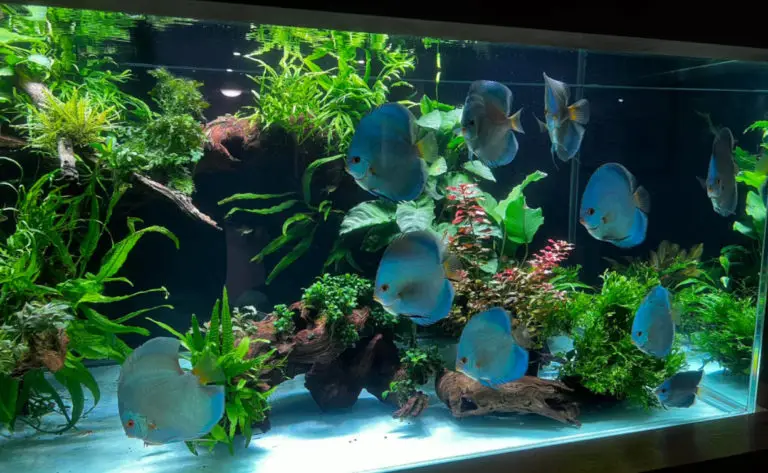
Discus (Symphysodon spp.) are sensitive to strong, directional flow. They prefer gentle, distributed circulation rather than strong point-source current. A spray bar return — which distributes the filter output across a wide horizontal area — is standard practice in discus tanks for this reason. High-flow canisters with a standard return nozzle directed at discus will stress them despite meeting all other parameters.
Goldfish and Large Cichlids
At the other end — goldfish and most large cichlids produce high waste and require strong filtration. They can tolerate and often benefit from moderate flow, as strong filtration is necessary for their bioload. Goldfish specifically are cold-water fish — their filters need to handle substantial ammonia loads without the thermal boost that tropical temperatures provide to bacterial metabolism.
General Adjustment Principles
- Point return nozzles at the glass surface at an angle to create circular circulation rather than a direct current across the tank
- Spray bars distribute flow widely and reduce current strength at any single point
- Live plants and hardscape provide natural flow breaks and resting zones
- Reduce pump speed rather than restricting the outlet (restriction reduces flow but increases pump wear and heat)
7. Seeding a New Filter — Methods and Honest Assessment
A brand new filter with no biofilm has zero biological capacity. The standard fishless cycle takes four to six weeks. But seeding — introducing established biological material to accelerate colonisation — can significantly reduce this timeline when done correctly.
Method 1: Media Transfer from an Established Filter (Most Effective)
Moving a portion of biological media from a mature, healthy established filter to the new filter immediately provides a substantial, living biofilm community that can begin processing ammonia from day one.
How to do it: Remove 20–30% of biological media from an established filter that has been running for at least three months. Place it in the new filter alongside the fresh media. Do not clean it — the biofilm is what you are transferring. Keep it submerged in tank water during the transfer to prevent the bacteria drying out (even a few minutes of air exposure can kill significant portions of the community).
What this achieves: The new tank can be stocked carefully within days rather than weeks, because the transferred community processes the initial ammonia load while the new media colonises. Stock at 30–40% of intended final capacity for the first two weeks, monitoring daily, then increase gradually.
The limits: The transferred community is sized for its original tank’s bioload. Transferring media from a 60-litre community tank to a new 200-litre tank with a large cichlid provides some biological capacity but not enough for heavy stocking immediately. Match the transfer volume to the intended stocking.
Method 2: Liquid Bacteria Products — Honest Assessment
Products like Seachem Stability, API Quick Start, and Tetra SafeStart claim to provide live nitrifying bacteria that immediately establish biological filtration. The honest assessment: they help, but they do not eliminate the cycling period and their effectiveness varies significantly.
Why they vary: True nitrifying bacteria (Nitrospira and related organisms) are obligate biofilm formers — they live attached to surfaces, not free-floating in water. Products that contain the relevant organisms work because the bacteria quickly attach to media and begin colonising. Products that contain different bacterial species (some products use Nitrosomonas and Nitrobacter which are less relevant to aquarium biofilms) work less well.
What the evidence shows: Quality bacteria products in combination with a gradual stocking approach can reduce the time to stable parameters from six weeks to two to three weeks. They do not produce an instantly cycled tank. Using them and adding a full stocking load on day one will still produce a cycle crash.
How to use them correctly: Dose on day one and again on day seven. Add the first fish at a low stocking density immediately. Test daily. The product is providing a head start, not a completion — treat the first weeks as an accelerated cycle, not a bypassed one.
Seachem Stability is generally considered the most reliable product in India with consistent availability. The bacteria are live and the formulation is designed for attachment. Dose at the full recommended rate for the first week.
Method 3: Established Plants and Substrate
Plants carry biofilm on their surfaces — particularly their roots, stems, and the substrate they are planted in. Transferring a significant portion of established planted substrate to a new tank introduces meaningful biological community alongside the plants themselves.
This method works best when combined with Method 2 and gradual stocking. It is less effective than media transfer but more effective than no seeding.
Method 4: Mature Filter Water
Transferring water from an established tank to a new tank is often recommended but provides minimal actual benefit. The nitrifying bacteria that matter are biofilm organisms attached to surfaces — they are not present in significant numbers in the free water column. Old tank water provides trace amounts of organic material and possibly some free-swimming heterotrophs, but does not meaningfully seed biological filtration.
The correct expectation: Media transfer is the gold standard. Bacterial products provide a meaningful acceleration. Plants and substrate provide moderate assistance. Water transfers provide negligible assistance. Any seeding method still requires a gradual stocking approach and daily monitoring for the first two to four weeks.
8. Planted Tank Filtration Considerations
Planted tanks have filtration requirements that differ meaningfully from fish-only setups. The relationship between the filter, CO₂, and plant biology creates trade-offs that are absent in non-planted systems.
CO₂ Stripping
This is the primary filtration consideration in CO₂-injected planted tanks, and it is often completely overlooked by hobbyists and guides.
CO₂ enters water at the surface — the same gas exchange interface that oxygen enters. High surface agitation increases gas exchange dramatically, which is beneficial for oxygen but harmful for CO₂ in an injected planted tank: aggressive surface agitation strips CO₂ from the water column as fast as it is injected.
The practical consequence: A canister filter with a return nozzle creating strong surface turbulence in a CO₂-injected planted tank will off-gas most of the injected CO₂ before plants can use it. The CO₂ injection is essentially wasted. This makes the surface agitation setting the most important calibration decision in a planted tank — enough to maintain dissolved oxygen without stripping CO₂.
The solution:
- Use a spray bar positioned at or just below the water surface rather than a return nozzle pointing upward — spray bars create lateral flow with minimal surface disturbance
- Lily pipes (glass return pipes with a surface-skimming design) are the preferred return method for serious planted tank setups precisely because they skim the surface for dissolved organics without creating excessive surface turbulence
- The correct level: gentle surface movement visible but no breaking turbulence. CO₂ drop checker (or pH measurement) at target concentration is the calibration tool
At night: When CO₂ injection is switched off (standard practice — CO₂ without photosynthesis creates carbonic acid accumulation and oxygen depletion), increase surface agitation to restore gas exchange for overnight oxygen maintenance. Many hobbyists connect the CO₂ solenoid and an additional airstone to the same timer — CO₂ on, airstone off during the light period; CO₂ off, airstone on during dark.
Filter Sizing for Planted Tanks
Heavily planted tanks with low stocking can operate with smaller filters than equivalent fish-only setups because the plants themselves process ammonia directly and compete with nitrifying bacteria for ammonia. A lush planted tank with a small bioload may function adequately with a filter that would be grossly undersized for a fish-only setup of the same volume.
The correct approach: size the filter to the fish, not the tank volume. In a low-stocking planted tank, a small canister with quality biological media at moderate flow is typically appropriate. In a heavily stocked planted tank, the full sizing considerations of Section 4 apply.
Substrate and Planted Tank Biology
The substrate in a planted tank is an additional biological processing zone. Plant roots, attached biofilm, and the broader rhizosphere microbial community all process organic matter and contribute to the tank’s overall biological capacity. A deep, established planted substrate is a meaningful supplement to the filter in terms of overall ammonia processing capacity — but it is not a substitute, and it cannot be maintained or assessed the way filter media can.
Turnover Rate in Planted Tanks
High flow rates in planted tanks create issues beyond CO₂ stripping:
- Strong current flattens delicate stem plant leaves and prevents normal photosynthetic posture
- Fine-grained substrates (ADA Aqua Soil and equivalents) can be disturbed by strong bottom flow
- Many small tropical species used in planted setups (small rasboras, nano fish) prefer gentle current
A turnover of 3–5x tank volume per hour is appropriate for most planted setups — lower than the 5–10x often recommended for fish-only tanks.
9. Media Selection — What Actually Matters
The aquarium market offers dozens of biological media types with competing surface area claims. Most hobbyists spend significant time evaluating media specifications. The actual performance differences between premium and budget media are smaller than marketing suggests — but there are meaningful real-world distinctions.
What matters in biological media:
Accessible oxygenated surface area — not total surface area. Media that is highly porous but has pores too small for water flow (and therefore oxygen delivery) to reach the interior cannot support biofilm in those interior spaces regardless of the calculated surface area. The bacteria only colonise where oxygenated water reaches.
Practical evaluation: media should have a mix of macropores (large channels for water flow and oxygen delivery) and mesopores (smaller surfaces for bacterial attachment). Very fine microporous media with high surface area but low macroporosity often underperforms its specs.
Structural stability. Biological media sits in a continuously flowing water environment for years. It should not degrade, release particles into the water column, or lose structural integrity. Cheap sintered glass media that crumbles after a year produces particulate contamination and loses surface area.
Flow distribution. Media should be dense enough to hold in place but not so densely packed that it creates flow channelling — where water takes the path of least resistance through a small section of the media bed while the rest receives inadequate flow.
Practical media comparison:
| Media Type | Surface Area | Accessibility | Longevity | Best For |
|---|---|---|---|---|
| High-quality sintered glass (e.g. Seachem Matrix) | Very high | Good | Excellent | High-bioload systems |
| Ceramic rings (budget) | Moderate | Variable | Good | General use |
| Lava rock | Moderate | Good | Excellent | Budget alternative |
| Sponge blocks | Lower | Very high | Moderate | Shrimp, fry, nano |
| Plastic bio-balls | Low | High | Excellent | Wet-dry / trickle |
The sponge vs ceramic question:
In most planted community tanks with moderate stocking, a large block of high-quality sponge material performs comparably to ceramic media because accessible oxygenated surface area is high throughout. The sponge’s lower total surface area is offset by its superior accessibility. Ceramic media has the advantage in high-bioload systems where maximum surface area per litre of filter volume is required — but only if the ceramic media is quality-sintered with genuinely accessible internal structure.
10. Maintenance That Protects Rather Than Damages
The purpose of filter maintenance is to preserve the function of the biofilm community, not to clean the filter. These are different objectives and they lead to different maintenance practices.
The cardinal rule: never perform a water change and filter maintenance on the same day. Each individually represents a moderate system disruption; combined, they represent a significant one. Separate filter maintenance from water changes by at least one week in either direction.
Mechanical media: Rinse in tank water (not tap water) when flow rate has visibly reduced — typically every one to two weeks for a moderately stocked tank. Squeeze out intercepted debris until water runs relatively clear. Replace when the physical structure of the sponge or floss has degraded and it no longer holds its shape.
Biological media: Rinse gently in tank water every three to six months if flow rate reduction indicates blockage. “Gently” means dipping and swirling in a bucket of tank water to remove loose debris — not scrubbing. Never replace more than one third of biological media at any time. Never replace biological media simultaneously with performing a water change. In hard Indian tap water, calcium deposits may build up on ceramic media over time — a brief soak in pH-neutral (no chlorine) dilute vinegar solution every six months removes mineral buildup without damaging the biofilm. Rinse thoroughly in tank water before returning to the filter.
Impeller and pump housing: Clean monthly. Debris around the impeller reduces flow rate and adds heat. Impeller cleaning does not affect the biofilm community.
Hose and inlet/outlet pipes: Monthly cleaning prevents flow restriction. A filter running at reduced flow rate has reduced residence time (see Section 3) and therefore reduced biological processing capacity. Inlet blockage is one of the most common causes of unexplained parameter deterioration in established tanks.
Filter timing: Filters must run 24 hours per day, seven days per week. Turning a filter off overnight to “save electricity” or reduce noise disrupts oxygen supply to the biofilm community. Nitrifying bacteria begin dying within hours of oxygen deprivation. A filter turned off for eight hours each night will have a chronically impaired biological community regardless of how well it was established.
11. Running Without Power — How Long Fish Survive and What to Do
Power cuts, filter failures, and transport all create situations where filtration stops. How long fish survive depends on several variables — and the answer is often more generous than hobbyists fear.
Dissolved Oxygen Depletion Timeline
When the filter stops, two things happen simultaneously: surface agitation stops (reducing gas exchange) and the biofilm bacteria start dying from oxygen deprivation. The immediate risk for fish is dissolved oxygen depletion, not ammonia — ammonia takes hours to accumulate; oxygen depletion takes minutes to hours.
Approximate time to critical DO levels by tank type:
| Tank conditions | Approximate time to critical DO |
|---|---|
| Lightly stocked, 26°C, good plant mass | 2–4 hours |
| Moderately stocked, 26°C | 60–90 minutes |
| Heavily stocked, 30°C+ (Indian summer) | 20–45 minutes |
| Planted tank, lights on (photosynthesising) | Several hours (plants producing oxygen) |
| Planted tank, lights off | 45–90 minutes |
These are approximations — tank-specific variables (stocking density, temperature, plant biomass, existing DO level) determine actual timelines. The key point: in a heavily stocked warm tank during Indian summer, a power cut becomes a fish emergency within 30 minutes.
Immediate Actions During a Power Cut
- Battery-powered air pump + airstone — the single most important piece of emergency equipment. A charged battery air pump deployed immediately maintains surface agitation and oxygenation for 6–12 hours depending on pump and battery size. In load-shedding states this is not optional equipment — it is as essential as the heater.
- Open the lid — removing the tank cover improves natural gas exchange at the surface. Not a substitute for agitation but meaningful as an immediate free action.
- Stop feeding immediately — do not feed during a power cut. Digestion produces ammonia, and ammonia is more harmful when the biofilter is also compromised. Resume minimal feeding when power and filtration are restored.
- Partial water change when power restores — introduces oxygenated water and removes some accumulated ammonia. 20–30% with properly treated, temperature-matched water.
Biofilm Recovery After Extended Power Cut
The biological community begins recovering as soon as oxygen is restored. Recovery rate depends on duration and temperature:
- Under 2 hours: minimal damage, rapid recovery
- 2–6 hours: partial damage, monitor ammonia for three to five days, feed minimally
- 6–12 hours: significant damage, expect ammonia elevation, daily testing and water changes for up to a week
- Above 12 hours: treat as a partial cycle crash — feed minimally, test daily, perform water changes as needed to keep ammonia below 0.25 ppm while the community re-establishes
How Long Fish Survive Without Any Filtration
In a properly oxygenated tank (airstone running), fish survive indefinitely without the biological filtration — but ammonia begins building within hours of the filter stopping. The biological filter is not oxygen; it is ammonia processing. Oxygenation buys time; biological filtration is still needed for long-term survival.
Without any oxygenation: fish begin showing distress within 30–90 minutes in a warm stocked tank.
With oxygenation but no biological filtration: fish survive days to weeks depending on stocking density, as ammonia accumulates slowly. At low stocking levels with regular partial water changes, a tank can be maintained without a biological filter for an extended period — though this is management, not a sustainable system.
12. What Goes Wrong — Filtration Failure Patterns
New tank syndrome: The biofilm community does not yet exist in sufficient density to process the ammonia load of the stocking. Ammonia and then nitrite accumulate. Fish show stress symptoms and die. This is the single most common cause of aquarium fish death globally. Prevention: complete the nitrogen cycle before adding fish. Management: daily partial water changes to keep parameters at survivable levels while the cycle establishes.
Filter cleaned in tap water: The biofilm community is killed by chlorine or chloramine in the tap water. The filter continues running but has dramatically reduced or zero biological capacity. Ammonia accumulates days after the cleaning event, not immediately, which disguises the cause. Prevention: always use tank water for all filter maintenance.
Antibiotic treatment in display tank: Many antibiotics are effective against gram-positive bacteria including Nitrospira. A full antibiotic course in the display tank can substantially damage the biofilm community. Prevention: quarantine and treat sick fish separately. If display treatment is unavoidable, remove biological media to a separate container of aerated, dechlorinated tank water for the treatment duration.
Simultaneous filter and water change: The combined disruption reduces biological capacity at the same time as chemistry is shifted. The resulting ammonia spike appears 24–72 hours later and is attributed to the water change rather than the concurrent filter cleaning.
Temperature extremes: Sustained temperatures above 35°C or below 15°C degrade the biological community. In Indian summer, tanks without cooling can reach critical temperatures for biofilm health before fish show visible symptoms.
pH crash: Inadequate KH (carbonate hardness) allows pH to drift below 6.5 as nitrification generates acid. The nitrifying community largely shuts down, and ammonia accumulates in a tank that was previously stable. Restoring pH restores the biofilm function within 24–48 hours.
Biofilm starvation: An overstocked tank that is drastically understocked overnight (mass fish death, large trade-in) suddenly has far less ammonia than the biofilm community was supporting. The population contracts. Restocking too quickly before the biofilm has stabilised at the new lower load can produce ammonia spikes. Stock gradually when rebuilding after a crash.
For the complete guide to ammonia spikes — causes, mechanisms, and emergency management — see Ammonia in Aquariums: Spikes, Poisoning and How to Lower It.
13. Troubleshooting — Symptom to Cause to Action
| Symptom | Most Likely Cause | First Action |
|---|---|---|
| Ammonia elevated in established tank that was previously stable | Filter cleaned in tap water / biological media replaced / medication used | Test daily; partial water changes to keep ammonia below 0.25 ppm; feed minimally; allow biofilm to recover |
| Ammonia elevated 1–3 days after water change | Filter cleaned same day as water change | Test ammonia daily; small water changes; do not clean filter again for at least 2 weeks |
| Ammonia elevated immediately after adding fish | Biofilter undersized for new bioload | Reduce feeding to minimum; partial water changes daily; consider adding biological media or second filter |
| Ammonia elevated after extended power cut | Biofilm oxygen-starved during outage | Feed minimally; test daily for one week; partial water changes if ammonia rises |
| Filter running but parameters deteriorating | Reduced flow from blockage / clogged inlet | Check and clean inlet pipe; check impeller; rinse mechanical media in tank water |
| Filter making grinding or rattling noise | Debris on impeller / impeller damage / air in pump housing | Clean impeller; check for debris in pump housing; prime canister if airlock |
| Canister filter not starting after maintenance | Airlock in canister | Prime correctly per manufacturer instructions; tilt canister to release air; run self-prime cycle |
| HOB filter not pumping water | Impeller blocked / water level too low | Clean impeller; raise water level to within 2cm of overflow weir |
| Water still cloudy despite filter running | Mechanical filtration saturated / biological bloom | Rinse mechanical media; check if bacterial bloom (new tank) — wait; add fine filter floss for particle cloudiness |
| Fish gasping at surface despite filter running | Filter inlet blocked reducing flow / power cut damage to biofilm producing ammonia | Check inlet for blockage; test ammonia; increase surface agitation |
| Filter flow rate has reduced noticeably | Mechanical media clogged / inlet blocked / impeller debris | Rinse mechanical media in tank water; clean inlet; clean impeller housing |
| Established tank crashing (ammonia spike) with no obvious cause | Check: antibiotic used recently / pH crash / temperature extreme / dead fish | Test pH, ammonia, nitrite; check for dead fish; review any recent medication or treatment |
| Sponge filter producing large bubbles, less fine | Air pump weakening / tubing cracked / sponge clogged | Check tubing for cracks; replace air pump if output reduced; rinse sponge in tank water |
| Biological media not colonising in new tank | Ammonia not present as food source / temperature too low / pH crash | Add ammonia source; check temperature (25–28°C optimal); test pH (above 7.0 required) |
| New bacteria product used but tank still not cycling | Product added without ammonia source / temperature too low / chloramine exposure | Ensure ammonia source present; check dechlorinator handles chloramine; maintain temperature |
| Betta or shrimp distressed despite clean parameters | Filter flow too strong | Reduce pump speed; add baffle to return; repoint outlet toward glass |
14. India-Specific Filtration Challenges
Chloramine and biofilm damage from water changes. Delhi, Mumbai, and most Indian metros use chloramine for water treatment. Standard sodium thiosulfate dechlorinators neutralise the chlorine component of chloramine but release the ammonia component — adding ammonia to the tank with every water change. More critically: full-strength chloramine in water that bypasses or is only partially dechlorinated is directly toxic to biofilm bacteria. Every water change using a dechlorinator that doesn’t explicitly handle chloramine exposes the filter to a small toxic dose. Cumulative over months, this degrades biological capacity without producing an obvious acute event. Use a full-spectrum conditioner that explicitly handles both chlorine and chloramine.
Hard water mineral deposition. Delhi NCR tap water has very high calcium and magnesium content (GH typically above 15 dGH). Over months, calcium carbonate deposits build up inside ceramic media pores, on canister walls, and on impeller housings. These deposits reduce accessible surface area of biological media and restrict flow. A biannual maintenance cycle that includes a brief dilute vinegar soak for ceramic media (followed by thorough rinsing in tank water) prevents long-term capacity degradation from mineral buildup. This is specific to hard-water regions and not mentioned in international maintenance guides. The broader context of Delhi’s hard water and its effects on tank management is in Hard Water Aquariums in Delhi NCR.
Summer heat and biofilm stress. At sustained temperatures above 32–34°C, nitrifying bacteria experience heat stress. Their optimal range is approximately 25–30°C. In Indian summer without active tank cooling, canister filter internals can reach temperatures above the ambient air temperature. Reduced biological capacity in summer — when fish metabolisms and ammonia production are also at their peak — creates compound pressure on the system. Battery-powered airstones during power cuts prevent the oxygen deprivation crash that compounds heat stress. The complete summer management framework is in Aquarium Water Temperature in Indian Summer.
Power cuts. When power cuts and the filter stops, oxygen deprivation of the biofilm community begins within minutes. Extended cuts (four to eight hours) in warm summer conditions can cause significant biological capacity loss. Recovery requires days of careful management with reduced feeding and parameter monitoring. After any extended power cut, test ammonia daily for the following week and feed minimally while the biofilm recovers. In cities with frequent summer load shedding, a battery-powered air pump keeps an inline sponge filter or an airstone in the filter chamber running through cuts, maintaining oxygen supply to the biofilm community even when the main pump is off.
15. Frequently Asked Questions
How long does it take for a new filter to work properly? A new filter becomes functional — zero ammonia, zero nitrite — in four to six weeks when seeded from scratch. It reaches its full mature biological capacity in six to twelve months. The first milestone marks a functioning but fragile system; the second marks a resilient and stable one. Stock conservatively through the first six months.
Can I add more filter media to improve my filtration? Yes, but the improvement depends on the specific bottleneck. If biological capacity is the limitation, adding media volume increases residence time and provides more surface for biofilm colonisation — genuine improvement. If oxygen supply to existing media is the limitation (caused by slow pump speed or packed media), adding more media without addressing flow will not help. If the filter is biologically adequate and the issue is organic load from overfeeding or overstocking, adding media is not the solution.
Should I run two filters? Running two filters of combined appropriate capacity is superior to one large filter in some ways — it provides redundancy (if one fails, the other maintains some biological processing), and it can allow staged maintenance (maintaining one while leaving the other completely undisturbed). For tanks above 200 litres or with high bioloads, dual filtration is worth considering.
My filter has been running for two years. Do I need to replace the biological media? No. Mature biological media in good physical condition can remain functional indefinitely. Two-year-old biological media with an established biofilm community is more valuable than brand new media. Replace only when physical degradation (crumbling, collapse of pore structure, loss of flow even after gentle cleaning) makes it non-functional.
Does my planted tank need a filter? A densely planted tank with low stocking, controlled feeding, and good light management can function with minimal mechanical filtration — plants process ammonia directly and can maintain water quality in light-load conditions. However, even planted tanks benefit from the water circulation and oxygen distribution that filtration provides, and the biofilm community that develops in filter media contributes to broader biological stability beyond just ammonia processing. A small canister running at reduced flow, or a sponge filter, provides meaningful benefit to most planted tanks without the CO₂ stripping concern of high-flow filtration.
How do I know if my filter is undersized? The clearest indicators: persistent low-level ammonia in an established tank with appropriate stocking; frequent unexplained fish stress or disease outbreaks; parameters that take days to recover after any disturbance; cloudiness or elevated organic content that water changes cannot keep pace with. If any of these are present in a tank with apparently normal stocking, filter biological capacity is the first variable to assess. For the ecological framework of how filtration capacity interacts with stocking, see Aquarium Water Flow Science and the carrying capacity article linked at the top of this guide.
What is the most important thing I can do for my filter? Leave it alone, mostly. The most common cause of reduced biological capacity is over-maintenance — cleaning too aggressively, cleaning too frequently, cleaning in tap water, or cleaning at the same time as performing a water change. The biofilm community requires stable conditions and minimal disruption to develop and maintain its capacity. The filter’s function is not to be clean. Its function is to support the living community inside it.
Do bacteria products like Seachem Stability and API Quick Start work? Yes, but with important qualifications. Quality products containing live nitrifying bacteria in appropriate formulation can reduce the time to stable parameters from six weeks to two to three weeks when combined with gradual stocking. They do not produce an instantly cycled tank — adding a full fish load on day one after dosing will still produce a cycle crash. Use them correctly: dose on day one and day seven, add fish at low density immediately, test daily, and treat the first weeks as an accelerated cycle rather than a bypass. Seachem Stability is generally the most consistently effective product widely available in India.
Canister vs HOB — which should I choose? For tanks under 100 litres with standard community fish and moderate planting: a good HOB is simpler to maintain, provides excellent surface agitation, and has adequate biological capacity. For tanks above 100 litres, heavily stocked setups, large fish, planted tanks with CO₂ injection, or any setup requiring precise flow management: a canister filter is significantly better — more media volume, more flexibility, better flow control, quieter, and the return pipe can be positioned precisely. The canister’s higher complexity is offset by its superior long-term performance and the ability to run years between major services.
How do I move my established filter to a new tank? Move the filter with as much of its biological media intact and wet as possible — even a few minutes of air exposure kills significant portions of the biofilm community. Submerge the media in old tank water during transport. Set up the new tank with dechlorinated water before moving the filter. The moved filter will have reduced capacity in the new tank initially because the biofilm community was sized for the old stocking — monitor ammonia daily for two weeks and stock gradually. Never start the moved filter in fresh tap water as the first step.
My filter is making a grinding or rattling noise — what does it mean? Grinding noise almost always means the impeller is obstructed by debris or partially damaged. Turn off the filter immediately and clean the impeller housing thoroughly — removing any gravel, plant debris, or accumulated sediment that has reached the pump. A cracked or chipped impeller will continue grinding and should be replaced. Rattling noise without grinding typically indicates air in the pump housing — prime the canister according to manufacturer instructions, or check HOB water level. A vibrating or humming noise that wasn’t present before can indicate motor wear. Running a filter with an obstructed impeller damages the motor.
Do I need to clean my filter if the water looks clear? Clear water does not mean the filter is functioning optimally. Flow restriction from clogged mechanical media can develop without any visible water clarity change — the fine polishing layer becomes saturated while the tank looks clear. Monitor filter flow rate (the return should produce consistent, visible surface movement) rather than water appearance. A filter with noticeably reduced flow compared to its normal output needs mechanical media rinsed regardless of how the water looks. Biological media should rarely need intervention beyond what Section 10 describes.
Can I cycle a tank without fish? Yes — fishless cycling is the recommended approach because it avoids exposing fish to toxic ammonia and nitrite during the cycle process. Dose ammonia (pure ammonia, no surfactants) to 2–4 ppm, monitor daily, and continue dosing to maintain ammonia in range. The cycle is complete when both ammonia and nitrite drop to zero within 24 hours of a full dose. The complete process, including fishless and fish-in cycling approaches and how to read test results, is covered in the dedicated cycling guide linked in Section 1 above.
How long can a canister filter go without maintenance? A well-configured canister with appropriate mechanical pre-filtration and correct stocking density can often run six to twelve months before mechanical media becomes flow-restrictingly clogged. Biological media can run indefinitely without replacement. The practical maintenance trigger is a noticeable reduction in flow rate from the return outlet — when that happens, mechanical media needs rinsing regardless of the calendar. Tanks with higher organic loads (more fish, more feeding, less plant mass) need more frequent mechanical maintenance; clean, lightly stocked planted tanks can go longer.
What filter do I need for a betta tank? A sponge filter is the ideal betta filter. It provides gentle, non-threatening flow, surfaces for the betta to rest against, grazing areas for microorganisms that benefit the betta’s environment, and zero intake suction risk. It is also the most power-cut-resilient option. A small HOB with the return baffled to prevent strong current is the second-best option. Internal power filters and canisters are workable in betta tanks with flow adjustment but require more careful management to prevent the current stress that damages betta fins and wellbeing.
What is the best filter for a shrimp tank? Sponge filter — always. Any filter with an open intake (HOB, canister, internal) will suck up baby shrimp, moults, and potentially adult shrimp of small species. A sponge filter has no intake risk, provides gentle flow, and the sponge surface provides grazing area that shrimp use constantly. If a canister is preferred for water clarity, cover the intake with a dense pre-filter sponge sleeve. Never use a HOB in a shrimp breeding tank without a sponge pre-filter covering the intake.
My filter smells bad. What does it mean? A rotten egg or sulphur smell from filter water indicates anaerobic conditions — sections of the filter have become oxygen-depleted and are harbouring hydrogen sulphide-producing bacteria rather than aerobic nitrifying bacteria. This happens when mechanical media is severely clogged and restricting flow, when the filter has been off for an extended period, or when a section of canister media is severely compacted. Clean the mechanical media thoroughly, check for blockages, and ensure consistent flow through all media layers. A healthy filter should have no smell beyond faint earthy/organic notes. If the smell persists after thorough maintenance, the biological media may need partial replacement.