
Feedback Loops, Thresholds and Failure Cascades in Closed Aquatic Systems
The ProHobby™ Ecological Systems Framework | A Cornerstone Global Reference Article by ProHobby™ | Ecological Systems Authority
INTRODUCTION
Aquarium ecosystem stability is not the same as balanced parameters — it is an emergent property of a functioning microbial community, and understanding why it fails is the single most important insight in aquarium science. An aquarium is not simply a container of water, fish and equipment. It is a living ecological system shaped by energy flow, biological succession, chemical buffering and environmental stability. Understanding how aquatic ecosystems function — and why they sometimes collapse — requires a systems perspective rather than isolated troubleshooting.
This reference article explains the ecological foundations of aquarium stability, drawing from real-world observations, environmental science and long-term habitat design principles.
PART I
Foundations of Stability in Closed Aquatic Systems
Aquariums are often described as miniature ecosystems, yet the phrase is frequently used without fully acknowledging its scientific implications. An aquarium is not simply a container holding water, fish and plants. It is a closed ecological system in which biological organisms, chemical processes, and physical dynamics interact continuously within a confined environment. Every feeding event, every microbial reaction, every exchange of gases at the water surface contributes to a web of interactions that determines whether the system remains stable or drifts toward instability.
Much of the confusion surrounding aquarium stability arises from fragmented online advice that isolates individual problems rather than understanding the system as a whole, a problem explored in detail in Aquarium Myths vs Reality: Why Online Aquarium Advice Fails Universally. Aquarium ecosystem stability emerges from the interaction of biological, chemical and physical processes that regulate life within closed aquatic systems.
Understanding stability in such systems requires moving beyond the idea that aquariums succeed through the use of equipment or routine maintenance. Filters, lighting systems, circulation pumps and water changes certainly influence the environment, but they do not determine stability on their own. Stability arises from the collective behaviour of interacting ecological processes operating within the system. These processes include nutrient cycling, microbial metabolism, oxygen distribution, energy flow, and the biological responses of the organisms living within the aquarium. The nutrient cycling processes that underpin this energy flow — from fish waste through microbial transformation to plant uptake and water change export — are the subject of the Nutrient Cycles in Nature and Captivity cornerstone article.
This ecological perspective has long been recognised in limnology, the scientific study of inland waters. Lakes, rivers and wetlands exhibit complex dynamics in which stability emerges from the interaction of multiple biological and physical factors. When these interactions remain balanced, ecosystems persist over long periods despite fluctuations in weather, nutrient input and biological activity. When that balance breaks down, ecosystems may undergo sudden transformations, shifting into entirely different ecological states.
Aquariums behave according to the same principles, although their scale is vastly smaller and their environmental boundaries more rigid. Because of this confinement, the margins for error are much narrower. Small disturbances that would be absorbed by large natural ecosystems can have disproportionate effects in closed aquatic systems.
The study of aquarium stability therefore begins with a fundamental ecological question: how do complex aquatic ecosystems maintain functional balance over time despite continuous environmental change?
The answer lies not in static conditions but in dynamic equilibrium. Why aquarium stability is better understood as dynamic equilibrium rather than a fixed state is the subject of Aquarium Stability Is Not Balance.
Dynamic Equilibrium in Closed Aquatic Systems
In everyday language the term equilibrium often implies stillness or lack of change. In ecological systems, however, equilibrium rarely means that conditions remain constant. Instead, ecosystems operate in a state of dynamic equilibrium, a condition in which continuous change occurs but the overall structure and function of the system remain relatively stable.
Aquariums illustrate this principle clearly. Within even the most stable tank, countless processes are occurring simultaneously. Fish consume oxygen and release carbon dioxide. Microorganisms break down organic waste. Plants absorb nutrients during photosynthesis while releasing oxygen into the surrounding water. At the air–water interface, gases diffuse in both directions, allowing oxygen to enter the water while carbon dioxide escapes into the atmosphere.
These processes do not occur at identical rates at all times. Oxygen concentrations may fluctuate between day and night as plants shift between photosynthesis and respiration. Nutrient levels may increase after feeding events and decline as microbes and plants consume available compounds. Yet despite these fluctuations, a well-established aquarium may maintain remarkably stable environmental conditions over long periods.
This stability arises because ecological processes regulate one another through feedback interactions. When oxygen concentrations decline slightly, for example, gas exchange at the water surface increases the rate at which oxygen enters the system. When ammonia concentrations rise due to fish metabolism, nitrifying microorganisms begin converting ammonia into nitrite and nitrate. When organic matter accumulates, heterotrophic microbes accelerate decomposition, transforming complex compounds into simpler forms that can be reused within the ecosystem.
These self-regulating mechanisms allow ecosystems to absorb disturbances without experiencing structural collapse. As long as environmental fluctuations remain within the system’s capacity to compensate, dynamic equilibrium persists.
The concept of dynamic equilibrium in aquariums is explored in greater depth in the ProHobby™ reference article on ecosystem balance, where the interplay between biological processes and environmental regulation is examined in detail. Within the broader context of stability theory, dynamic equilibrium represents the foundational condition that allows closed aquatic systems to persist over time.
Yet equilibrium alone does not guarantee long-term stability. For equilibrium to persist, the underlying processes that support it must operate within their functional limits.
Energy Flow and Ecosystem Structure
Every ecosystem is ultimately structured by the movement of energy through biological communities. In natural aquatic environments, energy typically enters the system through sunlight, which drives photosynthesis in algae, aquatic plants and symbiotic microorganisms. These primary producers convert solar energy into chemical energy stored in organic molecules. Herbivores consume these organisms, predators consume herbivores, and decomposers recycle organic matter after organisms die.
Aquariums replicate portions of this energy pathway but in a modified form. Although lighting systems allow aquatic plants or corals to perform photosynthesis, the majority of energy entering most aquariums arrives through external feeding. The complete science of light as an ecological energy input — PAR, spectrum, photoperiod and how lighting governs primary production and biological rhythms across all captive ecosystem types — is the subject of the ProHobby™ cornerstone article on Ecological Lighting and Energy Systems. Fish food introduced by the aquarist represents concentrated packets of energy and nutrients that immediately become integrated into the ecosystem.
Once food enters the aquarium, its energy follows several pathways. Fish and invertebrates consume a portion of the material directly, converting it into biomass while releasing metabolic waste. Uneaten particles settle into the substrate or are captured by filtration systems. Microorganisms begin breaking down these organic compounds, releasing dissolved nutrients into the water column. Some of these nutrients may be absorbed by plants or algae, while others remain dissolved until microbial communities process them further.
This continuous transformation of energy and matter creates the metabolic foundation of the ecosystem. Every gram of food introduced into the aquarium eventually becomes part of a complex network of biological interactions. Even when organic matter appears to disappear, its chemical components persist within the system in different forms.
Because energy enters aquariums primarily through feeding, the rate at which food is added becomes one of the most important determinants of ecosystem stability. Each feeding event increases the metabolic activity of the system, stimulating microbial decomposition, nutrient cycling and oxygen consumption. As long as the ecosystem’s biological infrastructure can process this energy efficiently, stability persists. When energy input exceeds the system’s processing capacity, however, the balance between biological demand and environmental regulation begins to shift.
Understanding this relationship between energy input and ecosystem function provides the first insight into why aquariums sometimes appear stable for long periods before suddenly deteriorating.
Oxygen as a Structural Constraint
Among the many environmental variables influencing aquarium ecosystems, oxygen plays a particularly critical role. Oxygen is essential for the metabolic processes of fish, invertebrates and most microorganisms. Without sufficient dissolved oxygen, cellular respiration becomes inefficient and organisms experience physiological stress.
In natural aquatic environments, oxygen enters water primarily through diffusion at the air–water interface and through photosynthesis by aquatic plants and algae. Large bodies of water also benefit from mixing processes such as wind-driven turbulence and currents that distribute oxygen throughout the ecosystem.
Aquariums rely on similar mechanisms, but the confined geometry of the system introduces additional constraints. Gas exchange occurs primarily at the water surface, and the efficiency of this exchange depends heavily on water movement and circulation patterns. Pumps, filters and surface agitation increase the rate at which oxygen dissolves into the water, while stagnant conditions can slow this process significantly.
The physical dynamics governing water movement within aquariums are explored extensively in the ProHobby™ reference article on flow and energy geometry in closed aquatic systems, which examines how circulation patterns influence oxygen distribution, nutrient transport and waste removal.
Oxygen availability also interacts closely with residence time, the period during which water remains within specific regions of the aquarium or filtration system before being replaced or recirculated. Longer residence times may allow microbial processes to operate more efficiently, but they can also permit localized oxygen depletion if organic matter accumulates faster than oxygen can diffuse into the area.
Because oxygen participates in so many biological and chemical processes, its availability often serves as a limiting factor in ecosystem stability. When oxygen concentrations decline below critical thresholds, metabolic pathways shift, microbial communities reorganize and organisms begin experiencing physiological stress.
These transitions rarely occur instantly. Instead, oxygen limitations often develop gradually as biological activity increases within the system.
Microbial Infrastructure and Biofilms
While fish and plants are the most visible inhabitants of aquariums, the majority of ecological activity occurs at a microscopic scale. Microorganisms—including bacteria, archaea and microscopic algae—form the foundation of nutrient cycling within aquatic ecosystems. Without these organisms, organic waste would accumulate rapidly and toxic compounds would build up within the water.
Microbial communities rarely exist as isolated cells suspended in the water column. Instead, they organize themselves into structured communities attached to surfaces, forming complex layers known as biofilms. These microbial films coat substrates, filtration media, plant surfaces, driftwood and even the glass walls of aquariums.
Within these biofilms, microorganisms create intricate metabolic networks. Different species occupy different microenvironments depending on their oxygen requirements, nutrient preferences and metabolic capabilities. Aerobic bacteria may dominate the outer layers of the biofilm where oxygen is readily available, while anaerobic organisms may inhabit deeper regions where oxygen penetration is limited.
This spatial organization allows multiple biochemical processes to occur simultaneously within microscopic distances. Organic compounds released by one group of microbes become energy sources for another, while metabolic byproducts from one pathway feed into entirely different cycles.
The ecological importance of these microbial structures is examined in detail in the ProHobby™ pillar article on biofilms in aquarium ecosystems, which describes how biofilms function as the invisible engines of aquatic stability. The engineering principles governing how filter media design, flow rate, surface area and maintenance practices collectively determine the biological processing capacity of the filtration system are the subject of the ProHobby™ guide to Aquarium Filtration: The Complete Science and Practice Guide.
As biofilms expand across the surfaces of the aquarium, they significantly increase the ecosystem’s capacity to process organic matter and recycle nutrients. Newly established tanks, which lack extensive microbial infrastructure, therefore tend to be far more sensitive to environmental disturbances than mature systems where microbial communities are well established.
This gradual development of microbial capacity is central to the concept of microbial succession, a process through which microbial communities evolve and diversify over time, a crtitical concept explored in How to Cycle a Fish Tank.
Microbial Succession and Ecosystem Maturity
When an aquarium is first established, microbial populations are sparse and ecological processes remain incomplete. Organic compounds introduced through food or plant material may accumulate temporarily because the microorganisms capable of processing them have not yet established stable populations.
Over time, however, microbial communities begin colonizing surfaces throughout the system. Early stages of microbial succession are often dominated by fast-growing heterotrophic bacteria that metabolize dissolved organic carbon. As these communities develop, slower-growing nitrifying microorganisms gradually establish themselves, converting toxic ammonia into nitrite and eventually into nitrate through aerobic nitrification. The practical process through which hobbyists establish this nitrifying community before introducing fish — fishless cycling, bacterial supplements, confirmation testing, and the India-specific timing variables — is covered in the ProHobby™ guide to How to Cycle a Fish Tank.
As microbial diversity increases, biofilms become thicker and more complex. Different microbial groups occupy distinct metabolic niches, creating a network of biochemical pathways capable of processing a wide range of compounds. The ecosystem gradually acquires greater capacity to regulate nutrient concentrations and maintain chemical stability.
The ProHobby™ reference article on microbial succession in aquarium ecosystems examines this process in depth, describing how microbial communities evolve from simple pioneer populations into complex biological networks that underpin long-term stability.
This gradual maturation of microbial infrastructure explains why experienced aquarists often observe that established aquariums become easier to maintain over time. Mature systems possess extensive microbial communities capable of absorbing fluctuations in nutrient input, processing organic matter efficiently and maintaining balanced chemical conditions.
Yet even mature ecosystems are not immune to instability. Stability persists only as long as environmental conditions remain within the system’s regulatory capacity.
Substrate Chemistry and Biogeochemical Processes
Beneath the visible surface of aquarium substrates lies another layer of ecological complexity. Substrates serve not only as structural foundations for plants and decorations but also as sites of intense microbial activity. Within these sediments, microorganisms participate in a variety of biochemical reactions that influence nutrient availability, oxygen distribution and the transformation of organic matter.
The chemical environment within substrates often differs significantly from that of the surrounding water. Oxygen concentrations typically decline with depth as microbial respiration consumes available oxygen faster than it can diffuse into deeper layers. In these low-oxygen environments, microorganisms may shift to alternative metabolic pathways, including processes such as denitrification and sulfate reduction.
These sedimentary processes play an important role in regulating nutrient cycles within aquariums. Under stable conditions, substrates may function as reservoirs that slowly release nutrients into the water column while simultaneously hosting microbial communities that process organic matter.
However, disturbances to substrate structure—such as excessive accumulation of organic debris or sudden physical disruption—can release stored compounds back into the water column, potentially destabilizing the ecosystem.
The chemical and biological dynamics of aquarium substrates are explored extensively in the ProHobby™ pillar article on substrate biogeochemistry, which examines how sediment structure, oxygen penetration and microbial activity interact to shape ecosystem stability.
Substrate processes illustrate an important principle of ecosystem stability: many of the mechanisms regulating environmental conditions operate out of sight, hidden beneath surfaces or within microbial communities.
Carrying Capacity and Biological Limits
The cumulative activity of fish, invertebrates, plants and microorganisms ultimately determines the biological load placed on an aquarium ecosystem. Every organism consumes oxygen, releases metabolic waste and participates in nutrient cycles. As the number or biomass of organisms increases, the demand placed on the ecosystem’s regulatory mechanisms increases accordingly.
The concept of carrying capacity describes the maximum level of biological activity that an ecosystem can sustain without experiencing structural instability. In aquariums, carrying capacity emerges from the interaction of multiple factors, including oxygen availability, microbial processing capacity, water circulation and nutrient cycling.
The ProHobby™ reference article on carrying capacity in aquariums explores this concept in detail, emphasizing that biological limits cannot be reduced to simple stocking formulas. Instead, carrying capacity reflects the dynamic relationship between metabolic demand and the ecosystem’s ability to process waste products and maintain stable environmental conditions.
When biological load approaches or exceeds the system’s carrying capacity, ecological balance becomes increasingly fragile. Small disturbances that would otherwise be absorbed by the ecosystem may trigger disproportionate responses, initiating the processes that eventually lead to instability.
Understanding how these limits emerge is essential for explaining why aquarium ecosystems sometimes collapse despite apparently stable conditions.
Residence Time and the Processing of Matter
Among the less visible but critically important properties of aquatic systems is the concept of residence time. In hydrology and aquatic ecology, residence time refers to the average duration that water—or substances dissolved within it—remains inside a particular system before leaving it or being transformed through biological or chemical processes.
In large natural ecosystems such as lakes or estuaries, residence time may extend over months or even years. During this period, nutrients, organic matter and microorganisms are repeatedly cycled through biological pathways. Microbial decomposition, sedimentation and chemical reactions gradually transform incoming materials, redistributing them throughout the ecosystem.
Aquariums operate on much shorter residence times because water is continuously circulated through filtration systems and across surfaces populated by microbial biofilms. Nevertheless, the concept remains central to ecosystem function. Organic compounds released through feeding events, fish metabolism or plant decay do not vanish immediately. They remain within the system for a measurable period during which microorganisms process them through metabolic pathways.
The ProHobby™ pillar article on residence time in aquariums examines how circulation patterns, filtration design and water movement influence the duration that nutrients and organic compounds remain within the system. If residence time is too short, microbial communities may not have sufficient opportunity to metabolize organic matter before it is redistributed throughout the aquarium. Conversely, excessively long residence times in poorly circulated zones may allow organic compounds to accumulate, creating localized pockets of oxygen depletion.
Residence time therefore acts as a bridge between the physical movement of water and the biological processing of nutrients. It determines how long metabolic byproducts remain available for microbial transformation and how effectively biological processes can regulate chemical conditions within the ecosystem.
This principle also reveals why filtration equipment alone cannot guarantee ecosystem stability. Even highly efficient filters cannot compensate for poor circulation patterns or zones of stagnation within the aquarium. Stability depends not only on the presence of filtration but on the interaction between water movement, microbial communities and chemical processes operating throughout the system.
Nutrient Cycling and Chemical Balance
Closely intertwined with microbial metabolism and water movement is the process of nutrient cycling. In aquatic ecosystems, nutrients such as nitrogen, phosphorus and carbon continually change chemical form as they move between organisms, dissolved compounds and particulate matter.
Nitrogen cycling is particularly important because nitrogen compounds are produced directly through fish metabolism. Fish excrete ammonia as a waste product of protein digestion. In high concentrations, ammonia is toxic to aquatic organisms because it interferes with cellular processes and disrupts the functioning of gill tissues.
Within established aquariums, specialized microorganisms known as nitrifying bacteria convert ammonia into nitrite and subsequently into nitrate through aerobic biochemical reactions. These microorganisms obtain energy by oxidizing nitrogen compounds, allowing them to grow and reproduce while simultaneously detoxifying the environment for fish and other organisms.
This process of nitrification forms the biochemical foundation of what aquarists commonly refer to as the aquarium nitrogen cycle. However, the nitrogen cycle extends beyond nitrification alone. Under certain conditions, microorganisms in oxygen-poor environments may convert nitrate into gaseous nitrogen compounds through processes collectively known as denitrification. These gases can then escape from the water column, effectively removing nitrogen from the ecosystem.
The dynamics of nitrogen transformations are closely connected to broader aspects of water chemistry, including pH, alkalinity and oxygen concentration. Changes in these parameters can influence the efficiency of microbial processes and the toxicity of nitrogen compounds. The ProHobby™ pillar article on water chemistry in aquarium ecosystems explores these interactions in detail, emphasizing how chemical conditions shape biological stability.
Although nitrogen cycling is often the most visible aspect of aquarium chemistry, it represents only one component of a larger network of nutrient transformations. The complete biogeochemical framework governing nitrogen, phosphorus, carbon and the full suite of elemental cycles across aquarium, vivarium and pond ecosystems is the subject of the ProHobby™ cornerstone article on Nutrient Cycles in Nature and Captivity. Phosphorus released from fish waste and uneaten food may accumulate in the water column, stimulating the growth of algae or microbial populations. Organic carbon compounds released during decomposition fuel heterotrophic bacterial metabolism, increasing oxygen demand within the system.
These interconnected cycles illustrate an important ecological principle: no nutrient pathway operates in isolation. Changes in one chemical cycle inevitably influence others, creating a network of interactions that determines the overall stability of the ecosystem.
Biological Communities and System Feedback
Within the physical and chemical framework of the aquarium exist the organisms that most aquarists observe directly: fish, invertebrates and plants. These organisms are not passive occupants of the ecosystem. Their behavior, metabolism and physiological responses contribute actively to the feedback loops that regulate environmental conditions.
Fish, for example, influence water chemistry through both metabolic and behavioral processes. Their respiration consumes oxygen and releases carbon dioxide, altering the balance of dissolved gases within the water. Their feeding behavior redistributes organic material throughout the aquarium, influencing microbial decomposition and nutrient availability.
The physiological health of fish also depends heavily on environmental conditions. When water quality declines or oxygen levels fall, fish may experience physiological stress. Stress triggers hormonal responses that alter metabolism, suppress immune function and increase susceptibility to disease. The ProHobby™ pillar article on the science of fish stress in aquarium ecosystems explores these physiological responses and explains how environmental instability can translate into biological vulnerability.
Plants and algae contribute additional feedback mechanisms. Through photosynthesis, aquatic plants absorb carbon dioxide and release oxygen into the surrounding water. They also assimilate dissolved nutrients such as nitrate and phosphate, incorporating these compounds into plant tissues. In doing so, plants can moderate nutrient concentrations within the ecosystem.
However, the relationship between plants and stability is not always straightforward. Under conditions of excessive nutrient availability or intense lighting, algae may proliferate rapidly, outcompeting other organisms and altering the ecological balance of the aquarium. The ecological conditions that allow algae to exploit competitive advantages in aquariums — light surplus, CO₂ limitation, nutrient imbalance and biofilm disruption — and the practical diagnosis and correction of each algae type are covered in the ProHobby™ pillar article on why algae keeps coming back. Such changes illustrate how biological communities can shift in response to environmental conditions, sometimes stabilizing the ecosystem and sometimes driving it toward instability.
Understanding these biological feedbacks is essential for explaining how stability emerges within closed aquatic systems.
The Illusion of Stability
One of the most intriguing characteristics of aquatic ecosystems is that instability rarely announces itself immediately. Ecosystems often appear stable even as underlying conditions gradually shift toward critical thresholds.
In aquariums, this phenomenon is frequently observed when systems function normally for extended periods before suddenly experiencing rapid deterioration. Fish that appeared healthy may begin showing signs of stress or disease. Algae blooms may appear seemingly overnight. Water clarity may decline despite unchanged maintenance routines.
These events are not typically the result of a single sudden disturbance. Instead, they represent the culmination of gradual changes that have accumulated within the ecosystem over time. Organic matter may have been accumulating slowly within the substrate. Microbial communities may have been approaching the limits of their metabolic capacity. Oxygen demand may have been increasing incrementally with each feeding event.
As long as the ecosystem’s regulatory mechanisms can compensate for these gradual changes, the system appears stable. However, once certain environmental thresholds are crossed, the balance between biological demand and ecosystem regulation begins to break down. At this point, small disturbances may produce disproportionately large effects.
This phenomenon is well documented in natural ecosystems, where lakes may shift suddenly from clear-water states to turbid algae-dominated conditions after gradual increases in nutrient input. Similar transitions can occur within aquariums, although the processes often unfold more rapidly because of the confined nature of the system.
The ProHobby™ pillar article on why aquariums fail explores these transitions in greater detail, examining how seemingly minor environmental changes can interact to destabilize aquatic ecosystems.
Recognizing the illusion of stability is essential for understanding why aquariums sometimes collapse despite careful maintenance and high-quality equipment.
Stability as an Emergent Property
Taken together, the processes described in this section—energy flow, oxygen distribution, microbial metabolism, nutrient cycling and biological feedback—form an interconnected network that governs the behavior of aquarium ecosystems. Stability does not arise from any single process operating independently. Instead, it emerges from the collective interaction of many processes occurring simultaneously.
In ecological science, such properties are often described as emergent properties. An emergent property is a characteristic of a system that cannot be explained by examining its individual components in isolation. Instead, it arises from the interactions between those components.
Aquarium stability is one such emergent property. No single piece of equipment or maintenance practice can guarantee stability because stability depends on the integration of multiple ecological processes. Filters may facilitate microbial activity, circulation pumps may improve oxygen distribution, and water changes may reset chemical conditions. Yet the long-term behavior of the ecosystem ultimately depends on how these factors interact with biological communities and environmental conditions.
This systems perspective represents a fundamental shift from traditional approaches to aquarium management. Rather than viewing aquariums as collections of independent variables that can be adjusted individually, the ecological approach recognizes that each intervention influences multiple aspects of the system simultaneously.
Understanding aquariums as interconnected ecological networks provides the foundation for the deeper analysis that follows in subsequent sections of this monograph.
Transition to Threshold Dynamics
The processes discussed thus far explain how stability emerges within closed aquatic systems. Dynamic equilibrium, energy flow, microbial metabolism and nutrient cycling collectively allow ecosystems to regulate themselves within certain limits.
However, stability in ecological systems is never absolute. Every ecosystem possesses thresholds beyond which regulatory mechanisms begin to fail. When these thresholds are crossed, feedback loops that once stabilized the system may begin amplifying disturbances instead.
The transition from stability to instability is rarely linear. Instead, ecosystems often undergo rapid transformations once critical environmental limits are exceeded. In aquariums, these transformations may manifest as sudden spikes in toxic compounds, explosive algae growth, oxygen depletion or widespread disease among fish populations.
Understanding these transitions requires examining the hidden thresholds that exist within aquarium ecosystems—thresholds that often remain invisible until they are crossed.
The next section of this monograph therefore turns to the concept of environmental thresholds, exploring how subtle changes in biological load, oxygen availability, microbial capacity and nutrient accumulation can push closed aquatic systems beyond the limits of stability.
PART II
Hidden Environmental Thresholds in Aquarium Ecosystems
In Part I we established that aquarium stability emerges from the interaction of multiple ecological processes operating simultaneously within a confined environment. These processes—energy flow, microbial metabolism, oxygen distribution, nutrient cycling and biological activity—interact through complex feedback mechanisms that allow ecosystems to maintain dynamic equilibrium over time.
Transitional ecosystems such as estuaries illustrate these dynamics particularly well, a pattern examined in Brackish Aquarium Ecology & Stability, where salinity gradients alter microbial metabolism, oxygen dynamics and nutrient cycling.
However, stability in ecological systems is never unlimited. Every ecosystem operates within environmental thresholds—critical boundaries beyond which regulatory processes lose their ability to maintain balance. As long as environmental variables remain within these limits, the ecosystem can absorb disturbances and maintain functional stability. Once these limits are crossed, however, the regulatory mechanisms that previously stabilized the system may begin amplifying disturbances instead of damping them.
Understanding these thresholds is essential for explaining why aquarium ecosystems sometimes appear stable for extended periods before undergoing rapid and seemingly unpredictable decline. In many cases, the visible symptoms of instability—algae blooms, fish disease, water quality deterioration—are not the initial causes of failure but rather the consequences of deeper ecological thresholds being crossed.
Hidden thresholds exist throughout aquatic ecosystems. They may arise from physical constraints such as oxygen diffusion limits, chemical boundaries such as ammonia toxicity, or biological constraints such as the metabolic capacity of microbial communities. Because these thresholds often remain invisible until they are exceeded, aquarists may unknowingly push their systems toward instability through gradual changes that accumulate over time.
This section examines several of the most important environmental thresholds influencing aquarium ecosystems. These thresholds do not operate independently; instead, they interact in complex ways that shape the resilience or fragility of the system as a whole.
Oxygen Thresholds and Respiratory Demand
Among the most fundamental constraints governing aquatic ecosystems is the availability of dissolved oxygen. Oxygen serves as the primary electron acceptor in aerobic respiration, enabling fish, invertebrates and microorganisms to extract energy from organic compounds. Without adequate oxygen, aerobic metabolism becomes inefficient, forcing organisms to rely on alternative metabolic pathways that produce far less usable energy.
In large natural ecosystems, oxygen availability is influenced by a variety of factors including wind-driven mixing, photosynthesis by aquatic plants and algae, and diffusion at the air–water interface. These processes continually replenish dissolved oxygen, allowing ecosystems to sustain high levels of biological activity.
Aquariums, by contrast, operate under much tighter oxygen constraints. The volume of water is limited, surface area is finite and circulation patterns depend largely on mechanical pumps rather than natural currents. As a result, the rate at which oxygen enters the system may be insufficient to meet increasing biological demand if stocking density or feeding intensity becomes too high.
The relationship between oxygen supply and biological demand is explored extensively in the ProHobby™ reference article on flow and energy geometry in closed aquatic systems, which examines how water movement influences oxygen distribution throughout the aquarium. In poorly circulated systems, oxygen gradients may develop, leaving certain regions of the aquarium relatively depleted even when surface oxygen levels appear adequate.
Oxygen demand within aquariums arises from multiple sources. Fish respiration consumes oxygen directly as organisms extract energy from food. Microbial decomposition of organic matter consumes additional oxygen as bacteria metabolize carbon-rich compounds. Nitrifying microorganisms require oxygen to convert ammonia into nitrite and nitrate through aerobic biochemical pathways.
Because these processes operate simultaneously, oxygen consumption often increases rapidly as biological activity within the aquarium grows. A system that initially appears stable may gradually approach an oxygen threshold as fish populations increase or feeding intensity rises. Once oxygen demand exceeds the rate at which oxygen can be replenished through gas exchange and circulation, dissolved oxygen concentrations begin to decline.
This decline may not be immediately obvious. Fish may continue behaving normally until oxygen concentrations fall below physiological thresholds, at which point stress responses begin to appear. Increased respiration rates, surface gasping and reduced activity may signal that oxygen availability has become insufficient to support normal metabolism. The complete diagnostic framework for surface gasping — distinguishing oxygen depletion from nitrite toxicity, gill disease, CO₂ excess and labyrinth fish normal behaviour — is in the ProHobby™ guide to fish gasping at the surface of the aquarium.
Crossing the oxygen threshold does more than affect fish respiration. Microbial communities also respond to declining oxygen levels by shifting their metabolic strategies. Aerobic decomposition slows while anaerobic processes become more dominant. These changes alter nutrient cycling pathways and may lead to the accumulation of compounds that were previously processed efficiently under aerobic conditions.
Thus, oxygen thresholds represent one of the most critical environmental boundaries governing aquarium stability. In Indian conditions specifically, summer ambient temperatures push tank water to 30–34°C simultaneously reducing oxygen solubility and elevating fish metabolic demand — a compound risk, and its management through cooling, power cut protocols and load reduction, is the subject of the ProHobby™ guide to aquarium water temperature in Indian summer.
Nitrogen Toxicity Thresholds
Another major environmental threshold arises from the accumulation of nitrogen compounds produced during fish metabolism. Protein digestion in fish generates ammonia as a metabolic waste product. Under stable conditions, nitrifying microorganisms convert ammonia into nitrite and subsequently into nitrate through aerobic nitrification.
This microbial process forms the biochemical foundation of the aquarium nitrogen cycle, a concept explored extensively in the ProHobby™ pillar article on water chemistry in aquarium ecosystems. As long as nitrifying microorganisms are present in sufficient numbers and environmental conditions remain favorable, ammonia concentrations remain low and the ecosystem maintains chemical stability.
However, the nitrification process has limits. The metabolic activity of nitrifying microorganisms depends on oxygen availability, temperature, pH and the presence of suitable surfaces on which microbial biofilms can develop. If environmental conditions become unfavorable, nitrification rates may decline even as ammonia production continues.
Ammonia toxicity thresholds vary depending on species and environmental conditions, but even relatively low concentrations may cause physiological stress in fish. Ammonia interferes with cellular ion regulation and damages gill tissues, impairing the ability of fish to exchange gases efficiently. The complete mechanisms of ammonia toxicity — including pH-dependent speciation that makes the same ammonia reading significantly more dangerous in warm alkaline water, species-specific thresholds, and emergency response protocols — are detailed in the ProHobby™ pillar article on ammonia spikes in aquariums. Elevated ammonia levels therefore compound oxygen stress by reducing the effectiveness of respiratory processes. See Ammonia in Aquariums.
Nitrite presents an additional hazard. Nitrite molecules can enter fish bloodstream through gill tissues, where they interfere with hemoglobin’s ability to transport oxygen. This condition, sometimes referred to as “brown blood disease,” reduces oxygen delivery to tissues even when dissolved oxygen levels in the water appear adequate. The mechanism of nitrite uptake through gill chloride channels, the species-specific toxicity thresholds that span a fifty-fold range, and the salt treatment protocol that exploits the same competitive inhibition mechanism are covered in the ProHobby™ pillar article on nitrite in aquariums.
Crossing nitrogen toxicity thresholds therefore creates a cascade of physiological stress responses that can destabilize the biological community of the aquarium. Fish weakened by chemical stress become more susceptible to disease, while microbial communities may struggle to maintain efficient nutrient cycling.
The ProHobby™ pillar article on carrying capacity in aquariums examines how biological load influences nitrogen production and the limits of microbial processing capacity. When stocking density approaches or exceeds the ecosystem’s carrying capacity, nitrogen thresholds become increasingly likely to be crossed.
Dissolved Organic Carbon and Microbial Oxygen Demand
While nitrogen cycling receives considerable attention in aquarium literature, another chemical dimension plays an equally important role in ecosystem stability: the accumulation of dissolved organic carbon (DOC).
Organic carbon enters aquariums through uneaten food, fish waste, plant debris and microbial byproducts. As organic compounds dissolve into the water column, they provide energy sources for heterotrophic bacteria that metabolize carbon-rich molecules during respiration.
The microbial decomposition of organic carbon consumes oxygen as bacteria oxidize organic compounds to release energy. When DOC concentrations rise, microbial respiration rates may increase dramatically, intensifying oxygen demand within the ecosystem.
This process often produces subtle changes that remain invisible to aquarists until significant instability develops. Water may appear clear while microbial communities within substrates and biofilms consume increasing amounts of oxygen to process accumulating organic matter. The specific failure modes through which water changes trigger fish deaths — chloramine releasing ammonia, thermal shock from overhead tank water in Indian summer, and old tank syndrome — are diagnosed in the ProHobby™ guide to fish dying after water change.
The role of microbial infrastructure in regulating carbon metabolism is explored in the ProHobby™ pillar article on biofilms in aquarium ecosystems, which describes how surface-associated microbial communities process organic compounds and maintain chemical balance.
However, when organic input exceeds the metabolic capacity of microbial communities, DOC concentrations may rise faster than microbes can metabolize them. This imbalance increases oxygen consumption and may contribute to the gradual approach of oxygen thresholds discussed earlier.
DOC accumulation therefore represents a hidden driver of instability in many aquariums. Systems with high feeding intensity or heavy organic input may gradually drift toward oxygen limitation even when nitrogen concentrations appear well controlled.
Hydrodynamic Constraints and Circulation Thresholds
Water movement within aquariums is rarely uniform. Circulation patterns created by pumps, filters and aquarium geometry generate regions of differing flow intensity. Some areas may experience strong directional currents while others remain relatively stagnant.
The hydrodynamic structure of aquariums is analyzed in detail in the ProHobby™ pillar article on flow and energy geometry, which explores how circulation patterns influence the transport of oxygen, nutrients and organic matter.
Hydrodynamic thresholds arise when circulation becomes insufficient to distribute oxygen and nutrients evenly throughout the system. Stagnant zones may develop in areas shielded from direct water movement, such as behind decorations, beneath dense plant growth or within substrate layers.
Within these zones, oxygen diffusion may become too slow to support aerobic metabolism. Microbial communities in these regions may shift toward anaerobic pathways, producing compounds such as hydrogen sulfide or methane under extreme conditions.
These localized chemical environments can destabilize broader ecosystem processes. Organic matter trapped in stagnant zones may decompose slowly, releasing nutrients that later enter the water column when disturbed. Sediment disruption during maintenance activities may suddenly release accumulated compounds into the surrounding water.
Circulation thresholds therefore represent another hidden boundary within aquarium ecosystems. Even when overall water quality appears stable, poorly circulated microenvironments may be approaching conditions conducive to instability.
Substrate Oxygen Penetration Limits
Substrates introduce an additional set of environmental thresholds associated with oxygen diffusion into sediment layers. Oxygen penetration within substrates typically declines rapidly with depth because microbial respiration consumes oxygen faster than it can diffuse downward.
The chemical and microbial processes occurring within substrates are explored extensively in the ProHobby™ pillar article on substrate biogeochemistry, which examines how sediment structure influences nutrient transformations and microbial metabolism.
Under stable conditions, shallow aerobic layers near the substrate surface host nitrifying bacteria that participate in nitrogen cycling. Deeper layers may contain facultative anaerobic microorganisms that utilize alternative metabolic pathways under low-oxygen conditions.
However, excessive accumulation of organic matter within substrates may intensify microbial respiration to the point that oxygen penetration becomes extremely shallow. When oxygen diffusion is insufficient to sustain aerobic processes near the surface, substrates may shift toward strongly reducing conditions.
These changes can alter nutrient availability, release previously stored compounds and destabilize microbial communities that previously maintained balanced chemical cycles. The result may be sudden shifts in water chemistry when sediments are disturbed or when diffusion gradients change.
Substrate oxygen thresholds therefore represent another layer of ecological complexity within aquarium ecosystems. Marine aquariums demonstrate similar system constraints, although the chemistry and biological communities differ substantially, as explored in Marine Aquarium Ecology & Stability.
Carrying Capacity Thresholds
The various thresholds described above ultimately converge on a central ecological concept: carrying capacity. Carrying capacity represents the maximum level of biological activity that an ecosystem can sustain without exceeding its regulatory limits.
The ProHobby™ pillar article on carrying capacity in aquariums examines this concept in detail, emphasizing that carrying capacity emerges from the interaction of oxygen availability, microbial processing capacity, nutrient cycling and water circulation.
As biological load increases, metabolic waste production and organic input increase accordingly. Microbial communities respond by expanding their populations and increasing metabolic activity to process these compounds. However, microbial metabolism itself consumes oxygen and generates additional byproducts, contributing to the overall metabolic load of the system.
When biological demand approaches the ecosystem’s carrying capacity, the margin for environmental fluctuations becomes increasingly narrow. Small disturbances—such as temporary oxygen depletion or localized organic accumulation—may trigger disproportionate responses.
Crossing the carrying capacity threshold does not necessarily result in immediate collapse. Instead, the ecosystem may enter a state of fragile equilibrium in which stability depends heavily on continued maintenance and environmental consistency.
Once carrying capacity is exceeded, however, regulatory mechanisms begin to fail more frequently. Feedback loops that previously stabilized the system may begin amplifying disturbances, setting the stage for the cascading processes that will be examined in the next section of this monograph.
Approaching the Edge of Stability
The thresholds described in this section—oxygen limitations, nitrogen toxicity, organic carbon accumulation, hydrodynamic constraints and carrying capacity limits—rarely operate independently. Instead, they interact in complex ways that shape the resilience or fragility of aquarium ecosystems.
For example, rising organic carbon concentrations may increase microbial respiration, accelerating oxygen depletion. Reduced oxygen availability may slow nitrification rates, allowing ammonia concentrations to rise. Elevated ammonia may stress fish populations, weakening immune responses and altering feeding behavior. Changes in feeding behavior may influence organic input, further altering microbial activity.
These interactions create networks of feedback relationships that determine whether disturbances remain localized or propagate throughout the ecosystem.
Understanding these relationships reveals an important truth about aquarium stability: ecosystems rarely collapse because of a single isolated problem. Collapse typically emerges from multiple interacting thresholds being crossed simultaneously, triggering feedback loops that amplify environmental disturbances.
The next section of this monograph therefore examines the mechanisms through which such disturbances propagate. By exploring the feedback loops and failure cascades that occur after ecological thresholds are exceeded, we can begin to understand why aquarium ecosystems sometimes deteriorate rapidly once instability begins.
PART III
Feedback Loops and Failure Cascades in Aquarium Ecosystems
In the previous section we examined the environmental thresholds that constrain the stability of closed aquatic systems. Oxygen availability, nitrogen accumulation, dissolved organic carbon, hydrodynamic circulation and biological carrying capacity all impose limits on the processes that maintain ecological balance. As long as these variables remain within manageable ranges, ecosystems are capable of regulating themselves through compensatory mechanisms.
However, once these thresholds are exceeded, the processes that once stabilized the system can begin to behave differently. Instead of dampening disturbances, they may begin reinforcing them. Environmental change that once produced minor fluctuations may suddenly trigger rapid and disproportionate responses.
This transformation occurs through feedback loops—chains of interactions in which the outcome of one process influences the conditions that control the next. Feedback loops are fundamental to ecological systems. In stable environments they often act as regulatory mechanisms that maintain balance. Yet when environmental limits are crossed, these same loops can accelerate instability.
Understanding feedback dynamics is therefore essential for explaining why aquarium ecosystems sometimes deteriorate rapidly once signs of instability appear. The symptoms that aquarists observe—fish disease, algal blooms, declining water quality—are rarely isolated events. Instead, they are the visible consequences of deeper feedback processes unfolding within the ecosystem.
This section examines several of the most important feedback loops that drive ecological collapse in aquarium systems.
Oxygen Depletion Cascades
One of the most powerful feedback mechanisms in aquatic ecosystems arises from the relationship between oxygen availability and microbial metabolism.
As discussed in Part II, oxygen serves as a critical resource for aerobic respiration in fish, invertebrates and microorganisms. Under stable conditions, oxygen enters aquarium water primarily through gas exchange at the air–water interface and through photosynthesis by aquatic plants. Circulation patterns distribute oxygen throughout the water column, allowing biological communities to maintain metabolic activity.
However, when organic input increases—through heavy feeding, decaying plant material or accumulated waste—microbial communities respond by accelerating decomposition processes. Heterotrophic bacteria metabolize organic compounds as energy sources, consuming oxygen during respiration.
This increased microbial respiration can initiate a self-reinforcing oxygen depletion loop. As oxygen concentrations decline, aerobic microbial processes slow while facultative anaerobic pathways become more active. These anaerobic processes often produce intermediate compounds that require additional microbial processing before they can be fully stabilized.
At the same time, declining oxygen levels place physiological stress on fish populations. Fish may increase their respiration rates in an attempt to extract sufficient oxygen from the water. This increased respiration further accelerates oxygen consumption within the system.
The combined effects of microbial respiration and stressed fish metabolism can produce a rapid decline in dissolved oxygen concentrations. Once oxygen falls below certain thresholds, entire microbial communities may reorganize, shifting toward anaerobic metabolic pathways that generate compounds such as hydrogen sulfide, methane or organic acids.
These changes can alter water chemistry dramatically, producing conditions that are increasingly hostile to fish and beneficial microorganisms alike. The initial disturbance—often a relatively small increase in organic input—therefore cascades into a broader destabilization of the ecosystem.
The physical dynamics governing oxygen distribution in aquariums are examined extensively in the ProHobby™ reference article on flow and energy geometry, which demonstrates how circulation patterns determine whether oxygen can be transported efficiently throughout the system.
When circulation patterns are insufficient to distribute oxygen evenly, localized depletion zones may form within substrates or stagnant regions of the aquarium. These zones can serve as starting points for broader oxygen depletion cascades.
Microbial Respiration Amplification
Closely related to oxygen depletion cascades is the phenomenon of microbial respiration amplification. Microbial communities respond rapidly to increases in available organic matter. Because heterotrophic bacteria reproduce quickly under favorable conditions, even modest increases in dissolved organic carbon can trigger substantial microbial population growth.
As microbial populations expand, their metabolic activity increases proportionally. Each bacterial cell consumes oxygen as it metabolizes organic compounds, meaning that larger microbial populations generate greater oxygen demand.
This creates a reinforcing cycle: increased organic input stimulates microbial growth, which increases oxygen consumption, which may encourage further decomposition of organic matter as microbial communities attempt to access new energy sources.
The ecological role of microbial infrastructure in these processes is explored in the ProHobby™ pillar article on biofilms in aquarium ecosystems. Biofilms provide stable habitats where microbial communities organize into complex metabolic networks. Within these structures, microorganisms exchange nutrients and metabolic byproducts, allowing multiple biochemical pathways to operate simultaneously.
Under stable conditions, these microbial networks process organic matter efficiently while maintaining balanced chemical conditions. However, when organic input becomes excessive, microbial respiration may increase faster than oxygen replenishment mechanisms can compensate.
The result is a gradual but accelerating shift in the balance between oxygen supply and demand. Initially the system may appear stable, but as microbial populations continue to expand, oxygen depletion may begin to spread across the ecosystem.
This process illustrates an important ecological principle: microbial communities are both stabilizing and destabilizing forces. When organic input remains moderate, microbes recycle nutrients and maintain ecosystem balance. When organic input becomes excessive, microbial metabolism can amplify disturbances.
Organic Accumulation Feedback
Another common driver of instability in aquariums is the organic accumulation feedback loop. Organic material enters aquariums through multiple pathways: uneaten food, fish waste, plant debris and microbial biomass all contribute to the pool of organic matter present within the ecosystem.
In stable systems, microbial communities decompose organic material as it accumulates, converting complex molecules into simpler compounds that can be recycled within the ecosystem. However, if the rate of organic input exceeds the rate at which microbes can process these compounds, organic matter begins to accumulate.
Accumulated organic matter creates several ecological consequences. First, decomposition of organic material consumes oxygen, contributing to the oxygen depletion processes described earlier. Second, organic compounds may release dissolved nutrients into the water column as they break down, stimulating the growth of algae and opportunistic microorganisms.
Third, accumulated organic matter within substrates may alter sediment chemistry. Oxygen penetration into substrate layers may decline as microbial respiration intensifies, creating reducing conditions that favor anaerobic metabolic pathways.
These changes can trigger additional feedback loops. Increased nutrient availability may stimulate algal growth, which in turn produces additional organic matter when algae die and decompose. Decomposition of algal biomass further increases microbial respiration and oxygen demand.
The chemical transformations occurring within sediments are examined in detail in the ProHobby™ pillar article on substrate biogeochemistry, which explains how sediment chemistry influences nutrient cycling and microbial metabolism.
Organic accumulation therefore represents one of the most common pathways through which aquarium ecosystems drift toward instability.
Fish Stress and Biological Vulnerability
Environmental instability rarely affects all organisms equally. Fish populations often serve as early indicators of ecological imbalance because their physiological responses to stress are highly sensitive to environmental conditions.
When water quality declines—whether through elevated ammonia concentrations, reduced oxygen levels or increased organic load—fish may experience physiological stress. Stress responses in fish involve hormonal changes that alter metabolism, suppress immune function and modify behavioral patterns.
The physiological mechanisms underlying these responses are examined in the ProHobby™ reference article on the science of fish stress in aquarium ecosystems, which describes how environmental disturbances translate into biological vulnerability.
Stress-induced changes in fish physiology can initiate additional feedback loops within the ecosystem. Fish experiencing stress may reduce feeding activity, altering nutrient distribution within the aquarium. Alternatively, stressed fish may produce increased metabolic waste as physiological regulation becomes less efficient.
Weakened immune systems also increase susceptibility to opportunistic pathogens. Bacterial or parasitic infections may spread rapidly through fish populations when environmental conditions favor pathogen growth while simultaneously weakening host defenses.
Disease outbreaks can therefore emerge not simply from the presence of pathogens but from environmental conditions that amplify pathogen success while suppressing host resistance.
These biological feedback loops illustrate how ecosystem instability can propagate through the living community of the aquarium, further complicating recovery.
Algal Dominance Feedback
Among the most visible consequences of ecosystem instability is the sudden proliferation of algae. Algal blooms occur when environmental conditions favor rapid algal growth relative to competing organisms such as aquatic plants or microbial decomposers.
Several factors may contribute to algal dominance. Elevated nutrient concentrations—particularly nitrate and phosphate—provide abundant resources for photosynthetic organisms. High light intensity may accelerate algal growth rates, allowing algae to outcompete slower-growing plants.
However, algal blooms are not merely aesthetic problems. They represent shifts in ecosystem energy pathways that may reinforce instability. Dense algal populations produce oxygen during daylight hours through photosynthesis, but they also consume oxygen during nighttime respiration.
When algal biomass becomes excessive, nighttime oxygen consumption may exceed the rate at which oxygen can be replenished through diffusion and circulation. This can produce sharp fluctuations in dissolved oxygen concentrations between day and night.
Algal blooms also contribute to organic accumulation when algal cells die and decompose. Decomposition of algal biomass increases microbial respiration, further intensifying oxygen demand.
Thus, algal dominance can become part of a reinforcing instability loop in which nutrient enrichment stimulates algal growth, algal biomass increases organic loading and decomposition further destabilizes the ecosystem.
Nitrification Instability
Another important feedback process involves the stability of nitrifying microbial communities responsible for ammonia oxidation.
Nitrifying bacteria grow slowly compared with heterotrophic microbes. Their populations depend on stable environmental conditions, including adequate oxygen levels, appropriate pH and sufficient surface area for biofilm formation.
If environmental conditions deteriorate—particularly through oxygen depletion or sudden chemical shifts—nitrifying populations may decline or become less efficient. When this occurs, ammonia concentrations may begin to rise.
Elevated ammonia levels can stress fish populations while simultaneously altering microbial community structure. Heterotrophic bacteria capable of metabolizing alternative compounds may begin to dominate, further destabilizing nutrient cycles.
The result is a feedback loop in which declining nitrification efficiency allows ammonia accumulation, which stresses biological communities and alters microbial activity, which further disrupts nitrification processes.
This dynamic highlights the fragile balance underlying nitrogen cycling in closed aquatic systems.
Cascading Ecosystem Failure
The various feedback loops described above rarely occur in isolation. Instead, they interact with one another in complex ways that can accelerate ecosystem collapse once instability begins.
For example, organic accumulation may stimulate microbial respiration, reducing oxygen levels. Declining oxygen may slow nitrification, allowing ammonia to accumulate. Ammonia stress may weaken fish immune systems, increasing disease susceptibility. Disease outbreaks may alter feeding behavior and increase organic waste production, further accelerating microbial respiration.
These interactions create failure cascades in which multiple ecological processes reinforce one another, pushing the ecosystem further away from stability.
The ProHobby™ pillar article on why aquariums fail examines these cascading processes from a diagnostic perspective, emphasizing that ecosystem failure typically arises from interacting environmental factors rather than single isolated causes.
Reef aquariums provide particularly clear examples of cascading instability, where nutrient imbalance, microbial shifts and oxygen depletion can rapidly destabilize coral ecosystems, a process examined in Reef Aquarium Ecology & Collapse.
Recognizing the role of feedback loops and cascades helps explain why aquarium collapse often appears sudden even when underlying instability has been developing gradually.
Transition to Resilience and Recovery
While feedback loops can accelerate ecosystem collapse, ecological systems also possess mechanisms that promote recovery and resilience. Mature ecosystems often develop buffering capacities that allow them to absorb disturbances without undergoing permanent structural change.
Understanding these mechanisms requires examining how microbial diversity, ecological memory and system maturity influence the ability of ecosystems to resist or recover from environmental disturbances. How biological maturity determines an ecosystem’s resistance to collapse — and why time cannot be substituted by technique — is covered in The Role of Time in Aquariums.
The final section of this monograph therefore turns to the concept of resilience in closed aquatic systems, exploring how stable ecosystems develop the capacity to withstand disturbances and why mature aquariums often recover from temporary instability more effectively than newly established systems.
PART IV
Resilience, Recovery and the Ecology of Stable Aquarium Systems
The preceding sections of this monograph have examined the mechanisms through which aquarium ecosystems drift toward instability. We have explored how environmental thresholds constrain biological processes, how feedback loops amplify disturbances once those thresholds are crossed, and how interacting failure cascades can transform seemingly stable systems into rapidly deteriorating environments.
Yet ecosystem science does not focus exclusively on collapse. Equally important is the question of resilience—the capacity of ecosystems to absorb disturbance without losing their fundamental structure and function.
In natural environments such as lakes, rivers and coastal ecosystems, disturbances occur frequently. Seasonal fluctuations alter temperature and oxygen levels. Storms redistribute sediments and organic material. Nutrient input varies with rainfall and watershed activity. Despite these disturbances, many ecosystems remain remarkably stable over long periods because they possess structural properties that allow them to buffer environmental change.
Aquariums, though far smaller in scale, exhibit similar patterns. Some systems remain stable for years despite minor disturbances, while others collapse after relatively small changes in environmental conditions. Understanding why some aquariums display resilience while others remain fragile requires examining the ecological mechanisms that allow ecosystems to maintain stability in the face of change.
Resilience as an Ecological Property
In ecological science, resilience refers to the ability of a system to maintain its structure and functional processes despite disturbances. A resilient ecosystem may experience fluctuations in environmental variables—such as oxygen concentration or nutrient levels—yet the fundamental relationships between organisms and environmental processes remain intact.
Resilience differs from stability in an important way. Stability describes the tendency of a system to remain near equilibrium under normal conditions. Resilience, by contrast, describes the capacity of a system to recover after being pushed away from equilibrium.
In aquarium ecosystems, resilience determines whether disturbances such as temporary oxygen depletion, organic accumulation or nutrient fluctuations lead to catastrophic collapse or gradual recovery. Two aquariums exposed to similar disturbances may behave very differently depending on their underlying ecological structure.
Resilience emerges from several interacting factors, including microbial diversity, structural complexity, nutrient buffering capacity and the maturity of ecological processes within the system.
Microbial Diversity and Functional Redundancy
Among the most important determinants of resilience in aquatic ecosystems is microbial diversity. Microorganisms perform the majority of biochemical transformations that regulate water chemistry, including the decomposition of organic matter, the oxidation of nitrogen compounds and the cycling of nutrients between different chemical forms.
In newly established aquariums, microbial communities are relatively simple. Early colonizing bacteria often dominate the ecosystem, performing limited metabolic functions. As microbial succession progresses, however, communities become more diverse. Different species occupy overlapping ecological niches, creating networks of metabolic pathways capable of processing a wide variety of compounds.
This diversity introduces a property known as functional redundancy. Multiple microbial species may be capable of performing similar biochemical reactions. If environmental conditions temporarily suppress one microbial population, another species capable of performing the same metabolic function may expand and compensate for the loss.
The development of these complex microbial networks is described in detail in the ProHobby™ pillar article on microbial succession in aquarium ecosystems, which explains how microbial communities evolve from simple pioneer populations into intricate ecological infrastructures.
Functional redundancy plays a crucial role in ecosystem resilience because it prevents the system from depending on a single biological pathway. Instead, multiple organisms contribute to nutrient cycling, increasing the likelihood that ecological processes will continue even when environmental conditions fluctuate.
Biofilms and Microbial Infrastructure
Closely related to microbial diversity is the development of biofilm infrastructure within aquarium ecosystems. As microbial communities colonize surfaces throughout the system—substrates, filter media, plant surfaces and decorations—they form complex biofilms composed of microorganisms embedded within extracellular polymer matrices.
These structures provide stable habitats where microbial communities can interact and exchange metabolic products. Within biofilms, oxygen gradients, nutrient concentrations and chemical conditions vary over microscopic distances, allowing different microbial species to coexist and perform complementary metabolic functions.
The ProHobby™ pillar article on biofilms in aquarium ecosystems describes how these microbial structures function as distributed biological reactors. Instead of relying solely on filtration equipment to process waste compounds, mature aquariums distribute microbial activity across virtually every surface within the system.
This distributed microbial infrastructure significantly increases the system’s capacity to process organic matter and maintain chemical stability. Even when localized disturbances occur, microbial communities elsewhere in the aquarium may compensate by accelerating metabolic activity.
Biofilm development therefore represents one of the most important structural changes that occur as aquariums mature.
Substrate Processes and Nutrient Buffering
Another major contributor to ecosystem resilience lies within the substrate environment. Substrates function as reservoirs for nutrients, organic matter and microbial populations. Within sediment layers, chemical gradients develop that allow diverse microbial communities to coexist.
Under stable conditions, substrates can act as buffers that regulate nutrient availability within the water column. Organic matter settling into the substrate may be decomposed gradually by microbial communities, releasing nutrients slowly rather than all at once. This gradual release helps prevent sudden spikes in nutrient concentrations that might otherwise stimulate algal blooms or destabilize water chemistry.
The complex chemical and microbial processes occurring within sediments are explored in the ProHobby™ pillar article on substrate biogeochemistry, which examines how oxygen penetration, microbial respiration and nutrient transformations interact within substrate layers.
Substrate buffering capacity also contributes to the removal of certain compounds from the water column. In low-oxygen zones deeper within sediments, microorganisms may convert nitrate into gaseous nitrogen through denitrification processes, effectively removing nitrogen from the ecosystem.
Although such processes occur at microscopic scales, their cumulative effects can influence the long-term stability of aquarium ecosystems.
Hydrodynamic Stability and Circulation Architecture
Physical processes also play an essential role in maintaining ecosystem resilience. Water circulation determines how oxygen, nutrients and organic compounds are distributed throughout the aquarium.
The hydrodynamic structure of aquariums is analyzed extensively in the ProHobby™ pillar article on flow and energy geometry in closed aquatic systems, which demonstrates how circulation patterns influence ecological stability.
Efficient circulation ensures that oxygen entering the system at the water surface is transported throughout the water column and into filtration systems where microbial communities reside. It also prevents the accumulation of organic matter in stagnant regions where decomposition might produce localized oxygen depletion.
Hydrodynamic stability is closely linked to the concept of residence time, which describes how long water and dissolved substances remain within particular regions of the system before being redistributed through circulation or filtration. The ProHobby™ reference article on residence time in aquarium ecosystems explains how circulation patterns influence the efficiency with which nutrients and organic compounds are processed by microbial communities.
Together, circulation and residence time form the physical framework within which biological processes operate. When these physical parameters remain stable, microbial and chemical processes are able to maintain equilibrium more effectively.
Carrying Capacity and Sustainable Biological Load
Resilience also depends heavily on maintaining biological load within the limits of the ecosystem’s carrying capacity. As discussed earlier in this monograph, carrying capacity represents the maximum level of biological activity that the ecosystem can sustain without overwhelming its regulatory mechanisms.
The ProHobby™ pillar article on carrying capacity in aquariums emphasizes that carrying capacity emerges from the interaction of multiple ecological processes, including oxygen availability, microbial processing capacity and nutrient cycling.
Systems operating well below their carrying capacity often exhibit high resilience because ecological processes possess sufficient margin to absorb disturbances. Temporary increases in organic input or nutrient fluctuations can be accommodated without destabilizing the ecosystem.
In contrast, aquariums operating near their carrying capacity may appear stable under normal conditions but remain vulnerable to relatively small disturbances. Minor increases in feeding intensity or organic accumulation may push the system beyond its regulatory limits, triggering the feedback cascades described in Part III.
Maintaining biological load within sustainable limits therefore represents one of the most effective strategies for preserving ecosystem resilience.
Ecological Memory and System Maturity
One of the most subtle yet powerful contributors to ecosystem resilience is the phenomenon of ecological memory. Over time, ecosystems accumulate structural and biological features that reflect their history of environmental interactions.
In aquatic systems, ecological memory is stored largely within microbial communities and sediment structures. As microbial succession progresses, ecosystems develop diverse populations capable of responding to a wide range of environmental conditions. Substrates accumulate layers of organic and mineral material that influence nutrient transformations and microbial activity.
These accumulated structures allow mature ecosystems to respond more effectively to disturbances. When environmental conditions change, microbial communities may shift their metabolic pathways rapidly because the organisms capable of performing those functions are already present within the system.
The development of ecological memory explains why mature aquariums often recover from temporary disturbances more rapidly than newly established systems. Young aquariums lack the microbial diversity and structural complexity necessary to absorb environmental shocks.
Thus, time itself becomes an important factor in ecosystem resilience. Stability is not merely the product of proper equipment or maintenance practices; it is the result of gradual ecological maturation.
Designing for Stability
Understanding the mechanisms that produce resilience allows aquarists to design aquarium systems that favor long-term stability. Several ecological principles emerge from the preceding analysis.
First, systems should be designed to promote robust microbial infrastructure. Providing ample surface area for microbial colonization—through substrates, filtration media and natural decorations—supports diverse microbial communities capable of processing organic matter efficiently.
Second, water circulation should ensure effective distribution of oxygen and nutrients throughout the system. Avoiding stagnant zones prevents localized chemical imbalances that might otherwise destabilize microbial processes.
Third, biological load should remain within the limits imposed by carrying capacity. Overstocking and excessive feeding increase the metabolic demands placed on microbial communities and may push the ecosystem toward environmental thresholds.
Fourth, substrates should be maintained in ways that preserve their ecological functions. While periodic maintenance may be necessary, excessive disturbance of sediment layers can disrupt microbial communities that contribute to nutrient cycling.
These design principles reflect a broader shift from managing aquariums through reactive interventions toward ecosystem-based management. These principles become even more visible in complex systems that combine terrestrial and aquatic processes, as discussed in Hybrid Ecosystems Ecology & Stability, where energy flow and microbial processes operate across environmental boundaries.
Systems designed around ecological constraint rather than aesthetic composition—such as those described in Biotope Aquariums: An Ecological Reference on Constraint, Emergence, and System Fidelity—often demonstrate greater long-term stability because environmental parameters remain internally consistent.
Stability as an Ecological Achievement
Aquarium stability is often perceived as the result of careful maintenance routines or advanced equipment. In reality, stability represents a far more profound ecological achievement.
Stable aquariums function as miniature ecosystems in which biological communities, chemical processes and physical dynamics interact harmoniously over extended periods. Such systems demonstrate the remarkable capacity of ecological networks to self-organize and maintain functional balance within constrained environments.
Achieving this stability requires understanding aquariums not merely as decorative displays but as living ecological systems governed by the same principles that regulate natural aquatic environments. The role of light as the energy input that drives primary production and influences biological rhythms across all captive ecosystem types is explored in the Ecological Lighting and Energy Systems cornerstone article.
The study of aquarium ecosystems therefore offers insights extending far beyond the hobby itself. By observing how stability emerges—or fails—within these small systems, we gain a deeper appreciation of the processes that sustain aquatic ecosystems throughout the natural world.
Concluding Synthesis
Stability, Understanding, and the Ecology of Aquarium Systems
The preceding sections of this work have examined aquarium ecosystems through the lens of ecological systems science. We have explored the mechanisms that govern stability, the environmental thresholds that constrain biological processes, the feedback loops that amplify disturbances, and the structural properties that allow ecosystems to recover from instability.
Taken together, these analyses reveal a fundamental truth that is often overlooked in conventional aquarium guidance.
Aquariums do not fail because aquarists lack effort, equipment, or care.
They fail because the ecological systems inside them are misunderstood.
Most aquarium advice treats individual symptoms—algae outbreaks, fish disease, cloudy water, or ammonia spikes—as isolated problems requiring targeted solutions. Filtration upgrades, chemical additives, new equipment or maintenance routines are applied in response to these symptoms. While such interventions may temporarily alleviate visible problems, they rarely address the deeper processes that produced those symptoms in the first place.
In ecological terms, these approaches attempt to manage outputs without understanding the system generating them.
Closed aquatic systems are governed by interacting networks of biological, chemical, and physical processes. Oxygen dynamics, microbial metabolism, nutrient cycling, hydrodynamic circulation, substrate chemistry and biological communities form a tightly coupled web of interactions. Changes in any one of these processes inevitably influence the others, sometimes in subtle ways that become visible only after long periods of accumulation.
Within such systems, stability is not the absence of change. It is the presence of regulatory processes capable of absorbing change without losing functional balance.
This property—known in ecology as resilience—emerges gradually as ecosystems mature. Microbial communities diversify and develop metabolic redundancy. Biofilms expand across available surfaces, distributing biochemical activity throughout the system. Substrates accumulate organic and mineral layers that buffer nutrient transformations. Circulation patterns establish consistent oxygen transport pathways. Biological communities adjust to the environmental conditions that surround them.
Over time, these processes generate a form of ecological infrastructure that allows the system to regulate itself.
This infrastructure is largely invisible. It operates below the threshold of direct observation, within microbial populations, chemical gradients and physical flow patterns that are rarely considered during routine aquarium management. Yet it is precisely this hidden infrastructure that determines whether an aquarium becomes stable or remains perpetually vulnerable to disturbance.
Understanding this distinction requires a shift in perspective.
Rather than viewing aquariums as collections of equipment and organisms, they must be understood as ecological systems operating under constrained conditions. Every aquarium is a closed environment in which energy, nutrients and organisms interact continuously. The size of the system, the biological load it supports and the physical structure through which water moves all impose limits on how these interactions can unfold.
Within these constraints, stability emerges only when the processes regulating the system are able to keep pace with the demands placed upon them.
When those processes fall behind—whether through excessive organic input, insufficient oxygen distribution, microbial imbalance or structural instability—feedback loops begin to amplify disturbances. What initially appears as a small imbalance may propagate through the ecosystem until the system crosses critical thresholds, triggering the failure cascades described earlier in this monograph.
These cascades often appear sudden to observers. In reality, they represent the culmination of processes that have been developing quietly within the system over extended periods.
The difference between stable aquariums and unstable ones therefore lies not in the absence of disturbances but in the capacity of the ecosystem to absorb them.
Mature ecosystems possess buffering depth. They contain sufficient microbial diversity, physical complexity and biochemical redundancy to process fluctuations in organic input, oxygen availability and nutrient concentrations. Disturbances are distributed across the system rather than concentrating in ways that amplify instability.
Fragile ecosystems lack these buffers. Their regulatory mechanisms operate close to environmental thresholds, leaving little margin for error. Under such conditions, even minor disturbances can propagate through feedback loops that rapidly destabilize the entire system.
Recognizing these dynamics transforms how aquarium ecosystems are understood.
The goal of aquarium management is not to eliminate variability or to maintain static chemical parameters. Natural aquatic ecosystems are never static. Instead, the objective is to design systems in which the processes governing energy flow, nutrient cycling, microbial metabolism and biological interactions are capable of maintaining equilibrium despite continual environmental change.
In other words, successful aquariums do not resist ecology.
They work with it.
This systems-based perspective also reframes the role of the aquarist. Rather than acting as a technician who constantly intervenes to correct problems, the aquarist becomes an ecosystem steward. The task is not to control every variable but to shape the environmental structure within which ecological processes operate.
When that structure is designed well—when circulation distributes oxygen effectively, when substrates support microbial communities, when biological load remains within ecological limits—stability emerges naturally. Maintenance shifts from constant correction to periodic observation and gentle adjustment.
In such systems, interventions become less frequent because the ecosystem itself performs much of the regulatory work.
The broader significance of this perspective extends beyond aquariums. Closed aquatic systems serve as simplified models of ecological processes that occur across the natural world. By studying how stability emerges within these small systems, we gain insights into the dynamics that govern lakes, rivers and marine environments.
The lessons are consistent across scales.
Ecosystems remain stable not because they are simple, but because they are complex in ways that distribute risk and absorb disturbance.
The gradual development of microbial infrastructure and ecological buffering capacity explains why system maturity plays such a critical role in stability, a concept explored in The Role of Time in Aquariums — Why Maturity Beats Technique. The quiet stability of a mature aquarium therefore represents more than successful aquarium keeping. It reflects the functioning of an ecological system that has achieved balance within the constraints imposed upon it.
Such systems rarely draw attention to themselves. They do not demand constant intervention or dramatic correction. Their defining characteristic is subtlety: water chemistry changes slowly, biological communities behave predictably and ecological processes unfold with quiet consistency.
In the end, this quiet consistency is the clearest indicator that the ecosystem has reached dynamic equilibrium.
And within that equilibrium lies the true achievement of aquarium ecology: a living system that sustains itself through the same principles that govern aquatic life throughout the natural world.
The ProHobby™ Ecological Systems Framework
The analysis presented throughout this monograph suggests that aquarium ecosystems can be understood as interacting networks of physical, chemical and biological processes. Stability emerges from the integration of these processes rather than from any single variable.
Within the ProHobby™ knowledge framework, aquarium ecosystems are conceptualized as six interacting subsystems:
- Energy Flow
- Nutrient Cycling
- Microbial Ecology
- Hydrodynamics
- Substrate Chemistry
- Biological Communities
Each subsystem influences the others through feedback relationships. Energy input through feeding affects nutrient cycling and microbial metabolism. Hydrodynamic circulation influences oxygen distribution and microbial activity. Substrate chemistry shapes nutrient availability and microbial community structure.
When these subsystems remain balanced, the ecosystem maintains dynamic equilibrium. When disturbances push one subsystem beyond its limits, feedback loops may propagate instability throughout the system.
Recognizing these interactions allows aquarists to diagnose problems not as isolated symptoms but as manifestations of deeper ecological imbalances.
At ProHobby™, aquariums are not approached as decorative installations or collections of equipment. They are understood as closed ecological systems governed by the same biological, chemical and physical processes that regulate natural aquatic environments.
Every aquarium contains interacting networks of energy flow, microbial metabolism, nutrient cycling, hydrodynamic movement, substrate chemistry and biological communities. Stability emerges only when these networks operate in balance with one another.
The ProHobby™ Aquatic Ecological Systems Framework therefore focuses on understanding how systems behave, rather than merely correcting the symptoms that appear when they malfunction.
The ProHobby™ Aquatic Ecological Systems Framework is a conceptual model describing how biological load, microbial infrastructure, hydrodynamics, substrate chemistry and nutrient cycling interact to determine stability in closed aquarium ecosystems.
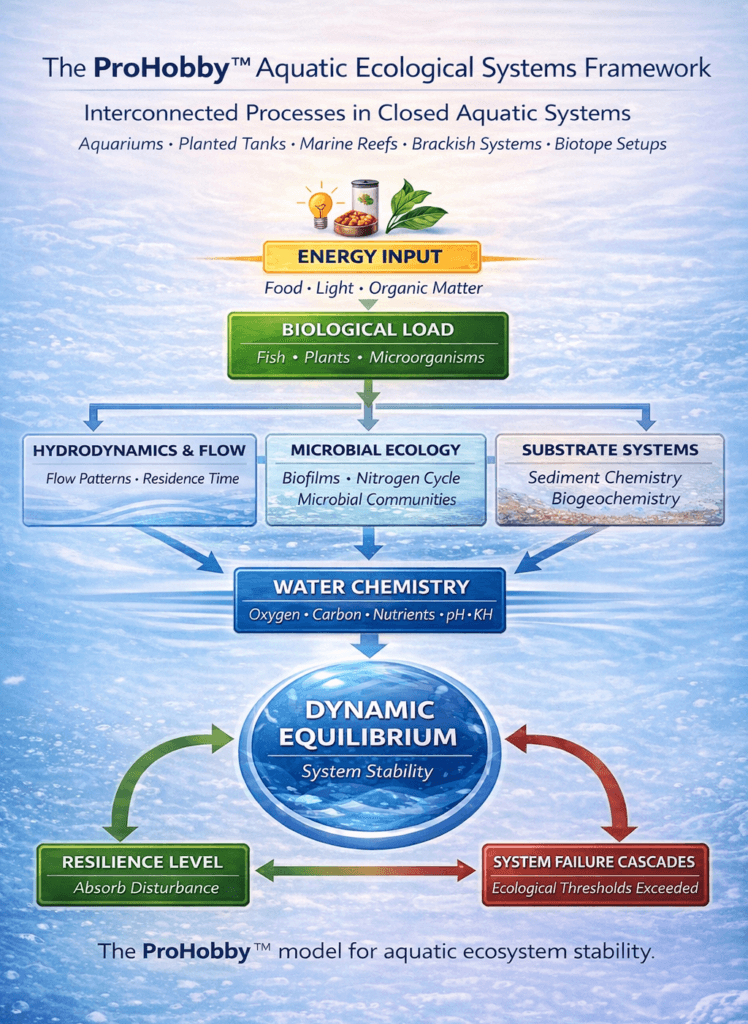
The ProHobby™ Aquatic Ecological Systems Framework summarizes the interacting processes that govern stability, resilience and failure in closed aquarium ecosystems. This perspective moves aquarium practice beyond fragmented advice and toward integrated ecosystem design. Instead of asking how to eliminate algae, cure disease or fix water chemistry, the more important question becomes:
What underlying ecological process produced this outcome?
By analyzing aquariums through the principles of systems ecology, ProHobby™ seeks to build aquariums that stabilize naturally, mature predictably and remain resilient over time.
Within this framework, successful aquariums are not engineered through constant intervention.
They emerge from ecological alignment.
The practical application of this framework — why specific aquarium failures follow predictable systemic patterns — is worked through in Why Aquariums Fail — A Systems-Level Diagnosis. For hobbyists experiencing recurring failure in their own tanks, My Aquarium Keeps Failing applies this framework to the most common repeating failure patterns.
Core Concepts in Aquarium Systems Ecology
These definitions summarize the key ecological principles discussed throughout this monograph and across the ProHobby™ knowledge library.
Why This Matters
Aquariums succeed when these processes operate together as an integrated ecological system.
When they are misunderstood or disrupted, instability follows.
Understanding aquarium ecosystems through this systems-based lens allows aquarists to move beyond reactive problem-solving and toward long-term ecological stability.
Frequently Asked Questions
Key questions on aquarium ecosystem stability, collapse dynamics, threshold failures, feedback loops, and resilience — from beginner hobbyists to advanced systems thinkers.
Why did my aquarium crash suddenly when it had been stable for months?
This is the most common and most misunderstood failure pattern in aquarium keeping — the sudden collapse of a system that appeared healthy. The answer lies in the distinction between apparent stability and genuine ecological resilience. Aquarium ecosystems do not fail linearly. They accumulate stress — rising dissolved organics, declining biofilm diversity, progressive oxygen depletion in substrate layers, increasing fish stress — while appearing externally normal: parameters within range, fish swimming and eating. The system is functioning but operating on progressively narrowing margins. When a threshold is finally crossed — a hot week reducing dissolved oxygen, a missed water change tipping organic load, a power cut damaging the biofilm — the apparent stability evaporates suddenly because there was no genuine resilience buffering the system against that final perturbation. The crash was not sudden; only its expression was.
What is the difference between a cycled aquarium and a mature one?
A cycled aquarium has established a minimum viable nitrifying biofilm — sufficient ammonia-oxidising and nitrite-oxidising communities to process the waste of its current stocking. This typically takes 4–8 weeks and is confirmed by zero ammonia and nitrite readings. A mature aquarium has developed the full, diverse microbial ecosystem that provides genuine ecological stability: biofilm communities distributed through all media pores at multiple depths, a diverse protozoan community grazing and regulating bacterial populations, stable substrate biogeochemistry with established redox gradients, and the ecological memory that allows the system to absorb disruptions — a stocking change, a missed water change, a power cut — without cascading failure. This maturity develops over 6–18 months and cannot be accelerated by bacterial supplements. A 6-week-old cycled tank and a 2-year-old mature tank both test zero ammonia, but they have fundamentally different resilience to disruption.
Why do fish die in an established, cycled aquarium with apparently normal test results?
Standard test kits measure ammonia, nitrite, nitrate, and pH. They do not measure dissolved oxygen, dissolved organics, accumulated hormones and metabolites excreted by fish, biofilm health, substrate oxygen penetration, or any of the parameters that determine whether a mature ecosystem is genuinely functioning. A tank can read normal on every test kit parameter while simultaneously running at borderline dissolved oxygen, accumulating dissolved organics that suppress immune function, and hosting fish under chronic cortisol-mediated stress from a variety of unmeasured stressors. The deaths then appear inexplicable — parameters were fine — because the parameters tested are not the parameters that failed. This is why behavioural observation (feeding enthusiasm, schooling cohesion, colour intensity, surface activity) is a more sensitive diagnostic than test kit results for a system experiencing subclinical deterioration.
What is aquarium stability and why is it not the same as balanced parameters?
Parameters — ammonia, nitrite, nitrate, pH — describe the current chemical state of the water. Stability describes the capacity of the ecosystem to maintain acceptable conditions through time and under perturbation. A tank can have perfect parameters today that collapse in three days following a power cut, because parameter readings describe a snapshot while stability describes a dynamic property. True aquarium stability is an emergent property of a functioning microbial ecosystem — diverse, well-distributed biofilm communities, active substrate biogeochemistry, appropriate carrying capacity buffer, and adequate energy flow through the system. These properties cannot be directly tested with hobby test kits; they must be inferred from the system’s behaviour over time and under stress. The aquarium that recovers from a disruption with minimal parameter excursion is a stable system. The aquarium that collapses from the same disruption was only apparently stable.
What is carrying capacity in an aquarium and why does it matter for stability?
Carrying capacity is the maximum biological load — in terms of ammonia production, oxygen demand, and organic waste — that an aquarium’s ecosystem can sustainably process and remain stable. It is not a fixed number defined by tank volume; it is set by biological filtration capacity, dissolved oxygen availability, surface area of biofilm communities, and substrate biogeochemical function. Operating near carrying capacity means the system has minimal resilience buffer: any perturbation that increases load (a feeding event, a dead fish, a temperature spike increasing metabolism) or reduces processing capacity (a power cut, filter cleaning, temperature reducing bacterial efficiency) can push the system over its threshold. Operating at 60–70% of carrying capacity means the system has genuine headroom to absorb disruptions. The most stable aquariums are almost always understocked relative to their theoretical maximum.
Why does dissolved oxygen matter so much for aquarium stability?
Dissolved oxygen is the master variable in aquarium ecosystem stability because it is simultaneously required by fish for respiration, by aerobic nitrifying bacteria for ammonia processing, by biofilm communities for their full metabolic function, and by the substrate’s aerobic zone for preventing anaerobic processes that produce toxic byproducts. When dissolved oxygen falls — from warm temperatures reducing saturation, from power cuts stopping surface agitation, from nighttime plant respiration in planted tanks, from organic decomposition consuming oxygen faster than it can be replenished — every dependent process degrades simultaneously. Fish experience respiratory stress and immune suppression. Nitrifying bacteria reduce processing efficiency. Anaerobic zones expand in the substrate, potentially releasing hydrogen sulfide. The system approaches collapse along multiple pathways at once. Dissolved oxygen is not one variable among many; it is the variable that determines whether all other biological processes can function at all.
What is old tank syndrome and how does it develop?
Old tank syndrome is the progressive deterioration of water chemistry and ecosystem function that occurs when an aquarium is maintained without adequate water changes over extended periods. The mechanism: nutrients and dissolved organics accumulate continuously from fish waste, uneaten food, and biological processes. Without regular water changes to export these compounds, the water gradually acidifies (the KH buffer is consumed by the acid produced during nitrification), dissolved organic carbon rises (suppressing immune function and water clarity), and nitrate climbs without bound. The fish adapt to these deteriorating conditions gradually — their physiology compensates continuously. The danger emerges when a large water change is finally performed: the sudden return to normal parameters represents a chemical shock to fish adapted to highly acidic, high-DOC conditions. This is why the “aquarium that crashes after a water change” is almost always old tank syndrome — not a water change problem but a chronic neglect problem with an acute trigger.
What causes feedback loops in aquarium collapse and why do they accelerate?
In a stable aquarium, biological processes are mutually supporting: fish produce waste, bacteria process it, dissolved oxygen sustains both, plants absorb excess nutrients. When one component fails, feedback loops can reverse this mutual support into mutual destruction. The most common cascade begins with dissolved oxygen depletion — typically from a power cut, warm temperature, or organic overload. As oxygen falls, nitrifying bacteria reduce activity, allowing ammonia to accumulate. Elevated ammonia suppresses fish immune function, elevating cortisol, which further increases metabolic oxygen demand. Stressed fish release more waste, increasing the ammonia load the impaired biofilm must process. Declining biofilm function allows organic accumulation to accelerate, consuming more oxygen. Each component’s failure worsens every other component’s stress simultaneously. This is why aquarium collapses accelerate exponentially once they begin — the same positive feedback loop that creates self-reinforcing stability when healthy creates self-reinforcing collapse when a threshold is crossed.
Why does algae suddenly take over an established aquarium?
Algal dominance in a previously stable aquarium is typically a threshold response to a nutrient or light imbalance that has been approaching a tipping point. In a functionally balanced tank, higher plants and beneficial biofilm communities hold competitive advantage over algae through faster nutrient uptake and more efficient light use. This competitive balance depends on the plant community being healthy, the biofilm being functional, and nutrients being within the range plants can process. When a disruption — increased light, reduced plant health from temperature stress, elevated nutrients from overfeeding or reduced water changes, biofilm damage reducing nutrient processing — tips the balance, algae can rapidly exploit the newly available resources. Because algae reproduce far faster than higher plants can respond, the transition from “balanced” to “algae dominated” can appear sudden despite having been building for weeks.
Why do ammonia spikes happen in established tanks with no apparent cause?
Ammonia in an established tank where nothing obvious has changed almost always traces to one of three causes. First, a dead fish decomposing unnoticed — even a small fish produces a significant acute ammonia load. Always check for missing individuals. Second, recent filter disruption — filter media cleaned in tap water, filter maintenance performed on the same day as a water change, or a power cut reducing biofilm oxygen supply — damaged the nitrifying community enough to impair processing without eliminating it entirely. Third, a sudden load increase — an overfeeding event, the addition of new fish, or a temperature rise increasing metabolic output — has temporarily exceeded the biofilm’s processing capacity. In each case the cause is identifiable from the preceding 72 hours of events if reviewed carefully.
What is the threshold concept in aquarium ecology and why does it matter?
Natural and captive ecosystems do not degrade gradually to failure — they often maintain apparent stability until a threshold is crossed, after which collapse is rapid and the degraded state becomes self-sustaining. This threshold behaviour, described in ecology as a regime shift, occurs because the processes that maintain stability also resist change: a healthy biofilm processes ammonia efficiently, maintaining the conditions that allow it to remain healthy. When degraded past a threshold, the reverse applies — reduced biofilm function allows conditions to deteriorate further, which further impairs biofilm function. The threshold means that: (a) apparent stability does not imply proximity to resilience, and (b) early intervention matters enormously. An aquarium approaching a threshold can often be stabilised with minor intervention; the same aquarium past the threshold requires complete recovery management. Recognising pre-threshold warning signs — progressive behaviour changes, declining appetite, minor parameter creep — is more valuable than responding to post-collapse symptoms.
How does biofilm function determine aquarium stability?
The biofilm community — the diverse microbial assemblage on filter media, substrate surfaces, hardscape, and equipment — is the biological infrastructure of a functioning aquarium. It performs nitrification (ammonia to nitrite to nitrate), partial denitrification in anaerobic microhabitats, decomposition of dissolved organics, and regulation of its own community structure through grazing protozoa. Its health determines not just the efficiency of ammonia processing but the entire chemical environment of the aquarium. A thick, mature, diverse biofilm processes disruptions — brief oxygen depletion, minor overloads, small temperature fluctuations — without failing. A thin, recently established, or chemically disrupted biofilm is vulnerable to the same events. This is why a 6-week-old cycled tank and a 2-year-old established tank respond so differently to identical stressors.
How does fish stress affect aquarium stability?
Chronic fish stress creates a systemic biological load that destabilises aquarium ecosystems through several simultaneous pathways. Stressed fish — from inappropriate water chemistry, territorial conflict, overcrowding, or temperature extremes — have elevated cortisol continuously. Cortisol suppresses immune function, increasing susceptibility to opportunistic infections that subsequently add pathogen and organic load to the system. Stressed fish excrete more cortisol and stress hormones into the water, which at elevated concentrations suppress the immune function of other fish — a documented phenomenon in aquaculture. Stressed fish produce more ammonia per unit of food consumed. They eat less efficiently, leaving more uneaten food. Each effect directly increases the biological load on the filtration system while reducing the ecosystem’s own resilience. Aquarium stability is inseparable from fish welfare — a chronically stressed fish population undermines the ecosystem that is simultaneously supposed to support their health.
What is ecological memory in an aquarium and why does it determine recovery speed?
Ecological memory is the capacity of an ecosystem’s microbial and biological communities to restore function after a disturbance, based on the diversity and redundancy maintained before the disturbance occurred. An aquarium with high ecological memory — a mature, diverse biofilm with multiple functional groups, varied substrate biology, established protozoan communities — recovers from disruptions relatively quickly because the functional capacity exists to rebuild from the surviving community. An aquarium with low ecological memory — recently cycled, chemically disrupted, or repeatedly disturbed — recovers slowly because the organisms needed to restore each function must first re-establish from minimal populations. This is why aggressive cleaning routines, frequent use of broad-spectrum medications in the display tank, and repeated filter disruption progressively reduce an aquarium’s recovery capacity, making each subsequent disruption more damaging than the last.
How do power cuts cause aquarium crashes in Indian conditions?
Power cuts remove filtration, surface agitation, and sometimes heating simultaneously. The consequences develop on two timescales. Immediately: dissolved oxygen depletes as fish and bacteria consume it without surface replenishment. In a heavily stocked tank at 30–32°C in Indian summer, critical oxygen levels can be reached in 20–45 minutes. On the timescale of days: the aerobic nitrifying biofilm, starved of oxygen during the cut, suffers community die-off proportional to the cut’s duration. When power restores, the filter runs again — but with a damaged biological community that now has insufficient capacity for the full ammonia load the fish produce. Ammonia accumulates 24–72 hours after the cut, producing apparent “sudden” deaths days after the event. A battery-powered air pump running through the cut prevents the acute oxygen crisis; minimal feeding for 48 hours after a prolonged cut prevents the delayed ammonia event while the biofilm recovers.
How long does an aquarium take to fully mature beyond basic cycling?
Basic cycling — establishing sufficient nitrifying bacteria to test zero ammonia and nitrite — takes 4–8 weeks. Full ecological maturity is a fundamentally different milestone and takes considerably longer: 12–18 months in most aquariums, sometimes 24 months in complex systems. Maturity involves the development of diverse protozoan communities that graze and regulate biofilm populations, stable substrate redox chemistry, established denitrification in anaerobic zones, diverse heterotrophic bacterial communities processing dissolved organics beyond the nitrification chain, and the ecological resilience that comes from functional redundancy across all these communities. A mature aquarium demonstrates this maturity primarily through behaviour under stress — it absorbs disruptions that would destabilise a recently cycled tank without significant parameter excursion. There is no test for maturity; it is demonstrated, not measured.
Why does my aquarium crash repeatedly every few months?
Recurring cyclical collapse in an established tank almost always indicates one of three underlying issues that are not being addressed between crashes. First, chronic overstocking — the system repeatedly approaches carrying capacity and collapses when a secondary stressor pushes it over the threshold; it recovers partially, approaches the threshold again, and collapses again. Second, a recurring management practice that disrupts the biofilm on a regular cycle — cleaning filter media in tap water monthly, for example, partially resets the biological filter each time and the tank collapses before it can fully recover. Third, a seasonal environmental factor — Indian summer heat progressively reducing oxygen and stressing the biofilm over weeks until collapse, followed by monsoon recovery, followed by another summer collapse. Identifying the recurring pattern — its timing, its trigger event, and what happens in the weeks before each crash — reveals which cause applies.
What is the role of substrate biogeochemistry in aquarium stability?
The substrate is not passive decoration — it is a biogeochemically active zone that significantly influences aquarium water chemistry and ecosystem stability. The upper aerobic layer supports nitrification and aerobic decomposition. Below a threshold depth, oxygen is depleted and anaerobic processes operate: denitrification (converting nitrate to harmless nitrogen gas), sulfate reduction (producing hydrogen sulfide in oxygen-free conditions), and methanogenesis. A healthy substrate with appropriate depth, adequate oxygen penetration in the aerobic zone, and a stable redox gradient contributes to nitrate removal, organic processing, and biofilm diversity. A neglected substrate — with deep sludge accumulations, collapsed redox gradients, and extensive anoxic zones — can release hydrogen sulfide and phosphate into the water column during disturbance, producing sudden acute chemistry events. Regular gentle substrate maintenance preserves the biogeochemical function without disrupting the established communities.
What does recovering an aquarium after a crash actually require?
Recovery from aquarium collapse is a staged process, not a single intervention. The immediate priority is fish welfare: emergency water changes to reduce acute ammonia, maximum surface agitation for dissolved oxygen, removal of any deceased animals, and cessation of feeding. The medium-term priority is biofilm recovery: the nitrifying community must re-establish to process the ongoing fish waste, which takes days to weeks depending on how severely it was damaged. During this period, daily testing and conservative feeding keep ammonia from exceeding the recovering biofilm’s capacity. The long-term priority is identifying and correcting the root cause — not just restoring parameters to normal but understanding what drove the threshold crossing, whether that was overstocking, chronic organic accumulation, a management disruption pattern, or an environmental factor. Recovery without addressing the root cause produces the next collapse.
Can a clear, clean-looking aquarium be an unstable one?
Yes, absolutely — and this is one of the most dangerous misconceptions in aquarium keeping. Water clarity reflects the absence of suspended particles and certain compounds that scatter light. It has almost no relationship to the chemical and biological health of the ecosystem. A tank can run crystal clear while accumulating dissolved organics, declining biofilm function, rising dissolved organic carbon, chronic low-grade ammonia from chloramine-incompetent dechlorination, or progressive substrate anoxia. Conversely, a biologically healthy tank with a functioning microbial community may have a slight haziness from normal microbial populations in the water column. Stability is a biological property of the ecosystem; clarity is a physical property of the water. Evaluating aquarium health by appearance is the equivalent of evaluating a person’s cardiovascular health by how they look standing still.
This article forms part of the ProHobby™ ecological systems reference Knowledge Library. Related foundational works include:
- The Science of Hybrid Aquarium Ecosystems
- Microbial Succession in Aquariums
- Carrying Capacity in Aquariums
- Residence Time in Aquariums
- Flow & Energy Geometry in Closed Aquatic Systems
- Aquarium Substrate Biogeochemistry
- Biofilms — The Invisible Engine of Every Aquarium
- The Role of Time in Aquariums
- Aquarium Stability Is Not Balance — Understanding Dynamic Equilibrium