
By ProHobby™ | Ecological Systems Authority
Betta fish are the most misunderstood fish in the hobby. They survive in cups at the pet shop, in unfiltered bowls on office desks, in tiny tanks with no heater — and because they survive, hobbyists assume these conditions are adequate. They are not. A betta surviving in poor conditions is a betta under constant physiological stress, with chronically suppressed immunity, shortened lifespan, and recurring fin rot. The same fish in correct conditions — a filtered, heated tank with stable water chemistry and plants — lives 3–5 years, develops full fin expression, and rarely shows disease.
Natural Habitat and What It Means for Care
Betta splendens originates from shallow, warm, slow-moving waters across Thailand, Cambodia, and the Mekong basin — rice paddies, ponds, and drainage ditches with dense vegetation. The labyrinth organ — a specialised respiratory structure above the gills — allows bettas to breathe atmospheric air directly. This is an adaptation for surviving temporary oxygen depletion, not a design specification for permanent life in a bowl. A betta can breathe air when the water runs low on oxygen; this does not mean it thrives when oxygen is low.
Tank Requirements
Minimum tank size: 20 litres for a single male. Smaller volumes experience rapid temperature swings, ammonia accumulation, and parameter instability.
Filtration: Required, with low flow. Bettas evolved in slow-moving water and their large fins are not adapted for navigating strong currents. Use a sponge filter or baffle the filter output. The nitrogen cycle that makes filtration work is in How to Cycle a Fish Tank.
Heating: Essential — bettas require 26–30°C. Below 24°C, immune function falls. Aquarium Water Temperature in Indian Summer covers summer heat management.
Cover: Bettas jump. Every betta tank requires a fully sealed lid.
Water Parameters
| Parameter | Target Range |
|---|---|
| Temperature | 26–30°C |
| pH | 6.5–7.5 |
| KH | 2–5 dKH |
| GH | 3–8 dGH |
| Ammonia | 0 ppm |
| Nitrite | 0 ppm |
| Nitrate | Below 20 ppm |
Delhi NCR tap water at pH 7.8–8.2 and GH 10–16 dGH sits at the harder, more alkaline edge of betta tolerance. Partial RO blending (50%) improves long-term outcomes, particularly for fancy fin varieties. Should You Use RO Water in Delhi NCR Aquariums?
Plants for a Betta Tank
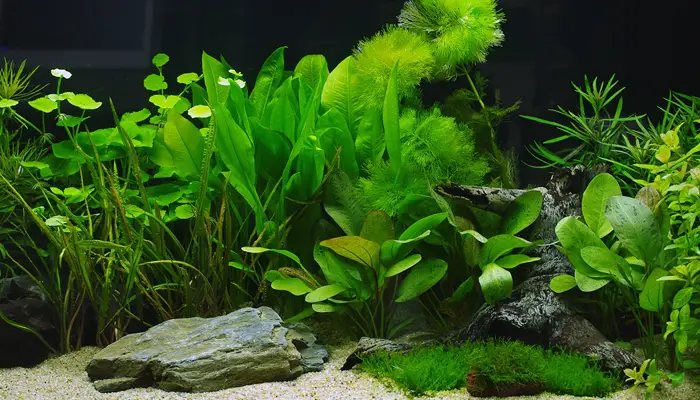
Bettas are among the most plant-compatible fish in the hobby — their native habitat is densely vegetated and they actively use plant cover for resting and territory definition.
Best plants for betta tanks:
- Java fern (Microsorum pteropus): Attaches to driftwood and rock, requires no substrate, tolerates low to medium light. The most beginner-proof betta plant.
- Anubias: Slow-growing, extremely hardy, attaches to hardscape. Bettas commonly rest on broad Anubias leaves.
- Java moss: Floating or attached, provides cover and, in breeding tanks, spawning substrate for bubble nests.
- Floating plants (water lettuce, frogbit, dwarf water lily): Surface cover is critical for bettas — they rest at the surface, build bubble nests at the surface, and feel exposed and stressed in tanks without surface structure. Floating plants replicate the natural rice paddy surface canopy.
- Hornwort: Fast-growing, excellent nitrate absorber, can be floated or rooted.
Plants to avoid: Plastic plants with sharp edges damage betta fins. Any plant requiring high light and CO₂ without those being provided.
Plants improve betta keeping in two concrete ways: they absorb ammonia and nitrate between water changes, improving water quality; and they provide the visual cover and surface structure that reduce chronic stress in a species evolved in dense vegetation.
Feeding
Bettas are obligate carnivores. The most common dietary error is feeding predominantly flake food designed for omnivorous community fish.
Correct diet: High-protein betta-specific pellets as the primary food, supplemented with frozen or live bloodworm, daphnia, and brine shrimp 2–3 times weekly.
Feeding frequency: Once or twice daily, only what the fish consumes in 2–3 minutes. Fast one day per week.
Daphnia: Acts as a natural laxative and is important for preventing constipation-related swim bladder dysfunction. Fish Swimming Upside Down — Swim Bladder Disorders.
Betta not eating: Common causes: temperature below 24°C (check first), water quality failure (test ammonia and nitrite), stress from aggression or a reflective surface, illness. A betta that suddenly stops eating after eating normally is displaying the first visible disease symptom — test water immediately.
Male vs Female Betta — How to Tell Them Apart
| Feature | Male | Female |
|---|---|---|
| Fins | Long, flowing, dramatic | Short, rounded |
| Body | Slimmer | Rounder, fuller abdomen |
| Colours | Vivid, intensely coloured | Duller, less saturated |
| Ovipositor | Absent | White spot between ventral fins |
| Behaviour | Aggressive toward males | Can be kept in groups |
Female bettas are frequently sold without being clearly labelled as female. They make excellent alternatives for hobbyists who want a betta in a community tank — females are typically less aggressive and can coexist with a wider range of species.
Bubble Nests — What They Mean
A bubble nest is a cluster of saliva-coated air bubbles built at the water surface by male bettas. In the wild, the male builds the nest before breeding, then guards eggs and fry within it.
In captivity, a male betta building a bubble nest is displaying species-appropriate behaviour that indicates a comfortable, well-conditioned fish. It does not mean breeding is imminent (no female required) and does not require any intervention. Floating plants give the nest structural support.
A betta that previously built bubble nests and stops is sometimes an early indicator of declining health or reduced comfort — though not diagnostic alone.
Betta Flaring
Bettas flare their gill covers (opercula) in display — making themselves appear larger to rivals and threats. This is normal species behaviour.
In a single-betta tank, flaring is often triggered by the fish’s own reflection in glass. Brief flaring is fine; a betta flaring constantly at its reflection for hours daily is under sustained territorial stress. Reduce reflective surfaces (background on the tank exterior) or reposition the tank.
Is My Betta Dead or Sleeping?
Bettas sleep. They do not close their eyes (fish have no eyelids) but they become still, often resting on a broad leaf, on the substrate, or at the surface. A betta resting motionless but positioned naturally — right-side up, fins slightly relaxed — is sleeping.
Signs that indicate illness rather than sleep: listing to one side, floating at the surface unable to dive, lying on the substrate with fins clamped, pale colouration, visible lesions. A betta that does not respond to gentle surface disturbance or feeding is showing an abnormal sign worth investigating.
Betta Fish Varieties
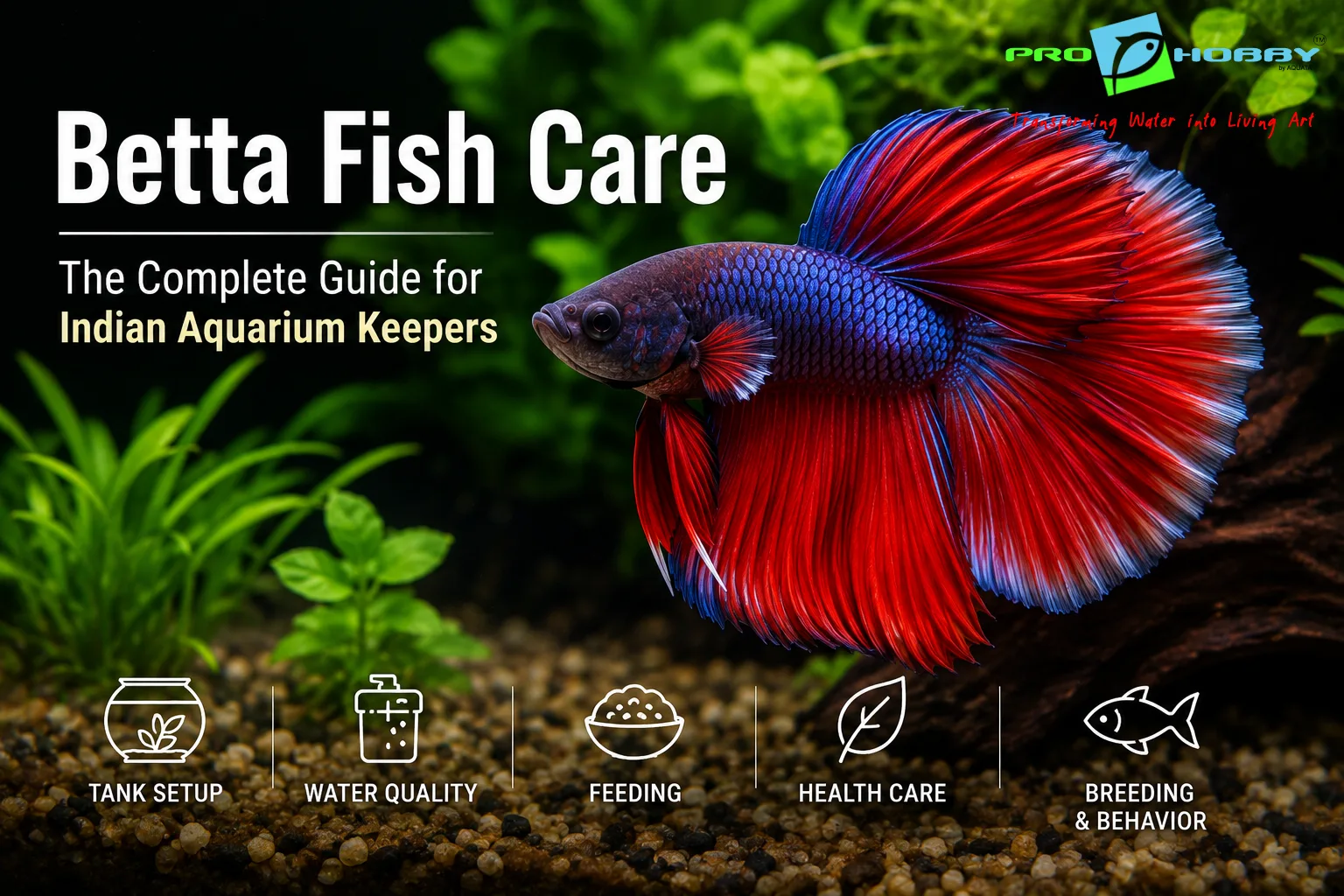
Veil tail: Most common, long flowing tail, generally hardy. Halfmoon: 180-degree tail spread. Large fin mass increases fin rot susceptibility. Crowntail: Elongated, spiky fin rays prone to rot at tips. Plakat: Short-finned, closest to wild type, most active and disease-resistant variety.
Price in India: Common veil tails ₹50–150; imported halfmoon/show quality ₹500–several thousand rupees.
Compatibility
Male bettas cannot coexist with other males. With other species: peaceful bottom dwellers (small Corydoras) and non-fin-nipping mid-water fish generally coexist. Avoid guppies with large tails, fin-nippers (tiger barbs), and bright-coloured species that trigger territorial response.
Colour Change — What It Means
Fading/pallor: Stress (wrong parameters, aggression, reflections), illness, or age. Test water first. Darkening: Stress response — bettas darken when stressed or showing dominance. Horizontal stress bars: Dark horizontal lines across the body indicating acute stress or fear — distinct from vertical breeding stripes in females. Vertical stripes in females: Normal breeding condition stripes indicating a female is ready to spawn.
Sudden colour change in a previously vibrant betta is the first reason to test water parameters and observe behaviour carefully.
Common Health Issues
Fin rot: Almost always water quality failure. Fin Rot — Complete Treatment Guide. Ich: White spots, triggered by temperature drops. Ich — White Spot Disease Treatment. Velvet: Fine gold dust — very fast and dangerous in bettas. Treat immediately. Velvet Disease. Swim bladder disorder: Floating or sinking, often dietary. Fish Swimming Upside Down. Popeye: Swollen eye from bacterial infection. Popeye — Treatment Guide.
All treatment through a hospital tank.
Betta Fish Lifespan
2–5 years. Bowl-kept bettas: 1–2 years from chronic stress. Tank-kept bettas: 3–5 years regularly. The difference is entirely conditions, not genetics.
India-Specific Considerations
Delhi NCR summer ambient temperatures frequently exceed 32–35°C. A betta in a small bowl in a non-air-conditioned room during summer experiences water temperatures above 34°C — above the safe maximum. Monitor tank temperature; consider repositioning to a cooler room in summer.
Frequently Asked Questions
Can bettas live in a bowl without a filter? They survive — not thrive. Without filtration, ammonia accumulates. Without heating, temperature fluctuates. A 20-litre tank with a sponge filter, heater, and plants produces a fish that lives 3–5 years with full fin expression.
Why does my betta build bubble nests? Normal, healthy behaviour. The male is displaying breeding readiness and comfort. It does not require intervention or a female. Floating plants give the nest structural support.
Why is my betta not eating? Check temperature first — below 24°C suppresses appetite significantly. Then test ammonia and nitrite. If parameters are correct, observe for illness signs (clamped fins, lethargy, colour change). A healthy betta refusing food for more than 3 days warrants a water test and close observation.
Is my betta dead or sleeping? Bettas sleep motionless on leaves, substrate, or at the surface. A sleeping betta is right-side up with slightly relaxed fins. Signs of illness: listing sideways, unable to swim normally, no response to food or gentle surface disturbance, pale or discoloured.
What is betta fish lifespan? 3–5 years in correct conditions. Bowl-kept bettas typically live 1–2 years from chronic stress.
Can I keep a female betta with my male? Only for planned breeding in a properly set-up breeding tank, and only for the duration of spawning — remove the female immediately after the male has collected the eggs or she will be killed. For a community display tank, keep either a single male or a sorority of 5+ females.