
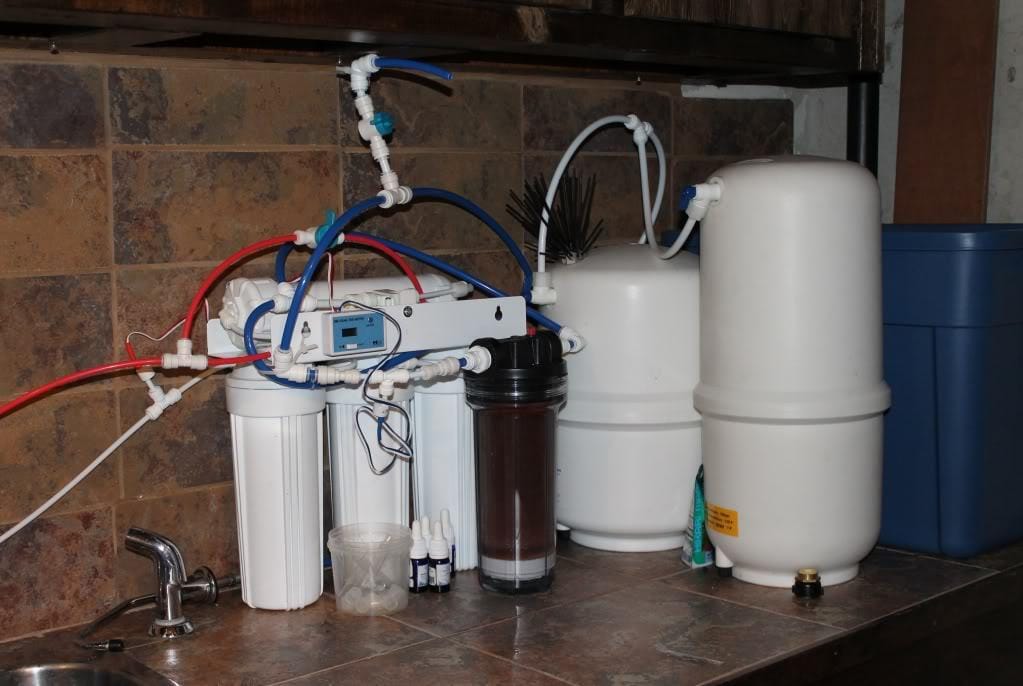
RO water in Delhi NCR aquariums is not a default requirement. It is a control tool used only when tap water prevents stable system performance. The decision is not based on preference, but on whether existing water chemistry allows the aquarium to function without instability. This applies across Delhi NCR including Gurgaon, Noida, Faridabad, and Ghaziabad where water chemistry varies by supply source and groundwater influence.
Use tap water when your system remains stable with your current plants and setup. Use RO water only when hardness, buffering, or mineral load prevents stability or restricts your intended plant selection. Use a blended approach when partial correction achieves stability without sacrificing consistency. To know more about water quality issues read Hard Water Aquariums in Delhi NCR — Complete Strategy Guide.
ProHobby RO Control Model
| Water Approach | Stability | Control | Outcome |
|---|---|---|---|
| Tap Water | High | Low | Stable but limited |
| RO Water | Low | High | Flexible but unstable if inconsistent |
| Blended Water | Medium–High | Medium–High | Balanced system |
Tap water provides consistency because its chemistry remains unchanged. RO water removes all minerals, allowing full control but introducing dependency on precise mixing. Blended water reduces excess minerals while retaining baseline stability.
Decision Conditions
| Condition | Use Tap | Use RO | Use Blend |
|---|---|---|---|
| TDS ≤ 300 ppm | Yes | No | No |
| TDS 300–600 ppm | Yes (with limits) | No | Yes |
| TDS ≥ 600 ppm | No | Yes | Yes |
| KH ≥ 8 dKH | Limited CO₂ systems | Yes | Yes |
| Sensitive plants required | No | Yes | Yes |
| Low-tech setup | Yes | No | No |
The decision depends on whether the current water supports the system you are trying to build. If it does, no correction is required. If it restricts plant growth or system stability, correction becomes necessary. This RO water decision applies for aquariums in Gurgaon and Noida too.
System Logic
If your aquarium is stable, RO is not required. If plants fail despite stable routine and lighting, water chemistry is limiting growth and RO becomes necessary. If CO₂ injection fails to produce consistent results, buffering is too high and RO blending is required. If algae persists despite balanced inputs, instability caused by mineral load or fluctuation must be corrected.
If you introduce RO, consistency becomes the primary requirement. Any variation in mixing ratio creates instability that is worse than the original condition.
RO Blending Framework
| Goal | Tap : RO | Result |
|---|---|---|
| Slight correction | 75 : 25 | Reduced hardness |
| Balanced system | 50 : 50 | Controlled stability |
| High control | 25 : 75 | Low mineral environment |
| Full reset | 0 : 100 | Complete control |
Blending is effective only when ratios remain constant across all water changes.
Stability vs Control
Tap water systems remain stable because chemistry does not change between water changes. RO systems provide control but require consistent remineralization. Instability occurs when control is introduced without consistency.
The most stable systems in Delhi NCR are not the most controlled, but the most consistent.
RO Misuse Pattern
RO creates problems when used inconsistently. Changing mixing ratios between water changes alters TDS, GH, and KH, leading to plant stress and algae growth. Sudden reduction in TDS causes osmotic shock. Incorrect remineralization results in nutrient imbalance. Systems fail not because of RO, but because of inconsistent application.
When NOT to Use RO
RO should not be used when the aquarium is already stable. It should not be used for hardy plants that tolerate existing conditions. It should not be used without the ability to maintain consistent mixing ratios. It should not be used as a solution to unrelated problems such as overfeeding, poor lighting balance, or weak filtration.
When RO Becomes Necessary
RO becomes necessary when mineral concentration prevents plant growth, when buffering prevents effective CO₂ use, or when the intended aquarium design requires conditions not achievable with tap water alone.
Frequently Asked Questions
Do I need RO water in Delhi aquariums?
Only when water chemistry limits stability or plant compatibility.
Can I mix RO and tap water?
Yes, blending provides balance between control and stability.
Does RO need differ across Gurgaon, Noida, and other NCR cities?
Yes, water chemistry varies across Delhi, Gurgaon, Noida, Faridabad, and Ghaziabad depending on supply and groundwater mix, which changes TDS, GH, and KH and therefore the need for RO.
What happens if I use only RO water?
It requires remineralization to avoid deficiencies.
Does RO improve plant growth?
Only when existing water conditions are limiting growth.
Is RO required for CO₂ systems?
Only when KH prevents effective CO₂ use.
Can RO reduce algae?
Indirectly, by stabilizing water conditions.
Can I switch between RO and tap water?
No, inconsistency leads to instability.
How do I choose the right ratio?
By measuring TDS, GH, and KH after mixing and keeping it constant.
Is RO safe for fish?
Yes, with proper remineralization.
Is RO better than tap water?
No, it is only useful when tap water limits system performance.
Closing Principle
RO water is a tool for control, not a requirement for success. Stability in Delhi NCR aquariums is achieved by matching system design to water conditions and maintaining consistency in every input.