
By ProHobby™ | Ecological Systems Authority
Fin rot is the most consistently mismanaged disease in the aquarium hobby — not because it is difficult to treat, but because it is almost never the primary problem. Fin rot is a symptom. The actual problem is water quality, physical damage, crowding, or immune suppression that has allowed opportunistic bacteria to attack fin tissue. Treating fin rot with antibiotics while leaving the underlying cause unchanged produces temporary improvement followed by recurrence. The fins recover; the cause remains; fin rot returns within weeks.
This guide covers fin rot properly: the bacterial and fungal forms and how to distinguish them, every cause and how to identify which is operating in your tank, the treatment approach for each situation, and the critical difference between fin rot that requires medication and fin rot that water quality improvement resolves on its own.
Table of Contents
- What Fin Rot Is — Bacterial vs Fungal
- The Root Cause Framework — Why Fin Rot Is Always Secondary
- Recognising Fin Rot — Visual Diagnosis
- Identifying the Cause in Your Tank
- Treatment — Water Quality First
- When Medication Is Necessary
- Medication Options — Honestly Assessed
- Fin Regeneration — What to Expect
- Fin Rot That Keeps Coming Back
- Species Vulnerability
- Frequently Asked Questions
1. What Fin Rot Is — Bacterial vs Fungal
Bacterial fin rot — the most common form — is caused primarily by gram-negative opportunistic bacteria: Pseudomonas fluorescens, Aeromonas hydrophila, Flavobacterium columnare, and related species. These bacteria are present in every established aquarium at all times, held at non-pathogenic levels by fish immune function and the competitive microbial ecology of a healthy biofilm. They establish pathogenic infection when immune function falls below the threshold required to suppress them. The same bacteria cause popeye when they establish at the eye, and contribute to dropsy when the infection becomes systemic — all three are expressions of the same opportunistic bacterial dynamic at different anatomical sites and severity levels. The immunity mechanism that allows them to establish is in The Science of Fish Stress.
Fungal fin rot — less common, frequently misdiagnosed — is typically caused by Saprolegnia or Achlya species. Fungal infections are almost always secondary to physical damage or existing bacterial infection. The fungal hyphae (visible as cottony white strands) colonise damaged tissue. True primary fungal fin rot is rare; in most cases, apparent fungal fin rot is either Columnaris (a bacterial disease that produces a superficially similar cottony presentation) or a secondary fungal infection at a wound site that already had bacterial involvement.
The distinction matters because bacterial and fungal fin rot require different treatments — antifungals are ineffective against bacteria and most antibacterials have no antifungal activity. Visual differentiation is covered in Section 3.
2. The Root Cause Framework — Why Fin Rot Is Always Secondary
Fin rot bacteria are opportunistic. They are not introduced by new fish or plants. They are already in the tank. The question is never “where did the fin rot bacteria come from?” — it is “what changed that allowed them to establish?”
Primary causes that enable fin rot, in order of frequency:
Poor water quality — the most common cause. Elevated ammonia and nitrite directly damage gill and skin tissue, creating bacterial entry points. Elevated nitrate suppresses immune function chronically. Unstable pH creates physiological stress. Any water parameter consistently outside acceptable ranges creates the immune suppression that allows fin rot bacteria to establish. Test parameters before treating fin rot — if any are outside range, correct the water before or instead of medicating. The Complete Water Chemistry Guide covers every parameter interaction. The specific mechanisms by which ammonia and nitrite damage fish tissue are covered in their dedicated guides.
Physical damage — fin nipping, sharp décor, handling. A torn or damaged fin has no immune defence at the wound edge. Bacteria colonise the exposed tissue within hours. Fin damage from aggressive tankmates, sharp rock or décor, or net handling consistently precedes fin rot onset. Any tank experiencing fin rot should be inspected for fin-nipping species or sharp décor that could be causing the physical damage enabling bacterial entry.
Overcrowding — chronic stress and territorial aggression. Overcrowded fish have chronically elevated cortisol, suppressed immunity, and elevated ammonia exposure from the bioload. Overcrowding creates three concurrent fin rot risk factors simultaneously. The Aquarium Stocking Calculator establishes sustainable stocking limits before chronic stress produces disease outcomes.
Incorrect water temperature. Temperatures below a species’ optimal range suppress immune function and also slow the metabolic processes that repair damaged tissue. Cold-shock from a large water change with insufficiently temperature-matched water is a reliable fin rot trigger in susceptible fish.
Nutritional deficiency. Fish fed exclusively on single-food diets (flake-only, for example) may lack specific fatty acids, vitamins (particularly vitamin C), and minerals that support immune function and tissue integrity. Varied diet is a prevention factor, not a treatment.
3. Recognising Fin Rot — Visual Diagnosis
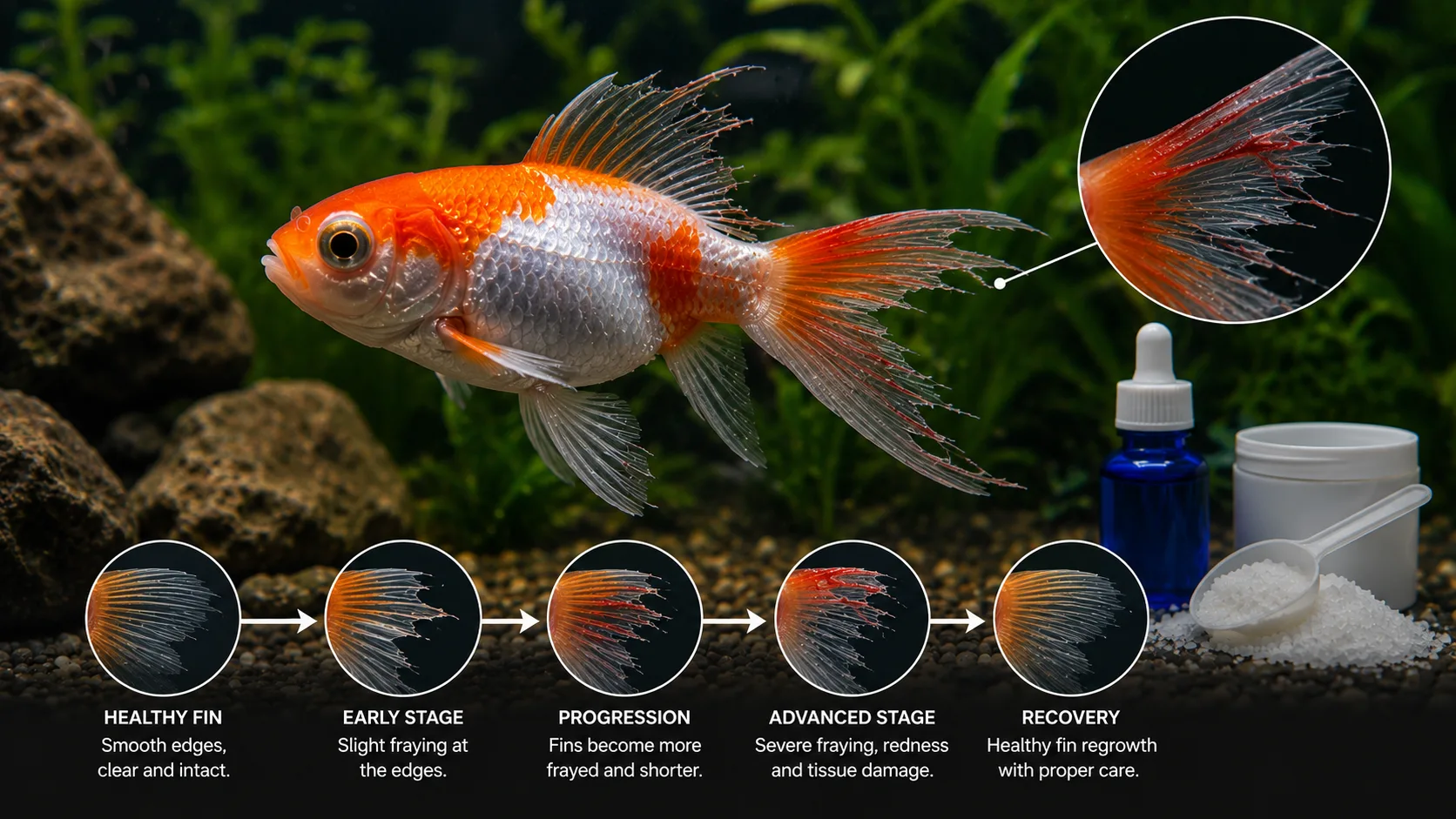
Early bacterial fin rot: The fin edge becomes slightly irregular or ragged where it was previously smooth. A whitish or slightly grey edging appears at the fin margin. No tissue loss yet — the fin simply looks less clean at the edges. This stage is reversible through water quality improvement alone in most cases without medication.
Progressive bacterial fin rot: The fin edge is visibly eroded. Tissue loss is measurable — fins that extended fully now have notched or missing sections. The affected edge may show redness (haemorrhage at the erosion margin) or a white-grey dead tissue band just behind the eroding edge. This stage typically requires medication in addition to water quality correction.
Severe bacterial fin rot: The entire fin has been eroded back toward the body. In extreme cases, infection reaches the fin rays and body tissue. Redness and haemorrhage may be visible at the body junction. This stage carries risk of body infection, septicaemia, and death.
Fungal fin rot (Saprolegnia/Achlya): Distinct cottony white or grey tufts extending from the fin edge or from wound sites. The growth has a three-dimensional, fuzzy texture unlike the flat deterioration of bacterial fin rot. Often appears at the site of a pre-existing wound or bacterial infection.
Columnaris (bacterial, often confused with fungal): White or yellowish-grey patches on the fin surface (not just at the edge), often appearing as a “saddle” across the dorsal fin. Can produce cottony-appearing lesions. Spreads rapidly. Requires a different antibiotic approach from other bacterial fin rot. See the dedicated Columnaris — Complete Treatment Guide for full coverage.
Key distinction: Bacterial fin rot erodes from the fin margin inward. Fungal infection produces cottony outgrowths. Body surface patches or patches not at fin margins suggest Columnaris rather than typical fin rot.
4. Identifying the Cause in Your Tank
Before treating, run through this diagnostic sequence:
Test water parameters. Ammonia, nitrite, nitrate, pH. Any abnormal reading is the most likely cause. Correct it before or alongside any medication. The Quarantine vs Medication diagnostic framework — which categorises fish health problems as true pathogenic disease, stress-induced immune collapse, or environmental failure — provides the complete triage logic.
Observe for fin-nipping. Watch the tank for 10–15 minutes during feeding, when fin-nipping behaviour is most active. Even occasional nipping by a single fish can produce persistent fin damage that enables ongoing bacterial colonisation.
Check décor for sharp edges. Run your finger along rocks, hardscape edges, and any décor with structural edges. Anything that snags fabric would damage fins.
Count fish and assess stocking. Is the tank at or above its biological carrying capacity? Chronic overcrowding produces chronic immune suppression that presents as recurring bacterial disease.
Assess the filter. When was it last cleaned, and how was it cleaned? A filter cleaned in tap water (killing the biofilm) followed by fin rot 48–72 hours later is not coincidence — it is ammonia from biofilm loss creating the tissue damage that enabled bacterial entry. How to Clean an Aquarium Filter Without Killing Bacteria prevents this common cascade.
5. Treatment — Water Quality First
For early-stage fin rot (ragged edges, no significant tissue loss, no redness), correcting water quality frequently resolves the condition without medication within 1–2 weeks.
The water quality correction protocol:
Perform a 25–30% water change with properly conditioned, temperature-matched water. Use the Water Change Calculator for accurate volumes and the Aquarium Volume Calculator to ensure correct dosing. See How to Do a Water Change for the complete protocol.
Increase water change frequency temporarily — 25% every 2–3 days rather than weekly — until the fin margin stabilises and begins recovering.
Remove aggressive tankmates if fin-nipping was observed, or add visual barriers to break sightlines in territorial setups.
Remove any sharp décor identified as a physical damage risk.
Ensure temperature is within the species’ optimal range and stable.
Observe for 1 week. If fin deterioration has stopped and early margin recovery is visible, continue water quality management. If deterioration continues despite correct parameters, proceed to medication.
6. When Medication Is Necessary
Medication is appropriate when:
- Fin rot has progressed to visible tissue loss with redness at the erosion margin
- Fin rot is not responding to water quality correction after 5–7 days
- Multiple fish are developing fin rot simultaneously (suggesting systemic water quality problem or a highly virulent bacterial strain)
- Infection appears to be spreading toward the body
- Fungal cottony growth is present
Medication is likely unnecessary when:
- Fin edges are ragged but no tissue has been lost and there is no redness
- A clear physical cause (fin-nipping, sharp décor) has been identified and addressed
- Water parameters were measurably poor and have now been corrected
- Only one fish is mildly affected in a tank with otherwise healthy fish
The complete decision framework for when environmental correction is sufficient versus when medication is genuinely required is in Quarantine vs Medication in Aquariums.
7. Medication Options — Honestly Assessed
Aquarium Salt Effective for mild bacterial fin rot as an adjunct to water quality improvement. Salt reduces osmotic stress on compromised tissue and has mild antibacterial properties at therapeutic concentrations (1–2g/L). Not appropriate for planted tanks above 1g/L. Not effective against fungal fin rot. Use in quarantine where possible — this avoids any disruption to the main tank’s biological filtration and allows treatment assessment without confounding variables.
Commercial Antibacterial Medications Products containing kanamycin, erythromycin, nitrofurazone, or similar antibacterials are effective against bacterial fin rot. Match the product to the type of bacteria suspected: gram-negative bacteria (Pseudomonas, Aeromonas) respond better to kanamycin or nitrofurazone than to erythromycin, which is more effective against gram-positives.
Always treat in a hospital tank where possible. Main tank antibiotic treatment kills biological filtration, causing ammonia accumulation that compounds the water quality problem already responsible for the fin rot. After any antibiotic course in the main tank, monitor ammonia and nitrite daily — see Ammonia in Aquariums and Aquarium Nitrite for the recovery monitoring protocol.
Remove activated carbon before treatment — carbon adsorbs antibacterials and renders them ineffective.
Antifungal Medications For confirmed fungal fin rot (cottony growths): products containing methylene blue, potassium permanganate, or dedicated antifungals. Do not use on bacterial fin rot — no benefit and adds unnecessary chemical stress. For Saprolegnia, a brief potassium permanganate bath (10mg/L for 10–30 minutes) is effective before returning the fish to clean, well-conditioned water.
8. Fin Regeneration — What to Expect
Fin tissue begins regenerating within days of the infection being controlled and water conditions being optimised. Regenerating fin tissue appears as transparent or pale new growth at the fin margin, extending from the base of the remaining fin tissue outward.
Timeline: Early-stage fin rot with minimal tissue loss can fully regenerate within 2–4 weeks of conditions being corrected. Significant tissue loss takes 4–12 weeks to fully regenerate depending on the species, age, and extent of damage. Very severe fin rot reaching the fin rays (the structural supports) may produce permanent deformity where regenerated tissue grows irregularly around damaged rays.
What to watch for: Regenerating fin tissue is thin and transparent at first. A fine white edge on regenerating tissue is new growth — not active infection. Redness, cottony growth, or progressive erosion of the regenerating tissue indicates ongoing infection requiring continued or different treatment.
9. Fin Rot That Keeps Coming Back
Recurring fin rot after apparently successful treatment is the clearest diagnostic signal that the root cause was never addressed. The medication resolved the active infection; the condition that enabled it remained.
The most common recurring causes:
Chronic low-level water quality issues that test “acceptable” but are consistently at the upper boundary of safe ranges — nitrate chronically at 40 ppm, pH fluctuating 0.3–0.5 units daily, ammonia detectable once or twice a week. Each of these individually is borderline; combined they produce persistent immune suppression.
An intermittent fin-nipper that is not caught during casual observation but is active at night or during periods when the tank is not watched.
A stocking level that is technically within limits for water processing but is producing chronic territorial stress in species with moderate aggression — a gourami in a tank that is too small for its territory, a cichlid with inadequate visual barriers, a betta whose tank has limited sight-breaks.
Recurrent filter maintenance errors that repeatedly damage biological filtration and produce ammonia spikes that damage fish tissue before recovery.
The Why Aquariums Fail — A Systems-Level Diagnosis article provides the complete framework for identifying why a tank produces recurring disease rather than resolving it.
10. Species Vulnerability
High vulnerability: Bettas (particularly long-finned varieties where fin mass is large relative to body), fancy goldfish, long-finned guppies and mollies, discus, freshwater angelfish. Species with extensive finnage have larger surface area for bacterial entry and are more visible targets for fin-nipping.
Lower vulnerability: Short-finned species, robust species like danios and barbs. Note that barbs are themselves common fin-nippers that create fin damage in tankmates.
Important: high vulnerability species kept in optimal water conditions rarely develop fin rot despite their anatomical susceptibility. The vulnerability is realised only when water quality fails or physical damage occurs.
Frequently Asked Questions
Is fin rot contagious? Not in the conventional sense. The bacteria causing fin rot are already present in every established tank. A fish developing fin rot does not “infect” other fish with a new pathogen. However, if the underlying cause is poor water quality, all fish in the tank are at elevated risk. If a particularly virulent bacterial strain is involved, fish with damaged fins or compromised immunity are vulnerable. Improve water quality for all fish rather than isolating the affected individual in most cases.
Can fin rot kill fish? Yes, in severe cases. Advanced fin rot that reaches the body and produces septicaemia (bacterial infection in the bloodstream) is fatal. Fin rot that reaches this stage is almost always preceded by a prolonged period of visible, treatable deterioration — early intervention prevents fatal progression.
How do I know if the fin rot is getting better or worse? Mark the extent of fin damage on a photo or sketch. Compare every 2–3 days. Improvement: the erosion has stopped and pale new tissue is appearing at the margin. Stable: no new erosion but no regeneration yet. Worsening: the erosion line has advanced further into the fin. If stable or worsening after 5–7 days of water quality correction, add medication.
My betta has fin rot — do I need medication? Not necessarily for mild cases. Bettas are highly susceptible to fin rot but also respond well to water quality correction. For bettas in cups or unfiltered bowls, moving to a cycled, filtered tank with stable water often resolves mild fin rot without medication. For active deterioration with redness, use a mild antibacterial treatment in a properly cycled quarantine setup.
Can fin rot spread to the body? Yes. Unchecked bacterial fin rot can progress from the fins to the body surface, producing body ulcers, and from there to internal organs through septicaemia. This progression is not inevitable — it represents advanced disease that has not been treated. Effective early treatment prevents body involvement.