
By ProHobby™ | Ecological Systems Authority
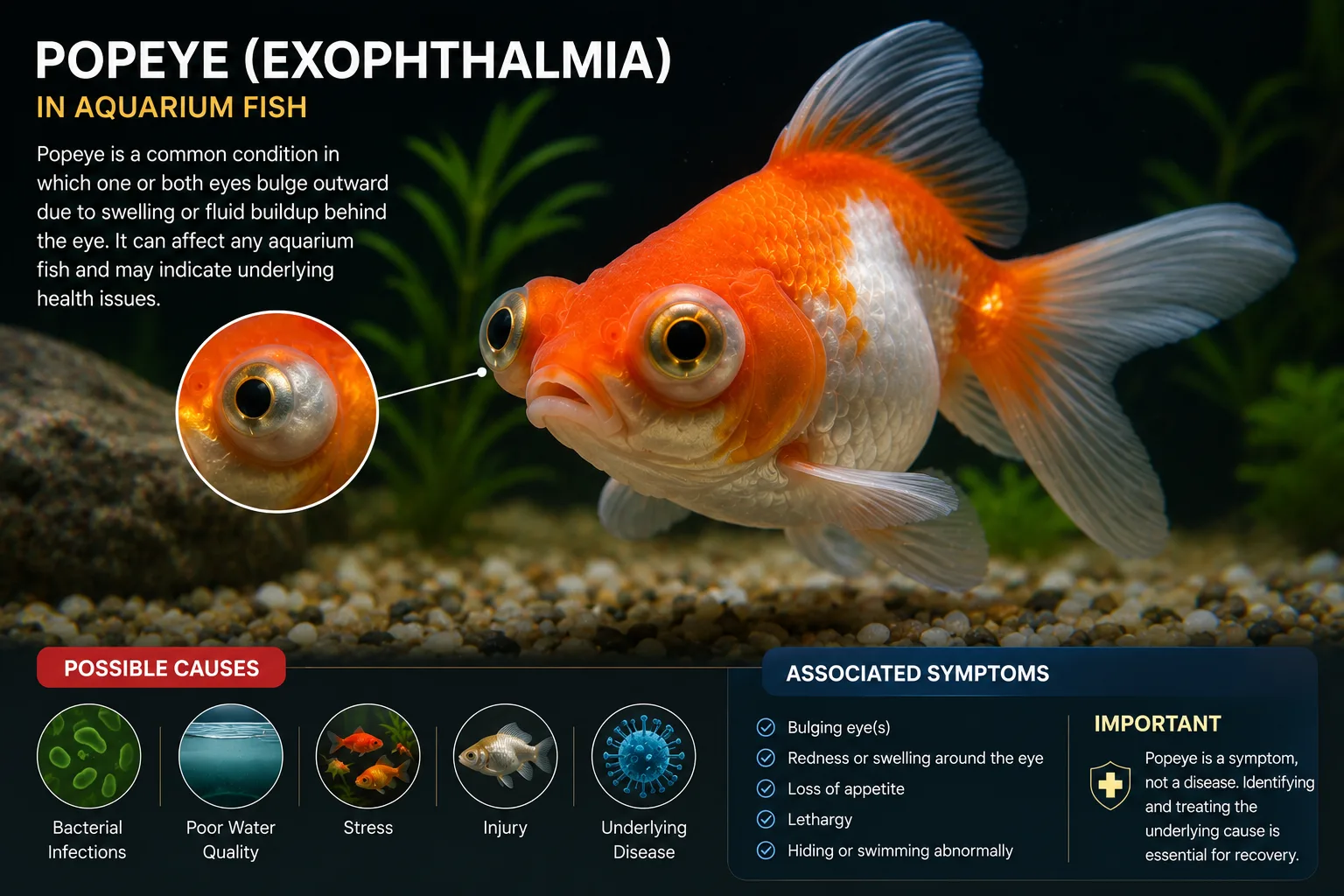
Popeye — the common name for exophthalmia, the protrusion of one or both eyes beyond their normal position in the socket — is one of the most alarming-looking conditions in aquarium fish. The appearance is dramatic: the eye bulges visibly outward, sometimes so severely that the surrounding tissue is damaged. The alarm is warranted, but the management response depends entirely on one diagnostic question before anything else: is one eye affected or both?
This distinction matters more than any other factor in popeye management. Unilateral popeye (one eye) is usually caused by a localised bacterial infection or physical injury — treatable, good prognosis. Bilateral popeye (both eyes) indicates a systemic condition — kidney failure, internal bacterial septicaemia, or viral infection affecting the whole body. The prognosis for bilateral popeye is similar to late-stage dropsy: meaningful recovery is possible but not probable, and the honest framework for deciding whether to treat aggressively or consider humane euthanasia is the same.
What Causes Popeye
Fluid accumulates behind the eyeball in the retrobulbar space, pushing the eye forward. In healthy fish, the pressure in this space is regulated by the same osmotic and immune mechanisms that prevent fluid accumulation throughout the body. When those mechanisms fail — through bacterial infection, kidney damage, or physical trauma — fluid accumulates, the eyeball is displaced forward, and the characteristic protrusion results.
Bacterial infection is the most common cause. Aeromonas hydrophila and Pseudomonas fluorescens — the opportunistic gram-negative bacteria responsible for fin rot and a contributor to dropsy — are the primary pathogens. As with those conditions, the bacteria are present in every established aquarium at non-pathogenic levels and establish clinical infection when immune function is suppressed by water quality failure, chronic stress, or physical injury creating a bacterial entry point. The immunity framework is in The Science of Fish Stress.
Physical injury — from net handling, collision with sharp décor, or aggression from tankmates — damages the eye or surrounding tissue directly. Bacteria colonise the wound. This is typically unilateral and has a better prognosis than bacterial infection arising without a traumatic cause, because the eye was healthy before the injury rather than being compromised by systemic immune failure.
Systemic disease — kidney failure (the same mechanism as late-stage dropsy), viral infection, or severe internal bacterial septicaemia — affects both eyes simultaneously because the fluid regulation failure is body-wide rather than localised. Any fish showing bilateral popeye simultaneously with a swollen abdomen almost certainly has concurrent dropsy.
The Unilateral vs Bilateral Diagnostic
Unilateral popeye (one eye only): The fluid accumulation is localised. This is most consistent with local bacterial infection at the eye site, physical injury creating a bacterial entry point, or a very early stage of systemic disease before the second eye is affected. Treatment is appropriate and prognosis is meaningfully better than bilateral cases.
Bilateral popeye (both eyes): The fluid accumulation is systemic. The same conditions causing body cavity fluid in dropsy are causing retrobulbar fluid in both eyes. If the fish also shows abdominal swelling or scale protrusion, dropsy and bilateral popeye are concurrent manifestations of the same systemic failure. The prognosis discussion and euthanasia framework in the Dropsy guide applies directly.
In practice: examine the fish from above and from the side in good light. Both eyes affected simultaneously is unmistakable. One eye clearly more protuberant than the other with a normal-appearing opposite eye is unilateral.
Treatment
Immediate step for both unilateral and bilateral: Isolate in a hospital tank. This provides a controlled treatment environment and reduces social stress — aggression from tankmates on a fish with a compromised eye causes additional physical injury. The hospital tank setup guide covers the complete protocol.
Epsom salt: As with dropsy, Epsom salt (magnesium sulphate, not aquarium salt/NaCl) at 1 teaspoon per 19 litres reduces fluid pressure through osmotic action. This is supportive treatment, not a cure — it reduces the discomfort of fluid pressure without addressing the cause.
Antibiotic treatment: For bacterial popeye, kanamycin at 40–50mg/L in the hospital tank addresses the gram-negative bacterial cause. Treat for 10 days minimum. Remove activated carbon before treatment — it adsorbs medication and renders it ineffective. Monitor ammonia and nitrite daily during any antibiotic course, as antibiotics damage biological filtration; daily water changes and ammonia detoxifier manage water quality during treatment. The complete ammonia management protocol is in Ammonia in Aquariums.
Will the eye return to normal? In successfully treated unilateral cases, the eye often returns to near-normal appearance over several weeks as the fluid reabsorbs. Severe cases may leave permanent mild protrusion even after successful treatment. In bilateral cases treated early and successfully, similar partial recovery is possible. The swelling receding is the first indicator of treatment success, typically visible within 7–10 days of beginning antibiotics.
Preventing Popeye
The prevention framework is identical to fin rot and dropsy prevention — because all three involve the same opportunistic bacteria exploiting the same immune suppression from water quality failure.
Maintain stable water parameters. Test ammonia, nitrite, and pH regularly. Any parameter chronically outside acceptable range creates the immune suppression that allows Aeromonas and Pseudomonas to establish. How to Clean an Aquarium Filter Without Killing Bacteria prevents the filter disruption that causes ammonia spikes — the most common trigger for immune collapse and subsequent bacterial disease.
Remove sharp décor that could cause eye injury. Inspect any rock, driftwood, or equipment with protrusions or edges that could physically damage fish passing near them.
Quarantine all new fish before main tank introduction. New arrivals with pre-existing bacterial infections introduce pathogen strains that resident fish have no immunity against. The complete quarantine protocol is in Quarantine and Biosecurity in Aquariums. The framework for deciding whether a case requires antibiotics or environmental correction first is in Quarantine vs Medication.
Frequently Asked Questions
Is popeye contagious? Not directly. The bacteria causing popeye are present in every established tank. A fish with popeye does not introduce a new pathogen to other fish. However, if water quality failure is the cause — as it most often is — all fish in the tank share that failing water and are at elevated risk. Address water quality for the whole tank, not just the affected fish.
My fish has one swollen eye — is it going to lose the eye? Possibly. In severe unilateral cases, the eye may be permanently damaged even with successful treatment. The fish can navigate, feed, and live a normal life with one functional eye. The treatment goal is resolving the infection and preventing the condition worsening or becoming bilateral/systemic, not necessarily preserving perfect vision in the affected eye.
The swelling has gone down but the eye still looks slightly different — is this normal? Yes. Mild residual protrusion after successful resolution of bacterial popeye is common and typically permanent. As long as the swelling is stable and not progressing, the fish is eating normally, and no redness or cloudiness is advancing, this represents successful treatment with cosmetic residual effects rather than active ongoing disease.able and not progressing, the fish is eating normally, and no redness or cloudiness is advancing, this represents successful treatment with cosmetic residual effects rather than active ongoing disease.