
by ProHobby™ | Ecological Systems Authority
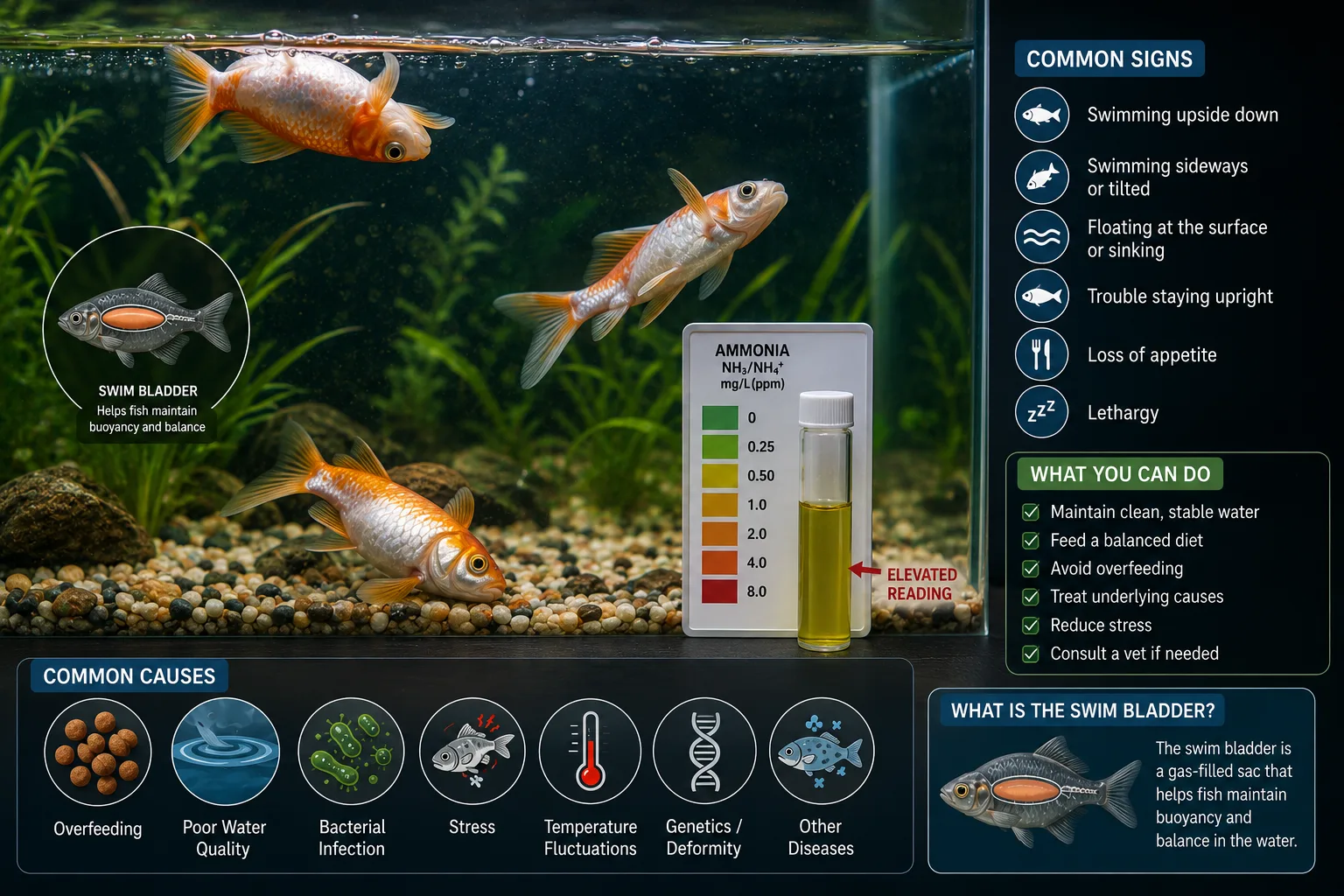
A fish swimming upside down, floating at the surface, sinking to the bottom, or tilting sideways is one of the most distressing sights in aquarium keeping. The symptom is called “swim bladder disease” in almost every guide, care sheet, and forum post. The name is misleading in a way that causes real harm — it implies a specific disease with a specific treatment, when in reality it describes a symptom that can arise from at least seven completely different causes, each with a different treatment, different prognosis, and different meaning for the fish’s quality of life.
A hobbyist told their fish has “swim bladder disease” and to feed it peas is receiving advice that is appropriate for one cause, irrelevant for most others, and actively wrong if the fish is not a goldfish or carp. Before any treatment is attempted, the cause needs to be identified — because the treatment for constipation is not the treatment for bacterial infection, and neither is appropriate for a congenital deformity.
This guide provides the diagnostic framework and cause-specific information needed to identify what is actually wrong with a fish exhibiting buoyancy disruption — and an honest assessment of what can and cannot be done about it. The broader principle that a symptom requires diagnosis before treatment — and that closed aquatic systems fail through specific mechanisms rather than bad luck — is the subject of the Aquarium Stability Is Not Balance cornerstone article.
Table of Contents
- What the Swim Bladder Actually Is and How It Works
- The Most Important Distinction Nobody Explains: Physostomous vs Physoclistous Fish
- Diagnosing the Cause — A Systematic Framework
- Every Cause Explained — With Honest Prognosis
- 4a. Constipation and Overfeeding
- 4b. Rapid Feeding and Air Ingestion
- 4c. Bacterial or Parasitic Infection
- 4d. Physical Injury
- 4e. Selective Breeding and Body Shape (Fancy Goldfish)
- 4f. Organ Compression: Obesity, Cysts, Eggs
- 4g. Environmental Causes: Temperature Shock and Pressure
- 4h. Congenital Defect
- Treatments — Honest Assessment by Cause
- When Buoyancy Disorder Is Permanent — Accommodation and Quality of Life
- The Euthanasia Question
- Frequently Asked Questions
1. What the Swim Bladder Actually Is and How It Works
The swim bladder is a gas-filled internal organ — specifically, a sac of flexible connective tissue located in the body cavity, positioned between the spine and the digestive organs. Its primary function is buoyancy regulation: by adjusting the volume of gas inside the sac, a fish can achieve neutral buoyancy at different water depths without continuous muscular effort, the same way a diver adjusts a buoyancy compensator.
The gas inside the swim bladder is primarily oxygen, nitrogen, and carbon dioxide, secreted or absorbed by a specialised network of capillaries (the gas gland and rete mirabile). Adjusting swim bladder volume is a physiological process that takes time — minutes to hours for most species — not an instantaneous mechanical adjustment like a submarine’s ballast tanks.
The swim bladder performs a secondary role in many species as an acoustic resonator — it amplifies and transmits sound vibrations and is connected to the inner ear through a series of small bones (Weberian ossicles) in cyprinids (goldfish, carp, tetras, barbs, danios) and catfish, giving these groups significantly better hearing than species without this connection.
When the swim bladder fails to regulate correctly, the fish cannot maintain neutral buoyancy. It floats to the surface, sinks to the bottom, tilts to one side, or swims in an uncontrolled spiralling or looping pattern depending on whether the swim bladder is over-inflated, under-inflated, or asymmetrically disrupted. None of these buoyancy problems are the same as each other mechanistically, even though they produce similar visual symptoms.
2. The Most Important Distinction Nobody Explains
Before considering any cause or treatment, determine which of the two fundamental swim bladder types your fish has. This single anatomical difference determines which treatments are possible and which universal recommendations are irrelevant or wrong for your fish.
Physostomous fish have a pneumatic duct — a tube connecting the swim bladder directly to the oesophagus or stomach. These fish can adjust swim bladder volume by gulping air at the surface (inflating) or releasing gas through burping (deflating). Their swim bladder system is connected to their digestive tract.
Fish with this system include: goldfish, koi, carp, loaches, salmon, trout, and most eels. Many of these are the most commonly kept pond and ornamental fish in India.
Physoclistous fish have no pneumatic duct. The swim bladder is a completely sealed system — gas is secreted and absorbed exclusively by the capillary network of the gas gland. These fish cannot gulp air or burp to adjust buoyancy. Their swim bladder adjustments are slow and entirely internal.
Fish with this system include: virtually all tetras, barbs, danios, rasboras, cichlids, live-bearers (guppies, mollies, platies, swordtails), gouramis, bettas, most catfish, most marine fish, and the majority of tropical fish kept in aquariums.
Why this matters for treatment:
The “feed peas” and “fast the fish” advice for swim bladder problems is grounded in physostomous fish biology. In a constipated goldfish, the enlarged intestine compresses the swim bladder, disrupting buoyancy. Fasting reduces digestive organ volume; peas act as a laxative to clear the intestinal blockage; once compression is relieved, the swim bladder can re-regulate — partly because the goldfish can also gulp air through the pneumatic duct to assist re-inflation.
For a physoclistous fish — a neon tetra, a betta, a cichlid — fasting does not address intestinal compression in the same way, peas do nothing because there is no pneumatic duct for the fish to use, and the “treatment” recommended in nine out of ten guides is irrelevant. If a physoclistous fish has buoyancy disruption, the cause is elsewhere in the list of causes below, and peas are not the answer.
3. Diagnosing the Cause — A Systematic Framework
Work through these questions in order before attempting any treatment.
Step 1: What type of fish is affected? Is it a goldfish, koi, carp, or loach? → Physostomous: constipation and the digestive tract connection is a plausible cause worth investigating first. Is it a tetra, barb, cichlid, live-bearer, betta, gourami, or tropical fish? → Physoclistous: constipation is not the primary pathway; look at infection, injury, environment, and congenital causes.
Step 2: What is the body shape of the fish? Is it a fancy goldfish variety (oranda, ryukin, ranchu, telescope, bubble eye, celestial)? → Body shape from selective breeding is a primary suspect, particularly if the fish has always been slightly odd-swimming or if the problem developed gradually without any environmental trigger. Is it a normal body-shape fish? → Move to Step 3.
Step 3: What was the onset? Did it happen suddenly — the fish was normal yesterday, abnormal today? → Environmental trigger (temperature shock, injury, acute infection) is more likely. Did it develop gradually over days or weeks? → Chronic infection, organ compression, progressive disease, or early-stage congenital expression is more likely.
Step 4: What are the associated symptoms? Is the fish’s abdomen visibly distended or swollen? → Constipation, organ cyst, egg retention, or dropsy (the latter indicates a serious systemic infection — see the pinecone scales diagnostic below). Are the scales standing out from the body like a pinecone? → Dropsy — a systemic bacterial infection with organ involvement, not swim bladder disease. Dropsy produces buoyancy disruption as a secondary symptom. It is serious, often fatal, and requires immediate separate diagnosis and treatment.
The broader diagnostic principle — that most aquarium fish deaths and symptoms trace to environmental causes rather than primary disease — is covered in Why Most Aquarium Deaths Are Environmental, Not Disease-Related. For a complete stage-by-stage diagnostic framework when fish are dying alongside showing abnormal behaviour, see Why Do My Aquarium Fish Keep Dying. Is there visible physical damage — scale loss, fin damage, impact marks? → Injury. Is the fish still eating and behaving otherwise normally? → Better prognosis regardless of cause. Is the fish lethargic, not eating, showing other signs of illness? → Systemic disease more likely. Chronic stress from poor water quality — elevated ammonia in particular damages gill tissue and directly suppresses immunity — makes fish significantly more susceptible to the opportunistic bacterial infections that cause aerocystitis. The full mechanism of cortisol-induced immune suppression is in The Science of Fish Stress, and the complete guide to ammonia toxicity and its immune effects is in Ammonia in Aquariums: Spikes, Poisoning and How to Lower It.
Step 5: What changed recently? Recent feeding change, overfeeding event, new dry food? → Constipation or air ingestion. Recent temperature spike or crash (summer heat event, power cut, cold water change)? → Environmental cause. New fish added recently? → Possible disease introduction. Medication used recently? → Some medications cause temporary buoyancy disruption. No change whatsoever in a fish that has been normal for months? → Infection or internal pathology developing over time.
4. Every Cause Explained — With Honest Prognosis
4a. Constipation and Overfeeding
Who it affects: Primarily physostomous fish — goldfish, koi, loaches. Less commonly, physoclistous fish can develop similar compressive symptoms from severe constipation, but the pathway is different.
The mechanism: Overfeeding or feeding exclusively dry foods (which expand with water absorption in the gut) can cause intestinal blockage or enlargement. In goldfish particularly, the intestines run along the ventral surface of the body cavity and when enlarged can compress the swim bladder directly. This disrupts the natural buoyancy point, typically causing the fish to float upward or tilt tail-up.
Recognition: The fish is typically otherwise alert and behaving normally apart from the buoyancy problem. The abdomen may be visibly rounded. The fish often continues to show interest in food. The onset is usually following a period of heavy feeding or a change to a more protein-dense diet.
Prognosis: Good if addressed early.
Treatment:
- Fast the fish for 24–48 hours — no food at all
- After fasting, offer a small amount of shelled, blanched peas — this provides dietary fibre that acts as a laxative
- Reduce dry food in the long term; vary the diet with frozen foods, blanched vegetables
- For goldfish: soak dry pellets thoroughly before feeding (pre-soaked food absorbs less water in the gut)
- If the fish does not improve within a week of dietary management, constipation is likely not the primary cause
The full framework for appropriate feeding quantity, food types, and schedules that prevent constipation from developing is in Common Aquarium Issues: Overfeeding and Nutritional Imbalances.
4b. Rapid Feeding and Air Ingestion
Who it affects: Primarily physostomous fish — goldfish, some other surface-feeding fish.
The mechanism: Fish that feed aggressively at the surface — gulping at floating food — may ingest air bubbles along with their food. This air temporarily over-inflates the swim bladder through the pneumatic duct connection. The fish floats abnormally until the excess air is absorbed. This is most common in goldfish with competitive feeding behaviour, or in fish that are fed floating pellets or flakes.
Recognition: Onset immediately after feeding, fish floating at the surface, returns to normal within hours to a day. No other symptoms.
Prognosis: Excellent — self-resolving.
Treatment:
- Switch from floating to sinking food for goldfish
- Pre-soak all dry food before feeding
- Feed smaller amounts more slowly
- No medication or intervention needed
4c. Bacterial or Parasitic Infection
Who it affects: Any fish. One of the most common causes in physoclistous tropical fish.
The mechanism: Bacterial infection of the swim bladder itself (aerocystitis) causes inflammation, fluid accumulation, or gas production within the swim bladder sac, disrupting its ability to regulate buoyancy correctly. Internal parasites can similarly damage swim bladder tissue. The infection may be localised to the swim bladder or part of a broader systemic infection.
Recognition: Often accompanied by other signs of illness — lethargy, loss of appetite, colour changes, visible body changes. May develop gradually over days. In some cases buoyancy disruption is the only visible symptom of a deeper internal infection.
The distinction from constipation: an infected fish typically shows reduced appetite and lethargy; a constipated fish is usually still alert and seeking food. A fish with buoyancy disruption that is also not eating and appears generally unwell is significantly more likely to have an infection than a digestive issue.
Prognosis: Variable. Early treatment of bacterial infection with appropriate antibiotics can be effective. Advanced infection with organ involvement is often fatal. Viral infections have no treatment. Parasitic infections can be treatable with appropriate antiparasitics if caught early. For the complete reference on fish disease patterns, bacterial and parasitic causes, and treatment approaches across species, see Common Fish and Livestock Problems in Aquariums.
Treatment:
- Quarantine the fish immediately to prevent potential disease spread and to allow individual treatment
- Broad-spectrum antibiotic treatment is the appropriate response for suspected bacterial aerocystitis — gram-negative bacteria (particularly Aeromonas) are the most common causative organisms
- Consult a vet familiar with fish medicine if the infection does not respond to standard treatment within 5–7 days
- For suspected parasitic involvement, consult before treating — using the wrong antiparasitic or combining treatments is harmful
4d. Physical Injury
Who it affects: Any fish. Common in community tanks, tanks with fast currents, and tanks where fish are transported roughly.
The mechanism: A sharp blow to the body — impact with a hard decoration, an aggressive tankmate ramming, rough netting during transport — can physically damage or puncture the swim bladder. Internal haemorrhage from injury can compress or displace the organ.
Recognition: Sudden onset. May coincide with observed aggression or a transport event. The fish may show bruising or scale damage at the impact site. May also have other signs of physical trauma.
Prognosis: Poor to fair. Minor injury may heal. Significant physical damage to the swim bladder tissue itself often does not resolve, leaving permanent buoyancy disruption. The fish may stabilise at an abnormal buoyancy point and live for some time in a managed environment.
Treatment:
- Quarantine to reduce additional stress and prevent opportunistic secondary infection on damaged tissue
- Clean, optimal water quality to support recovery
- Antibiotic treatment to prevent secondary bacterial infection of damaged tissue
- Monitor for improvement over two weeks; if buoyancy does not improve, likely permanent
4e. Selective Breeding and Body Shape (Fancy Goldfish)
Who it affects: Fancy goldfish varieties — oranda, ryukin, fantail, ranchu, bubble eye, celestial, telescope eye.
This is the most honest section in this guide, and the one most often omitted from care resources.
Modern fancy goldfish have been selectively bred for extreme body shapes — round, compressed bodies, upward-pointing eyes, unusual fin configurations — that bear little relationship to the natural streamlined body shape of wild carp. These breeding-induced body shape changes compress the body cavity, displacing and distorting internal organs including the swim bladder.
Many fancy goldfish do not have swim bladder disease at all. They have swim bladder compression caused by the body shape their selective breeding produced. No amount of fasting, peas, salt, or antibiotics changes the fundamental internal geometry of a fish shaped like a ball. The problem is structural, not medical.
Recognition: The fish has always swum slightly oddly, the problem has developed gradually without any environmental trigger, and the fish is otherwise healthy — eating, alert, producing waste normally. Comparing the fish to images of the same variety at the same age: if other fish of the same variety look similar, it is likely a breed characteristic rather than an individual illness.
Prognosis: This is a management issue, not a treatable medical condition. Many fancy goldfish live for years with buoyancy adjustments — they adapt, and with appropriate accommodation (shallow water, easy surface access, sinking food) they can have reasonable quality of life.
The ethical dimension: The existence of this cause is an argument against keeping fancy goldfish varieties with extreme body shapes in the first place. The deformities that cause swim bladder compression are intentionally bred characteristics that produce chronic health problems in the fish. This is not discussed in most care guides but is worth knowing before purchasing.
4f. Organ Compression: Obesity, Cysts, Tumours, Egg Retention
Who it affects: Any fish, though more common in older fish, females, and chronically overfed fish.
The mechanism: Any internal enlargement — accumulated fat deposits from chronic overfeeding, benign cysts on organs, tumours, or an abnormally large mass of unlaid eggs (egg binding in females) — can physically compress the swim bladder from the outside, disrupting its normal function.
Recognition: Visible abdominal swelling or asymmetric distension. Gradual onset over weeks or months. Fish may otherwise be alert. Egg binding is specific to females showing distension in the lower abdomen.
Prognosis: Variable. Obesity-related compression can be managed by dietary reduction over time — the swim bladder may recover as fat deposits reduce. Cysts and tumours depend on size, location, and growth rate. Egg binding requires intervention and carries risks. Internal tumours are generally not treatable in fish without specialist veterinary care.
4g. Environmental Causes: Temperature Shock and Pressure Change
Who it affects: Any fish.
The mechanism: Rapid temperature change disrupts the physiological processes that regulate gas secretion and absorption in the swim bladder. The capillary network that manages gas exchange in the swim bladder is temperature-sensitive — a sudden temperature spike or crash can cause gas expansion or contraction faster than the regulatory system can compensate.
In Indian conditions, this is a real and common cause: a water change using afternoon tap water drawn from an overhead storage tank at 38–42°C, poured into a tank at 26–28°C, can produce a temperature spike sufficient to cause temporary buoyancy disruption in sensitive fish. The complete framework for managing temperature in Indian summer conditions — including water change protocols that prevent this — is in Aquarium Water Temperature in Indian Summer.
Recognition: Sudden onset immediately following a water change, temperature event, or power cut (with subsequent temperature shift). The fish was normal before the event and abnormal after. No other symptoms.
Prognosis: Often good if the temperature is stabilised. Temporary buoyancy disruption from a temperature event frequently resolves within 24–48 hours once the temperature is corrected. If it persists beyond 48–72 hours after temperature correction, the event may have triggered a secondary issue.
Treatment:
- Correct the temperature immediately — do not allow the fish to remain in the disrupted temperature
- Test water parameters — temperature spikes often coincide with oxygen depletion and ammonia fluctuation; Aquarium Water Quality Issues covers the full range of parameter failures that compound with temperature events
- Provide optimal water quality and low stress while the fish recovers
4h. Congenital Defect
Who it affects: Any fish, though certain species and selectively bred varieties are more prone.
The mechanism: Some fish are born with malformed, underdeveloped, or asymmetric swim bladders. This is a genetic or developmental issue present from birth.
Recognition: The fish has always swum abnormally, from the time it was first observed. There is no acquired onset. Other fish from the same spawn may or may not be affected.
Prognosis: Permanent. Congenital malformation cannot be treated. Management and quality of life accommodation are the only options.
5. Treatments — Honest Assessment by Cause
| Cause | Fasting | Peas | Salt | Epsom Salt | Antibiotics | Environmental Fix | Prognosis |
|---|---|---|---|---|---|---|---|
| Constipation (physostomous) | ✓ Yes | ✓ Yes | ✗ No | ✗ No | ✗ No | ✗ | Good |
| Air ingestion | ✓ Brief | ✗ No | ✗ No | ✗ No | ✗ No | ✓ Sinking food | Excellent |
| Bacterial infection | ✓ Reduce feeding | ✗ No | Supportive only | ✗ No | ✓ Yes | ✗ | Variable |
| Physical injury | ✓ Reduce feeding | ✗ No | Supportive only | ✗ No | ✓ Prevent secondary | ✗ | Poor–Fair |
| Fancy goldfish body shape | ✗ No | ✗ No | ✗ No | ✗ No | ✗ No | ✓ Shallow tank | Management only |
| Organ compression | ✓ Diet reduction | ✗ No | ✗ No | ✗ No | ✗ No | ✗ | Variable |
| Temperature shock | ✗ No | ✗ No | ✗ No | ✗ No | ✗ No | ✓ Fix temperature | Often good |
| Congenital | ✗ No | ✗ No | ✗ No | ✗ No | ✗ No | ✓ Accommodate | Permanent |
On Epsom salt: Epsom salt (magnesium sulphate) is sometimes recommended as an osmotic laxative for fish with constipation or fluid retention. It has a legitimate mechanism for reducing internal fluid accumulation in physostomous fish with bloating — it acts as a mild osmotic laxative. It is not appropriate for physoclistous fish and is not a swim bladder treatment. Use at 1 tablespoon per 40 litres in a separate hospital tank for 10–15 minutes as a bath, not as a long-term tank additive.
On salt (sodium chloride): Non-iodised salt can provide mild osmotic support and reduce physiological stress during treatment. It does not treat swim bladder disorders mechanistically. Adding salt to the main display tank for swim bladder treatment provides no direct benefit and may harm plants and sensitive species. If used, treat in a separate container.
The hospital tank: Any fish receiving treatment for swim bladder disorder should be quarantined in a separate tank. This reduces stress from tank competition, prevents disease spread if infection is involved, allows individual observation, and permits targeted medication without affecting the main tank’s biological filtration. The complete quarantine framework is in Quarantine vs Medication.
6. When Buoyancy Disorder Is Permanent — Accommodation and Quality of Life
Not all swim bladder disorders are treatable, and honest assessment of prognosis matters for both the hobbyist’s decisions and the fish’s welfare. A fish with a permanent buoyancy disorder is not necessarily dying or suffering — many fish adapt remarkably well to altered buoyancy and can live for years with appropriate accommodation.
Assessing quality of life:
- Is the fish eating? A fish with a permanent tilt that still actively seeks and consumes food, moves around the tank, and responds normally to its environment is experiencing reasonable quality of life.
- Is the fish able to reach food? A bottom-sinking fish that cannot reach surface food, or a floating fish that cannot reach sinking food, needs feeding accommodation.
- Is the fish being harassed by tankmates? Buoyancy-impaired fish are vulnerable to aggression from healthy fish. Separate the affected fish if it is being bullied.
- Is the fish visibly distressed — panicked swimming, continuous struggling, inability to rest? This suggests active distress that is not compatible with good quality of life.
Practical accommodations:
Reduce water depth. A floating fish in a shallow tank has less distance between its abnormal rest position (surface) and the substrate — it can access both food and shelter more easily. Moving the fish to a shallower hospital or recovery tank can dramatically improve its quality of life.
Feed at the appropriate level. A floating fish needs food delivered at the surface or very high in the water column. A sinking fish needs food delivered to the substrate. Adjust feeding specifically to where the fish can access it.
Provide resting places at different levels. A floating fish benefits from having something near the surface to rest against — a broad-leafed plant, a floating decoration. A sinking fish benefits from smooth substrate and no sharp hardscape to injure against during uncontrolled sinking.
Keep with peaceful, non-competitive tankmates — or alone in a hospital tank. Impaired fish in competitive community settings often fail to eat adequately.
7. The Euthanasia Question
This section addresses a difficult reality that care guides typically avoid: some fish with swim bladder disorders are suffering in a way that accommodation cannot meaningfully address, and euthanasia is the kindest option.
Signs that euthanasia should be considered:
- The fish cannot access food despite every accommodation effort and is visibly losing weight
- The fish appears to be in continuous distress — panicked movement, constant struggling against buoyancy, inability to rest at any level
- Injury is severe and recovery is not occurring over two to three weeks
- The fish has a concurrent serious illness (dropsy, advanced infection) in addition to buoyancy disorder
- Quality of life is clearly poor despite accommodations over a period of months
Euthanasia in fish is most humanely performed by clove oil (eugenol) overdose — available from pharmacies. A concentration of approximately 0.4ml per litre of water induces rapid anaesthesia followed by death. The fish becomes unconscious within 30–60 seconds and death follows within minutes. This is significantly more humane than other commonly suggested methods.
Making the decision to euthanise a fish is not failure — it is an act of responsible fishkeeping. Maintaining a suffering fish because ending its life is emotionally difficult is not in the fish’s interest.
8. Frequently Asked Questions
My fish is swimming upside down. Is it going to die? Not necessarily and not immediately. A fish swimming upside down has a buoyancy disorder — the cause determines the prognosis. If the fish is still eating, alert, and otherwise normal, the cause may be reversible (constipation in goldfish, air ingestion, temperature event). If the fish is also lethargic, not eating, and showing other illness symptoms, the situation is more serious. Diagnose before treating: the answer to this question depends entirely on what is causing the buoyancy problem.
Should I feed my fish peas? Only if it is a goldfish, koi, carp, or loach (physostomous fish) and you suspect constipation as the cause. Peas act as a laxative for the goldfish digestive system and can relieve intestinal compression of the swim bladder. For tropical fish — tetras, cichlids, live-bearers, bettas, barbs — peas do nothing for the swim bladder because these fish have no pneumatic duct through which the pea’s effect could act. The universal “feed peas” advice is specifically wrong for the majority of aquarium fish.
How long should I fast my fish for swim bladder problems? For suspected constipation in physostomous fish (goldfish): fast for 24–48 hours, then offer peas. If no improvement within a week of dietary management, constipation is unlikely the cause. For other fish and other causes, fasting is not a primary treatment — it reduces digestive stress during illness but does not address the underlying cause.
Can swim bladder disease spread to other fish? Buoyancy disorder itself is not contagious. However, if the underlying cause is a bacterial infection (aerocystitis), the causative bacteria may be transmissible and quarantine is appropriate as a precaution. Environmental causes (temperature event, water quality) would affect other fish in the same tank if they had not already.
Why does my fancy goldfish keep getting swim bladder problems? In fancy goldfish varieties (oranda, ryukin, ranchu, telescope, bubble eye), recurring buoyancy problems are usually structural — the extreme round body shape compresses internal organs including the swim bladder. This is a consequence of selective breeding, not a disease you can treat repeatedly and resolve. Feeding sinking food rather than floating food, not overfeeding, and providing shallow, easy-access water are management strategies. The underlying body shape cannot be changed. If the problem is severe and affecting quality of life, this is a welfare consideration worth taking seriously.
My fish has been swimming sideways for weeks but is still eating. Should I be worried? A fish with a chronic stable buoyancy disorder that is still eating, active, and otherwise behaving normally may be living a reasonable quality of life despite the disability. Many fish adapt to altered buoyancy and live for years. The key factors are: can it access food, is it being harassed by tankmates, and is it showing signs of active distress? If the answers are satisfactory, monitoring and accommodation rather than aggressive treatment may be appropriate.
Is swim bladder disease the same as dropsy? No, though dropsy causes buoyancy disruption as a secondary symptom. Dropsy (oedema) is a systemic bacterial infection causing fluid accumulation in body tissues — it produces swelling, and the diagnostic sign is scales standing out from the body like a pinecone (pinecone scales or pineconing). A fish with pinecone scales has dropsy, not swim bladder disease. Dropsy is serious, often fatal, requires antibiotic treatment, and should not be confused with a swim bladder disorder. If you see raised scales, that is the diagnosis.
Can I prevent swim bladder problems? The preventable causes are constipation (vary the diet, avoid excessive dry food, do not overfeed — covered fully in the How Often to Feed Fish guide), air ingestion (switch to sinking food for goldfish), temperature shock (always check water temperature before water changes — critical in Indian summer when overhead tank water can reach 40°C), and injury (appropriate tankmates, smooth hardscape, careful netting). Infection, congenital defects, and fancy goldfish body shape are not preventable.
My betta is floating at the surface sideways. What do I do? Bettas are physoclistous fish — the peas and fasting advice designed for goldfish does not apply. Common causes in bettas: overfeeding (bettas are prone to obesity and constipation despite being physoclistous — reduce feeding, introduce dietary variety); infection; injury from impact with tank equipment; or in the case of bettas specifically, swim bladder issues related to their labyrinth organ adjacent to the swim bladder. Quarantine, reduce feeding, ensure optimal water temperature (26–28°C), and monitor for improvement over a week before considering antibiotic treatment if infection seems likely.