
By ProHobby™ | Ecological Systems Authority
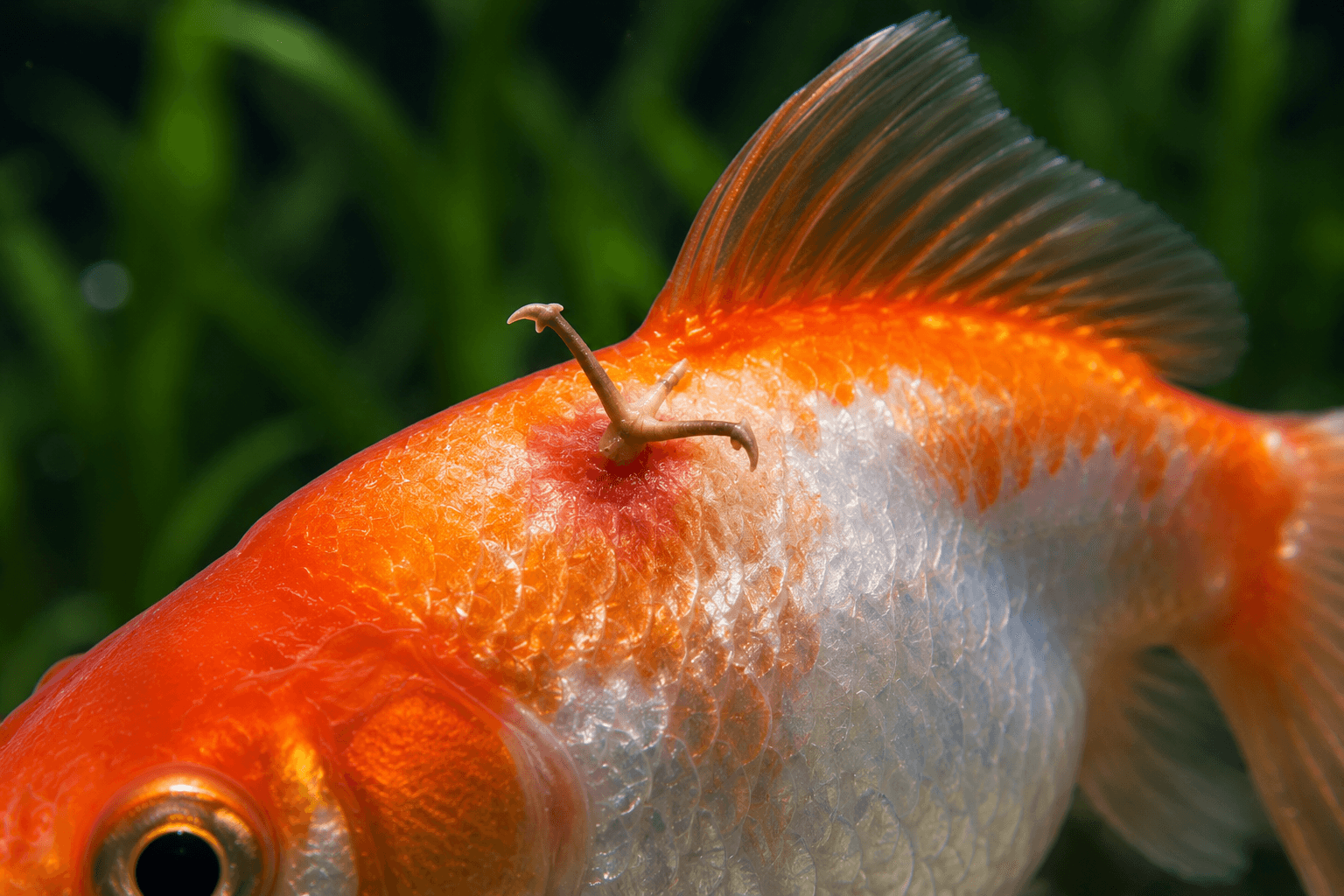
Anchor worm is the most visible external parasite in freshwater aquariums — and the most commonly misidentified. Despite the name, it is not a worm at all. Lernaea cyprinacea is a parasitic copepod crustacean, more closely related to copepods and barnacles than to any worm. The “worm” visible protruding from the fish’s body is the adult female copepod, with her egg sacs trailing behind and her anchor-shaped head structure embedded deep in the fish’s muscle tissue. No fish owner who sees a Lernaea attached to their fish is likely to forget it — the parasite is clearly visible to the naked eye, typically several millimetres to over a centimetre long, and often accompanied by localised haemorrhage and tissue inflammation at the attachment site.
Because the parasite is visible, anchor worm is both easier to diagnose and psychologically more alarming than most fish diseases. The management approach requires understanding the lifecycle: the visible adult female is only part of the population, and treating only what you can see without addressing the free-swimming larval stages in the water column produces rapid recurrence.
The Anchor Worm Lifecycle
Understanding this lifecycle determines why treatment requires multiple components.
Free-swimming copepodid larvae: Invisible to the naked eye, these larvae hatch from the egg sacs of attached females and swim freely in the water column seeking a host. They are the most vulnerable stage — the primary target of chemical treatment (diflubenzuron, potassium permanganate dips). They survive only days without a host.
Attachment and development: Larvae attach to fish skin and develop through several juvenile stages. During this period they are partially buried in the skin and not yet visible as the full adult “worm.”
Adult female: The mature female anchors into the fish’s flesh with her head structure, produces two trailing egg sacs of hundreds of eggs each, and remains attached until she dies or is removed. This is what is visible as the “anchor worm.” She is mechanically resistant to most chemical treatments because her body is largely outside the water column and her head is embedded in tissue.
Treatment — Two Components Required
Effective anchor worm treatment requires both physical removal of adult females AND chemical treatment to kill free-swimming larvae. Addressing only one component produces recurrence.
Physical Removal of Adult Females
This is a hands-on procedure. The fish must be caught and briefly held above water or at the surface, and the adult anchor worm must be grasped as close to the attachment point as possible and removed with a slow, steady rotating motion — not yanking, which may leave the embedded anchor head in the tissue and cause deeper injury.
Equipment needed: fine-tipped forceps or curved haemostat forceps, mild anaesthetic (clove oil at low concentration — see below), clean container of aquarium water.
Brief anaesthesia reduces stress and handling injuries for the fish. Clove oil at 1–2 drops per 10 litres produces light sedation within 30–60 seconds — the fish stops swimming vigorously but continues breathing. Work quickly. Return the fish to clean, well-oxygenated water immediately after parasite removal.
After removal: treat the wound site with povidone-iodine solution on a cotton bud, or dilute potassium permanganate. Transfer the fish to a clean hospital tank for monitoring during recovery and chemical treatment.
Chemical Treatment for Larvae
Diflubenzuron (available as Dimilin or aquarium-specific products) prevents larval moulting — the juvenile anchor worm cannot progress through its development stages and dies. It is not immediately lethal to adults but prevents population reproduction. Dose per manufacturer instructions. Safe for fish and biological filtration. Not safe for invertebrates — remove all invertebrates from the treatment tank.
Potassium permanganate dips (10mg/L for 30–45 minutes in a separate treatment container) kill larvae on the fish’s surface and provide wound disinfection at removal sites. Use with care — potassium permanganate at therapeutic doses is a strong oxidiser and can cause gill and skin damage if exposure is prolonged. Have clean dechlorinated water ready to immediately transfer the fish if it shows signs of stress.
Salt at 2–3g/L in the main tank reduces larval survival and osmotic stress on affected fish. Not sufficient as a standalone treatment but useful as an adjunct.
Treatment Duration
Because diflubenzuron targets only moulting stages and does not immediately kill adults or eggs, a minimum of 3–4 weeks of chemical treatment is required to break the lifecycle. Physical removal of any new adults appearing during this period should continue weekly. By week 4 of chemical treatment, no new larvae should be developing.
Introduction and Prevention
Anchor worm is almost exclusively introduced through new fish. Unlike internal parasites that may arrive invisibly, Lernaea on an infected fish is usually visible on careful inspection — one of the benefits of the parasite’s size. A thorough physical inspection of any new fish before purchase and during quarantine should specifically check for the characteristic trailing “worms” attached at haemorrhagic points on the body surface. Fish that are stressed from transport have suppressed immune function that may make them more susceptible to establishing infestation — the mechanism is in The Science of Fish Stress.
Quarantine for 4 weeks allows any attached Lernaea to become fully visible and the lifecycle to progress enough that larvae in the quarantine tank become detectable and treatable. The complete quarantine framework is in Quarantine and Biosecurity in Aquariums and the diagnostic decision framework in Quarantine vs Medication.
Plants introduced without quarantine can also carry anchor worm larvae, which can survive briefly in moist plant tissue. Quarantining or dipping new plants significantly reduces this risk.
Frequently Asked Questions
Can I just pull the anchor worm out? Yes, but the technique matters. Grasp the parasite as close to the attachment point as possible — not by the trailing egg sacs — and remove with a slow rotating motion. Pulling by the visible body risks leaving the anchor head embedded in tissue, which will cause deeper inflammation and secondary bacterial infection. Brief sedation with dilute clove oil reduces stress and handling injury.
I removed the anchor worm but my fish still has red inflammation where it was attached. Is this normal? Yes. The wound site remains inflamed for several days to weeks after removal. Monitor for signs of secondary bacterial infection — expanding redness, white-grey discharge, or fin deterioration in the area — which would indicate fin rot or columnaris establishing at the wound. If secondary infection develops, antibiotic treatment for gram-negative bacteria is appropriate.
Do I need to treat the whole tank or just the fish with anchor worm? The whole tank needs chemical treatment for larvae. The free-swimming larval stages are in the water column throughout the tank. Treating only the fish with visible adults while leaving larvae in the main tank produces reinfection within days.adults while leaving larvae in the main tank produces reinfection within days.