
By ProHobby™ | Ecological Systems Authority
Rainbowfish are the most consistently underrated freshwater community fish in the hobby, and the reason is almost always timing: a juvenile rainbowfish, whatever the species, is a modest, somewhat washed-out silver fish that gives almost no visual indication of what it will eventually become, and a meaningful proportion of hobbyists who purchase rainbowfish as juveniles either rehome or lose interest in them before the genuine, often spectacular adult colouration this family is named for has had time to develop. Understanding why rainbowfish colour develops the way it does, on the timeline it does, is the single most important piece of information for anyone considering this family — everything else in this guide builds on that foundation.
Table of Contents
- Why Rainbowfish Colour Takes So Long to Develop
- Geographic Origin and Why It Matters for Species Selection
- Boesemani Rainbowfish — The Signature Species
- Praecox (Neon Dwarf) Rainbowfish — The Compact Alternative
- Other Notable Species Worth Knowing
- Tank Requirements
- Water Parameters
- Lighting — Why It Directly Affects Colour Outcome
- Shoaling Behaviour and Why Undersized Groups Fail
- Tank Mates and Compatibility
- Feeding
- Sexing and Breeding
- Common Health Issues
- India — Water Chemistry and Sourcing Realities
- Frequently Asked Questions
1. Why Rainbowfish Colour Takes So Long to Develop
Rainbowfish colouration is produced substantially through iridocytes — specialised cells containing reflective platelet structures that produce colour through light refraction and interference rather than through pigment alone, a fundamentally different colour-production mechanism from the pigment-based colouration that dominates in many other popular aquarium fish. This iridescent, structurally produced colour is genuinely slow to develop, continuing to intensify and mature well beyond the point at which most other community fish have reached their full adult colouration, and juvenile rainbowfish of every species covered in this guide look meaningfully more subdued and silver than mature adults will eventually appear.
The practical consequence that drives so much hobbyist disappointment: rainbowfish are near-universally sold as juveniles, at exactly the life stage when their defining visual characteristic is least apparent, and a hobbyist expecting the vivid adult colouration seen in photographs to be immediately visible in a newly purchased juvenile is set up for disappointment that has nothing to do with the fish’s actual health or genetic quality. Full colour development in most species covered in this guide takes several months at minimum, continuing to intensify further as the fish matures over its first year or more, and is meaningfully influenced by the husbandry factors covered throughout this guide — lighting specifically, established in Section 8, alongside diet, water quality, and general stress level.
2. Geographic Origin and Why It Matters for Species Selection
Rainbowfish (family Melanotaeniidae, alongside several related families sharing the common “rainbowfish” name) originate predominantly from Australia and New Guinea, with the specific river systems and lake environments a given species evolved in directly shaping both its natural colouration and its specific water chemistry preferences — a geographic diversity worth understanding before selecting a species, in broadly the same way understanding which African rift lake a cichlid originates from shapes appropriate husbandry, covered in African Cichlid Tank Setup elsewhere on this site.
This geographic diversity across the rainbowfish family produces genuine variation in natural water hardness and pH preference between species, covered specifically for the two most commonly kept species in Sections 3 and 4, and is directly relevant to why rainbowfish, as a family, tend to be considerably more adaptable to a range of water chemistry conditions — including the hard, alkaline water common across much of India — than many of the more specifically soft-water-adapted South American and Southeast Asian species covered elsewhere in this site’s fish care series.
3. Boesemani Rainbowfish — The Signature Species
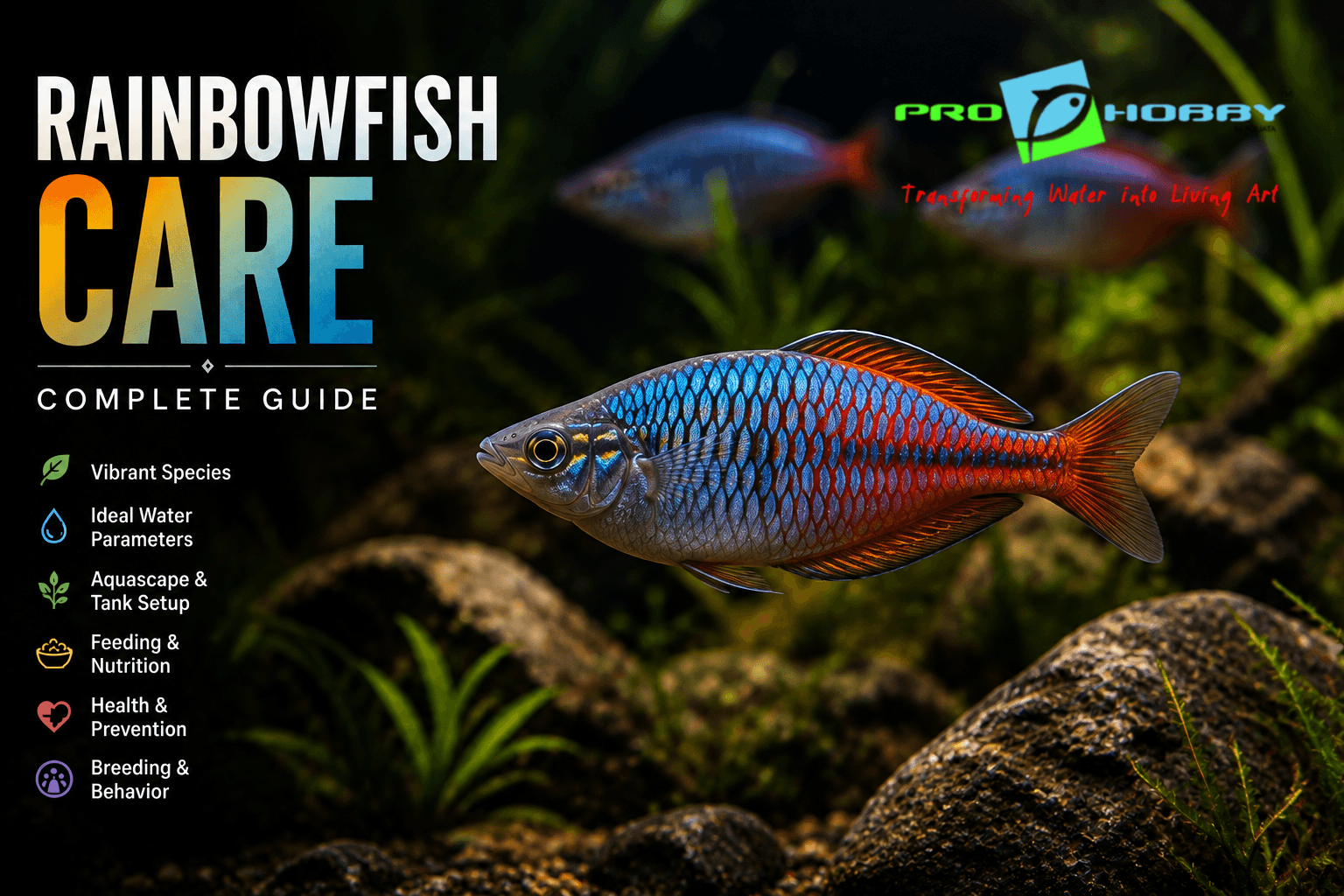
Melanotaenia boesemani, native to the Ayamaru Lake system in West Papua, New Guinea, is the species most closely associated with the rainbowfish family in general hobbyist awareness, defined by its striking two-tone adult colouration — a blue-purple anterior half transitioning to a vivid orange-red posterior half, a colour pattern genuinely unlike almost anything else in the freshwater hobby once fully developed, and one of the clearest illustrations of the colour-development timeline established in Section 1, given how dramatically different a juvenile Boesemani appears from the mature adult pattern the species is known for.
Boesemani rainbowfish reach a moderate adult size, generally larger than the dwarf species covered in Section 4, and their combination of striking mature colouration, moderate size, and genuinely peaceful temperament makes them one of the more consistently recommended rainbowfish species for hobbyists building a first rainbowfish-focused community tank.
4. Praecox (Neon Dwarf) Rainbowfish — The Compact Alternative
Melanotaenia praecox, commonly sold as neon dwarf rainbowfish or simply praecox rainbowfish, is native to river systems in Papua, New Guinea, and offers a genuinely different proposition from Boesemani — a considerably smaller adult size making this species suitable for tanks that could not comfortably accommodate the larger Boesemani, combined with a vivid, more uniform blue-violet body colouration with red-orange fin accents that develops on a broadly similar maturation timeline to the rest of the family established in Section 1, though the smaller adult size means this species reaches its full mature colouration somewhat faster in absolute terms than the larger-bodied Boesemani typically does.
Praecox are also frequently recommended as a genuinely good entry point species for hobbyists specifically wanting to experience rainbowfish shoaling behaviour and colour development in a smaller footprint tank than Boesemani or the larger species mentioned in Section 5 would comfortably require.
5. Other Notable Species Worth Knowing
Melanotaenia lacustris (Lake Kutubu rainbowfish) — a striking blue-toned species from a specific, geographically isolated Papua New Guinea lake system, with correspondingly specific water chemistry adaptations reflecting that isolated lake environment.
Melanotaenia parva — a smaller species with a comparatively subtler but genuinely attractive colouration, sometimes recommended as an intermediate size option between the compact praecox and the larger Boesemani.
Glossolepis incisus (red rainbowfish) — displaying vivid, near-uniform red adult colouration in males specifically, from Lake Sentani in Papua, and a genuinely striking option for a hobbyist specifically seeking red-dominant colouration within the broader rainbowfish family.
Iriatherina werneri (threadfin rainbowfish) — a smaller, more delicate species distinguished by dramatically extended fin filaments in mature males, requiring somewhat more specific care attention than the hardier species covered above given its more delicate overall constitution.
6. Tank Requirements
Minimum tank size scales directly with the specific species and, critically, with the shoal size established in Section 9 — the genuinely undersized single-species groups that produce the poor colour and behaviour outcomes covered in that section are frequently a direct consequence of an undersized tank simply not providing room for an appropriately sized group in the first place, making tank size and shoal size interdependent decisions rather than separate considerations.
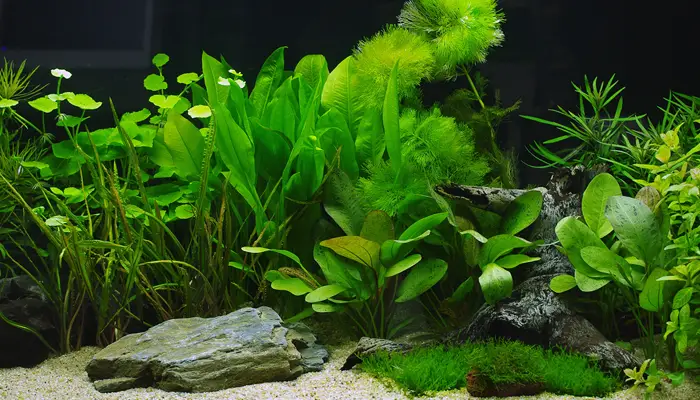
Open swimming space matters considerably more for rainbowfish than dense aquascaping — this is a genuinely active, mid-to-upper-water-column swimming family, and a tank designed primarily around dense planting with limited open water underserves their natural activity pattern relative to a design that balances planting (which also supports the natural, more subdued background environment against which their colouration displays most effectively) with genuine open swimming room.
Filtration at standard community-tank turnover rates is generally adequate, given rainbowfish are not a particularly heavy-bioload family relative to the larger cichlids and other more demanding species covered elsewhere in this site’s fish care series. Aquarium Filtration: The Backbone of a Healthy Aquarium covers the general sizing principles directly applicable here.
7. Water Parameters
| Parameter | Target Range |
|---|---|
| Temperature | 24–28°C |
| pH | 7.0–8.0 |
| KH | 4–10 dKH |
| GH | 8–16 dGH |
| Ammonia | 0 ppm |
| Nitrite | 0 ppm |
| Nitrate | Below 20 ppm |
This is genuinely favourable territory relative to many of the soft-water-adapted species covered elsewhere in this site’s fish care series — rainbowfish as a family tolerate, and in several species genuinely prefer, moderately hard, neutral-to-alkaline water considerably closer to typical Indian municipal water chemistry than the soft, acidic water demanded by discus, cardinal tetras, or the Caridina shrimp covered in Shrimp Tank Setup. Hard Water Aquariums in Delhi NCR covers the broader hard-water context this compatibility sits within.
8. Lighting — Why It Directly Affects Colour Outcome
Given the iridocyte-based colour mechanism established in Section 1, lighting quality and duration are not merely aesthetic considerations for viewing an already-coloured fish — they are a genuine input into how fully that colour develops in the first place, in a broadly similar principle to the water-chemistry-and-lighting influence on colour development established for Asian arowana in Arowana Fish Care elsewhere on this site, despite the different underlying colour-production biology between the two families.
Full-spectrum lighting, appropriate duration following the general principles established in How Long to Run Aquarium Light Per Day, and a tank environment that is not persistently over-bright in a way that stresses fish (itself a colour-suppressing factor given the general stress-colour relationship established throughout this site’s fish care series) together support fuller, more vivid mature colouration than inadequate or inconsistent lighting typically produces.
9. Shoaling Behaviour and Why Undersized Groups Fail
This is arguably the single most consequential husbandry decision for rainbowfish, and the one most consistently underestimated by hobbyists accustomed to smaller community shoaling species.
Rainbowfish are genuine shoaling fish, and a group that is too small — commonly, groups of 3 to 4 individuals purchased on a modest budget or in an undersized tank — produces measurably poorer outcomes across multiple dimensions simultaneously: reduced natural shoaling and swimming display behaviour, increased stress from inadequate social buffering (the same general stress-suppresses-colour-and-immunity principle established throughout this site, including The Science of Fish Stress), and specifically, reduced male display colouration, since male rainbowfish colour intensity and display behaviour are understood to be at least partly socially mediated, intensifying in the presence of an adequately sized group including other males to display against and females to display toward.
The practical recommendation: a minimum of 6 individuals of a single species, and ideally more where tank size allows, considerably above the group sizes many hobbyists default to for other community shoaling fish, reflecting the genuinely stronger social and display dependency this family shows relative to many alternatives.
10. Tank Mates and Compatibility
Rainbowfish are genuinely peaceful, active community fish, compatible with a wide range of similarly peaceful, similarly active mid-water community species, and their moderate size and active swimming pattern make them a poor match specifically for very small, slow, or fin-vulnerable tank mates that could be outcompeted for food or stressed by the rainbowfish’s own activity level, rather than through any genuine aggression on the rainbowfish’s part.
Compatible options include most peaceful tetra and rasbora species, Corydoras and other peaceful bottom-dwelling catfish, and other similarly active, similarly peaceful community fish of comparable size — Best Community Fish for Beginners covers the broader compatibility framework this fits within.
Less suitable pairings include very small, delicate nano fish that may struggle to compete for food against the more actively foraging rainbowfish, and genuinely aggressive or fin-nipping species that could target rainbowfish fins during normal community tank dynamics.
11. Feeding
Rainbowfish are omnivorous with a genuine appetite and active foraging behaviour, accepting high-quality flake and small pellet foods as a staple, with regular supplementation from frozen or live foods — brine shrimp, daphnia, and bloodworm — supporting both general condition and, per the colour-development principle established throughout this guide, contributing to fuller mature colouration alongside the lighting and water quality factors already covered.
Feeding frequency of two to three times daily, in quantities consumed within a few minutes, follows the general feeding principles established in How Often to Feed Fish applicable across most community fish species covered throughout this site.
12. Sexing and Breeding
Sexing most rainbowfish species is relatively straightforward once fish approach maturity — males typically display more vivid, more fully developed colouration and, in several species including Boesemani specifically, a more pronounced dorsal body profile, while females remain comparatively more subdued in colouration and body shape even at full maturity, a genuine and useful sexing indicator once the colour-development timeline established in Section 1 has had sufficient time to progress.
Breeding rainbowfish is genuinely achievable for hobbyists interested in pursuing it — most species are egg-scatterers, depositing adhesive eggs among fine-leaved plants or spawning mops over a period of days, with no parental care provided after spawning, meaning eggs and subsequently hatched fry require separation from adult fish to achieve meaningful survival rates given adult rainbowfish will otherwise consume both eggs and fry opportunistically. Conditioning breeding adults with the varied, protein-inclusive diet established in Section 11, combined with stable, optimal water parameters per Section 7, generally supports more reliable spawning activity than marginal husbandry conditions would produce.
13. Common Health Issues
Rainbowfish are not disproportionately associated with any single characteristic disease the way several other species covered throughout this site’s fish care series are — Malawi Bloat in African cichlids, or Hole in the Head disease in oscars and discus, for instance — and instead remain generally susceptible to the standard range of opportunistic conditions covered throughout this site’s freshwater disease library when water quality or husbandry lapses create the immune suppression these conditions exploit.
Ich and fin rot are the two most commonly encountered conditions in stressed or newly introduced rainbowfish, following the standard treatment protocols established in Ich — White Spot Disease Treatment and Fin Rot — Complete Treatment Guide respectively, with no rainbowfish-specific modification to either standard protocol required.
Colour loss or persistent dullness in an otherwise healthy-appearing adult fish should prompt review of the husbandry factors established throughout this guide — inadequate group size per Section 9, insufficient lighting per Section 8, or suboptimal water quality — rather than being assumed to indicate active disease, given how directly colour intensity in this family tracks these environmental and social factors independent of any pathogen.
14. India — Water Chemistry and Sourcing Realities
The hard water advantage established in Section 7 makes rainbowfish a genuinely favourable family for Indian hobbyists, and specifically for Delhi NCR keepers managing the hard, alkaline municipal water covered throughout Hard Water Aquariums in Delhi NCR — rainbowfish join guppies, mollies, and African cichlids, all covered elsewhere in this site’s species guides, as families that are directly compatible with unmodified or minimally modified Indian tap water, in contrast to the RO-water-dependent species covered in the discus and Caridina shrimp guides.
Sourcing and juvenile-stage disappointment, established as the central theme of this entire guide in Section 1, is a particularly relevant consideration for Indian buyers specifically given that rainbowfish availability through general retail channels frequently means purchasing young juveniles well before mature colouration has developed — setting correct expectations at the point of purchase, and specifically budgeting for the group size established in Section 9 rather than a token pair or trio, meaningfully improves the likelihood of a satisfying long-term outcome with this family. Aquarium Shop Delhi NCR — What a Specialist Looks Like covers the broader framework for evaluating suppliers who can provide accurate guidance on adult colouration expectations and appropriate group sizing at the point of sale.
Frequently Asked Questions
Why does my rainbowfish look so plain compared to photos I’ve seen? Rainbowfish colour, produced through reflective iridocyte cells rather than pigment alone, develops slowly and continues intensifying well into adulthood, often taking several months to a year or more to reach the vivid colouration seen in photographs of mature adults. Nearly all rainbowfish are sold as juveniles, at exactly the life stage when this colour is least developed — the fish is very likely healthy and simply not yet mature.
How many rainbowfish should I keep together? A minimum of 6 individuals of a single species, and ideally more where tank size allows. Smaller groups produce measurably reduced shoaling behaviour, increased stress, and specifically reduced male display colouration, since colour intensity and display behaviour in this family are partly socially mediated by group size.
Can rainbowfish live in hard, alkaline Indian tap water? Yes, generally very well without modification — rainbowfish as a family tolerate and often prefer moderately hard, neutral-to-alkaline water considerably closer to typical Indian municipal water chemistry than many other popular community fish, making them a genuinely favourable choice for hard water regions.
What is the difference between Boesemani and praecox rainbowfish? Boesemani rainbowfish are larger, displaying a striking two-tone blue-to-orange adult colour pattern. Praecox (neon dwarf) rainbowfish are considerably smaller, with a more uniform blue-violet body colouration, making them better suited to tanks that cannot comfortably accommodate the larger Boesemani.
Why did my rainbowfish’s colour fade after looking great for a while? Review lighting adequacy, group size, and water quality first, given how directly colour intensity in this family tracks these environmental and social factors. Persistent colour loss is more commonly a husbandry signal than a symptom of active disease in an otherwise normally behaving fish, though standard disease conditions should still be ruled out if other symptoms are present.