
By ProHobby™ | Ecological Systems Authority
Head and Lateral Line Erosion — HLLE — is one of the most visually distressing conditions a marine hobbyist will encounter, and one of the most frustrating precisely because it is not an infection at all. There is no organism to identify under a microscope, no antibiotic that resolves it, and no single accepted cause that the marine fishkeeping community agrees on even now. What exists instead is a cluster of competing, overlapping theories — nutritional deficiency, activated carbon exposure, water quality stress, even stray electrical current — each with genuine supporting evidence and none individually sufficient to explain every case. Tangs and marine angelfish are disproportionately affected, the pitting and erosion around the head and along the lateral line is progressive and disfiguring, and the honest, responsible answer for any hobbyist facing it is that management means addressing every plausible contributing factor simultaneously rather than waiting for a single definitive diagnosis that the science itself has not yet settled on.
Table of Contents
- What HLLE Actually Looks Like
- Why HLLE Is Not an Infection — And Why That Matters for Treatment
- The Nutritional Deficiency Theory
- The Activated Carbon Theory
- The Water Quality and Stress Theory
- The Stray Voltage Theory
- Why These Theories Are Not Mutually Exclusive
- HLLE vs Freshwater Hole in the Head — A Genuinely Different Disease
- Species Most Affected and Why
- Diagnosis — Ruling Out What HLLE Is Not
- Management — Addressing Every Plausible Factor at Once
- Prognosis — What Recovery Actually Looks Like
- India — Practical Realities for Tang and Angelfish Keepers
- Frequently Asked Questions
1. What HLLE Actually Looks Like
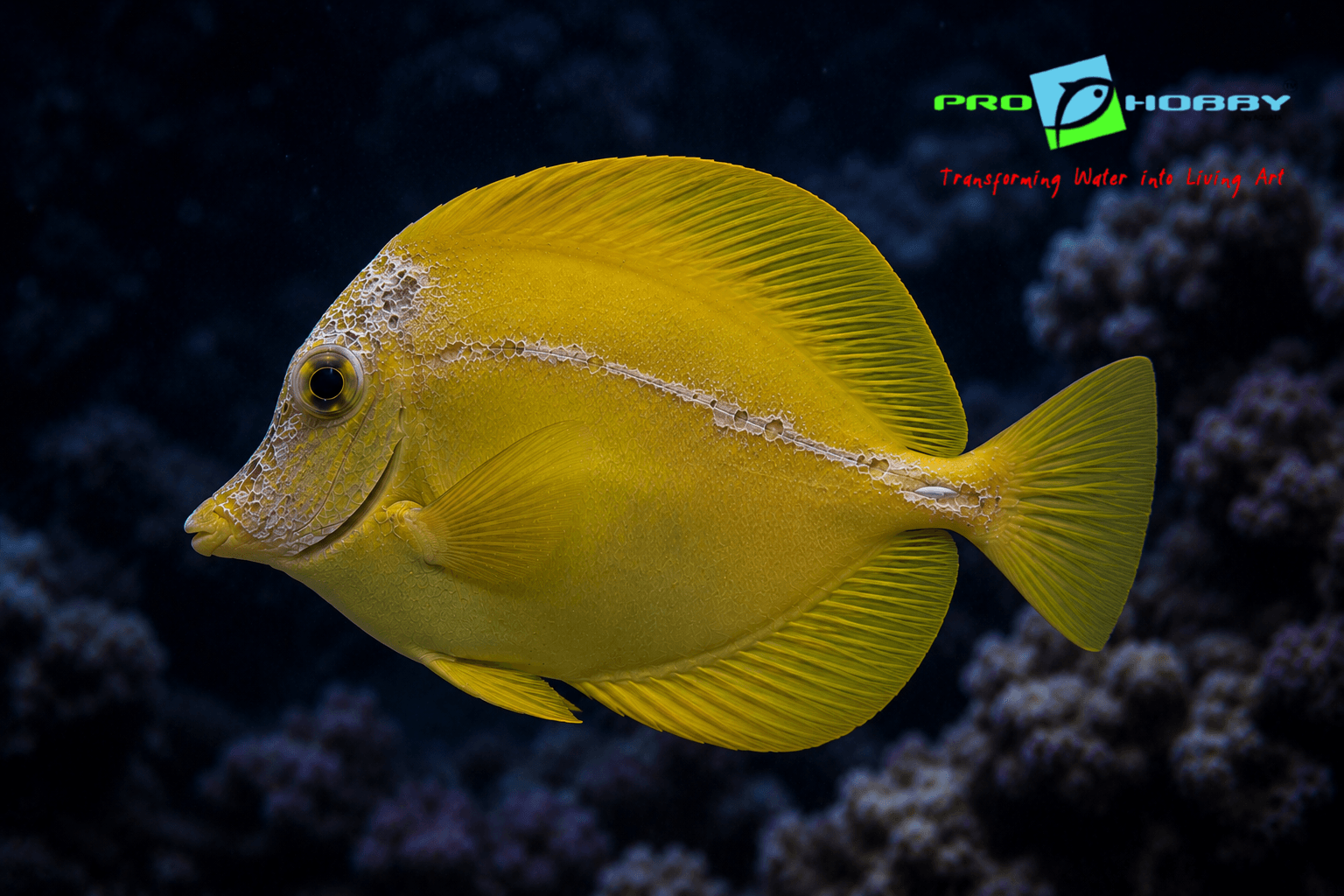
HLLE presents as progressive pitting, erosion, and tissue loss beginning around the head — particularly around the eyes and the sensory pores of the face — and frequently extending along the lateral line, the sensory organ running the length of the fish’s body used to detect water movement and pressure changes. Early HLLE appears as small, shallow depressions or pits in the skin, often first noticed as a slight roughening or loss of the smooth facial contour typical of the species. As the condition progresses, the pits deepen and widen, sometimes coalescing into larger eroded areas, and can extend to affect a significant portion of the head and body surface in advanced, longstanding cases.
Unlike the disease processes covered elsewhere in this cluster, HLLE typically develops slowly over weeks to months rather than presenting as an acute event, and affected fish frequently continue eating and behaving relatively normally even as the visible erosion progresses — a pattern that itself is a diagnostic clue, discussed further in Section 10.
2. Why HLLE Is Not an Infection — And Why That Matters for Treatment
This is the single most important thing to understand before considering any treatment approach: HLLE is not caused by a bacterium, parasite, fungus, or virus in the way that every other condition covered throughout this marine disease cluster is. There is no pathogen to culture, no organism to identify on a gill or skin biopsy, and consequently no antibiotic, antiparasitic, or antifungal treatment that addresses it directly, in exactly the same way that Lymphocystis in the freshwater and general disease library cannot be treated pharmacologically because it is viral rather than bacterial or parasitic.
This does not mean HLLE is untreatable — it means the entire treatment logic shifts away from killing an organism and toward correcting the husbandry, nutritional, and environmental conditions understood to contribute to the tissue breakdown, covered across Sections 3 through 6. A hobbyist reaching for antibiotics or antiparasitic medication in response to HLLE is applying exactly the same category error addressed for bacterial gill disease and Lymphocystis elsewhere in this library — treating a non-infectious condition as though it were infectious wastes time without addressing the actual contributing factors.
3. The Nutritional Deficiency Theory
The most widely supported explanation for HLLE centres on dietary insufficiency, particularly of vitamins involved in tissue maintenance and repair — historically vitamin C, along with broader concerns about overall diet quality and variety in captive marine fish, especially herbivorous and grazing species like tangs that in the wild spend most of their time grazing algae and biofilm continuously throughout the day.
Why grazing species are implicated specifically: Tangs and similar grazing herbivores have digestive systems and feeding behaviour adapted to near-continuous small-quantity intake of a highly varied, algae-rich diet. Captive diets — even well-intentioned ones — frequently fail to replicate either the continuous grazing pattern or the full nutritional variety of a natural algae-rich diet, and the resulting chronic, low-grade nutritional insufficiency is understood to compromise the tissue integrity and repair capacity specifically in the skin and connective tissue around the head and lateral line, areas that may be more nutritionally demanding to maintain given the sensory tissue and pore structures located there.
The practical implication, addressed further in Section 11, is that dietary correction toward a varied, high-quality, appropriately frequent feeding regimen — particularly rich in marine algae and vitamin-supplemented foods for grazing species — is one of the most consistently recommended management interventions, even though it does not resolve every case in isolation.
4. The Activated Carbon Theory
A specific and long-debated hypothesis links HLLE to the continuous use of activated carbon in marine filtration systems, paralleling almost exactly the activated carbon association with Hole in the Head disease in freshwater cichlids covered elsewhere in this library.
The proposed mechanism: activated carbon is understood to adsorb trace amounts of fat-soluble vitamins and other beneficial organic compounds from aquarium water alongside the dissolved organics and discolouration compounds it is intended to remove, potentially compounding the nutritional insufficiency described in Section 3 by depleting compounds the fish might otherwise obtain, in however small a quantity, from the water column itself. As with the freshwater HITH association, the causal mechanism is not fully proven, and correlation between carbon use and HLLE incidence in anecdotal hobbyist experience is the primary evidence base rather than controlled experimental confirmation.
The practical response, regardless of the mechanism’s exact validity: removing continuous activated carbon use, or limiting it to short, specific-purpose applications (such as clearing medication residue after a treatment course) rather than permanent, continuous filtration, is a low-risk, evidence-adjacent precaution widely adopted by experienced tang and angelfish keepers as part of a broader HLLE management approach.
5. The Water Quality and Stress Theory
Chronic, low-grade water quality stress — marginal but not acutely dangerous ammonia, nitrate, or pH instability, along with general system stress from inadequate space, aggressive tank mates, or insufficient hiding and grazing structure — is implicated in HLLE through the same general cortisol-mediated immune and tissue-health pathway that underlies opportunistic disease susceptibility throughout this entire library.
Tangs in particular are frequently kept in tanks that, while adequate for many other marine fish, are undersized relative to the swimming space and territory a naturally wide-ranging grazing species requires, and chronic stress from inadequate space or social conflict is a widely cited contributing factor in HLLE cases independent of, or in combination with, the nutritional and carbon-filtration theories above.
6. The Stray Voltage Theory
A less commonly discussed but persistently reported hypothesis links HLLE to stray electrical current in aquarium water, originating from faulty, poorly grounded, or degrading electrical equipment — heaters, pumps, and lighting ballasts in particular — creating a low-level electrical current in the tank water that is proposed to irritate the sensory pores and lateral line specifically, given their function as electrically and pressure-sensitive organs.
This theory has less robust supporting evidence than the nutritional and water-quality hypotheses, but the corrective action it implies — testing tank water for stray voltage using a simple voltage meter, and inspecting and replacing any aging or suspect electrical equipment — is a low-cost, low-risk precaution worth taking as part of a comprehensive management approach regardless of how strongly any individual hobbyist weighs this particular theory, since equipment safety and grounding are worthwhile practices independent of HLLE specifically.
7. Why These Theories Are Not Mutually Exclusive
This is the point that too many discussions of HLLE miss by treating it as a debate to be won rather than a genuinely multifactorial condition to be managed. Nothing about the nutritional theory precludes the water quality theory also being relevant in the same fish; nothing about activated carbon exposure precludes chronic stress from inadequate tank space also contributing. The most defensible current understanding, consistent with how multifactorial conditions are treated elsewhere in this library — the combination of Hexamita, nutritional deficiency, elevated nitrate, and activated carbon use in freshwater Hole in the Head disease being the closest direct parallel — is that HLLE most plausibly represents a shared tissue-breakdown endpoint reached through multiple, frequently co-occurring contributing pathways rather than a single-cause disease with one correct answer.
This is precisely why the management approach in Section 11 addresses every plausible factor simultaneously rather than betting on a single theory.
8. HLLE vs Freshwater Hole in the Head — A Genuinely Different Disease
Given the visual and conceptual similarity, it is worth being explicit that HLLE and freshwater Hole in the Head disease (HITH) are not the same condition despite superficially comparable presentations and some overlapping proposed contributing factors.
HITH has an identified, if not fully proven, infectious component — Hexamita and Spironucleus flagellate parasites — alongside the nutritional and water quality factors that compound it, meaning metronidazole treatment targeting those parasites forms a genuine part of the standard HITH protocol.
HLLE has no identified infectious agent implicated in mainstream understanding of the condition. The activated carbon and nutritional theories parallel HITH’s contributing factors closely, but there is no equivalent parasitic component and consequently no antiparasitic medication with an established role in HLLE management. Applying the HITH treatment protocol — specifically metronidazole — to HLLE is a mismatch based on visual similarity rather than shared underlying pathology, and would not be expected to address a condition without the parasitic component that metronidazole targets.
9. Species Most Affected and Why
Tangs (Acanthuridae) are the species group most consistently and prominently associated with HLLE in the marine hobby, consistent with the grazing-herbivore nutritional vulnerability discussed in Section 3 and the space and territory requirements discussed in Section 5 — tangs are both nutritionally specialised in a way captive diets frequently under-replicate and behaviourally demanding in terms of space in a way many marine systems under-provide.
Marine angelfish are the second major group commonly affected, sharing some of the grazing and browsing dietary tendencies of tangs, alongside general sensitivity to water quality stability.
Other marine species can develop HLLE, but the strong association with these two groups specifically is consistent enough across hobbyist and clinical experience to warrant particular attention to the preventive measures in Section 11 for anyone keeping tangs or marine angelfish specifically.
10. Diagnosis — Ruling Out What HLLE Is Not
Because HLLE has no definitive positive diagnostic test — no organism to find on a biopsy, no blood marker to check — diagnosis is substantially a process of exclusion, confirming that the presentation is not one of the genuinely infectious or parasitic conditions covered elsewhere in this cluster that might otherwise produce superficially similar tissue changes.
Rule out active infection: a gill or skin biopsy, per the approach described in the bacterial gill disease guide, showing no parasitic organisms and no evidence of active bacterial infection supports an HLLE diagnosis over an infectious alternative. Where erosion is accompanied by inflammation, discolouration, or a rapidly worsening margin rather than the slow pitting typical of HLLE, a bacterial component should specifically be considered and ruled out per Vibriosis and Marine Bacterial Infections — Complete Guide.
Assess the timeline: the slow, progressive, weeks-to-months development pattern described in Section 1, in a fish that continues eating and behaving largely normally, is itself consistent with HLLE and inconsistent with the acute presentations of Cryptocaryon, Amyloodinium, or Brooklynella covered elsewhere in this cluster, all of which progress over days rather than weeks to months.
Review husbandry history: the presence of continuous activated carbon use, a documented history of dietary limitation or lack of variety, chronic marginal water quality, or inadequate tank space and social stress all support an HLLE diagnosis and simultaneously identify which specific management interventions from Section 11 are most likely to be relevant for the individual case.
11. Management — Addressing Every Plausible Factor at Once
Given the multifactorial understanding established in Section 7, the responsible management approach addresses every plausible contributing factor simultaneously rather than sequentially testing one theory at a time while the fish’s condition potentially continues to progress:
Correct diet immediately — increase feeding frequency toward a near-continuous grazing pattern where practical, incorporate a wide variety of marine algae (nori, dried seaweed sheets, and prepared algae-based foods) and vitamin-supplemented commercial foods specifically marketed for herbivorous marine fish, and consider direct vitamin C supplementation of food.
Remove or limit continuous activated carbon use — reserve activated carbon for short-term, specific-purpose applications such as clearing medication residue rather than permanent continuous filtration.
Optimise water quality comprehensively — test and correct ammonia, nitrate, and pH stability even at levels that would not be flagged as acutely dangerous, following the Complete Water Chemistry Guide framework, and increase water change frequency if any parameter is running at the marginal end of the acceptable range rather than genuinely optimal.
Review tank size and social stress — assess whether the affected fish, tangs in particular, has adequate swimming space and territory, and address any ongoing aggression or overcrowding contributing to chronic stress.
Test for and address stray voltage — a simple, low-cost precaution using a standard aquarium voltage meter, with prompt replacement of any aging or suspect electrical equipment identified.
12. Prognosis — What Recovery Actually Looks Like
With comprehensive management addressing multiple contributing factors simultaneously, HLLE frequently stabilises and shows gradual improvement over a period of months — existing erosion may partially fill in and smooth over time, though severe, longstanding cases may leave permanent tissue changes and scarring even with successful management, similar in principle to the residual scarring sometimes seen after successfully treated scale rot in the freshwater context.
The honest expectation to set is gradual stabilisation and partial improvement over a genuinely extended timeline — this is not a condition that resolves within days or weeks even under ideal management, and continued vigilance across every management factor in Section 11 for the long term, not just an initial correction period, is what sustains improvement rather than allowing relapse. It is also worth monitoring eroded areas for secondary complication during the recovery period — chronically compromised tissue of the kind HLLE produces is exactly the type of pre-existing damage that opportunistic organisms like Uronema marinum can exploit, so a previously stable HLLE lesion that suddenly worsens or shows new inflammation warrants reassessment rather than being assumed to be a simple HLLE flare-up.
13. India — Practical Realities for Tang and Angelfish Keepers
Tangs and marine angelfish are popular and frequently kept species in the Indian marine hobby, and the general marine system stability and water quality considerations established throughout this cluster — see Marine Aquarium Ecology and Stability — apply directly to HLLE prevention in Indian systems.
Sourcing high-quality marine algae products and vitamin-supplemented herbivore foods specifically, rather than relying solely on generic flake or pellet foods not formulated for grazing species’ specific needs, is a particularly relevant consideration for the Indian market, where specialist marine herbivore foods may be less consistently available through general retail channels than through dedicated marine specialist suppliers. Aquarium Shop Delhi NCR — What a Specialist Looks Like covers the broader supplier evaluation relevant to sourcing appropriate specialist foods and equipment for demanding species like tangs.
For hobbyists running a full reef system that includes both grazing fish species and coral, the same disciplined, long-horizon management approach that HLLE demands applies equally to coral-specific risks such as marine flatworms — both are conditions where patience, consistent husbandry, and addressing root causes rather than chasing a single quick fix determine the outcome.
Frequently Asked Questions
Is HLLE contagious or infectious? No. HLLE has no identified bacterial, parasitic, fungal, or viral cause in mainstream understanding of the condition. It is understood as a multifactorial tissue-breakdown condition linked to nutritional deficiency, activated carbon use, water quality stress, and possibly stray electrical current, rather than an infectious disease that spreads between fish.
What is the difference between HLLE and freshwater Hole in the Head disease? Freshwater HITH has an identified parasitic component (Hexamita and Spironucleus) alongside nutritional and water quality factors, and responds partly to metronidazole treatment targeting those parasites. HLLE has no identified infectious agent, shares some proposed contributing factors like activated carbon use, but has no equivalent antiparasitic treatment component, since there is no parasite for metronidazole to target.
Will antibiotics or antiparasitic medication cure HLLE? No. HLLE is not caused by an infectious organism, so medications targeting bacteria or parasites will not address the underlying condition. Management instead focuses on diet correction, activated carbon removal, water quality optimisation, and stress reduction addressed simultaneously.
How long does it take for HLLE to improve? Gradual stabilisation and partial improvement typically develop over a period of months with comprehensive management addressing diet, water quality, activated carbon use, and stress simultaneously. Severe, longstanding cases may leave some permanent tissue changes even with successful management. This is not a condition that resolves within days or weeks.
Which marine fish are most likely to develop HLLE? Tangs (Acanthuridae) are the species group most consistently affected, followed by marine angelfish, both groups sharing grazing or browsing dietary tendencies that captive diets frequently under-replicate, alongside space and territory requirements that are often under-provided in captive systems.