
By ProHobby™ | Ecological Systems Authority
Marine flatworms occupy an unusual position in this disease cluster, because strictly speaking they are not a fish disease at all — they are an invertebrate pest problem, and the majority of flatworm species a reef keeper will ever encounter are entirely harmless to fish, corals, and system health, doing nothing more than quietly grazing detritus and algae film in a way indistinguishable from a dozen other benign microfauna living in any established tank. The genuine risk sits with a small number of specific flatworm species — most critically the Acropora-eating flatworm — capable of devastating an entire coral collection within days if misidentified as harmless and left unaddressed, and with the treatment process itself, where a mass flatworm die-off from an improperly managed eradication attempt can release enough toxin into the water to kill fish that the flatworms themselves were never actually threatening. Getting the identification right before choosing a response, and choosing the right eradication method for the specific situation, matters more here than in almost any other condition in this cluster, precisely because the wrong response can cause more harm than the pest itself.
Table of Contents
- Marine Flatworms Are Not One Thing — The Identification Problem
- Benign Detritus-Grazing Flatworms
- Convolutriloba and the Nuisance Bloom Category
- The Acropora-Eating Flatworm — A Genuine Coral Emergency
- Why Flatworms Explode in Population So Quickly
- Identification — Distinguishing the Categories in Practice
- The Toxin Release Problem — Why Mass Die-Off Treatment Can Kill Fish
- Treatment for Nuisance Flatworm Blooms
- Treatment for Acropora-Eating Flatworm Specifically
- Manual Removal and Biological Control
- Quarantine — Why This Is the Only True Prevention
- Prevention and Ongoing Monitoring
- India — Coral Sourcing and Practical Realities
- Frequently Asked Questions
1. Marine Flatworms Are Not One Thing — The Identification Problem
The phrase “marine flatworm” covers an enormous diversity of unrelated flatworm species with wildly different diets, behaviours, and levels of threat to a reef system, and the single biggest mistake a hobbyist can make is treating every flatworm sighting as equally alarming or equally trivial. A tank can simultaneously host completely harmless detritus-grazing flatworms that have been present unnoticed for months, an unsightly but non-coral-threatening bloom of a nuisance species reacting to excess nutrients, and — in the worst case — a small, easily overlooked population of a genuinely coral-destroying species actively working through an Acropora collection. Correctly sorting a given sighting into the right category, covered across Sections 2 through 4, is the entire foundation of choosing an appropriate response.
2. Benign Detritus-Grazing Flatworms
The majority of flatworms found in established reef systems fall into this category — small, typically translucent or lightly pigmented flatworms grazing on detritus, diatoms, and organic film on rock, sand, and glass surfaces, functioning as part of the same general clean-up crew ecology as many benign microfauna, causing no damage to fish, corals, or other invertebrates, and frequently going unnoticed for extended periods precisely because they cause no visible harm.
These species require no treatment whatsoever. Their presence is not a sign of poor tank management, and eradication attempts targeting them are, at best, unnecessary effort and, at worst, an example of the toxin-release risk described in Section 7 being taken on for no actual benefit.
3. Convolutriloba and the Nuisance Bloom Category
Convolutriloba species, along with several visually similar related flatworms, represent the most commonly encountered “nuisance” flatworm category — worms that do not directly attack coral tissue or fish but can bloom into visually unpleasant, carpet-like population explosions across rock and sand surfaces under favourable nutrient conditions, particularly in systems running elevated nutrient levels or with abundant unconsumed food and organic matter.
Why this category matters even without direct coral predation: a heavy Convolutriloba bloom, while not eating coral tissue directly, can physically smother low-growing coral colonies or interfere with light and flow reaching coral surfaces purely through sheer physical coverage, and represents in most cases a visible symptom of the same excess-nutrient system conditions that drive nuisance algae growth and other water-quality-linked problems covered throughout the broader ecology framework in Reef Aquarium Ecology and Collapse. A Convolutriloba bloom is frequently better understood as a nutrient management signal than as a pest problem in its own right, though direct population reduction alongside the underlying nutrient correction is still generally warranted once a bloom becomes visually or physically problematic.
4. The Acropora-Eating Flatworm — A Genuine Coral Emergency
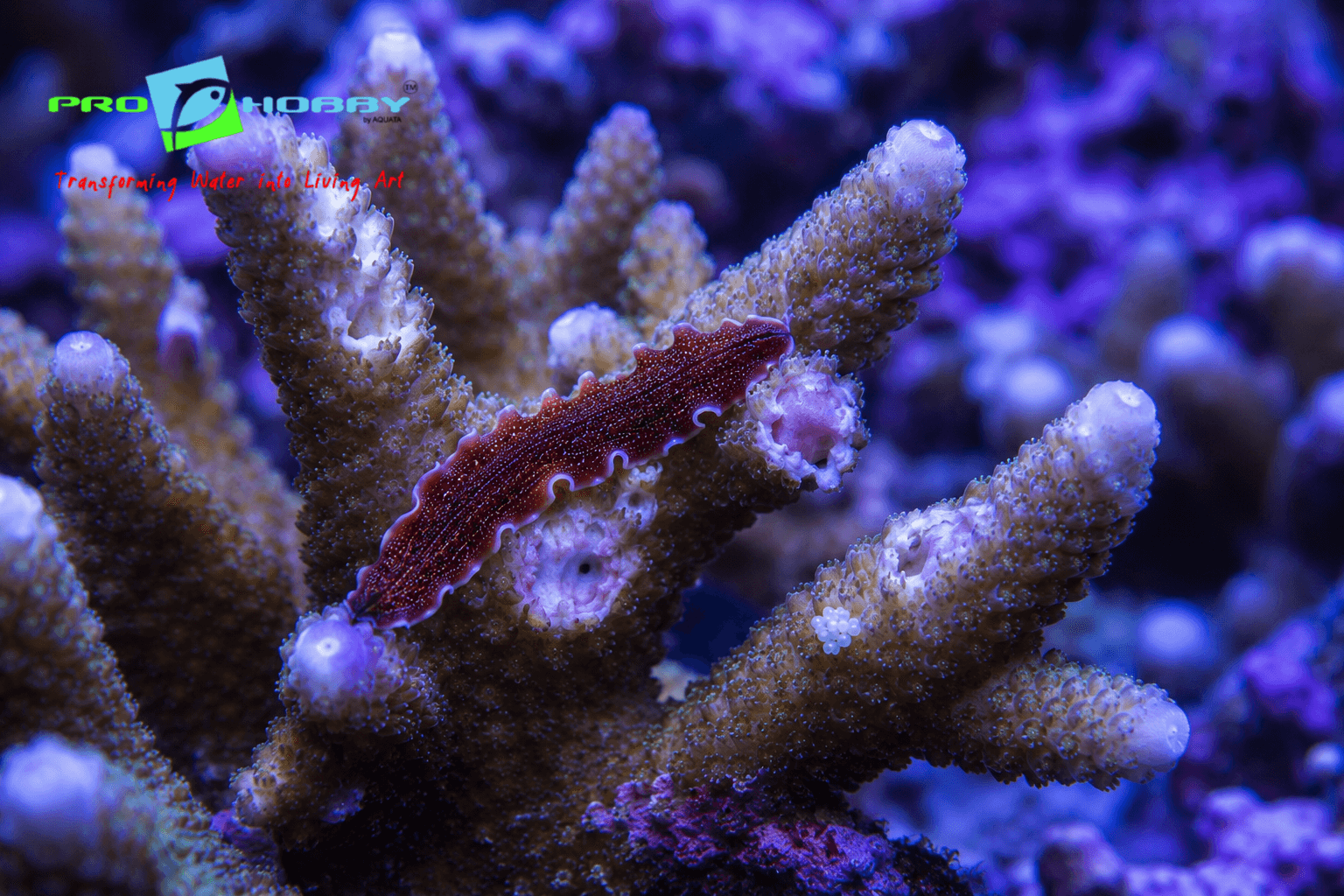
The Acropora-eating flatworm (AEFW, most commonly referring to Amakusaplana acroporae and related species) is the specific flatworm threat that justifies the level of vigilance this guide recommends for the entire category, and represents a genuine emergency for any reef system containing Acropora corals specifically.
Biology and feeding behaviour: AEFW feed directly on Acropora coral tissue, typically favouring the base and lower branches of a colony where they are also hardest to visually detect against the coral’s own colouration and skeletal structure — a camouflage advantage that is central to why infestations are so often discovered only after significant tissue damage has already occurred. Feeding produces visible tissue necrosis, receding tissue exposing bare skeleton, and progressive colony decline that, left unaddressed, can destroy an entire Acropora colony and spread to adjacent colonies in the same system within a period of days to a few weeks.
Why Acropora specifically: AEFW species show strong host specificity for Acropora coral tissue, meaning a system without Acropora corals present is not at meaningful risk from this specific flatworm even if other coral genera are kept, though the broader identification vigilance in Section 6 remains relevant given the diversity of other flatworm species that may be present regardless of coral selection.
The urgency this creates: because AEFW are small, camouflaged against Acropora tissue and skeleton, and often first noticed only once visible tissue damage has already begun, any Acropora colony showing unexplained tissue recession or necrosis — even without a flatworm directly visible — should prompt close inspection specifically for this pest before assuming a water quality or general coral health cause.
5. Why Flatworms Explode in Population So Quickly
Most marine flatworm species relevant to this guide, including both the benign and problematic categories, reproduce through a combination of sexual reproduction and, critically, asexual fission or fragmentation, in which a flatworm can split or regenerate from body fragments into multiple new individuals without requiring a mating partner. This reproductive strategy, combined in many species with rapid generation times under favourable conditions, is the underlying reason flatworm populations — whether a benign detritus grazer, a nuisance Convolutriloba bloom, or an AEFW infestation — can expand from an inconspicuous handful of individuals to a visually obvious or, in the AEFW case, coral-threatening population within a surprisingly short window, and is also the direct reason that mechanical disruption or partial removal methods that fragment worms without killing them completely can, perversely, increase rather than decrease the total population if fragments survive and regenerate.
6. Identification — Distinguishing the Categories in Practice
Location and behaviour as the first clue: flatworms found grazing openly on rock, sand, and glass surfaces away from coral tissue, in a system without dramatic coral health changes, are most likely the benign category from Section 2 or, if present in visually obvious bloom quantities, the Convolutriloba nuisance category from Section 3.
Coral association as the critical red flag: any flatworm found directly on coral tissue, particularly Acropora, especially when accompanied by tissue recession, necrosis, or unexplained colony decline, should be treated as a potential AEFW situation requiring the emergency response in Section 9 rather than assumed to be incidental or harmless until proven otherwise.
Close visual inspection of Acropora specifically: given AEFW’s camouflage against host tissue described in Section 4, periodic close inspection of Acropora colonies — particularly the base and lower branch areas, and ideally using a magnifying loupe or macro photography to reveal camouflaged worms that are difficult to spot with the naked eye under standard tank lighting — should be part of routine reef maintenance for any system keeping this coral genus, rather than something undertaken only after visible tissue damage has already prompted concern.
7. The Toxin Release Problem — Why Mass Die-Off Treatment Can Kill Fish
This is the single most important safety consideration in this entire guide, and deserves to be understood before any treatment decision is made for any flatworm category.
Marine flatworms, upon death, release toxic compounds into the water — the specific toxin profile varies by species, but the underlying risk is consistent across the category: a small number of dying flatworms release a correspondingly small and generally inconsequential amount of toxin, easily diluted and processed by an established system’s biological filtration and water volume. A large population die-off, particularly from a chemical treatment applied to an established, heavy flatworm bloom without adequate preparation, can release toxin in a quantity sufficient to cause fish mortality and broader system toxicity — a genuine case of the treatment causing more immediate harm than the pest itself was causing, and directly analogous in principle to the disrupted-nodule viral release risk discussed for Lymphocystis, the biological filtration disruption risk that runs throughout the Cryptocaryon and Vibriosis guides, and the same treatment-caution principle established for copper’s toxicity to biological filtration in the Amyloodinium and formalin’s respiratory-irritant properties in the Brooklynella guides elsewhere in this cluster — in every case, the treatment itself carries a real risk profile that must be actively managed, not just the disease or pest being treated.
Fish already compromised by gill irritation from any cause — including the non-parasitic bacterial gill pathology covered in Bacterial Gill Disease in Marine Fish — are likely to be disproportionately vulnerable to any additional toxin or water quality burden from a mismanaged flatworm die-off, another reason to treat the staged, carefully monitored approach in this section as non-negotiable rather than an optional precaution.
The practical implication: any chemical or mass-treatment approach to a significant flatworm population, covered in Section 8, must be undertaken with active carbon filtration running to absorb released toxins, close monitoring of the system during and after treatment, strong protein skimming and water movement to help process and export the toxin load, and ideally staged or partial treatment rather than an attempt to eliminate an entire large population in a single application.
8. Treatment for Nuisance Flatworm Blooms
Address the underlying nutrient driver first, per the ecological framework in Section 3 — excess nutrients, uneaten food, and organic accumulation are the conditions that allow nuisance flatworm populations to bloom in the first place, and correcting feeding practices, improving protein skimming, and reviewing overall nutrient export capacity addresses the root cause rather than only the visible symptom.
Chemical flatworm treatments formulated specifically for reef-safe flatworm eradication are available and generally effective against nuisance bloom species, but must be used with the toxin-release precautions established in Section 7 — active carbon, strong skimming, and close monitoring throughout treatment, ideally with the system’s fish and sensitive invertebrates under close observation for signs of distress during and immediately after dosing.
Manual removal, covered in more detail in Section 10, is a reasonable lower-risk starting approach for a bloom that has not yet become severe, avoiding the toxin-release risk of chemical treatment entirely for populations small enough that manual methods can meaningfully reduce numbers.
9. Treatment for Acropora-Eating Flatworm Specifically
Given AEFW’s specific threat to Acropora coral health and the urgency established in Section 4, treatment approaches focus on both the immediate infestation and preventing spread to unaffected colonies.
Coral dips using flatworm-specific dip solutions, applied to individual Acropora colonies removed from the main display, are a standard first-line approach — the coral is briefly immersed in the treatment solution outside the main system, dislodging and killing flatworms and their eggs attached to the colony without exposing the entire display and its fish population to a mass in-tank die-off. This approach directly sidesteps the toxin-release risk from Section 7 by conducting the kill outside the main system entirely.
Systemic in-tank treatment using reef-safe flatworm eradication products is used when dipping individual colonies is impractical or when the infestation has already spread across multiple colonies or the substrate, again requiring the toxin-management precautions from Section 7 given the potentially larger die-off volume involved.
Quarantine of all new Acropora specifically before introduction to an existing display, covered in full in Section 11, is the single most effective AEFW prevention measure available, given that new coral acquisition is overwhelmingly the primary introduction pathway for this pest.
Ongoing colony inspection following the visual identification approach in Section 6, applied specifically and repeatedly to any Acropora colonies that have been dipped or treated, to confirm eradication and catch any surviving worms or hatching eggs before a fresh infestation can re-establish.
10. Manual Removal and Biological Control
Manual removal using a turkey baster or similar tool to physically siphon visible flatworms directly off rock and glass surfaces into a container for disposal outside the tank is a genuinely useful, zero-toxin-risk method for reducing population size in both nuisance bloom and, for accessible individuals, AEFW situations, though it is rarely capable of achieving complete eradication on its own given the reproductive capacity described in Section 5, and works best as a population-reduction adjunct to chemical or dip treatment rather than a standalone solution for anything beyond a very light, early-stage presence.
Biological control using specific flatworm-predating fish or invertebrate species is practised by some reef keepers for nuisance bloom species, though compatibility with existing tank inhabitants, the predator’s own care requirements, and the general unreliability of biological control as a complete solution for an established heavy infestation mean this is generally best considered a supportive, ongoing population-management tool rather than a primary treatment for an active outbreak, and is not considered a reliable standalone approach specifically for AEFW given the coral-tissue-specific feeding behaviour and camouflage described in Section 4.
11. Quarantine — Why This Is the Only True Prevention
Given that flatworms — problematic species specifically included — are overwhelmingly introduced to established reef systems via new coral acquisitions rather than arising spontaneously within a mature tank, coral quarantine functions as the direct equivalent of the fish quarantine discipline established throughout this entire marine disease cluster, from Cryptocaryon through Uronema.
Standard coral quarantine practice involves holding every new coral acquisition in a separate system, away from the main display, for a period of several weeks, during which close visual inspection per Section 6, and often a precautionary dip treatment regardless of whether flatworms are visually detected, are performed before the coral is considered safe to introduce to the display. This mirrors precisely the logic of prophylactic treatment during fish quarantine established in the Cryptocaryon guide — the cost of unnecessary precaution is far lower than the cost of an AEFW infestation reaching an established Acropora collection.
Given the specific camouflage and detection difficulty established for AEFW in Section 4, coral quarantine deserves at least as much discipline as fish quarantine, if not more, since a missed AEFW infestation can spread through direct coral-to-coral contact and proximity within a display in a way that compounds rapidly once established, precisely because it typically goes unnoticed until visible damage has already occurred.
12. Prevention and Ongoing Monitoring
Beyond the coral quarantine discipline in Section 11, ongoing prevention rests on the same general system management principles established throughout this cluster: maintaining appropriate nutrient levels to avoid the conditions that drive nuisance flatworm blooms, per Section 3, and incorporating routine close visual inspection of Acropora colonies specifically into regular maintenance, per Section 6, rather than relying on incidental noticing of visible tissue damage as the first indication of a problem.
13. India — Coral Sourcing and Practical Realities
Coral sourcing in the Indian marine hobby, whether through domestic aquaculture, imported colonies, or frag trading within the hobbyist community, carries the same fundamental flatworm introduction risk established throughout this guide, and the general marine livestock sourcing and quarantine considerations detailed throughout this cluster’s India sections apply directly to coral acquisition as well as fish.
Given the relative novelty of dedicated reef-keeping infrastructure in parts of the Indian market, establishing a genuine coral quarantine system — even a simple, separate small tank used specifically for this purpose — before beginning to acquire Acropora specifically is a worthwhile investment relative to the risk of losing an established coral collection to an undetected AEFW introduction. Aquarium Shop Delhi NCR — What a Specialist Looks Like covers relevant questions to ask any coral supplier regarding their own quarantine and inspection practices before corals reach a buyer.
A fully built-out Indian reef system managing both fish health and coral health draws on the same underlying discipline throughout this entire marine cluster — separate quarantine for fish and corals, careful treatment protocols that account for toxin and biological filtration risk, and close ongoing observation rather than reactive treatment only once a problem is visually obvious. This applies as much to fish-side conditions like HLLE in tangs and angelfish, which shares the same patient, root-cause-focused management philosophy as flatworm control, as it does to the coral-specific risks covered in this guide.
Frequently Asked Questions
Are all marine flatworms dangerous to my reef tank? No. The majority of flatworms encountered in established reef systems are entirely harmless detritus grazers causing no damage to fish or corals. A small number of specific species, most critically the Acropora-eating flatworm, pose a genuine and serious threat specifically to Acropora corals, while nuisance species like Convolutriloba can bloom unsightly but are not directly coral-destroying. Correct identification before choosing a response is essential.
Can treating flatworms kill my fish? Yes, if not managed carefully. Flatworms release toxic compounds upon death, and a large population die-off from chemical treatment can release enough toxin to harm or kill fish and other tank inhabitants. Active carbon filtration, strong protein skimming, close monitoring, and staged rather than single-application treatment of large populations all reduce this risk.
How do I know if I have Acropora-eating flatworms specifically? Close inspection of Acropora colonies, particularly the base and lower branches, ideally using a magnifying loupe or macro photography given the pest’s camouflage against coral tissue, is the reliable identification method. Unexplained tissue recession or necrosis on Acropora colonies should prompt this inspection even if no flatworm is immediately visible.
Does quarantine actually prevent flatworm infestations? Yes, and it is the single most effective prevention measure available, given that flatworms are overwhelmingly introduced via new coral acquisitions rather than arising within an established system. Holding new corals in a separate quarantine system for several weeks, with close inspection and often a precautionary dip treatment, before introduction to the display significantly reduces introduction risk.
Why do flatworm populations explode so quickly? Many flatworm species reproduce both sexually and through asexual fission or fragmentation, allowing rapid population expansion from a small founding population under favourable conditions. This same reproductive strategy means mechanical disruption methods that fragment worms without killing them completely can sometimes increase rather than decrease total population if fragments survive and regenerate.