
By ProHobby™ | Ecological Systems Authority
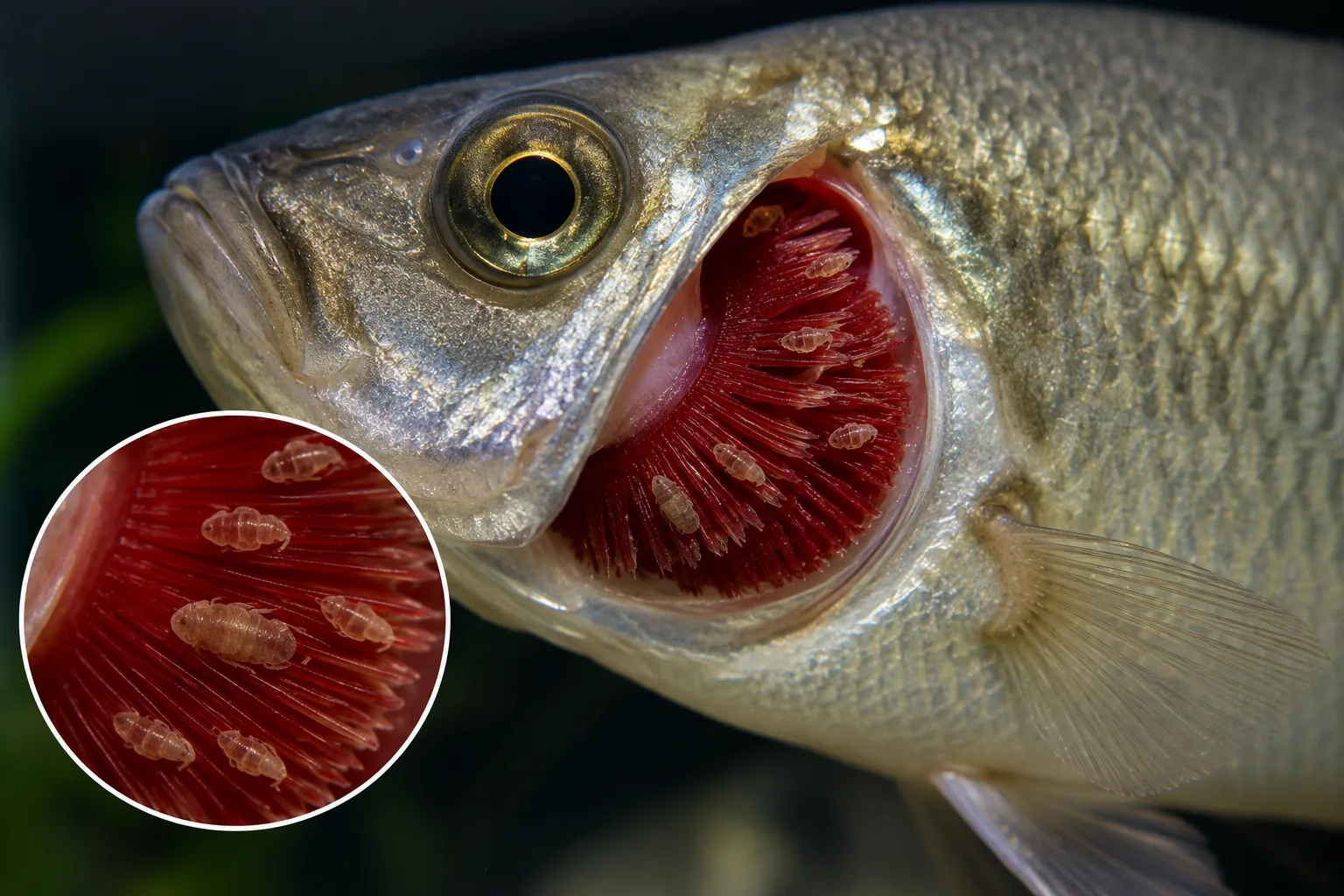
Flashing — the rapid, jerky scratch of a fish’s body against substrate, rocks, or décor — is one of the most frequently misdiagnosed symptoms in aquarium keeping. The assumed cause is almost always ich. The actual cause, in the majority of flashing cases in established tanks without other ich symptoms, is gill flukes: microscopic monogenean parasites attached to gill tissue and skin surfaces that cause intense irritation as they move and feed.
The misdiagnosis matters because the treatments are different. Salt and heat — the standard ich protocols — have limited efficacy against flukes. Praziquantel, which is highly effective against flukes, has no effect on ich. A hobbyist treating persistent flashing with the ich protocol while flukes continue multiplying will see temporary partial improvement followed by worsening, because the temperature stress kills some surface flukes temporarily while the gill population — protected by the gill arch — continues unchecked.
What Gill Flukes Are — The Two Species
Flukes affecting aquarium fish belong to two genera with different biology, different primary sites of infection, and slightly different treatment implications.
Dactylogyrus (gill flukes proper): Egg-laying parasites that primarily infect gill tissue. The eggs are resistant to most treatments — only the hatched parasites are killed by praziquantel and similar medications. This means treatment must be maintained long enough to kill each wave of hatching larvae before they reach sexual maturity and produce more eggs. A single treatment course may not be sufficient; retreatment after 7–14 days (when eggs have hatched) is often required.
Gyrodactylus (skin flukes): Live-bearing parasites that infect both skin and gills. Because there are no resistant eggs, Gyrodactylus populations can be cleared with a single properly maintained treatment course. Gyrodactylus tends to cause more visible skin irritation and flashing behaviour, while Dactylogyrus primarily affects respiratory function.
In practice, both genera are often present simultaneously, and the treatment protocol addresses both. The clinical distinction matters when treatment appears to have worked but symptoms recur 10–14 days later — this pattern is characteristic of Dactylogyrus egg hatching overwhelming a completed treatment course.
Symptoms and Diagnosis
Classic flashing presentation: The fish makes rapid contact with substrate, rocks, or décor — a quick roll or twitch against a surface — then returns to normal swimming. This behaviour is distinct from normal territorial or feeding behaviour by its repetitive, seemingly compulsive nature and the absence of a clear social trigger.
Respiratory signs: Rapid gill movement, surface orientation, and reduced activity are more consistent with Dactylogyrus gill involvement than skin fluke presentation. A fish sitting near the filter output or at the waterline despite adequate dissolved oxygen (verified by testing) should be considered for gill parasite involvement.
Visible inspection: At heavy infestation, gill flukes may be visible as small white or grey specks at the gill edge under a torch at a 45-degree angle — though not with the clarity of ich spots or velvet dust. A definitive diagnosis requires gill scrape examination under a microscope, which is not practical for most hobbyists. Empirical praziquantel treatment is reasonable when flashing persists without other explanation.
Differential diagnosis:
| Symptom pattern | Most likely cause |
|---|---|
| Flashing + discrete white spots on body | Ich — treat for ich |
| Flashing + gold/rust dust visible under torch | Velvet — treat for velvet urgently |
| Flashing + no visible spots, normal body + gill breathing | Gill flukes — treat with praziquantel |
| Flashing + visible irritation at specific site only | Physical irritation (sharp décor, water chemistry) |
| Flashing + ammonia or nitrite positive | Water chemistry irritation — correct parameters first |
Before treating for flukes, always test ammonia and nitrite. Both parameters cause gill irritation and flashing that is indistinguishable from parasitic flashing without testing. Ammonia and nitrite exposure at subclinical concentrations produces exactly this symptom pattern. Correct water quality first — the complete framework for distinguishing environmental disease triggers from true pathogenic infection is in Quarantine vs Medication; the immunity mechanism that makes water quality failure the root cause of most disease is in The Science of Fish Stress. If flashing persists after parameters are confirmed normal, proceed with praziquantel treatment.
Treatment
Praziquantel is the treatment of choice for both Dactylogyrus and Gyrodactylus. It disrupts the fluke’s neuromuscular function, causing paralysis and detachment. It is safe for fish at therapeutic doses, does not significantly damage biological filtration, and is available as aquarium-specific products in most markets.
Dose: Typically 2–5mg/L depending on the product. Dissolve in a small amount of warm water before adding to the tank — praziquantel has low water solubility and benefits from pre-dissolution. Remove activated carbon before treatment.
Treatment course: Treat the main tank or hospital tank for 5–7 days. Perform a 25–30% water change, then retreat 7–14 days later to catch hatching Dactylogyrus eggs. A two-course protocol separated by 10–14 days is more reliable than a single extended treatment, particularly for established infestations.
Salt at 2–3g/L provides adjunct osmotic stress on parasites and supports gill tissue recovery. Not a replacement for praziquantel but a useful addition.
Hospital tank vs main tank treatment: Unlike ich or velvet treatment — where treating the main tank requires disrupting the main tank’s biological filtration — praziquantel is relatively gentle on nitrifying bacteria. Treating the main tank is reasonable for flukes, particularly for Dactylogyrus where egg persistence in the substrate means any fish left in the main tank during hospital treatment will be reinfected anyway. If treating the main tank, monitor ammonia and nitrite throughout.
Connection to Dissolved Oxygen
Heavy gill fluke infestation causes significant gill tissue damage that reduces the effective surface area for gas exchange — fish with severe gill fluke loads can show oxygen deficiency symptoms despite adequate dissolved oxygen in the water, because their damaged gills cannot extract oxygen efficiently. This is the same physiological mechanism as ammonia’s gill damage and nitrite’s haemoglobin interference — different causes, same outcome: a fish that cannot adequately oxygenate itself in water that tests normal. Aquarium Dissolved Oxygen covers the complete management framework for fish showing respiratory distress.
Prevention
Quarantine is the primary prevention. Gill flukes are introduced almost exclusively through new fish — established tanks with no new additions rarely develop new fluke populations. Four weeks in quarantine allows fluke populations to become visible and treatable before the main tank is exposed. The quarantine protocol is in Quarantine and Biosecurity in Aquariums.
Frequently Asked Questions
My fish keeps scratching but I can’t see any spots — is it ich? Not necessarily. Flashing without visible spots is more consistent with gill flukes than ich, which produces clearly visible 1mm white spots. Test ammonia and nitrite first — both cause flashing from gill irritation. If parameters are normal and flashing persists, treat empirically with praziquantel for flukes.
Why did my fish get better after ich treatment but then start flashing again? The heat and salt of ich treatment temporarily suppress surface flukes (heat stress, osmotic stress) while not clearing the gill population or destroying Dactylogyrus eggs. When temperature and salt return to normal, the surviving fluke population rebounds. The recurrence 10–14 days after “successful” ich treatment is a characteristic pattern of concurrent or exclusive gill fluke infestation.
Is praziquantel safe for shrimp and snails? Praziquantel is generally considered safe for invertebrates at recommended doses, unlike copper treatments. However, caution is advised with freshwater snails as some reports suggest sensitivity. Remove snails as a precaution if possible.uggest sensitivity. Remove snails as a precaution if possible.