
By ProHobby™ | Ecological Systems Authority
Malawi bloat is an emergency. Unlike dropsy, which develops progressively over days to weeks with a correspondingly wider treatment window, Malawi bloat can kill African cichlids within 24–72 hours of first visible symptoms. The swollen abdomen and rapid deterioration are alarming, and the urgency is warranted — a hobbyist who sees bloat symptoms in a cichlid, recognises the condition, and begins treatment the same day saves significantly more fish than one who waits to see if symptoms resolve or research treatment options.
The second challenge with Malawi bloat is differential diagnosis. The swollen abdomen in a cichlid can represent Malawi bloat (treatable if caught early), generalised dropsy (poor prognosis), constipation (not a disease, resolves with fasting), or internal tumours (no treatment). The specific combination of symptoms, species, and speed of onset distinguishes these conditions — and the distinction determines whether emergency treatment or watchful management is appropriate.
What Causes Malawi Bloat
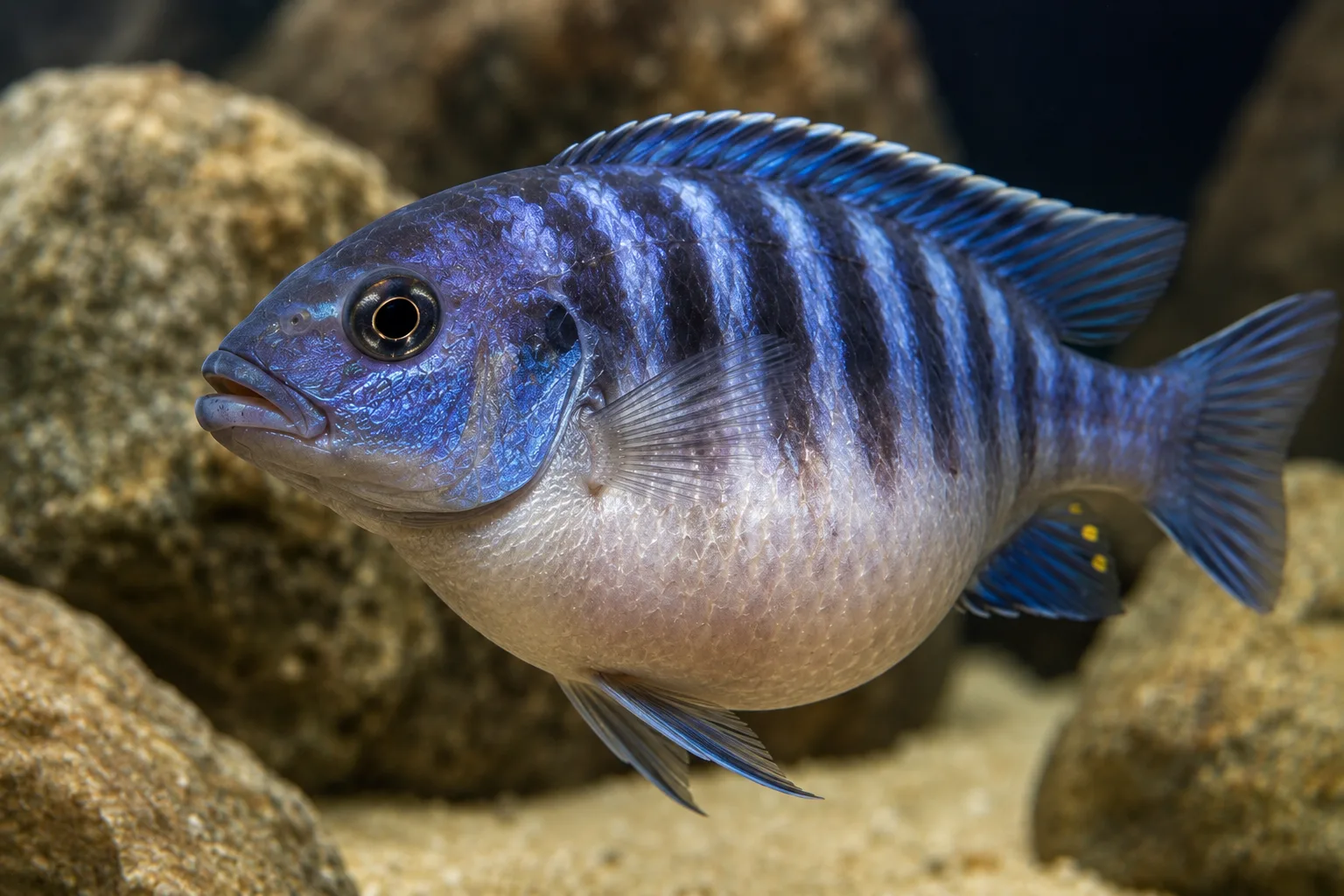
Malawi bloat is a specific condition of African Rift Lake cichlids — primarily mbuna (rock-dwelling herbivores from Lake Malawi) and other Malawi and Tanganyika species. The precise cause is not fully established, but the leading framework involves internal flagellate parasites (Hexamita/Spironucleus — the same organisms associated with Hole in the Head disease) in combination with dietary and water quality predisposing factors.
The protein diet trigger is the most well-documented predisposing factor. Mbuna are obligate herbivores that evolved feeding on aufwuchs — the algae and microorganism film on rock surfaces. Their digestive systems are adapted for high-fibre plant matter, not protein. When fed protein-rich foods (bloodworm, beef heart, high-protein pellets marketed for carnivorous cichlids), the mbuna intestine cannot process the protein efficiently. The undigested protein provides a substrate for bacterial and parasitic overgrowth, creating the internal environment in which Malawi bloat develops.
Water quality deterioration is the consistent secondary factor. Elevated nitrate, ammonia spikes, and pH instability are consistently present in the histories of Malawi bloat outbreaks. The Complete Aquarium Water Chemistry Guide provides the stability framework; the specific nitrate-immunity connection covered there is directly relevant. The cortisol-immunity mechanism — how any stressor creates the window for Hexamita to become pathogenic — is in The Science of Fish Stress.
Hexamita/Spironucleus overgrowth in the already-compromised intestinal environment completes the pathological process. These flagellates cause intestinal inflammation and contribute to the fluid accumulation producing abdominal distension.
Diagnosing Malawi Bloat vs Dropsy vs Constipation
This distinction is the most important diagnostic in cichlid disease management.
| Feature | Malawi Bloat | Dropsy | Constipation |
|---|---|---|---|
| Species | African cichlids primarily | Any species | Any species |
| Onset | Rapid — hours to 1–2 days | Gradual — days to weeks | Gradual |
| Scale protrusion | Absent or late-stage | Present (pinecone appearance) | Absent |
| Appetite | Rapidly lost | May eat initially | Often still eating |
| Other fish affected | Often multiple simultaneously | Usually individual | Individual |
| Response to metronidazole | Usually good if caught early | Poor | Not applicable |
| Response to fasting | Not applicable | Not applicable | Resolves within days |
Multiple fish affected simultaneously is the most important Malawi bloat indicator that distinguishes it from dropsy. If two or more African cichlids in the same tank develop swollen abdomens within 24–48 hours of each other, this is a Malawi bloat outbreak, not individual dropsy events. The shared environmental trigger (diet, water quality) and parasitic transmission through feces produce this simultaneous presentation.
Scale protrusion distinguishes late-stage dropsy — the pinecone appearance of scales lifted away from the body by subcutaneous fluid accumulation — from Malawi bloat, where scale protrusion is absent until very late if at all. If scales are clearly raised, treat as dropsy; the prognosis framework from the Dropsy guide applies.
Emergency Treatment Protocol
Begin treatment the same day symptoms are identified. The 24–72 hour mortality window in untreated Malawi bloat means there is no time for a “watch and see” approach.
Step 1: Isolate in a hospital tank. Remove affected fish to a prepared hospital tank. This reduces stress from tankmates and allows precise medication dosing.
Step 2: Metronidazole. This is the primary treatment — targeting the Hexamita/Spironucleus component that drives the disease. Dose at 400–500mg per 100 litres as a water treatment, or at approximately 25mg/kg body weight in food if the fish is still eating. Treat for 5–7 days. The same metronidazole protocol used for Hole in the Head disease applies here.
Step 3: Nitrofurazone or kanamycin. Adding an antibacterial that covers gram-negative intestinal bacteria as a combination treatment addresses the secondary bacterial component. The combination of metronidazole + nitrofurazone is the standard recommendation for Malawi bloat.
Step 4: Water quality correction in the main tank. While the affected fish are being treated, address the trigger conditions in the main tank. Large water change (40–50%) immediately. Test nitrate — target below 20 ppm. Increase aeration. Review feeding — remove all protein-rich foods from the mbuna diet immediately.
Step 5: Treat the main tank. If multiple fish are affected, treat the main tank with metronidazole as well as the hospital tank isolation. Fish that appear unaffected may be carrying subclinical infestation that would progress within days.
Prevention — The Diet Is the Foundation
Malawi bloat prevention is primarily dietary management. No other intervention — water quality alone, medication prophylaxis, filtration improvement — substitutes for correct diet for mbuna and other herbivorous African cichlids.
For mbuna: The diet should consist of spirulina-based pellets or flakes (30–40% spirulina content) as the primary food, with occasional green vegetables (blanched spinach, cucumber, courgette, green peas). Bloodworm, beef heart, and high-protein pellets should be permanently excluded from the diet of obligate herbivore African cichlids.
For carnivorous African cichlids (Nimbochromis, Tyrannochromis, and other piscivores): protein foods are appropriate and Malawi bloat is much less common in these species.
Water quality maintenance — regular water changes, stable pH, low nitrate — forms the second pillar of prevention. How to Do a Water Change covers the water change protocol; the Water Change Calculator helps calculate appropriate volumes. Monitoring ammonia after any large water change or dietary correction is good practice — Malawi bloat often accompanies ammonia stress events. Any new fish introduced to a cichlid community should complete quarantine before main tank introduction — Quarantine and Biosecurity in Aquariums covers the protocol. The decision framework for when medication is necessary versus environmental management is in Quarantine vs Medication.
Frequently Asked Questions
Is Malawi bloat the same as dropsy? No, though both produce abdominal swelling. Malawi bloat is specific to African cichlids, has a dietary trigger (protein-rich foods fed to herbivores), involves Hexamita/Spironucleus parasites, often affects multiple fish simultaneously, and responds well to metronidazole if caught early. Dropsy is a symptom of kidney failure from various causes, develops more gradually, produces scale protrusion (pinecone appearance), and has a much poorer prognosis. Distinguishing the two determines whether emergency treatment is likely to succeed.
My African cichlid is bloated but still eating — is this Malawi bloat? Possibly early-stage, or possibly constipation. Constipation produces mild bloating with the fish still eating and behaving normally — fast the fish for 2–3 days and see if the swelling resolves. If the fish is noticeably distressed, stopping eating, or if other fish are developing similar symptoms, begin Malawi bloat treatment immediately. Early-stage Malawi bloat where the fish is still eating is actually the best scenario for treatment — the prognosis is significantly better than when the fish has already lost appetite and become lethargic.
Can Malawi bloat affect other cichlids, not just Malawi species? Yes, though it is most associated with mbuna and other herbivorous African cichlids. Tanganyika cichlids, South American cichlids fed inappropriate protein-rich diets, and discus can develop similar conditions. The diagnostic and treatment framework applies broadly, though the dietary trigger is most pronounced in true herbivore species fed inappropriate protein.