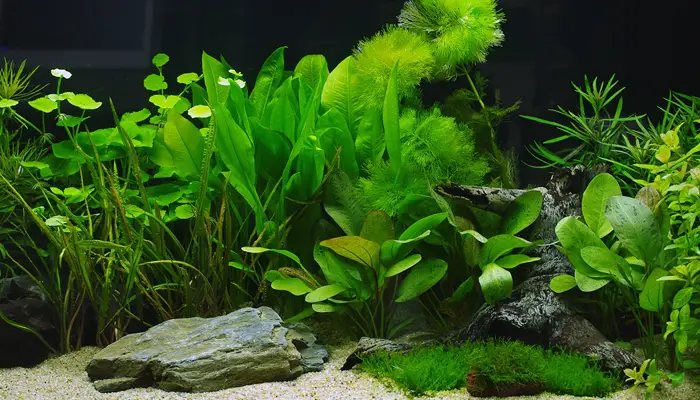

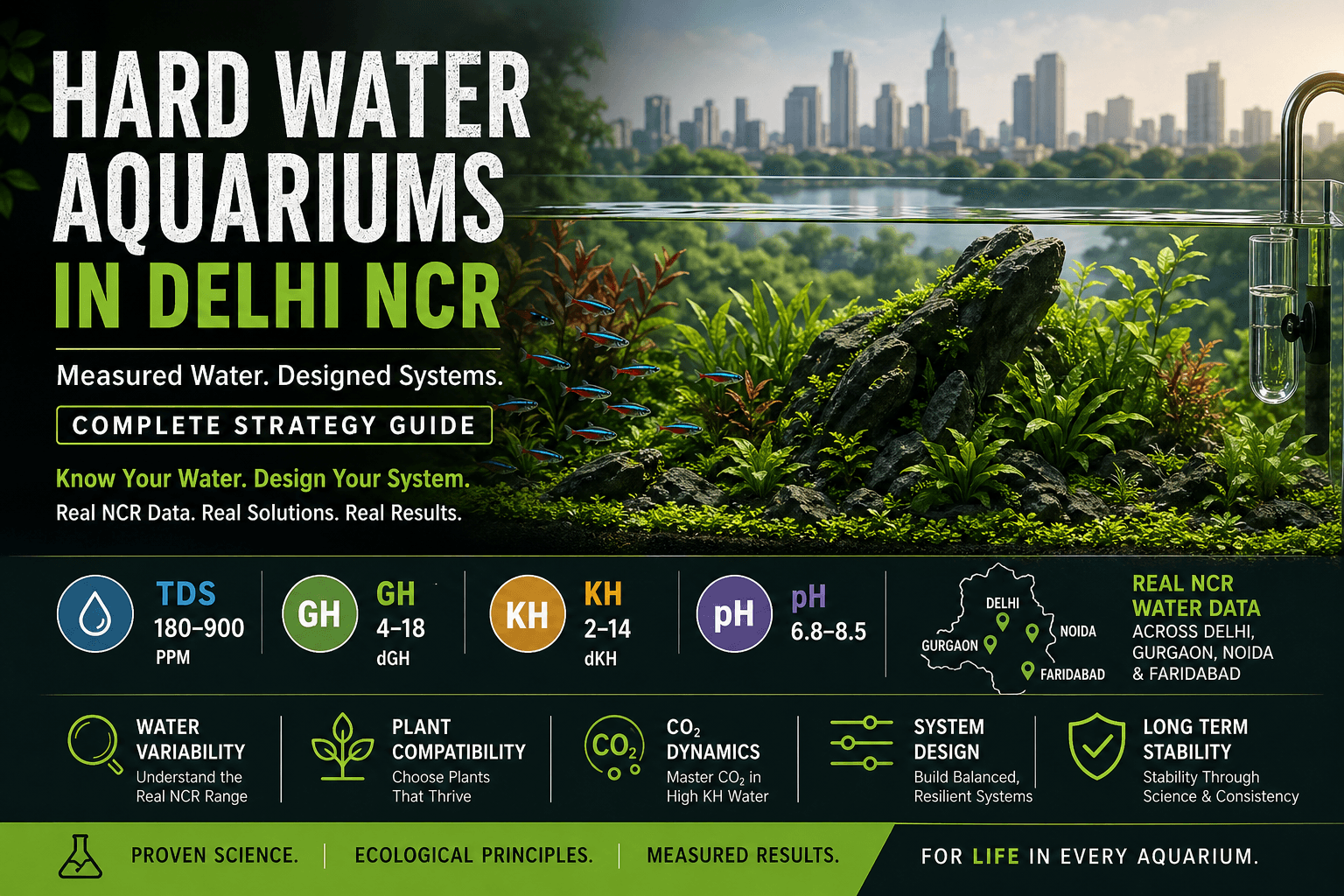
Delhi NCR aquariums operate within a chemically variable system defined by wide ranges in dissolved solids, hardness, and buffering capacity. Across the region, water does not follow a single profile but fluctuates between low-mineral municipal supply and high-mineral groundwater influence, with additional seasonal shifts altering concentration and stability. Successful aquarium systems in Delhi are not built on ideal parameters, but on alignment with these measurable ranges. This applies across NCR including Gurgaon, Noida, Faridabad, and Ghaziabad where water conditions show similar variability.
Aquarium water in Delhi NCR typically ranges between 180 and 900 ppm TDS, 4 to 18 dGH, and 2 to 14 dKH, with pH spanning 6.8 to 8.5 depending on source and season. These conditions create a variable hard-water system where high buffering reduces CO₂ efficiency, elevated minerals restrict sensitive plants, and seasonal fluctuations introduce instability. Stable aquariums in this region are achieved by designing systems around measured water conditions rather than attempting to standardize them.
Water Chemistry Across Delhi NCR
| Parameter | Observed NCR Range | System Interpretation |
|---|---|---|
| TDS | 180 – 900 ppm | Low to very high dissolved solids depending on source |
| GH | 4 – 18 dGH | Moderate to extreme hardness |
| KH | 2 – 14 dKH | Weak to very strong buffering |
| pH | 6.8 – 8.5 | Slightly acidic to strongly alkaline |
These ranges define the operational limits within which aquariums must function. A system that performs well at 250 ppm TDS behaves differently at 700 ppm, even when all other variables remain constant.
ProHobby Delhi NCR Water Variability Model
| Parameter | NCR Range | What It Changes | What You Do |
|---|---|---|---|
| KH | 2–14 dKH | CO₂ effectiveness (buffering) | Match CO₂ to KH and keep it stable day-to-day |
| TDS | 180–900 ppm | Osmotic stress | Keep tank TDS consistent with incoming water |
| GH | 4–18 dGH | Plant viability | Choose plants that tolerate your hardness |
| Seasonal shift | Variable | Stability over time | Adjust routine before changes show as problems |
System Logic (Operational Rules)
When KH is greater than or equal to 8 dKH, CO₂ must be increased and kept stable because buffering reduces its effectiveness. When KH is less than or equal to 4 dKH, CO₂ fluctuations must be minimized and pH must be monitored closely because small changes have larger impact.
When TDS is greater than or equal to 600 ppm, plant selection becomes limited and RO blending or controlled systems are required. When TDS is less than or equal to 300 ppm, standard planted aquarium setups function reliably without major adjustments.
When GH is greater than or equal to 10 dGH, only hardy plant species remain stable over time. When GH is less than or equal to 6 dGH, a wider range of plants becomes viable.
During summer, rising TDS requires tighter control of light intensity and feeding. During monsoon, fluctuating KH and GH require avoiding sudden parameter corrections. During winter, reduced biological activity requires slightly lower nutrient input.
Measure your water, identify KH, TDS and GH, apply the appropriate adjustments, maintain consistency in all inputs, and modify your routine as seasonal conditions change.
Functional Water Zoning Across NCR
Low mineral systems occur where treated municipal supply dominates, typically maintaining TDS between 180 and 300 ppm, GH between 4 and 8 dGH, and KH between 2 and 5 dKH. These systems allow broader plant compatibility and more predictable CO₂ behavior.
Mixed systems represent the most common condition across NCR, where municipal and groundwater sources blend. TDS ranges from 300 to 600 ppm, GH from 6 to 12 dGH, and KH from 4 to 10 dKH. These systems are chemically stable but impose biological constraints that require selective plant choice and controlled system design.
High mineral systems are found in groundwater-dominant zones, where TDS rises between 600 and 900 ppm, GH between 10 and 18 dGH, and KH between 8 and 14 dKH. These environments strongly resist chemical change, favoring stability but limiting species diversity and CO₂ efficiency.
Seasonal Variability and System Response
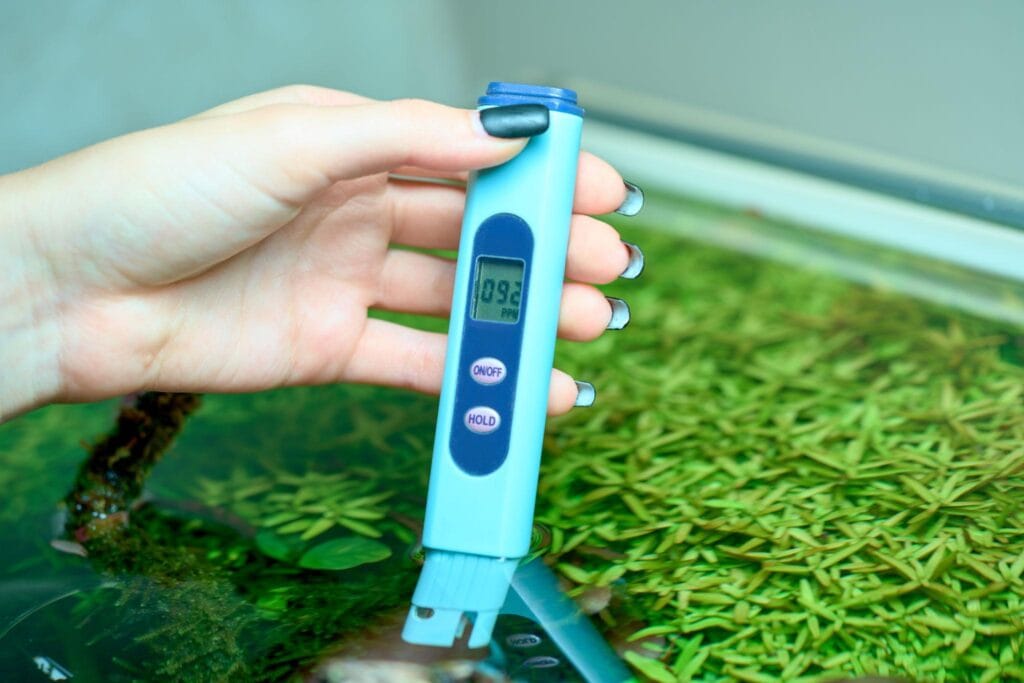
Seasonal variation alters water chemistry across NCR in measurable ways. During summer, evaporation increases concentration, often raising TDS by 50 to 150 ppm and intensifying mineral load. This creates conditions where algae becomes more competitive if plant mass and system balance are not maintained.
During monsoon, dilution and supply variation reduce KH and GH unpredictably. This creates instability in buffered systems and often leads to delayed algae outbreaks or plant stress following sudden parameter shifts.
Winter stabilizes water chemistry due to reduced biological activity and lower temperature-driven reactions. Systems become more predictable, though plant growth slows and nutrient demand decreases.
For a detailed breakdown of how seasonal changes affect aquarium stability across Delhi NCR, see our aquarium seasonal changes Delhi NCR guide.
Plant Compatibility Under NCR Conditions
| Plant Category | Behavior Across NCR Conditions |
|---|---|
| Epiphytes (Anubias, Java Fern) | Stable across full NCR range including high mineral systems |
| Hardy rooted plants (Vallisneria, Cryptocoryne) | Perform consistently in low to mixed zones, variable in high mineral zones |
| Stem plants (Hygrophila, Bacopa) | Adapt in low to mixed systems with stable conditions |
| Carpeting plants (Monte Carlo, HC) | Require low KH environments and controlled CO₂ systems |
| Sensitive species (Tonina, Syngonanthus) | Fail in untreated NCR water conditions |
A detailed breakdown of plant suitability based on Delhi water conditions is covered in our Delhi Plant Compatibility Matrix.
CO₂ Response in Variable KH Systems
When KH is between 2 and 4 dKH, CO₂ dissolves efficiently and produces a strong biological response. When KH rises between 8 and 14 dKH, buffering increases and CO₂ becomes less effective, requiring higher input to achieve the same result. This explains why identical CO₂ setups behave differently across households in Delhi NCR.
CO₂ behavior in high KH environments is explained in depth in our guide on CO₂ in Delhi Water.
Fish Compatibility in Delhi NCR Water
Fish performance in Delhi NCR follows the same constraints as plants: mineral load, buffering, and consistency. With TDS commonly between 180 and 900 ppm, GH between 4 and 18 dGH, and KH between 2 and 14 dKH, species that tolerate harder, alkaline water remain stable, while soft-water specialists show stress or reduced lifespan unless water is modified.
| Fish Category | Examples | Low Mineral (TDS ≤300) | Mixed (300–600) | High Mineral (≥600) |
|---|---|---|---|---|
| Hard-water tolerant | Guppies, Mollies, Platies, Swordtails | Excellent | Excellent | Excellent |
| Moderate tolerance | Zebra Danios, White Cloud Mountain Minnows, Corydoras (most species) | Excellent | Good | Variable |
| Soft-water specialists | Neon Tetras, Cardinal Tetras, Rasboras, Discus | Good | Poor without control | Unsuitable without RO |
Hard-water livebearers such as guppies, mollies, platies, and swordtails align naturally with Delhi NCR conditions and remain stable across the full range. Moderate species like zebra danios and white clouds adapt well in low to mixed conditions but can become inconsistent as TDS and GH rise. Soft-water species, including neon and cardinal tetras, rasboras, and discus, require reduced TDS and KH to maintain health and coloration; without control, they exhibit stress, disease susceptibility, and shortened lifespan.
System Logic
When TDS exceeds 600 ppm and GH exceeds 10 dGH, only hard-water tolerant species remain consistently stable. When KH exceeds 8 dKH, buffering increases and can stress soft-water fish adapted to lower alkalinity. When TDS remains below 300 ppm and KH below 5 dKH, a broader range of community fish becomes viable. Stability of parameters matters more than the absolute number; frequent swings in TDS or KH cause more harm than consistently elevated values.
Stocking Strategy
Fish selection should follow measured water conditions, not the other way around. In high mineral systems, stocking should prioritize hard-water species with proven tolerance. In mixed systems, a balanced community is possible with careful selection. In lower mineral systems or RO-blended setups, soft-water species become viable. Attempting to keep incompatible species without adjusting water leads to chronic stress and instability.
For a complete breakdown of species selection, compatibility, and stocking combinations under Delhi NCR conditions, see our Best Fish for Delhi NCR Aquariums guide.
Substrate Interaction with Hard Water Systems
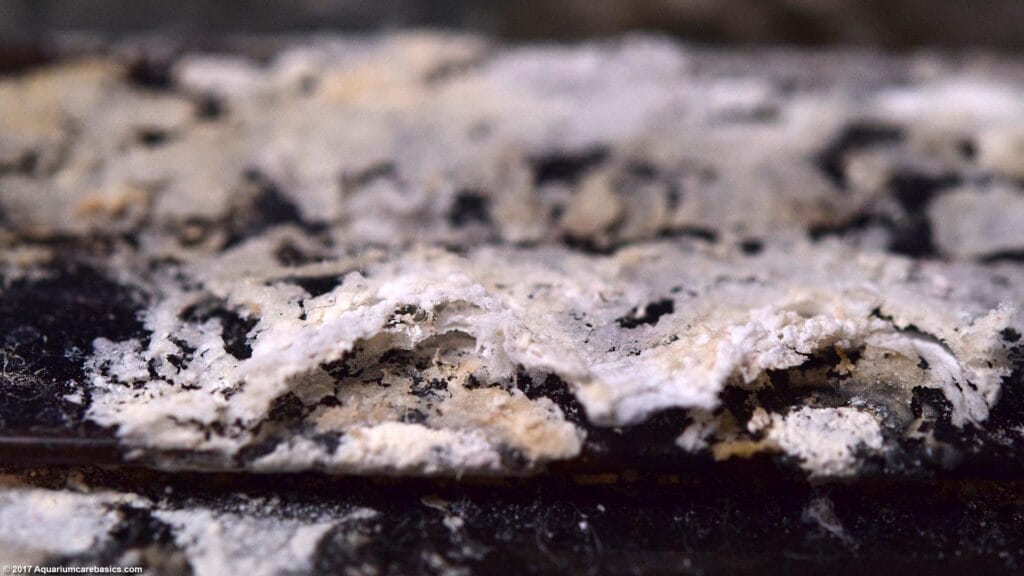
Substrate behavior in Delhi NCR is strongly influenced by external water chemistry. In lower KH environments, aquasoils actively buffer and influence system chemistry. In higher KH systems, this buffering effect diminishes as the water resists chemical change, reducing the functional lifespan of active substrates.
For a deeper understanding of how substrates behave under these conditions, see our aquarium substrate strategy for Delhi NCR.
Failure Patterns Specific to NCR
High TDS combined with low plant biomass leads to persistent algae dominance. High KH combined with unstable CO₂ results in recurring black beard and staghorn algae. Hard water combined with incompatible plant species causes continuous plant melt. Seasonal shifts combined with rigid maintenance routines lead to delayed instability.
These patterns are part of broader system-level failures explained in Why Aquariums Fail.
NCR Water Decision Model
When TDS is below 300 ppm, tap water can be used directly with broad plant compatibility. Between 300 and 600 ppm, system design must align with plant tolerance and may include partial RO blending. Above 600 ppm, controlled systems using RO integration become necessary for wider plant viability. For a complete breakdown of when to use RO water versus tap water in Delhi NCR, see our detailed RO vs Tap Decision Framework.
Frequently Asked Questions
Does water differ across Delhi NCR cities like Gurgaon and Noida?
Yes, water chemistry varies across Delhi, Gurgaon, Noida, Faridabad, and Ghaziabad depending on supply and groundwater influence, which affects aquarium behavior.
What is the TDS of tap water in Delhi NCR for aquariums?
Delhi NCR tap water typically ranges from 180 to 900 ppm depending on location and season.
Is Delhi water too hard for planted aquariums?
Delhi water is hard but workable when plant selection and system design align with GH and KH conditions.
Do I need RO water in Delhi aquariums?
RO water becomes useful when TDS exceeds 600 ppm or when growing sensitive plant species that require controlled parameters.
Why do aquarium plants fail in Delhi water?
High GH, KH, and TDS create mineral and buffering conditions that prevent sensitive plants from adapting.
What plants grow best in Delhi tap water?
Anubias, Java Fern, Vallisneria, Cryptocoryne, and Hygrophila grow reliably under NCR conditions.
How does KH affect CO₂ in aquariums?
Higher KH increases buffering, reducing CO₂ effectiveness and requiring greater stability in injection.
Why does algae keep coming back in Delhi aquariums?
High mineral load combined with unstable CO₂ and low plant mass creates recurring imbalance.
Does Delhi water change across seasons?
Yes, TDS increases during summer, fluctuates during monsoon, and stabilizes in winter.
Can I use tap water directly in Delhi aquariums?
Yes, when TDS is below 300 ppm. Higher levels require system adjustments or blending.
Why do aquarium setups behave differently across homes?
Because GH, KH, and TDS vary significantly across NCR locations, affecting system behavior.
Closing Principle
Measured water defines system design, and system design determines biological stability. Aquariums in Delhi NCR succeed not by replicating external conditions, but by responding directly to the chemistry they operate within.