
Substrate behavior in Delhi NCR aquariums is controlled by external water chemistry rather than internal nutrient composition. Across Delhi, Gurgaon, Noida, Faridabad, and Ghaziabad, water commonly ranges from 180 to 900 ppm TDS with GH between 4 and 18 dGH and KH between 2 and 14 dKH. In such conditions, substrate does not operate as an independent nutrient system but as part of a combined chemical environment.
In Delhi NCR aquariums, substrate selection does not override water chemistry. In high mineral conditions, inert substrates perform reliably, while active substrates lose buffering influence over time. Nutrient-rich substrates are effective only when water chemistry allows stable plant uptake.
ProHobby Substrate Interaction Model
| Water Condition | Substrate Behavior | Outcome |
|---|---|---|
| Low mineral (TDS ≤ 300) | Active buffering | Strong plant growth |
| Moderate (300–600) | Partial buffering | Controlled growth |
| High mineral (≥ 600) | Reduced buffering | Water dominates |
Substrate influence decreases as mineral load increases.
Substrate Types and Performance
| Substrate Type | Behavior in Delhi NCR | Use Case |
|---|---|---|
| Aquasoil (active) | Buffers initially, declines in high KH | Controlled systems |
| Inert sand/gravel | Chemically neutral | Stable setups |
| Nutrient substrates | Variable | Depends on water |
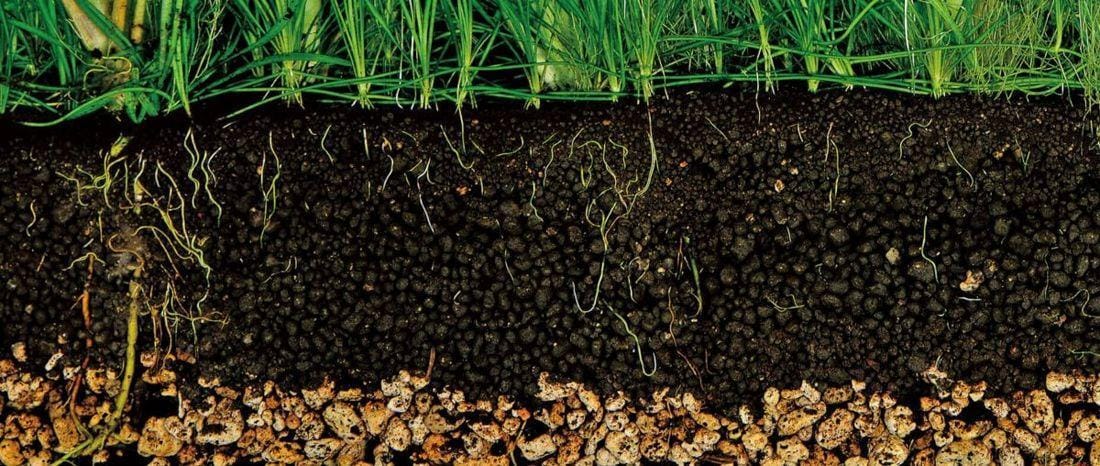
Active substrates alter water chemistry temporarily. In high KH conditions, their buffering capacity is neutralized faster.
System Logic
When KH exceeds 8 dKH, substrate buffering becomes less effective as water resists change. When TDS exceeds 600 ppm, mineral concentration reduces nutrient uptake efficiency. When KH remains below 5 dKH, substrates contribute significantly to system chemistry. When water remains stable, substrate performance becomes predictable.
Substrate cannot compensate for unsuitable water conditions.
Root Zone vs Water Column
Plant growth depends on both root uptake and water column nutrients. In Delhi NCR conditions, water chemistry dominates. Root zone benefits from substrate exist but are secondary to water stability.
Plants adapted to water column feeding perform better in hard water conditions.
Substrate and Plant Compatibility
Epiphytes do not depend on substrate and remain stable across all conditions. Rooted plants benefit from substrate but only when water chemistry supports nutrient uptake. Sensitive plants require both controlled substrate and controlled water.
For plant selection aligned with substrate behavior, see our aquarium plants Delhi NCR compatibility guide.
Substrate Lifespan in Hard Water
Active substrates degrade faster in high KH and high TDS environments. Their ability to buffer and supply nutrients reduces over time. Inert substrates remain consistent because they do not interact chemically.
Long-term stability in Delhi NCR is often achieved through inert systems rather than active ones.
Failure Patterns
Using active substrate in high KH systems leads to short-lived buffering effects. Overreliance on substrate to fix plant issues results in instability. Mixing multiple substrate types without understanding chemistry leads to unpredictable results.
These patterns align with broader instability explained in our why aquariums fail systems diagnosis.
Practical Substrate Strategy
Substrate choice should follow water conditions. In high mineral environments, inert substrates provide stability. In controlled systems with modified water, active substrates can be used effectively. Consistency in water parameters determines substrate performance more than substrate composition itself.
Substrate behavior varies indirectly across NCR due to water differences. Gurgaon and Faridabad, with higher mineral load, reduce active substrate lifespan. Noida and parts of Delhi may allow longer buffering periods depending on supply source.
Frequently Asked Questions
Is aquasoil necessary in Delhi aquariums?
No, substrate does not replace water chemistry.
Does substrate affect water parameters?
Only temporarily in active substrates.
Which substrate is best for hard water?
Inert substrates provide stable long-term performance.
Can substrate fix plant growth issues?
No, water chemistry determines plant success.
How long does aquasoil last in Delhi conditions?
Shorter lifespan due to high KH and TDS.
Is sand better than aquasoil?
For stability in hard water, yes.
Closing Principle
Substrate does not define aquarium success in Delhi NCR. Water chemistry defines substrate performance. Stable systems are built by aligning substrate choice with water conditions rather than expecting substrate to compensate for them. This substrate behavior is one component of a broader system covered in our hard water aquariums Delhi NCR guide.