
Fish selection in Delhi NCR must align with mineral load and buffering. Across Delhi, Gurgaon, Noida, Faridabad, and Ghaziabad, water commonly spans 180–900 ppm TDS, 4–18 dGH, and 2–14 dKH. Species that tolerate harder, alkaline conditions remain stable; soft-water specialists require controlled water or show chronic stress.
Choose hard-water tolerant fish for most Delhi NCR setups. Use RO-blended or controlled systems only when keeping soft-water species. Stability of parameters matters more than chasing ideal numbers.
ProHobby Fish Compatibility Model
| Water Band | Typical Range | Fish Response | Outcome |
|---|---|---|---|
| Low mineral | TDS ≤ 300, KH ≤ 5 | Broad compatibility | Flexible communities |
| Mixed | TDS 300–600, KH 4–10 | Selective compatibility | Stable with limits |
| High mineral | TDS ≥ 600, KH ≥ 8 | Restricted | Hardy species only |
Fish Compatibility Matrix (Delhi NCR)
| Category | Examples | Low Mineral | Mixed Water | High Mineral |
|---|---|---|---|---|
| Hard-water tolerant | Guppies, Mollies, Platies, Swordtails | Excellent | Excellent | Excellent |
| Moderate tolerance | Zebra Danios, White Clouds, most Corydoras | Excellent | Good | Variable |
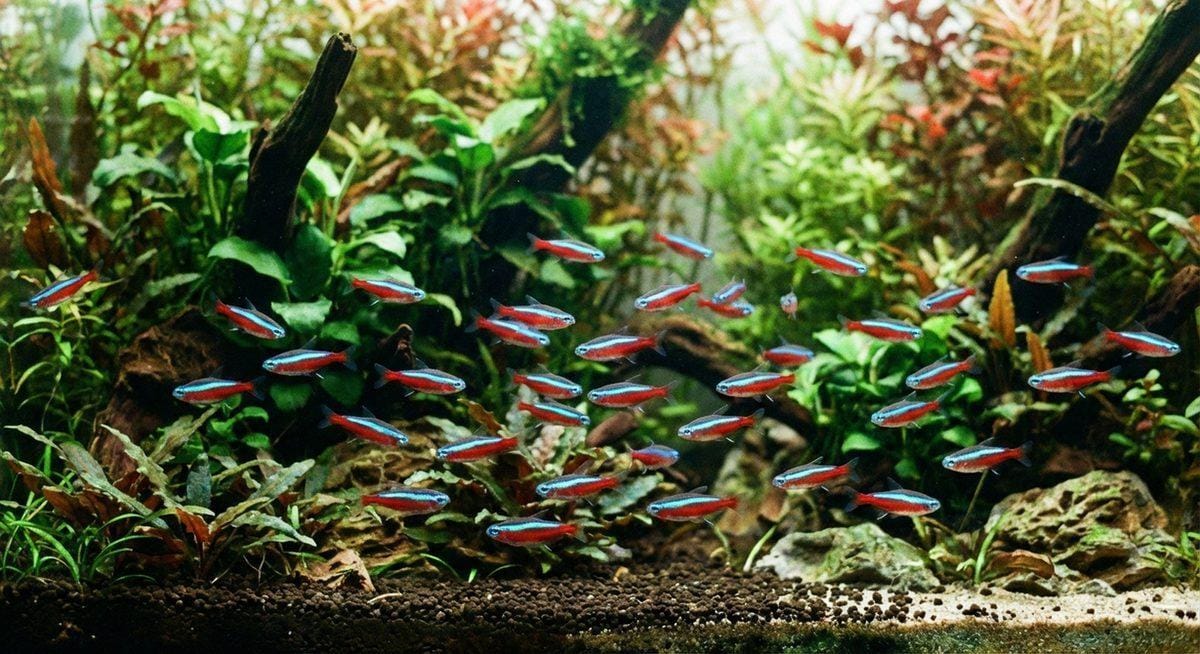
| Soft-water specialists | Neon/Cardinal Tetras, Rasboras, Discus | Good | Poor without control | Unsuitable |
Hard-water livebearers align naturally with NCR conditions. Moderate species adapt in low to mixed bands. Soft-water fish require reduced TDS/KH via control strategies.
System Logic
When TDS ≥ 600 ppm and GH ≥ 10 dGH, limit stocking to hard-water tolerant species. When KH ≥ 8 dKH, buffering increases and soft-water fish show stress without modification. When TDS ≤ 300 ppm and KH ≤ 5 dKH, a wider community becomes viable. Parameter consistency outweighs absolute values.
Community Building (What Actually Works)
Stable communities in NCR prioritize similar tolerance bands. Mixed-band stocking creates invisible stress even if fish appear active. Keep species within the same water band and similar behavior profiles to avoid chronic imbalance.
For full system context, see our hard water aquariums Delhi NCR guide.
CO₂, Plants, and Fish Interaction
High CO₂ setups in high KH water require stability to avoid fish stress. Strong circulation that distributes CO₂ also improves oxygenation. Match fish choice with plant system intensity.
See CO2 in high KH aquarium conditions and aquarium plants Delhi NCR compatibility guide for alignment.
Stocking Density and Waste Load
Higher TDS systems already carry mineral load; excessive bioload compounds instability. Conservative stocking maintains stability, especially in high-mineral conditions. Filtration supports stability but does not replace proper stocking. See our complete guide on Aquarium Filtration – Flow, Biomedia Efficiency & Real Nitrification Capacity.
Failure Patterns
Soft-water fish in hard water show faded coloration, stress, and disease susceptibility. Mixed tolerance communities exhibit unexplained losses over time. Overstocking in high TDS systems leads to persistent imbalance.
These patterns align with why aquariums fail systems diagnosis.
Practical Stocking Framework
Start with measured TDS, GH, and KH. Select a tolerance band. Build the community within that band. Modify water only if the target species requires it; otherwise, keep parameters stable and consistent.
Gurgaon and Faridabad often trend higher in TDS and GH due to groundwater influence, favoring hard-water species. Noida and parts of Delhi may allow mixed communities depending on supply. Always confirm with testing before stocking.
Frequently Asked Questions
Which fish are best for Delhi NCR water?
Guppies, mollies, platies, and swordtails are the most reliable.
Can I keep neon tetras in Delhi tap water?
Only in controlled or RO-blended systems.
Do Corydoras work in hard water?
Many species adapt in low to mixed ranges; performance varies at higher TDS.
Is CO₂ harmful to fish?
Not when stable and properly distributed.
Should I mix hard- and soft-water fish?
No, keep within the same tolerance band.
Closing Principle
Fish success in Delhi NCR comes from matching species to water, not forcing water to match species. Stability and compatibility define long-term outcomes.