
By ProHobby™ | Ecological Systems Authority
Spring Viraemia of Carp announces itself in its own name — this is a disease whose entire clinical behaviour is organised around a specific, predictable seasonal window, striking precisely when a pond is emerging from winter cold and water temperature begins climbing through the range this virus favours. A koi or carp pond that has weathered an entire winter without incident, appearing to be in the clear, can be at its single most vulnerable point in the calendar year in the weeks immediately following. Understanding why this seasonal pattern exists, how to recognise the haemorrhagic symptom picture that distinguishes SVC from the other serious koi diseases covered elsewhere on this site, and why — as with every viral disease in this library — there is no cure once infection is established, is the complete picture this guide provides.
Table of Contents
- What Causes Spring Viraemia of Carp
- Why Spring Specifically — The Temperature and Timing Mechanism
- Symptoms — The Haemorrhagic Presentation
- SVC vs KHV — The Critical Differential
- Species Susceptibility
- Transmission — How SVC Actually Spreads
- Is SVC Treatable?
- Diagnosis — Why Laboratory Confirmation Matters
- Emergency Response During a Suspected Outbreak
- Biosecurity and Prevention
- Quarantine Considerations Specific to SVC
- Recovery, Survivors and the Carrier Question
- India — Notifiable Status and Surveillance
- Frequently Asked Questions
1. What Causes Spring Viraemia of Carp
Spring Viraemia of Carp is caused by Spring viraemia of carp virus (SVCV), a rhabdovirus — placing it in a genuinely different viral family from the herpesvirus responsible for Koi Herpesvirus, despite both diseases affecting overlapping cyprinid species and both carrying serious mortality and biosecurity implications for koi and carp keepers. Rhabdoviruses are a family of RNA viruses with a distinctive bullet-shaped viral particle structure, and SVCV’s specific pathology centres on systemic viraemia — literally, virus circulating throughout the bloodstream — producing the widespread haemorrhagic tissue damage that gives this disease its characteristic clinical picture, covered in full in Section 3.
The disease was first characterised and named based on its clear seasonal association with the spring temperature rise in affected regions, a pattern that has held consistently since its initial description and remains the single most useful piece of practical seasonal-risk information a koi keeper can hold in mind.
2. Why Spring Specifically — The Temperature and Timing Mechanism
SVCV, like CyHV-3 covered in the KHV guide, is a temperature-dependent pathogen, but its specific favoured range sits at the cooler end relative to KHV’s window — SVC clinical disease is most strongly associated with water temperatures in approximately the 10 to 17°C range, meaning the disease is at its most dangerous specifically during the transitional period as pond water warms from winter cold toward summer heat, rather than during the warmer mid-range temperatures at which KHV becomes most virulent.
Why this specific window is so dangerous beyond the virus’s own temperature preference: fish immune function in cyprinids, like most ectothermic animals, is itself somewhat temperature-dependent and generally less robust at the cooler end of their tolerable range than at optimal warmer temperatures — meaning the SVC temperature window coincides with a period when affected fish’s own immune defences are operating at reduced capacity, compounding the virus’s own temperature-linked virulence with a genuine host-side vulnerability at exactly the same time. This combination — a virus most active in a temperature range where host immunity is simultaneously least robust — is a significant part of why SVC outbreaks can progress so rapidly and severely once established in a susceptible population.
The practical calendar implication for koi keepers in temperate and subtropical climates, including much of India during the cooler months and transitional seasons, is that the specific weeks during which pond water is warming out of winter cold represent a genuine, predictable elevated-risk period deserving heightened vigilance for the symptom pattern in Section 3, distinct from and complementary to the different, warmer seasonal risk window established for KHV.
3. Symptoms — The Haemorrhagic Presentation
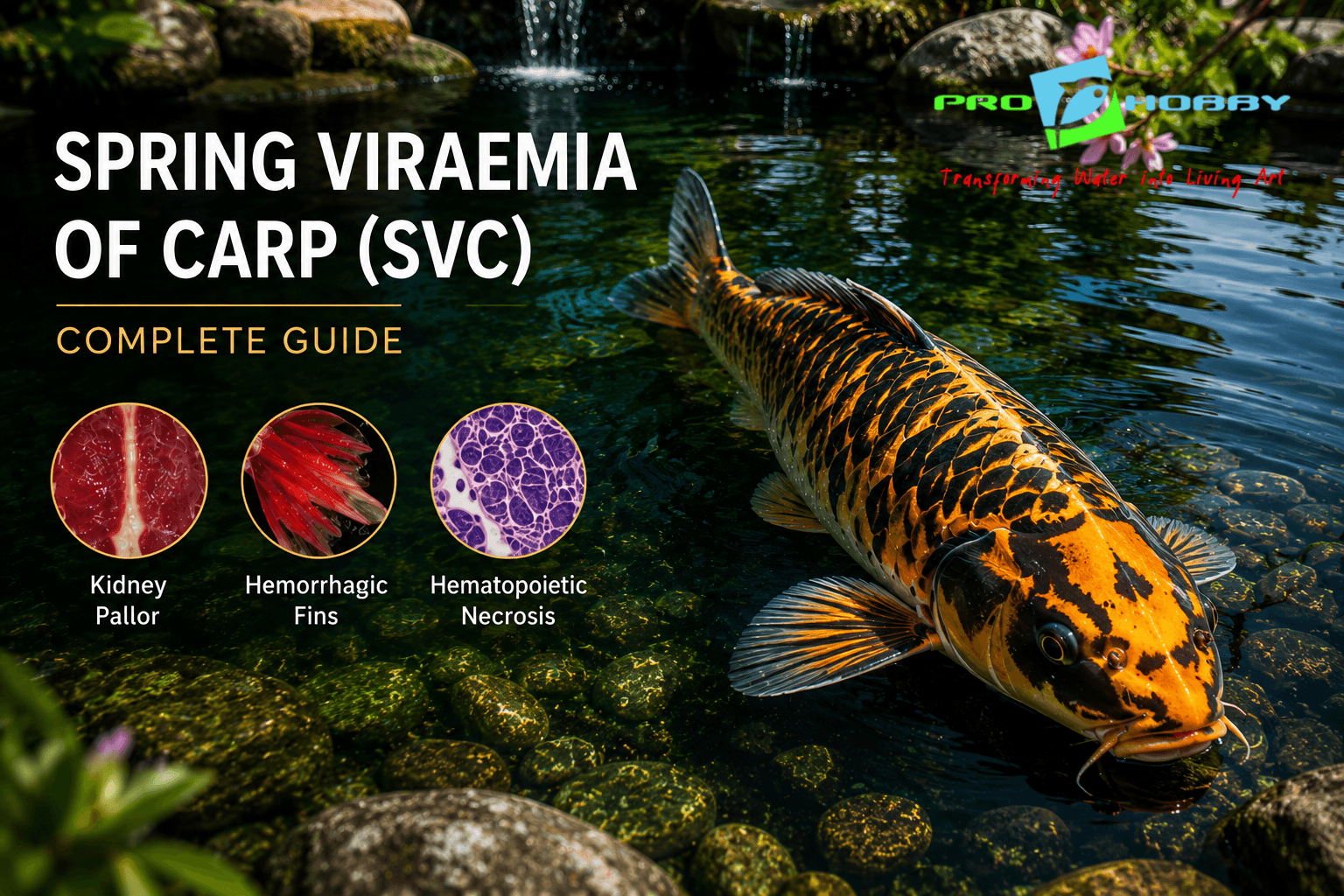
Haemorrhaging is the defining and most diagnostically useful symptom category for SVC — visible bleeding and reddening at the skin, gill, fin bases, and frequently the vent area, reflecting the systemic viraemia and associated blood vessel damage described in Section 1. This haemorrhagic presentation is a genuinely useful distinguishing feature relative to KHV, whose symptom picture centres more specifically on gill necrosis and mucus changes rather than widespread visible bleeding — covered in full comparative detail in Section 4.
Abdominal swelling and fluid accumulation — a distended abdomen from internal fluid buildup, sometimes accompanied by protruding eyes (exophthalmia) as part of the same generalised fluid-shift pathology.
Darkened skin colouration across affected fish, a general systemic illness indicator alongside the more specific haemorrhagic signs.
Loss of balance and erratic or lethargic swimming, reflecting the systemic nature of the infection rather than a localised tissue-specific effect.
Rapid onset and progression within the susceptible temperature window established in Section 2, with mortality in severely affected populations developing over a period of days to at most a couple of weeks once clinical disease becomes established — a progression speed that, while somewhat more variable than the extremely rapid KHV timeline, still warrants the same immediate emergency response established in Section 9 rather than a gradual, wait-and-observe approach.
4. SVC vs KHV — The Critical Differential
Given that both diseases affect overlapping koi and carp populations, can both produce significant mortality, and both carry the same fundamental “no cure, biosecurity is everything” management logic, distinguishing between them matters primarily for accurate reporting, appropriate laboratory testing selection, and understanding the correct seasonal risk window going forward — the emergency response and biosecurity principles established throughout both this guide and the KHV guide apply almost identically to either diagnosis in practice.
| Feature | SVC | KHV |
|---|---|---|
| Virus family | Rhabdovirus (SVCV) | Herpesvirus (CyHV-3) |
| Favoured temperature range | ~10-17°C | ~16-28°C |
| Seasonal risk window | Spring, water warming from cold | Warmer transitional periods and summer |
| Defining symptom | Haemorrhaging, abdominal swelling | Gill necrosis, excess mucus |
| Carrier state in survivors | Less definitively established than KHV | Well-established, lifelong |
| Goldfish susceptibility | Can be affected, variable by strain | Generally refractory, can still carry |
Both conditions require laboratory confirmation for definitive diagnosis, per Section 8, given the genuine overlap in general severity and the fact that a hobbyist without specific virology training cannot reliably distinguish the two from clinical symptoms alone with full confidence, particularly in cases with mixed or ambiguous symptom presentation.
5. Species Susceptibility
Common carp and koi (Cyprinus carpio) are the primary susceptible species and the focus of essentially all clinical concern and management guidance in this area, developing the full haemorrhagic disease picture described in Section 3.
Other cyprinid species including various carp relatives show variable susceptibility depending on species and strain, generally less severely affected than common carp and koi specifically but not automatically presumed safe without specific reference to the species in question.
Goldfish susceptibility to SVC is less clearly and less consistently established in the literature than the well-documented KHV carrier-but-refractory pattern covered in the KHV guide — some sources indicate goldfish can develop clinical SVC disease under certain conditions, differing from the more consistently refractory goldfish response to KHV specifically, meaning the “healthy goldfish means it’s probably not KHV” caution established in that guide does not straightforwardly extend to ruling out SVC in a mixed pond, and any suspected outbreak affecting multiple species in the same system should be assessed on its own clinical merits rather than assuming either virus’s specific goldfish-susceptibility pattern applies by default.
6. Transmission — How SVC Actually Spreads
SVCV transmits through direct fish-to-fish contact, through contaminated water, and through contaminated equipment — nets, siphons, and any tool contacting infected water and subsequently used in an unaffected system — following the same general contaminated-water and equipment transmission logic established throughout this site’s disease library for numerous other pathogens, from Vibriosis to the freshwater bacterial conditions covered extensively elsewhere on this site.
Vector transmission is also documented for SVCV, with certain external parasites, including the fish louse Argulus covered in a dedicated guide on this site, implicated as a potential mechanical vector capable of transferring virus between fish during their feeding activity — a further reason the general external parasite biosecurity and prompt-treatment principles established throughout this site’s disease library carry additional weight in a koi and carp pond context specifically, given this documented vector relationship with a serious notifiable viral disease.
Introduction to new systems overwhelmingly occurs through the introduction of infected or carrier fish, following the identical fundamental biosecurity principle established throughout this guide and the companion KHV guide — quarantine of all new koi and carp, covered in Section 11, remains the single most important preventive measure available regardless of which of the two major notifiable koi viral diseases is the specific concern.
7. Is SVC Treatable?
No approved, reliably effective antiviral treatment exists for SVC, following the identical fundamental limitation established for every viral condition covered throughout this site’s disease library — the virus’s replication machinery is not a target that any antibiotic, antiparasitic, or antifungal product available to hobbyists or general aquaculture operations addresses.
Management during a suspected or confirmed outbreak is accordingly focused on containment, supportive care where feasible for less severely affected individuals, and preventing further transmission to unaffected fish and systems, mirroring precisely the management philosophy established for KHV — realistic expectation-setting regarding the likelihood of significant loss during a genuine outbreak in susceptible fish at permissive temperature is an important part of managing the situation honestly rather than pursuing ineffective treatment attempts at the expense of prompt containment action.
8. Diagnosis — Why Laboratory Confirmation Matters
Definitive SVC diagnosis requires laboratory testing — virus isolation in cell culture or molecular methods such as PCR — to confirm the presence of SVCV specifically, following the same general diagnostic standard established for KHV and reflecting the genuine clinical overlap between the two conditions established in Section 4 that makes confident field diagnosis based on symptoms alone unreliable.
For hobbyists without direct access to virological testing, the practical approach during a suspected outbreak — particularly one presenting with the haemorrhagic symptom pattern established in Section 3 during the specific cooler spring temperature window established in Section 2 — is to treat the situation with the full emergency and biosecurity response established in Sections 9 and 10 while pursuing testing through veterinary or fisheries diagnostic services where available, exactly the same practical approach recommended for suspected KHV given the shared diagnostic access limitations most hobbyist keepers face.
9. Emergency Response During a Suspected Outbreak
Isolate symptomatic fish immediately where physically feasible, recognising the same pond-scale containment challenge established for KHV — full isolation within an established outdoor pond system is considerably harder to achieve than in a smaller aquarium hospital-tank context, and the pond water itself should be considered contaminated for remaining fish once an outbreak is underway.
Do not introduce new fish and do not move fish out of the affected system to any other system, given the biosecurity implications established throughout this guide.
Minimise handling and stress of remaining fish, following the same immune-suppression-avoidance logic established throughout this site’s disease library and specifically relevant here given that host immune function is already operating at reduced capacity within the cooler SVC temperature window, per Section 2.
Address any Argulus or other external parasite presence promptly given the vector transmission relationship established in Section 6 — an active parasite population during a suspected SVC outbreak represents an ongoing transmission risk between fish within the same system, compounding the direct water and contact transmission already occurring.
Contact veterinary or fisheries authority support for diagnostic testing and given the notifiable disease implications covered in Section 13.
10. Biosecurity and Prevention
The biosecurity principles established in full detail in the KHV guide apply directly and almost without modification to SVC prevention: never introduce new koi or carp to an established pond without full quarantine, never share equipment between quarantine and display systems, and source new stock specifically from suppliers who can demonstrate their own testing and biosecurity practices.
The specific SVC-relevant addition to this general framework is heightened vigilance around the spring temperature transition specifically, established in Section 2, as the period during which any newly introduced fish, or any existing fish carrying undetected infection from a prior exposure, is most likely to develop visible clinical disease — meaning the spring season specifically warrants closer-than-usual observation of pond fish behaviour and symptom presentation, independent of any recent new-fish introduction, given the temperature-driven virulence pattern established throughout this guide.
11. Quarantine Considerations Specific to SVC
As with the KHV-specific quarantine modification established elsewhere on this site, standard aquarium quarantine duration benefits from adjustment to account for SVC’s specific temperature-dependent clinical window — ideally including genuine exposure to the cooler 10–17°C range in which the virus is most likely to produce visible symptoms in an infected fish, rather than relying on a fixed quarantine period conducted entirely outside this range.
Where laboratory testing access allows, testing new koi and carp during quarantine provides considerably greater diagnostic confidence than clinical observation alone, particularly given the symptom overlap with KHV established in Section 4 that can complicate confident visual diagnosis even when disease is genuinely present.
12. Recovery, Survivors and the Carrier Question
The carrier-state biology is less definitively and consistently established in the scientific literature for SVC than the well-documented lifelong herpesvirus latency established for KHV survivors, though given the genuine uncertainty and the serious biosecurity implications of getting this judgement wrong, the responsible practical approach for any fish that has survived a confirmed or strongly suspected SVC exposure is to apply the same permanent-caution principle established for KHV survivors — treating a recovered fish as a potential ongoing biosecurity risk rather than assuming full clearance, and never introducing such a fish to a new, previously unaffected collection, erring toward the more conservative assumption given the incomplete certainty involved.
13. India — Notifiable Status and Surveillance
Spring Viraemia of Carp is, alongside Koi Herpesvirus, listed as a notifiable disease by the World Organisation for Animal Health (WOAH), and is included within the same active Indian government surveillance framework established in the KHV guide’s India section — the National Surveillance Programme for Aquatic Animal Diseases (NSPAAD), implemented by the Department of Fisheries under the Ministry of Fisheries, Animal Husbandry and Dairying, and coordinated by ICAR-National Bureau of Fish Genetic Resources, with documented multi-year molecular surveillance for both SVC and KHV conducted across major Indian aquaculture zones including Telangana.
The practical implication for Indian koi keepers mirrors the KHV guidance directly: while formal reporting structures are generally oriented around commercial aquaculture rather than individual hobbyist ponds, the existence of genuine, active national surveillance for this disease underscores its seriousness within Indian aquatic animal health policy, and any hobbyist experiencing a suspected SVC outbreak — particularly one presenting with the specific haemorrhagic symptom pattern established in Section 3 during a spring temperature transition — should consider contacting local veterinary or state fisheries department resources both for diagnostic support and in recognition of the broader disease surveillance effort this represents.
Koi Fish Care in India and Koi Pond Setup in India provide the broader husbandry context this biosecurity discipline should be integrated into as standard practice, and Aquarium Shop Delhi NCR — What a Specialist Looks Like covers the supplier evaluation framework relevant to sourcing koi and carp with appropriate biosecurity assurance in the Indian market.
Frequently Asked Questions
What is the difference between SVC and KHV? Both are serious notifiable viral diseases of koi and carp, but caused by different viruses (a rhabdovirus for SVC, a herpesvirus for KHV) with different favoured temperature ranges — SVC is most dangerous at cooler spring temperatures around 10-17°C, while KHV favours warmer temperatures around 16-28°C — and different characteristic symptoms, with SVC presenting primarily through haemorrhaging and abdominal swelling versus KHV’s gill necrosis and excess mucus.
Why is spring specifically the dangerous season for SVC? SVCV is most clinically active in the 10-17°C range typical of pond water warming after winter, and fish immune function is itself somewhat reduced at these cooler temperatures, meaning the virus’s own temperature preference coincides with a period of reduced host immune defence, compounding outbreak severity during this specific seasonal window.
Can SVC be treated? No. No approved, reliably effective antiviral treatment exists. Management during a suspected outbreak focuses on containment and supportive measures rather than curing infected fish, the same fundamental limitation that applies to every viral disease.
Can fish lice spread SVC between koi? Yes, potentially. Argulus (fish lice) are documented as a possible mechanical vector capable of transferring the virus between fish during feeding activity, alongside direct fish-to-fish contact and contaminated water and equipment as transmission routes.
Is SVC notifiable in India? Yes, alongside KHV, SVC is a WOAH-listed notifiable disease with active surveillance conducted within India under the National Surveillance Programme for Aquatic Animal Diseases, coordinated by ICAR-National Bureau of Fish Genetic Resources, including documented state-level surveillance programmes.