
By ProHobby™ | Ecological Systems Authority
Shrimp keeping has grown from a specialist niche into one of the most popular directions in the aquarium hobby — and for good reason. A well-planted shrimp tank running a colony of colourful Neocaridina or crystal-clear Caridina is a living ecosystem in 20 litres: dense with microbial activity, biologically stable in a way that large fish tanks rarely achieve, and visually unlike anything else in the hobby. India’s growing shrimp community is developing rapidly, and the species most commonly kept — Neocaridina cherry shrimp — are genuinely well-suited to Indian water conditions with modest modification.
Two things separate successful shrimp keeping from failure in India, and both are underaddressed in general aquarium guidance: copper and temperature. Most Indian shrimp deaths trace back to one of these. This guide covers both in full — alongside everything else a shrimp tank requires.
Why a Dedicated Shrimp-Only Tank
Shrimp can be kept in community tanks, but almost every common aquarium fish will eat shrimp — especially juveniles and young adults. The list of genuinely shrimp-safe fish is short and the exceptions require careful management. A dedicated shrimp tank removes this risk entirely, allows water parameters to be optimised specifically for shrimp, and enables the colony-level observation that makes shrimp keeping genuinely rewarding.
Shrimp-only tanks also allow planted aquascaping approaches not possible with fish — no uprooting, no grazing of delicate plants, no disturbance of fine substrate. The best shrimp tanks are often the most accomplished planted aquariums.
Tank Size — Why Smaller Is Often Better
Counter-intuitively, smaller tanks (20–40 litres) are often preferable for shrimp keeping over larger volumes. The reasons:
Parameter stability: Shrimp are sensitive to water chemistry fluctuations. A 20-litre tank that is properly cycled, planted, and maintained holds chemistry more stable than a larger tank with a high fish bioload.
Observation: In a 20–30 litre nano tank with clear front glass, shrimp behaviour, breeding, and health are fully visible. In a large tank, individual shrimp disappear.
Economics: A 20-litre setup with quality substrate, plants, and lighting costs less than scaling up. Shrimp breeding rapidly fills a small tank — expansion is easy.
Minimum tank size: 10 litres is the absolute floor, but 20 litres provides significantly better parameter stability and population room. For serious breeding setups or multiple colour morphs, 40–60 litres per colony.
Filtration — Sponge Filter Only
This is non-negotiable. All other filter types kill shrimp.
Why power filters and canister filters are unsafe: The intake draws in juvenile shrimp and even adult shrimp that are weakened during molting. Shrimp molting (shedding their exoskeleton to grow) is a vulnerable period when they are soft-bodied and cannot swim effectively — any current near the intake is dangerous. Pre-filter sponges over intakes reduce but do not eliminate the risk.
Sponge filters provide biological filtration through the colonisation of nitrifying bacteria in the sponge material, with zero intake risk, no moving parts that can trap shrimp, and gentle surface agitation that maintains dissolved oxygen without creating stress-inducing current. They are the universal standard for shrimp tanks.
Dual sponge filter setup: In established shrimp colonies, running two sponge filters provides redundancy — if one requires cleaning, the other maintains biological filtration. Cleaning one sponge at a time (squeezing in old tank water to preserve bacteria, not replacing) maintains the biofilm communities that shrimp also directly graze.
The biological foundation of the nitrogen cycle is in How to Cycle a Fish Tank. For shrimp tanks, the cycle must complete fully before any shrimp are introduced — zero ammonia and zero nitrite for at least two weeks confirmed by testing.
Cycling a Shrimp Tank — Longer Than You Think
A shrimp tank should be cycled for 6–8 weeks minimum, significantly longer than fish tank cycling. The reason: shrimp are far more sensitive to residual ammonia and nitrite than fish. A tank that reads 0 ppm ammonia and 0 ppm nitrite after 3 weeks of fishless cycling has technically passed — but the bacterial colony is still establishing and a water parameter spike from early feeding can produce ammonia exposure that kills shrimp while being survivable for fish.
Planted cycling: Adding plants to the tank during the cycling period dramatically improves the outcome — plants absorb ammonia directly, stabilise the nitrogen cycle, and create the microbial ecosystem (biofilm on leaves and hardscape) that shrimp graze on as their primary food source. A cycled, planted shrimp tank that has been running 6–8 weeks before shrimp introduction is fundamentally different from a newly cycled bare tank.
Test ammonia, nitrite, nitrate, pH, GH, KH, and TDS before introducing shrimp. Ammonia in Aquariums and Aquarium Nitrite cover the diagnostic framework.
Substrate — The Foundation Decision
Substrate choice is the most consequential decision in shrimp tank setup because it directly determines what shrimp species can be kept long-term.
Active / Buffering Substrates
Substrates such as ADA Amazonia, Fluval Stratum, Controsoil, and similar products actively lower and buffer pH to 6.0–6.8 and soften water. They are required for Caridina shrimp (crystal red shrimp, Taiwan bee, CRS, CBS) which need soft, acidic water.
Active substrates exhaust their buffering capacity over 12–18 months, after which the tank must be resubstrated. They are not appropriate for Neocaridina (cherry shrimp) which prefer neutral to slightly alkaline water.
Inert / Neutral Substrates
Sand, gravel, and inert aquarium soils (dark gravel, natural coloured sand) do not alter water chemistry. They are appropriate for Neocaridina cherry shrimp, which benefit from the natural water chemistry rather than buffered conditions.
For Indian beginners with hard tap water: Inert substrate plus partial RO water blending is the correct approach for Neocaridina. Active substrate plus RO water is required for Caridina. Starting with Neocaridina on inert substrate is significantly simpler and is the recommended first step into shrimp keeping. Cherry Shrimp and Neocaridina Care covers this species in full.
Substrate depth: 3–5 cm provides root zone for plants and the microbial stratification that benefits shrimp health. Aquarium Substrate Biogeochemistry covers the biological activity in substrate layers that directly benefits shrimp keeping.
Water Parameters by Shrimp Type
| Shrimp Type | pH | KH | GH | TDS | Temperature |
|---|---|---|---|---|---|
| Neocaridina (cherry shrimp) | 6.5–7.5 | 2–6 dKH | 6–10 dGH | 150–250 ppm | 18–24°C |
| Caridina (crystal red, Taiwan bee) | 5.8–6.8 | 0–2 dKH | 4–6 dGH | 100–150 ppm | 20–24°C |
| Sulawesi shrimp | 7.5–8.5 | 4–8 dKH | 8–15 dGH | 150–300 ppm | 27–30°C |
Delhi NCR tap water assessment:
- pH 7.6–8.2, KH 8–12, GH 10–16, TDS 300–600 ppm
- Too hard and alkaline for Caridina — 80–100% RO required
- Manageable for Neocaridina with 30–40% RO blending
- Suitable for Sulawesi shrimp with minimal modification
Should You Use RO Water in Delhi NCR Aquariums? provides the complete decision framework. Hard Water Aquariums in Delhi NCR covers the local water chemistry in full.
Remineralisation: RO water used for Caridina tanks requires remineralisation with specific shrimp mineraliser products (Salty Shrimp GH+, Borneowild, or equivalent) to restore the specific mineral profile shrimp need. Plain RO water has near-zero mineral content — shrimp in unmineralised RO water cannot complete molting correctly.
Copper — The Shrimp Killer Nobody Talks About
This is the most underaddressed threat to shrimp in India, responsible for sudden unexplained colony collapses that hobbyists attribute to disease or bad luck.
Copper is acutely toxic to shrimp at concentrations as low as 0.01–0.02 ppm. Most fish tolerate copper at concentrations 10–100× higher than this threshold. A product that is safe for fish can be lethal for shrimp.
Sources of copper in Indian shrimp tanks:
Tap water from copper plumbing: Many Indian buildings (particularly older construction) have copper water supply pipes. First-draw water from copper pipes can contain elevated copper concentrations. Always run the tap for 30–60 seconds before collecting tank water, and consider testing tap water with a copper test kit before using it in a shrimp tank.
Aquarium fertilisers: Many commercially available liquid fertilisers contain copper as a micronutrient. All-in-one fertilisers (particularly popular brands) frequently contain copper at concentrations safe for plants and fish but lethal for shrimp. Use only fertilisers explicitly labelled shrimp-safe or verified as copper-free. Check the ingredient list for copper sulphate or copper EDTA.
Fish medications: Many common aquarium treatments — particularly anti-parasite and anti-algae products — contain copper sulphate. Never use any copper-based medication in a shrimp tank or in a tank that shares water with a shrimp tank. Read every medication label before adding it to any system connected to shrimp.
If a shrimp tank suffers sudden mass mortality with no obvious parameter cause (ammonia, nitrite, temperature), copper contamination is the most likely explanation. There is no effective treatment once shrimp have been exposed to lethal copper concentrations — the priority is identifying and removing the source, doing a large water change with confirmed copper-free water, and allowing the tank to recover before restocking.
Plants for Shrimp Tanks
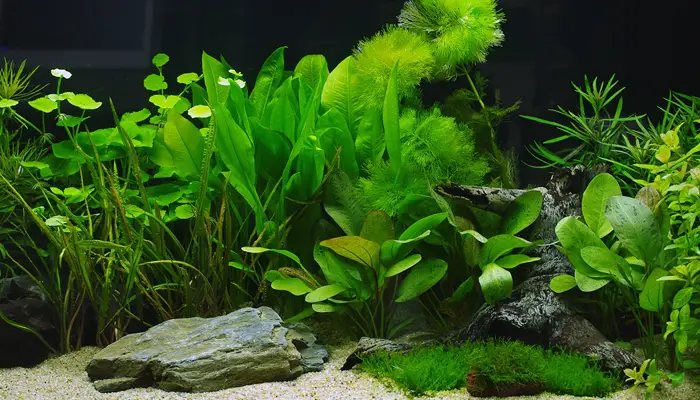
Plants are functionally essential in shrimp tanks, not decorative. They provide three critical functions: biofilm substrate (the primary food source for shrimp, growing on all leaf surfaces), water quality improvement (ammonia and nitrate absorption), and surface area for grazing and hiding.
Best plants for shrimp tanks:
Java moss and Christmas moss: The most important shrimp plants. Dense moss growth creates the biofilm-rich micro-environment that shrimp graze constantly. Shrimp spend significant time picking through moss. In breeding tanks, moss provides the fry survival cover that makes passive breeding possible. Moss also catches shed exoskeletons, which shrimp eat for calcium.
Java fern: Slow-growing, hardy, tolerates low light. Biofilm grows readily on the broad leaves. Attaches to hardscape without substrate.
Anubias: Slow-growing, very hardy. The broad smooth leaves develop excellent biofilm. Shrimp graze Anubias leaves consistently.
Hornwort and water sprite: Fast-growing, excellent ammonia absorption, fine texture provides cover. Can be floated or gently weighted.
Bucephalandra: Increasingly popular in shrimp tanks. Slow-growing, low-light tolerant, produces distinctive textured leaves with excellent biofilm. Wide variety of forms available in India.
Floating plants (water lettuce, frogbit, dwarf water lily): Reduce light (preventing algae on glass), absorb nitrate and ammonia, provide cover that makes shrimp more comfortable.
CO₂: Not required for low-tech shrimp planted tanks (Java fern, Anubias, hornwort, moss thrive without it). For more complex planted shrimp setups, low-level CO₂ (10–15 ppm) improves growth significantly. Advanced Nutrient Dynamics.
Fertilisation: Use only shrimp-safe, copper-free liquid fertilisers. Dose conservatively in established shrimp tanks — heavy fertilisation produces parameter swings that stress shrimp.
Plant guide for Delhi NCR conditions: Best Aquarium Plants for Delhi NCR Water.
Drip Acclimation — Non-Negotiable for Shrimp
Standard fish acclimation (floating the bag, adding small amounts of tank water over 15–30 minutes) is insufficient for shrimp. Shrimp are extremely sensitive to osmotic pressure changes — a sudden shift in pH, GH, or TDS causes osmotic shock that triggers premature molting, failed molts, and death within 24–48 hours even when the new water chemistry is correct.
Drip acclimation procedure:
- Float the bag to equalise temperature (15 minutes)
- Transfer shrimp to a clean container with the bag water
- Using airline tubing with a knot or valve to control flow, drip tank water into the container at 2–3 drops per second
- Allow the container water volume to double (approximately 1–2 hours)
- Gently net the shrimp and introduce to the tank — do not add the acclimation water to the tank
This slow, controlled osmotic equalisation gives shrimp time to adjust physiologically. Skipping it is the most common cause of shrimp deaths in the first 48 hours after purchase, often misattributed to disease or poor specimens.
Indian Summer — The Temperature Crisis
Shrimp are more temperature-sensitive than most aquarium fish. Neocaridina cherry shrimp have a comfort range of 18–24°C and tolerate up to 28°C briefly. Above 28°C: reduced oxygen availability (warm water holds less DO), failed molts, reduced breeding, and mortality. Above 30°C: acute physiological stress and significant mortality.
Delhi NCR room temperatures reach 40–45°C in May–June. An uncontrolled shrimp tank in a non-air-conditioned room will reach lethal temperatures without active cooling.
Cooling options:
- Air-conditioned room (most effective — 24–26°C ambient protects most shrimp)
- Fan blowing across the water surface (evaporative cooling — reduces water temperature 2–4°C)
- Aquarium chiller (definitive but expensive)
- Cooling fans designed for aquariums (clip-on fans that blow across the water surface)
- Frozen water bottles floated briefly (temporary, labour-intensive)
For Caridina shrimp with their narrower temperature tolerance (20–24°C), an air-conditioned room or chiller is mandatory in Indian summer conditions, not optional. Aquarium Water Temperature in Indian Summer.
Hardscape and Hiding
Shrimp use hiding spots constantly — during molting (their most vulnerable period), when stressed, and during initial settlement in a new tank. Dense hardscape with multiple small caves and crevices is not decorative excess but functional requirement.
Dragon stone, seiryu stone, and other porous rocks: Surfaces quickly colonise with biofilm. Multiple rocks arranged to create caves and overhangs are the standard shrimp hardscape approach.
Driftwood: Releases tannins that slightly acidify water and produce biofilm. Most shrimp actively graze driftwood surfaces. Some hobbyists allow driftwood to produce a light tannin colouration — this slightly reduces water pH (beneficial for Neocaridina and Caridina) and produces a natural biotope appearance.
Ceramic shrimp hides: Purpose-made cylindrical or dome-shaped ceramic hides provide molting and breeding cover. Low cost, effective.
Shrimp Tank Mates — Keeping It Simple
Most fish eat shrimp. The safest approach is a shrimp-only tank.
Fish genuinely safe with adult shrimp (but may eat juveniles):
- Otocinclus catfish (algae eaters that are too small and wrong body type to prey on shrimp)
- Pygmy Corydoras (Corydoras pygmaeus, C. habrosus)
- Chili rasboras and other nano rasboras in dense planting
Fish that will eat shrimp: Bettas, guppies (eat juveniles), mollies (eat juveniles), most tetras, all cichlids, all gouramis. The list of safe fish is short; the list of shrimp-eating fish is essentially “everything else.”
Snails: Mystery snails and Nerite snails coexist peacefully with shrimp and provide additional algae grazing. Assassin snails eat pest snails and are shrimp-safe. Ramshorn snails coexist without predating shrimp.
Water Changes in Shrimp Tanks
Shrimp require smaller, more frequent water changes than fish tanks — not large, infrequent changes.
Recommended protocol: 10–15% weekly, using the Water Change Calculator to maintain consistency. Temperature-match and chemistry-match replacement water precisely before adding — abrupt changes in GH, KH, or TDS trigger molting stress.
Never do large emergency water changes in shrimp tanks — the parameter shock kills more shrimp than the original water quality problem in most cases. The correct response to elevated ammonia or nitrite in a shrimp tank is small, frequent changes (10% twice daily) until the parameter resolves. How to Do a Water Change.
Feeding
A well-planted, biofilm-rich shrimp tank with adequate population density does not require additional feeding. Shrimp graze continuously on biofilm, algae, and decomposing plant matter.
Supplemental feeding is beneficial for colony growth and colour development:
- Specialised shrimp pellets or wafers (sink immediately, placed directly on substrate)
- Blanched vegetables: spinach, zucchini, cucumber, kale (place in tank for 2–4 hours, remove before decomposing)
- Dried leaves: Indian almond leaves, oak leaves (release tannins, provide biofilm substrate, shrimp graze extensively — leave permanently)
- Protein supplement: occasional micro-worm or baby brine shrimp for breeding conditioning
Feeding frequency: Every other day maximum. Overfeeding is the primary water quality problem in shrimp tanks — uneaten food produces ammonia spikes in the small water volumes typical of shrimp setups.
Common Shrimp Tank Failures in India
Sudden colony collapse: Copper contamination most commonly. Identify source (fertiliser, medication, plumbing) before restocking.
Shrimp not breeding: Temperature too warm (above 26°C reduces breeding drive significantly), parameters out of range, copper sub-lethal exposure, or tank not cycled sufficiently.
White ring of death: A white ring around the shrimp’s body during molting, indicating a failed molt. Caused by insufficient GH (mineral content too low for exoskeleton formation), rapid parameter change, or iodine deficiency. Increase GH slightly and ensure remineralisation of RO water is correct.
Shrimp dying after water change: Osmotic shock from parameter mismatch in replacement water, or temperature differential. Slow down water changes to 10% maximum and match replacement water temperature and chemistry precisely.
Shrimp not eating: New tank stress (normal for first 1–2 weeks), water parameters outside range, or sub-lethal copper exposure. Check copper first if a new fertiliser or medication has been added.
Frequently Asked Questions
What filter should I use for a shrimp tank? Sponge filter only. Power filters and canister filter intakes draw in and kill juvenile shrimp and adults during molting. Sponge filters provide biological filtration, gentle water movement, and zero intake risk.
Does copper kill shrimp? Yes — at very low concentrations (0.01–0.02 ppm) that are safe for fish. Check liquid fertilisers and all medications for copper content. Test tap water from copper plumbing. Use only explicitly shrimp-safe or copper-free products.
How do I cycle a shrimp tank? Fishless cycle for 6–8 weeks minimum — longer than fish tanks. Add plants during cycling. Confirm zero ammonia and zero nitrite for at least two weeks before introducing shrimp. Test GH, KH, TDS, and temperature alongside the standard nitrogen cycle parameters.
Can shrimp survive Indian summers? Neocaridina cherry shrimp can survive up to 28°C briefly. Delhi NCR room temperatures in summer (35–40°C ambient) will push tank temperatures above this without cooling. Air conditioning, fan cooling, or a chiller is required for summer shrimp keeping in uncontrolled Indian rooms.
What is the minimum tank size for shrimp? 10 litres absolute minimum; 20 litres recommended for stable parameters and adequate population. Smaller tanks fluctuate in temperature and chemistry faster than larger ones, which is more problematic for shrimp than for fish.