
By ProHobby™
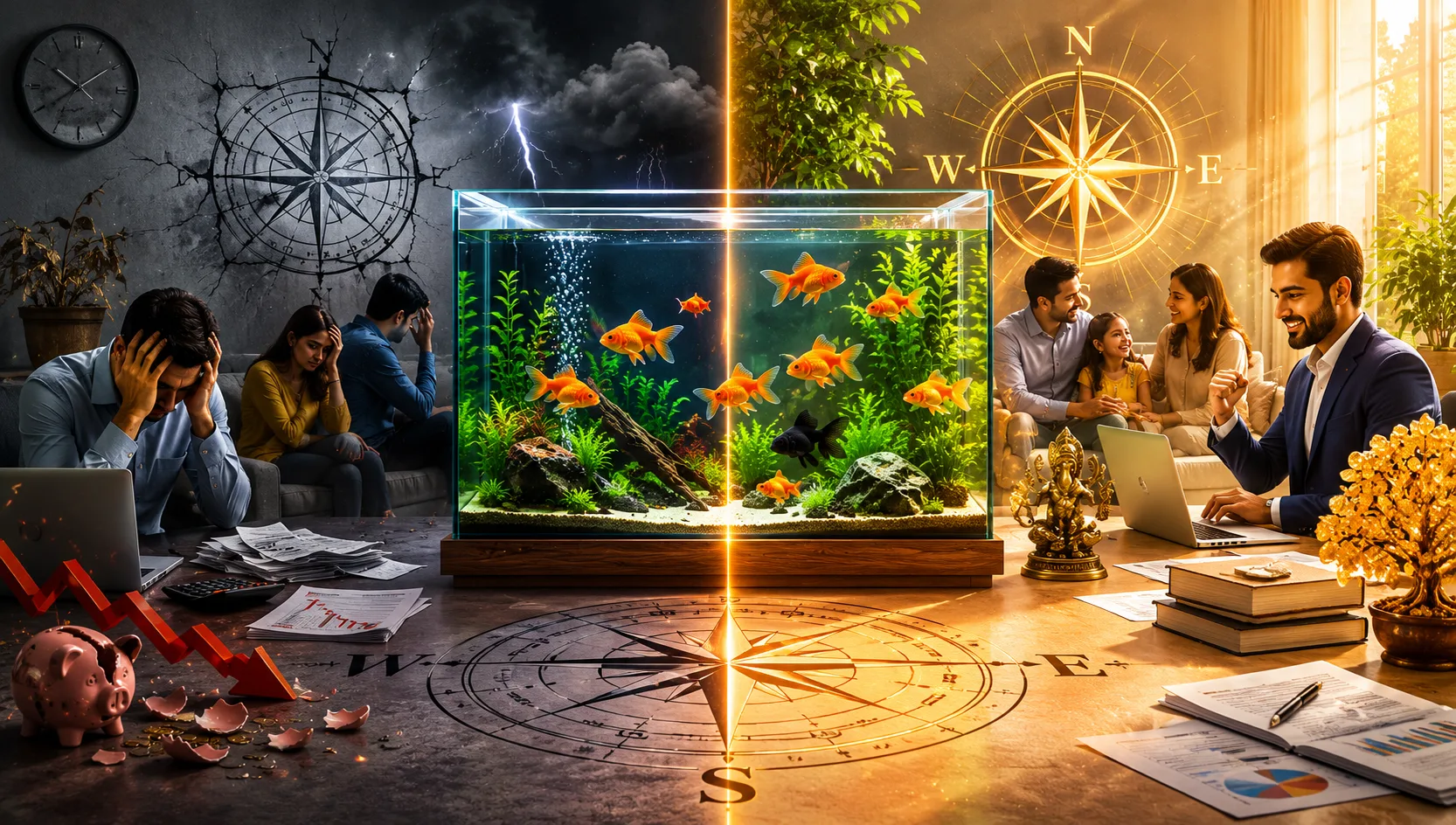
The short answer: A fish dying in your aquarium is not bad luck for you. In vastu shastra and feng shui, it is the opposite — the fish absorbed a negative energy or misfortune that was heading toward your household and its death means the protection was successful. Remove it immediately, offer a quiet acknowledgement, and replace it as soon as possible.
Of all the questions ProHobby™ receives about vastu aquariums, fish death generates the most anxiety. Forum threads run for pages. WhatsApp groups light up at midnight. Families argue about whether to remove the entire aquarium.
Almost universally, the interpretation is wrong. The anxiety is the product of misunderstanding the fish’s role — and that misunderstanding can lead to the single worst possible response: removing a correctly placed aquarium from a home that needs it most.
The Vastu Shastra Framework
In vastu shastra, fish are living protectors. This is not metaphor. The belief is rooted in one of Hinduism’s most foundational mythological events — Lord Vishnu’s first avatar on earth was Matsya, the fish, who protected the sacred Vedas from destruction and saved humanity from the great flood. Fish are therefore understood to carry an extraordinary capacity for protection: the ability to absorb negative energy, malevolent intentions, illness vibrations, and misfortune on behalf of those they serve.
When you maintain a vastu aquarium, the fish are doing energetic work continuously. They absorb the jealousy of visitors, the ill-will of competitors, the accumulated stress of daily life, and whatever negative forces are directed at the household. Over time — particularly during periods of heightened negativity entering the home — a fish absorbs more than it can carry. It dies.
The death is the protection completing itself. The fish gave what it had for the household. Its death is not an omen of things to come. It is evidence that something negative was intercepted.
Feng shui states this in different terms but with identical meaning. Fish absorb negative chi continuously. When a fish dies, it has fulfilled its protective function. The household has been shielded.
Both traditions are unanimous: fish death does not cause bad luck. Fish death means bad luck that was coming has already been stopped.
What the Specific Death Tells You
Not every fish death carries the same energetic significance. Which fish died matters.
The black fish dies first: If the Black Moor Goldfish — the dedicated protective fish in the classic 9-fish vastu formula — dies before the others, this is the clearest possible vastu interpretation. The black fish is placed specifically to absorb negative energy. Its death means it absorbed a significant, targeted negative force on behalf of the home. This is exactly what it is in the tank to do. Replace it immediately with another black fish. Do not let the tank run without its black fish.
A gold fish dies: Gold fish die from absorbed financial or positive-energy-related negativity, or from water quality issues. Check water parameters first. If parameters are perfect, interpret it as protection.
Multiple fish die together: Almost always a fishkeeping emergency — ammonia spike, temperature crash, disease outbreak, or chlorine in the water. Check parameters immediately. If all parameters are perfect and multiple fish died simultaneously with no physical explanation, this indicates a severe energetic event that warrants a full vastu assessment of the property.
The same fish keeps dying repeatedly: Chronic water quality problems in the vast majority of cases. Persistent correctly-maintained water quality with repeated deaths indicates a severe ongoing vastu problem — the aquarium is being overwhelmed. This is a signal that the tank may be incorrectly placed or incorrectly specified for the dosha it is trying to address. ProHobby™ assessment is warranted.
Timing of Death — What It Means
Fish dying on Amavasya (new moon): Energetically significant. Amavasya is associated with ancestral energy and the activation of deep, accumulated negative forces. A fish dying on Amavasya is interpreted as having absorbed heavy ancestral karma or deeply accumulated household negativity. Replace the fish and, if appropriate to your tradition, perform ancestral offerings.
Fish dying during important life events (exams, job interviews, medical procedures): The fish absorbed the negative energy — fear, competitive jealousy, environmental stress — surrounding the event. The event may go well precisely because the fish intercepted the forces that would have hindered it. This is protection, not warning.
Fish dying on an auspicious day: Almost always a fishkeeping problem — overfeeding during a celebration, guests disturbing the tank, temperature fluctuation from gatherings. Check water quality first.
What to Do When a Fish Dies — Step by Step
Step 1: Remove immediately. A dead fish left in the tank creates an ammonia spike toxic to other fish and, in vastu terms, a concentrated source of stagnant negative energy in the space. Remove it the moment you notice it.
Step 2: Test your water. Before any spiritual interpretation, verify: ammonia (must be 0 ppm), nitrite (must be 0 ppm), pH (species-appropriate), temperature (stable). Most fish deaths in Indian homes are fishkeeping problems. Address the physical cause first.
Step 3: Handle respectfully. The fish performed a protective function. Many vastu practitioners recommend burying it in garden soil or releasing it to a natural water body. Do not flush carelessly.
Step 4: Perform a partial water change. 25–30% with dechlorinated, temperature-matched water. This refreshes the tank’s energy as well as the water chemistry.
Step 5: Replace promptly. Within 24–48 hours where possible. The vastu formula is incomplete until the fish count is restored. The black fish, if that is the one that died, is particularly urgent to replace. ProHobby™ stocks Black Moor Goldfish, Goldfish, and Arowana year-round. Browse available fish →
The Critical Warning: What Happens When a Fish Dies and Is Not Replaced
This is the consequence most guides omit. When a fish dies and is not replaced — when the tank runs incomplete for days or weeks — two things happen simultaneously:
From a fishkeeping perspective: the remaining fish are living in a tank with a gap in its social structure, possibly elevated stress, and potentially declining water quality if the maintenance response to the death was inadequate.
From a vastu perspective: the protective formula is broken. The energetic system the tank maintains — the continuous absorption of negativity, the generation of positive prana — is operating at reduced capacity or not at all. The home or office is energetically exposed during this period.
The longer the incomplete tank runs, the more the accumulated negative energy — which the fish was absorbing daily — begins to build in the space without being intercepted. We have assessed homes where a fish died, was not replaced for weeks, and the period of the incomplete tank corresponded precisely with the most difficult period the household could remember.
Replace the fish. Do not leave the formula broken.
When Fish Death Is a Warning About the Tank Itself
There is a category of fish death that is not about protection at all — it is a warning about the aquarium’s placement or specification.
If you have a fish tank that loses fish repeatedly despite:
- Consistent, impeccable water quality
- Correct feeding
- Appropriate species for the tank size
- No disease diagnosis
— the most likely explanation is not energetic. It is one of: chronic low-level ammonia from overfeeding or overstock, incorrect pH for the specific species, or water temperature fluctuations from an AC vent or window the owner has not noticed.
But if all physical causes are genuinely and professionally ruled out, repeated fish death in a well-maintained tank is a signal that the aquarium is in the wrong position — it is absorbing more negative energy than it can process, because the dosha it is placed near is more severe than the current setup can handle. A larger tank, a different species, or a repositioning may be required.
This is a ProHobby™ assessment conversation. Not a DIY problem to solve from a guide. Book an assessment →
Frequently Asked Questions
Is it bad luck if a fish dies in your aquarium as per vastu? No. In vastu shastra and feng shui, a dead fish has absorbed a negative energy on behalf of the household. It is a protective act. Remove it, replace it, and do not interpret it as a warning of things to come.
What should I do with a dead fish as per vastu? Remove it immediately from the tank. Handle respectfully — bury in garden soil or release to a natural water body. Perform a partial water change. Replace the fish within 24–48 hours to restore the vastu formula.
What does it mean if the black fish dies? The black fish is specifically placed to absorb negative energy — its death means it successfully intercepted a negative force. This is exactly its purpose. Replace it with another black fish (Black Moor Goldfish) immediately. Do not substitute with any other colour.
My fish died on Amavasya. Is this especially significant? Yes — Amavasya deaths are associated with absorbed ancestral or deeply accumulated negative energy. Replace the fish and consider performing puja or ancestral offerings if this is part of your tradition.
What if all my fish die together? Check water quality parameters immediately — this is almost always a water quality emergency (ammonia spike, temperature crash, chlorine). Consult ProHobby™ if all parameters are verified perfect and mass death occurred.
Can I eat a fish that died in my vastu aquarium? No. A vastu fish has absorbed household negative energy throughout its life. This is unanimously advised against across all vastu traditions.
My fish died and I feel the aquarium is not working. What should I do? Do not remove the aquarium. Replace the fish, restore the formula, and if concerns persist, book a ProHobby™ assessment to verify the placement and specification are appropriate for your specific space.
Related Reading
- Why Bad Vastu Costs More Than You Think — and the Aquarium Fix →
- Aquarium Vastu Shastra & Feng Shui: The Complete Guide →
- Best Fish for Vastu Aquarium — Complete Species Guide →
- Aquarium in Bedroom as Per Vastu →
- Browse Aquarium Fish at ProHobby™ →
ProHobby™ — Delhi NCR’s dual-science vastu and feng shui aquarium consultants. WhatsApp: +91 81303 16186 · Book a Consultation →