
by ProHobby™ | Ecological Systems Authority
A garden pond is one of the most rewarding things you can add to an Indian home.
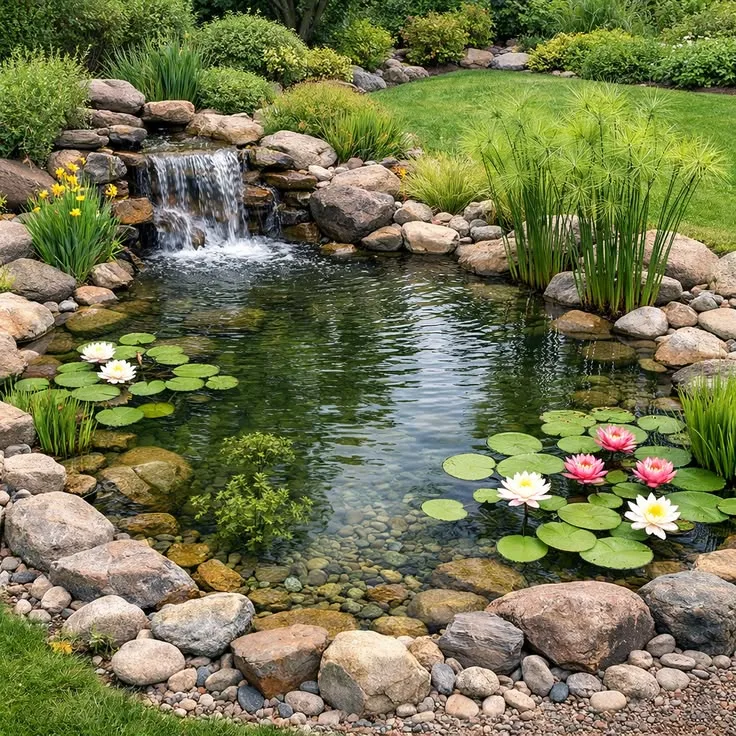
Unlike an aquarium, it lives outside — subject to rain, sun, wind, visiting birds, and the full range of Indian seasons. It connects your home to something larger and older. Water has been central to Indian garden design for thousands of years, from the stepwells of Rajasthan to the formal tank gardens of Mughal architecture. A well-planted outdoor pond with fish is, in many ways, a continuation of that tradition brought into a modern home or terrace.
It is also, compared to a full koi pond, a much more forgiving and accessible project. You do not need ₹2–3 lakh, weeks of construction, or a complex multi-chamber filtration system to create a beautiful garden pond with fish. A thoughtfully designed 1,000-litre pond with goldfish, water lilies, and marginal plants can be built for a fraction of that cost — and it will genuinely thrive if you understand how the ecosystem works.
This guide covers everything: how a garden pond differs from a koi pond (a distinction that matters enormously), the best fish species for Indian conditions, setup and construction, plants, water quality, seasonal management, and maintenance. By the end, you will know exactly what kind of pond is right for your space, your budget, and the fish you want to keep.
Table of Contents
- Garden Pond vs. Koi Pond: Understanding the Critical Difference
- Is a Garden Pond Right for You? Key Questions First
- Planning Your Garden Pond: Size, Shape, and Location
- Vastu Shastra and the Garden Pond
- Construction: Liner, Container, and Raised Pond Options
- Filtration and Aeration for a Garden Pond
- The Best Fish for a Garden Pond in India
- Fish to Avoid in an Indian Garden Pond
- How Many Fish Can a Garden Pond Hold?
- Pond Plants for India: The Complete List
- Water Quality and Parameters
- Setting Up and Cycling Your New Pond
- Feeding Pond Fish in India
- Indian Seasonal Care: Summer, Monsoon, and Winter
- Common Garden Pond Problems and Solutions
- Garden Pond Cost in India
- Maintenance Schedule
- Frequently Asked Questions
1. Garden Pond vs. Koi Pond: Understanding the Critical Difference
This is the most important section in this guide — and the section most Indian pond guides skip entirely.
A garden pond and a koi pond are fundamentally different systems. They look similar on the surface — both are bodies of water with fish in a garden setting. But they are designed for different purposes, built to different specifications, and maintained on different terms. Choosing the wrong type for your goals, or trying to run one as if it were the other, is the single most common cause of pond failure in India.
Here is the distinction in full.
Purpose and Philosophy
A garden pond is an ecosystem-first water feature. It is designed around balance — plants, fish, bacteria, and invertebrates working together in a self-regulating cycle that requires relatively light human intervention once established. Fish are one component of a larger living environment. The pond exists to be beautiful, to support wildlife, and to create a calm, natural space.
A koi pond is a fish-first system. It is engineered around the needs of koi — large, heavy-bodied, high-waste fish that can live for decades and grow to 60 cm or more. Everything about a koi pond — its depth, its filtration, its aeration — is designed to manage the extraordinary biological load that koi produce. The plants, if any, are secondary. The filtration system is primary.
Depth Requirements
A garden pond can function successfully at 60–90 cm depth. Most of the fish suited to a garden pond (goldfish, shubunkins, small ornamental fish) are comfortable in this range, and the shallower depth allows aquatic plants to establish and thrive. Aquatic plants need light reaching their roots, which requires shallower water.
A koi pond requires a minimum of 1.2 metres depth, and 1.5–2 metres is strongly preferred. This is non-negotiable for koi welfare in Indian climate — the depth provides the temperature buffering and oxygen reserves that koi need to survive Indian summers without chronic stress.
Putting koi in a garden pond depth is one of the most common mistakes in Indian backyard ponds. Koi are not harmed immediately, but the shallow, warm water in an Indian summer becomes oxygen-depleted and ammonia-rich rapidly under a full koi load. Fish begin dying within months.
Filtration Requirements
A garden pond relies heavily on plant-based and natural biological filtration. A healthy planting of water lilies, marginal plants, and submerged oxygenating plants absorbs the nutrients that goldfish and smaller fish produce, keeps algae under control through competition, and maintains water clarity through the natural ecological cycle. A simple pump-fed mechanical filter or small biofilter is usually sufficient supplemental support.
A koi pond requires a dedicated, engineered multi-stage filtration system — settlement chambers, biological filtration media with enormous surface area, and a UV clarifier. This system must process the entire pond volume at least once per hour. Koi produce approximately three times the waste per body weight that goldfish produce. This waste load overwhelms plant-based filtration entirely. Koi also eat most aquatic plants, removing the natural filtration that garden ponds rely on.
Fish Load and Waste Production
A single mature koi (50 cm) produces more ammonia per day than 10–15 medium goldfish. Garden pond fish like goldfish, shubunkins, and small ornamental carp are compatible with the natural ecosystem of a planted pond. Koi are not — they eat the plants, disturb the substrate, and produce a waste load that only purpose-built filtration can handle.
Cost and Complexity
A well-built garden pond with fish can be established for ₹15,000–₹60,000 depending on size and materials. It is accessible to a motivated DIY hobbyist and requires no specialist construction skills.
A proper koi pond starts at ₹1,20,000–₹2,50,000 for a modest setup and scales to ₹5,00,000+ for a serious display pond. It benefits substantially from professional installation, especially the filtration system and any concrete construction. Read our full koi pond guide.
Summary Comparison Table
| Feature | Garden Pond | Koi Pond |
|---|---|---|
| Primary purpose | Ecosystem / planted water feature | Fish showcase |
| Minimum depth | 60–90 cm | 120–150 cm |
| Fish load | Light — goldfish, small ornamentals | Heavy — large koi |
| Filtration | Natural + simple pump filter | Engineered multi-stage system |
| Plants | Central to the ecosystem | Mostly absent (koi eat them) |
| Aeration | Helpful, not critical (in cooler seasons) | Critical year-round in India |
| Cost to build | ₹15,000–₹60,000 | ₹1,20,000–₹5,00,000+ |
| Complexity | Beginner–intermediate | Intermediate–advanced |
| Best for | Naturalistic garden, planted pond, small spaces | Koi collection, feature pond, larger spaces |
Can I keep koi in a garden pond?
The honest answer is: in a correctly built garden pond that is deep enough (1.2 m+), with adequate filtration and aeration, a small number of young koi can be kept. But a garden pond built to garden pond specifications will not serve koi well over the long term. As koi grow — and they grow quickly in India’s warm climate — they will exceed the capacity of a plant-based filtration system, eat all your aquatic plants, and require progressively more filtration infrastructure. Most people who start with “koi in a garden pond” either end up with dying koi or end up rebuilding the pond to proper koi pond specifications within a few years.
If you want koi, build a koi pond. If you want a beautiful, planted, naturalistic water garden with fish, build a garden pond and stock it with the species it is designed for.
2. Is a Garden Pond Right for You? Key Questions First
Before planning anything, answer these honestly:
Do you have outdoor ground space? Even a modest garden pond needs a minimum footprint of roughly 1.5 m × 1 m. Terrace or balcony ponds are possible with container-style setups, but structural load must be assessed (water is heavy).
What is your sun exposure? A location with 4–6 hours of sun and afternoon shade is ideal. Full shade means plants struggle and fish become sluggish. Full all-day Indian sun means overheating in summer and persistent algae.
Are you prepared for seasonal management? Indian seasons stress outdoor ponds differently — summer heat, monsoon runoff, and (in North India) severe winters all require different management. This is not difficult, but it requires attention.
What is your maintenance commitment? A mature, balanced garden pond requires approximately 30–60 minutes per week of maintenance plus seasonal deeper sessions. If you cannot commit to this, the pond will deteriorate.
What do you want from it? A visual water feature with a few fish? A wildlife habitat attracting frogs, dragonflies, and birds? A koi display? An aquaponics system growing vegetables? Knowing your goal shapes every other decision.
3. Planning Your Garden Pond: Size, Shape, and Location
Size
Bigger is always more stable. The temptation with a first garden pond is to start small. Resist it. A 500-litre pond is unstable — temperature fluctuates rapidly, algae blooms easily, and any imbalance (overfeeding, a hot week, a monsoon rain) can tip parameters into dangerous territory quickly.
Recommended minimum: 1,000 litres. This is achievable in a footprint of approximately 1.5 m × 1.2 m × 60 cm deep — manageable in most Indian gardens and large enough to be genuinely stable.
Ideal beginner size: 1,500–3,000 litres. A pond in this range can support a beautiful mix of goldfish, shubunkins, small ornamentals, and aquatic plants with significantly more stability and resilience.
Shape
For a naturalistic garden pond, irregular organic shapes (kidney, oval, teardrop) look most beautiful and integrate most naturally with garden planting. For a more formal Indian garden aesthetic (which suits many traditional and contemporary Indian homes), rectangular or geometric shapes with coping stone edges can look elegant.
Practically: avoid sharp right-angle corners where water circulation is poor. Incorporate at least one planting shelf at 20–25 cm depth for marginal aquatic plants — this is the shallow ledge around the perimeter where irises, rushes, and similar plants sit.
Location
Sun and shade: 4–6 hours of direct sunlight, with afternoon shade in summer, is the sweet spot for most Indian gardens. Morning sun is preferable to afternoon sun — afternoon sun in India (2–5 PM) is the most intense and will heat a shallow pond most aggressively.
Away from large trees: Falling leaves are the primary maintenance burden of any garden pond in India, especially during autumn and monsoon seasons. Decomposing leaf matter depletes oxygen and releases tannins and organic acids. Situate the pond away from the heaviest leaf-dropping trees, or plan for net covers seasonally.
Level ground: The pond must sit on completely level ground. Even a 5 cm tilt across a 2-metre pond is visible and aesthetically problematic. Level before lining.
Power access: Even a simple garden pond benefits from a pump for filtration and circulation. A nearby outdoor-rated power point prevents running extension cables.
4. Vastu Shastra and the Garden Pond
As with all water features in Indian homes, placement according to Vastu Shastra is an important consideration for many Indian families.
Most auspicious directions: The north and northeast zones of the property are considered ideal for water features. North is governed by Kubera, the deity of wealth, and the northeast (Ishaan kona) is the most spiritually active corner of the property. A pond in either of these directions is believed to attract prosperity, positive energy, and good fortune.
Directions to avoid: South, southeast, and southwest placements are generally inauspicious for water in Vastu. The southwest is associated with the earth element and is considered destabilised by water. The southeast is the fire zone and water here is considered to create conflict.
Flowing water: If your pond includes a small waterfall, fountain, or stream, water should appear to flow toward the home rather than away from it. This symbolises wealth arriving. A waterfall in the north or northeast flowing gently toward the house is considered particularly auspicious.
Fish species and Vastu: Orange and gold fish (goldfish, shubunkins, common carp) are considered very auspicious in Vastu, associated with wealth and solar energy. Black fish (black moors, dark ornamental carp) are also traditionally included as absorbers of negative energy. Nine fish in total — eight gold or orange, one black — is the most commonly recommended Vastu configuration.
Odd numbers of fish are preferred in Vastu: 1, 3, 5, 7, or 9.
5. Construction: Liner, Container, and Raised Pond Options
Option 1: Flexible Liner Pond (Most Popular)
A flexible EPDM rubber or butyl liner in an excavated depression is the most common method for garden ponds in India. It accommodates any shape, is relatively easy to DIY, and a quality EPDM liner lasts 20+ years.
Construction steps:
- Mark out the shape with string or spray paint
- Excavate to the desired depth, shaping the planting shelf at 20–25 cm depth around the perimeter
- Remove all sharp stones and roots from the excavated surface
- Lay a geotextile underlayment (old carpet, purpose-made liner underlay, or thick sand) to protect the liner from puncture
- Lay the liner, pressing it into the contours gently as you fill with water — the weight of water will settle it naturally
- Leave 30–40 cm of overlap at all edges, to be secured under coping stones
- Fill, treat the water, install pump and filter, and allow 4–6 weeks of cycling before adding fish
Option 2: Raised Pond (Great for Indian Homes and Terraces)
A raised pond built above ground — from brick, block, or stone with a liner — requires no excavation and can be positioned on a paved patio, terrace, or balcony (subject to structural assessment). Raised ponds are also more visible, which means you see the fish more easily, and they integrate well with formal Indian garden and courtyard aesthetics.
Important: A full pond weighs approximately 1 kg per litre. A 1,500-litre raised pond weighs 1,500 kg fully loaded. Ensure the underlying structure can bear this weight before building.
Option 3: Preformed Pond Shell
Rigid preformed fibreglass or plastic pond shells are widely available in India and are the simplest option for very small ponds (300–800 litres). They install quickly, require minimal construction skill, and are perfectly functional for a few goldfish with aquatic plants. Limitations: the shapes and sizes available are fixed, depths are often shallower than ideal (especially for Indian summer conditions), and they are difficult to expand.
Option 4: Container / Pot Pond
The most accessible entry point into pond keeping. A large ceramic pot, a wooden barrel lined with food-grade pond liner, a fibreglass bathtub, or a purpose-made container pond can house 2–4 small goldfish, a few aquatic plants, and a small filter pump. Suitable for balconies, small terraces, and limited spaces. Volume is constrained (typically 100–400 litres), which means more active management of water quality and temperature.
6. Filtration and Aeration for a Garden Pond
Unlike a koi pond, a well-planted garden pond can approach a natural ecological balance where plants, bacteria, and fish coexist without intensive mechanical intervention. But in Indian conditions — with high temperatures accelerating biological activity — some filtration and circulation support is always beneficial.
Minimum filtration for a garden pond
A submersible pump with a pre-filter basket moving water to either a waterfall, fountain head, or external biofilter box. This provides circulation (distributing oxygen and preventing stagnant zones), mechanical filtration (removing solid particles), and basic biological filtration (the filter media houses beneficial bacteria).
Pump size rule: the pump should turn over the pond volume once every 1–2 hours. A 1,500-litre pond needs a pump rated at 1,500–3,000 LPH.
Beneficial additions
Pond skimmer: Removes floating debris (leaves, pollen, dead insects) from the surface before it sinks and decomposes. Particularly useful in Indian conditions where tree debris is substantial.
Pressurised biofilter with UV: An external pressurised filter combines mechanical, biological, and UV sterilisation in one unit. Very convenient for garden pond sizes (1,000–5,000 litres), easy to install and clean, and effective at controlling green water algae. Widely available in India.
Air pump with diffuser: Provides additional oxygenation, especially important during the Indian summer when dissolved oxygen levels drop in warm water. Run continuously during peak summer months.
Can a well-planted garden pond run without a filter?
In theory, a very lightly stocked, heavily planted pond can maintain acceptable water quality through plant-based filtration alone. In practice, in Indian conditions, this is difficult to sustain through summer. The combination of high temperatures, rapid organic decomposition, and the closed-system nature of an Indian garden pond (unlike a natural pond fed by groundwater) means that even a well-planted garden pond benefits substantially from some pump circulation and filtration.
7. The Best Fish for a Garden Pond in India
These are the species best suited to a planted Indian garden pond — hardy, available in India, tolerant of the Indian climate, and compatible with aquatic plants.
Goldfish (Carassius auratus)
The best beginner garden pond fish, by a wide margin.
Goldfish are the most forgiving, widely available, and visually rewarding fish for an Indian garden pond. They have been bred for over 1,000 years from wild Crucian Carp, and the result is a fish of extraordinary hardiness — able to tolerate a wide temperature range, variable water quality, and the seasonal extremes of Indian conditions.
Best varieties for Indian garden ponds:
Common Goldfish / Comet: The single-tailed, streamlined goldfish most people picture. Fast, active, and extremely hardy. Comets grow to 25–30 cm in a good pond environment, are available across India, and are inexpensive. Orange, red-and-white, and calico colour forms are all available. The best all-round choice for a first garden pond.
Shubunkin: A calico-patterned, long-tailed goldfish with blue, red, black, and white markings. Closely related to the Comet in body form and hardiness. Shubunkins are slightly more ornate in appearance and are an excellent companion fish to Comets. They are available from specialist fish shops in Indian metros.
Sarasa Comet: A specific colour form with deep red-and-white contrast. Very striking in a pond. Essentially a Comet goldfish with selected colouration — equally hardy.
Fancy goldfish (Orandas, Ryukins, Ranchus): Beautiful fish but generally not recommended for outdoor Indian garden ponds. Their compact, round bodies and elaborate fins make them poor swimmers, vulnerable to more active fish, and sensitive to the temperature swings of Indian outdoor conditions. Keep fancy goldfish indoors in a well-maintained aquarium where conditions are stable.
Shubunkin (see above under Goldfish)
Shubunkins deserve their own mention because they are distinctly different in appearance while being equally easy to keep. Their calico patterning — no two fish are identical — makes a mixed Comet-and-Shubunkin pond visually dynamic and interesting.
Sarasa Comet (see above)
Grass Carp (Ctenopharyngodon idella)
Algae and plant controller — use with caution.
Grass carp are available in India and are exceptionally effective at controlling aquatic vegetation. A single adult grass carp will eat several times its body weight in plant material daily. This makes them extremely useful for controlling overgrown vegetation — but equally dangerous to any planted pond, where they will consume your carefully chosen aquatic plants without discrimination.
Use grass carp only if weed control is the priority and you are willing to sacrifice most aquatic planting. Do not mix with a pond where plants are central to the design.
Important: Grass carp are fast-growing (up to 1 metre) and must never be released into natural waterways — they are a highly invasive species in Indian ecosystems.
Indian Ornamental Carp / Rohu / Catla (Native species)
India’s native major carps — Rohu (Labeo rohita), Catla (Catla catla), and Mrigal (Cirrhinus mrigala) — are occasionally kept in large garden ponds, particularly in rural and semi-urban settings. They are perfectly suited to Indian water conditions and grow very well in warm water.
However: These are large fish. Rohu and Catla routinely reach 1–2 kg and 60+ cm in good pond conditions. They are not suitable for small ornamental garden ponds. They suit large estate ponds, farm ponds, or ornamental water bodies of 5,000+ litres. If you have the space, a large Indian carp pond is a genuinely rewarding project with a cultural dimension — these fish have been part of Indian garden and temple ponds for centuries.
Mosquitofish (Gambusia affinis)
A small, hardy livebearer kept primarily for its exceptional appetite for mosquito larvae. In India, where mosquito-borne disease is a significant concern, a few mosquitofish in any outdoor water feature are genuinely valuable as a natural control measure.
Mosquitofish are not primarily ornamental — they are small and unspectacular. But they are extraordinarily tough (tolerant of high temperatures, variable water quality, and even mildly polluted water) and serve a real ecological function. Available from specialist aquarium shops in India.
Note: Mosquitofish are listed as an invasive species globally. Never release into natural water bodies.
Guppies and Mollies (for smaller/warmer ponds)
In southern Indian conditions — where outdoor temperatures stay warm year-round — guppies and mollies can thrive in a small garden pond or container pond. They are prolific breeders, colourful, and effective mosquito larvae consumers. They cannot survive Indian winters in the north (Delhi, Punjab, Rajasthan) where temperatures fall below 10°C.
For a container pond on a balcony or terrace in Mumbai, Chennai, Bangalore, or Hyderabad, a mix of fancy guppies with aquatic plants is a beautiful and low-maintenance setup.
Weather Loach (Misgurnus anguillicaudatus)
An unusual and charming pond fish. Bottom-dwelling, eel-like in body form, peaceful, and extremely hardy. Weather loaches are named for their sensitivity to barometric pressure changes — they become unusually active before storms, which Indian pond keepers find endlessly entertaining. They grow to around 20–25 cm and are compatible with goldfish. Available from specialist suppliers in India.
8. Fish to Avoid in an Indian Garden Pond
Koi (for garden pond depths): As detailed in Section 1, koi require pond specifications (depth, filtration, aeration) that a garden pond is not built to provide. Young koi in a garden pond seem fine initially, but as they grow and Indian summers stress the system, the outcome is predictably poor.
Fancy Goldfish (Orandas, Ryukins, Bubble-eyes, etc.): Their elaborate fins and rounded bodies make them poor swimmers and vulnerable to more active pond fish, bird predators, and temperature fluctuations.
Oscars, Cichlids, and Tropical Predatory Fish: These are aquarium fish requiring stable tropical temperatures year-round. An outdoor Indian pond, even in the south, has seasonal temperature variation that these species cannot tolerate long-term.
Common Catfish (large species): Catfish introduced to garden ponds often hide in the depths and are rarely seen. As they grow, they can consume smaller fish and destabilise the pond ecosystem. Small ornamental catfish (corydoras) are aquarium fish, not pond fish.
9. How Many Fish Can a Garden Pond Hold?
The traditional stocking rule for garden ponds — inherited from the aquarium hobby — is 1 cm of adult fish body length per 10–15 litres of water. In practice, in an Indian garden pond with live plants and a functioning filter, you can work with this as a starting point:
| Pond Volume | Recommended Stocking (small fish, 10–15 cm adult) |
|---|---|
| 500 litres | 3–4 fish |
| 1,000 litres | 6–8 fish |
| 2,000 litres | 12–15 fish |
| 3,000 litres | 18–22 fish |
Always start at half your capacity and add fish gradually. The bacterial colony in a new pond adjusts to increased stocking over time. A sudden large addition of fish overwhelms the biofilter, causing an ammonia spike. Add fish in groups of 2–4, waiting 3–4 weeks between additions and testing water in between.
In Indian summer: Reduce effective stocking by 20–30% — warm water holds less oxygen and higher temperatures accelerate ammonia toxicity. What is a comfortable stocking level in winter can become a dangerous one in May.
10. Pond Plants for India: The Complete List
Plants are the soul of a garden pond. They provide shade (controlling temperature and algae), oxygen (through photosynthesis during daylight), natural filtration (absorbing nitrates through their root systems), cover and spawning sites for fish, and the aesthetic beauty that makes a pond a living water garden rather than a fish tank.
India’s warm climate is ideal for most aquatic plants — many thrive here that struggle in temperate gardens. Here is the definitive guide to what works.
Deep-Water Plants (planted at the bottom, leaves at the surface)
Water Lily (Nymphaea): The quintessential pond plant and the most important one for an Indian garden pond. Water lily pads cover the surface, shading the water and dramatically reducing algae growth. In Indian conditions, a well-established water lily can cover 30–40% of the pond surface by midsummer — exactly what you want. Available in dozens of varieties across Indian nurseries, from pure white to deep magenta. Plant in baskets at 30–60 cm depth.
Lotus (Nelumbo nucifera): India’s national flower is also one of the most magnificent pond plants in the world. Lotus grows with leaves that rise above the water surface (unlike water lily, which floats), topped by extraordinary flowers. It spreads vigorously in Indian conditions and prefers shallower water (20–40 cm over the root zone). Keep in large baskets to control spread. Highly Vastu-auspicious — the lotus is one of the most spiritually significant plants in Indian tradition.
Marginal / Emergent Plants (planted on the shallow shelf, 0–25 cm depth)
Water Iris (Iris pseudacorus / Iris laevigata): Spiky, elegant foliage with seasonal flowers (yellow or purple). One of the most beautiful pond edge plants. Reasonably koi-resistant (tough leaves) and excellent at absorbing excess nutrients from shallow water. Seasonal — dies back in winter, regrows in spring.
Papyrus / Egyptian Paper Reed (Cyperus papyrus): Tall, dramatic, umbrella-topped stems up to 1.5–2 metres. Stunning architectural plant for the pond edge. Thrives in Indian conditions — in fact, it grows better in warm climates than in its native temperate range. Koi-resistant.
Water Canna (Thalia dealbata / Canna aquatica): Bold tropical foliage. Very fast-growing in Indian conditions. Creates an immediate lush, established look for new ponds. Fish do not typically eat it.
Pickerelweed (Pontederia cordata): Blue-purple flower spikes, broadly attractive foliage. Excellent nitrate absorber. Available from specialist aquatic plant suppliers in India.
Rush / Bulrush (Scirpus / Typha): The classic pond-edge reed. Provides cover for fish, nesting material for pond wildlife, and excellent natural filtration. Control its spread — it can take over smaller ponds.
Water Mint (Mentha aquatica): Fragrant, pretty purple flowers. Effective nutrient absorber. Also has practical value — the mint is usable. Fish generally ignore it.
Floating Plants
Water Hyacinth (Eichhornia crassipes): One of the most effective nitrate-absorbing plants in existence. Floating, with beautiful purple flowers. Grows explosively in Indian conditions — a genuine concern in natural water bodies, where it is a notoriously invasive weed. In a contained pond, this growth rate is a feature: it absorbs nutrients faster than almost any other aquatic plant, outcompeting algae and keeping water clear. Must never be discarded into natural water bodies, rivers, or lakes.
Water Lettuce (Pistia stratiotes): Rosette-shaped floating plant with velvety leaves. Softer growth than water hyacinth, also effective at absorbing nutrients. Fish hide under it. Available across India.
Duckweed (Lemna minor): Tiny floating plant that forms green carpets on the water surface. Excellent nitrate absorber and fish food — goldfish eat it enthusiastically. Can take over if fish do not keep it in check. Naturally present in most Indian outdoor ponds within weeks of setup.
Submerged Oxygenating Plants
Hornwort (Ceratophyllum demersum): The best submerged oxygenating plant for Indian conditions — grows very well in warm water, provides oxygen during the day, and provides a refuge for fish fry. Fish nibble on it but rarely devastate it.
Vallisneria (Vallisneria spiralis): Tape grass. Long, grassy leaves that wave in water movement. Very hardy, grows in Indian water conditions including harder water. Goldfish nibble at it but it regrows rapidly.
11. Water Quality and Parameters
Garden pond fish are generally more tolerant of variable water quality than koi, but the same parameters matter:
| Parameter | Safe Range | India Notes |
|---|---|---|
| Temperature | 10–30°C (Goldfish) | Aim to keep below 30°C in summer |
| pH | 6.5–8.0 | Indian tap water typically 7.5–8.5; acceptable for goldfish |
| Ammonia | 0 ppm | Any detectable level is a warning sign |
| Nitrite | 0 ppm | Toxic; signals incomplete cycling or overloading |
| Nitrate | Under 40 ppm | Managed by plants + water changes |
| Dissolved Oxygen | Above 6 mg/L | Critical in summer; supplement with aeration |
Test your pond water at minimum monthly, and weekly during summer and after monsoon events. Pond test kits are widely available in India and covers all essential parameters.
Treating Indian tap water: Always add a dechlorinator rated for chloramine when topping up after water changes or evaporation loss. Delhi and most Indian metro tap water contains chloramine (not just chlorine) — this does not evaporate on its own and is toxic to fish and beneficial bacteria.
Across Delhi NCR including Gurgaon, Noida, Faridabad, and Ghaziabad, water does not follow a single profile but fluctuates between low-mineral municipal supply and high-mineral groundwater influence, with additional seasonal shifts altering concentration and stability. Water here typically ranges between 180 and 900 ppm TDS, 4 to 18 dGH, and 2 to 14 dKH, with pH spanning 6.8 to 8.5 depending on source and season. Read our Complete Strategy Guide on Hard Water Aquariums.
12. Setting Up and Cycling Your New Pond
The nitrogen cycle establishes beneficial bacteria in your pond filter and substrate that convert fish waste (ammonia) into less harmful nitrate. Without this cycle completing, fish die.
Timeline: 4–6 weeks without bacterial supplements, 2–3 weeks with a quality bacterial starter.
Fishless cycling method:
- Fill pond with dechlorinated water. Start pump and filter.
- Add a small pinch of fish food every day as an ammonia source.
- Test ammonia and nitrite every 3 days.
- Weeks 1–2: ammonia rises. Week 2–3: nitrite rises as ammonia drops. Weeks 3–5: both approach zero as nitrate rises.
- When ammonia = 0 and nitrite = 0: do a 25% water change and add your first fish.
Adding plants before fish is highly recommended for garden ponds — plants help seed beneficial bacteria, begin absorbing nutrients immediately, and make the pond look established and beautiful before any fish arrive.
13. Feeding Pond Fish in India
Garden pond fish in a planted pond will find natural food — algae, insects, aquatic invertebrates, and plant matter — but benefit from supplemental feeding.
How much: Only what fish consume in 5 minutes. Remove uneaten food immediately — decomposing food is a significant ammonia and oxygen hazard in a warm Indian pond.
How often: Once daily in mild seasons. Twice daily in active summer growth periods. Reduce to every other day in the monsoon when fish appetite often drops. Stop or near-stop feeding when water temperature falls below 12°C in North India’s cold season.
What to feed: A quality floating pond pellet sized for the fish you keep. Goldfish benefit from a mix of pellets and vegetable-based foods (blanched spinach, peas without skins, watermelon pieces — all widely loved by goldfish). Avoid live worms from unknown sources — they can introduce pathogens.
Summer feeding tip: Feed in the early morning when oxygen levels are highest and temperatures are lowest. Avoid feeding in the heat of the afternoon in peak summer — the combination of digestion (which increases oxygen demand) and low oxygen availability (warm afternoon water) can stress fish.
14. Indian Seasonal Care
Summer (March–June)
The most challenging season for Indian garden ponds. Primary threats: water temperature exceeding 30°C, oxygen depletion, and accelerated algae growth.
- Add shade: 40–50% shade cloth over part of the pond surface reduces temperature significantly and cuts direct algae-triggering sun. Position to provide afternoon shade.
- Maximise aeration: Run pump continuously. Add an air stone if you haven’t already.
- Reduce feeding: Less food = less ammonia = less biological oxygen demand.
- Water top-ups: Evaporation is high in Indian summers. Top up frequently with dechlorinated water. Do this in the morning or evening — never add cold tap water in the heat of the afternoon.
- Watch for heat stress: Fish gasping at the surface, refusing food, or sitting at the bottom are all signs of heat stress or low oxygen.
Monsoon (July–September)
- Install an overflow: The pond must have an overflow outlet at the correct water level. Without it, heavy monsoon rain will overflow the pond, taking fish with it.
- Cover during heavy rain: Monsoon runoff in Indian cities carries petrochemicals, pesticides, and pollutants from roads and rooftops. Cover the pond or divert roof drainage away from the pond area.
- Remove debris aggressively: Monsoon winds drop organic material into the pond rapidly. Decomposing leaves and debris deplete oxygen and spike ammonia.
- Test after heavy rain: Significant rainfall dilutes pond water and can drop pH and KH. Test within 24 hours of heavy rain events.
- Watch for disease: The combination of stress from parameter fluctuations and the warm, humid monsoon conditions creates ideal conditions for bacterial and fungal infections in fish.
Winter (October–February)
In most of India, winters are mild enough that garden pond fish remain active and healthy with only modest management adjustments.
- North India (Delhi, Punjab, Haryana, UP, Rajasthan): Reduce feeding progressively as temperatures fall. Stop feeding when water temperature consistently falls below 12°C. Fish enter a semi-torpid state and do not need food.
- South India (Chennai, Bangalore, Mumbai, Hyderabad): “Winter” is mild. Reduce feeding slightly, continue normal maintenance.
- Use the opportunity: Winter is the best time for deeper pond cleaning, equipment servicing, and any construction or modification work on the pond structure.
15. Common Garden Pond Problems and Solutions
Green water (algae bloom): Cause: Excess nutrients, too much direct sun, insufficient plant cover. Solution: Increase aquatic planting (water lilies, water hyacinth), reduce feeding, add a UV clarifier to the pump system. Green water is not dangerous to fish but signals an ecological imbalance.
Blanket weed / string algae: Cause: High nutrients, high light, warm water. Very common in Indian summer. Solution: Manual removal (wind onto a stick), increase plant competition, check and improve filtration. A barley straw extract treatment works well as a natural preventative.
Fish gasping at surface: Cause: Low dissolved oxygen — almost always the first diagnosis in Indian conditions. Solution: Immediately increase surface agitation (splash the water with a hose, point the pump output toward the surface). Add aeration. Reduce feeding immediately.
Cloudy / brown water: Cause: New pond (bacterial bloom — normal and temporary), tannins from new driftwood or organic matter, disturbed substrate. Solution: For new ponds, wait — it clears within 1–2 weeks as the ecology establishes. For tannin discolouration, it is harmless. For persistent cloudiness with no fish stress, improve filtration.
Fish dying: Cause: Most likely ammonia poisoning (uncycled pond, overfeeding, overcrowding), oxygen depletion (summer), or disease introduced with new fish. Solution: Test water immediately. If ammonia or nitrite elevated — 30–40% water change right now, stop feeding, add beneficial bacteria. If oxygen — increase aeration. If disease — quarantine affected fish if possible and consult a fish health specialist.
Heron predation: Cause: Herons are common in Indian urban gardens and are highly effective koi and goldfish hunters. Solution: Pond depth of at least 80 cm (herons wade, they don’t dive), steep sides, dense floating plant cover that obscures fish, and netting during high-risk periods. A line of thin string or wire at shin height around the pond perimeter is a surprisingly effective heron deterrent.
16. Garden Pond Cost in India
Small container / pot pond (100–400 litres)
| Item | Cost (INR) |
|---|---|
| Large ceramic pot or container | ₹2,000–₹6,000 |
| Small submersible pump + filter | ₹1,500–₹3,000 |
| Aquatic plants (3–5 varieties) | ₹800–₹2,000 |
| Water conditioner, test kit | ₹600–₹1,200 |
| 3–5 goldfish | ₹300–₹800 |
| Total | ₹5,200–₹13,000 |
Small garden pond (1,000–2,000 litres, liner)
| Item | Cost (INR) |
|---|---|
| Excavation (manual) | ₹4,000–₹8,000 |
| EPDM liner + underlayment | ₹5,000–₹10,000 |
| Coping / edging stone | ₹6,000–₹12,000 |
| Submersible pump + pressurised filter | ₹6,000–₹15,000 |
| Aquatic plants (full complement) | ₹2,000–₹5,000 |
| Water treatments, test kit | ₹1,000–₹2,000 |
| Fish (6–10 goldfish/shubunkins) | ₹500–₹2,000 |
| Total | ₹24,500–₹54,000 |
Medium garden pond (2,000–5,000 litres, with waterfall feature)
| Item | Cost (INR) |
|---|---|
| Excavation + construction | ₹15,000–₹30,000 |
| EPDM liner, underlayment, fittings | ₹12,000–₹20,000 |
| Edging, coping, surrounds | ₹15,000–₹35,000 |
| Pump + multi-stage filtration + UV | ₹15,000–₹35,000 |
| Waterfall / water feature construction | ₹10,000–₹25,000 |
| Aquatic plants, initial planting | ₹4,000–₹10,000 |
| Fish + water treatments | ₹2,000–₹5,000 |
| Total | ₹73,000–₹1,60,000 |
Monthly running costs
| Item | Cost per Month |
|---|---|
| Electricity (pump, UV, aeration) | ₹400–₹1,200 |
| Fish food | ₹100–₹600 |
| Water treatments | ₹100–₹250 |
| Total | ₹600–₹2,050 |
17. Maintenance Schedule
Daily (5 minutes):
- Observe fish — check all are present, swimming normally, feeding when offered
- Check pump is running and flow is normal
- Note water temperature in summer
Weekly (20–30 minutes):
- Remove surface debris with a net
- Test water parameters (especially in first 3 months and all summer)
- 10–15% water change, replacing with dechlorinated water
- Clear skimmer / pre-filter basket
- Feed and observe fish behaviour
Monthly (45–60 minutes):
- Rinse filter media in a bucket of pond water (never tap water)
- Clean UV clarifier quartz sleeve
- Inspect and trim aquatic plants — remove dead leaves and stems before they decompose
- Check pump impeller for debris or reduced flow
- More thorough water test including dissolved oxygen if you have a meter
Seasonally:
- Pre-summer (February–March): Deep clean, service all equipment, increase aeration capacity, add shade netting
- Post-monsoon (October): Full debris removal, pond bottom clean if needed, equipment service before winter
- Winter (November–February): Reduce feeding, deeper clean if pond has accumulated silt
Frequently Asked Questions
What is the difference between a garden pond and a koi pond? A garden pond is an ecosystem-centred water feature designed around the balance of plants, small fish, and natural biological filtration. A koi pond is a fish-centred system engineered to manage the high waste load of large koi, requiring specialist deep construction, multi-chamber filtration, and dedicated aeration. They are not interchangeable — attempting to keep koi in a garden pond, or using koi pond expense and complexity for goldfish, are both common mistakes.
Can I keep goldfish and koi together in a garden pond? Small juvenile koi and goldfish coexist peacefully. As koi grow, they will outcompete goldfish for food and eventually outgrow a typical garden pond. If you intend to keep koi long-term, build a proper koi pond from the start.
How deep should a garden pond be in India? A minimum of 60 cm for goldfish and garden pond fish, with a deepest zone of at least 80–90 cm. This provides adequate temperature buffering during Indian summers and sufficient volume for a stable ecosystem.
Do I need a filter in a garden pond? A lightly stocked, heavily planted garden pond can function without a mechanical filter. In Indian conditions, however, some pump circulation and basic filtration is strongly recommended — it significantly improves water clarity, stability, and fish health, especially through the summer months.
What is the best fish for a small garden pond in India? Common goldfish and Comets are the best all-round choice — hardy, widely available across India, visually beautiful, and perfectly suited to the planted, naturalistic garden pond environment.
Can I keep a garden pond on my terrace or balcony? Yes, using a raised pond, a large container, or a custom built basin — but only after confirming that the structure can support the weight. Water weighs approximately 1 kg per litre. A 1,000-litre pond adds 1 tonne of load. Always consult a structural engineer for terrace ponds above the smallest sizes.
How do I prevent mosquitoes in a garden pond? Fish — even a few goldfish — will consume mosquito larvae as fast as they appear. A moving water surface (fountain, waterfall, or pump output breaking the surface) also prevents mosquitoes from laying eggs. A combination of fish and water movement eliminates any practical mosquito concern.
Which pond direction is best as per Vastu? North and northeast are the most auspicious directions for a garden pond in Vastu Shastra. Avoid south, southeast, and southwest placements.
What Next?
A garden pond, once established, asks remarkably little of you in return for what it gives. Within a season, a well-planted pond develops its own ecological rhythm — plants flower, fish breed, dragonflies lay eggs, kingfishers appear at dusk. It becomes something that belongs to the garden in a way no paved surface or static ornament can.
If you are based in Delhi NCR and would like help designing or building a garden pond, ProHobby™ offers full custom pond installation, aquatic plant sourcing, and ongoing maintenance services across India.
Request a garden pond consultation →
Related articles: [Koi pond setup India: complete guide] · [Koi pond vs garden pond: which is right for you?] · [Best aquatic plants for India] · [Aquaponics India: combining fish and vegetables] · [Custom pond installation Delhi NCR] · [Fish tank Vastu direction guide]
Published by ProHobby | Delhi NCR’s ecosystem and pond specialists