
by ProHobby™ | Ecological Systems Authority
So you want to set up your first fish tank.
Maybe you walked past an aquarium in a hotel lobby and felt strangely calm. Maybe your child has been asking for fish for months. Or maybe you’ve seen a beautifully planted tank on Instagram and thought — I want that in my living room.
Whatever brought you here, this guide will take you from zero to a thriving, fully cycled aquarium — without killing your fish, wasting money on the wrong equipment, or spending weeks Googling conflicting advice.
We’ll also cover the things that are different about setting up an aquarium in India — hard tap water, extreme seasonal temperatures, and where to actually buy good equipment.
Let’s start.
What You’ll Need Before You Begin: The Complete Equipment Checklist
Before you buy anything, here’s everything a beginner freshwater aquarium needs. We’ll explain each item in detail below.
Essential (non-negotiable):
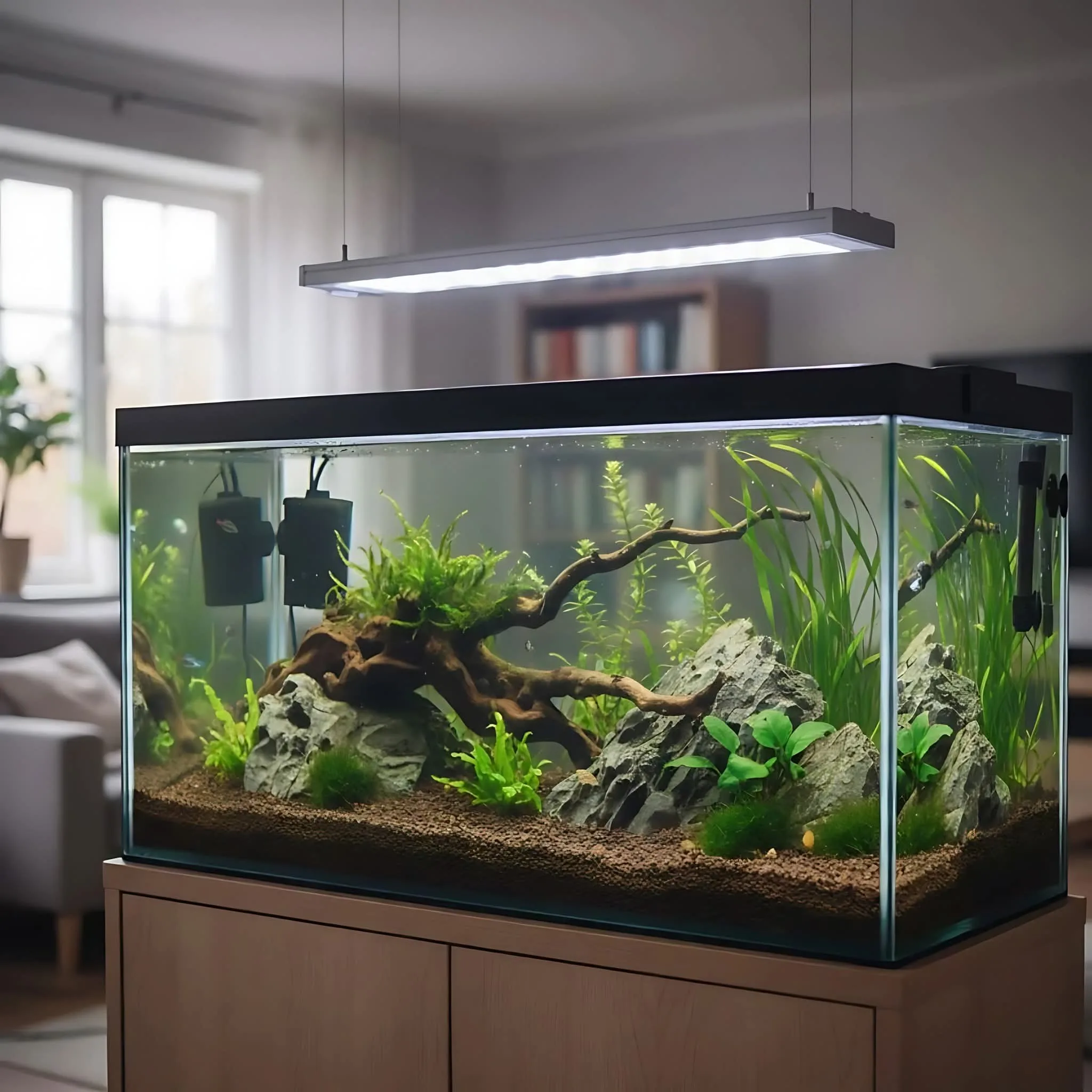
- Aquarium tank (glass or acrylic)
- Aquarium stand or a sturdy, flat surface
- Filter (hang-on-back or canister for beginners)
- Heater (even in warm parts of India — more on this)
- Thermometer
- Substrate (gravel or sand)
- Water conditioner / dechlorinator
- Aquarium test kit (API Master Test Kit or equivalent)
- LED light
Highly recommended:
- Aquarium background (solid black or dark blue)
- Air pump + air stone (optional but helpful)
- Gravel vacuum / siphon
- Fish net
- Bucket (dedicated, never used with soap)
For planted tanks (optional but rewarding):
- Plant substrate (like Fluval Stratum or ADA Aqua Soil)
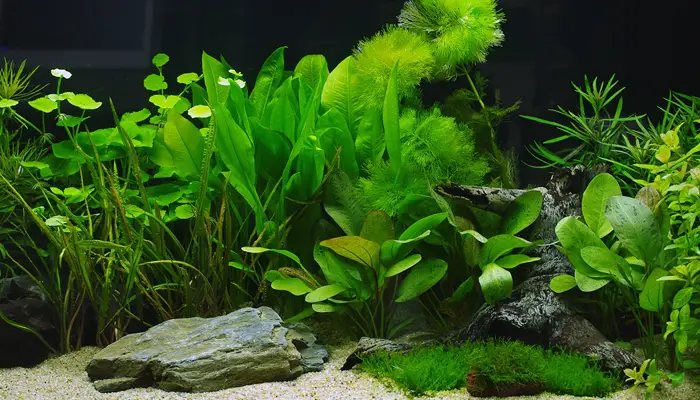
- Live plants (Java fern, Anubias, Vallisneria — beginner-safe)
- CO₂ cylinder and diffuser (not required for low-tech planted tanks)
- Full spectrum RGB/WRGB planted tank lights
Approximate budget in India: A basic 2-foot freshwater setup with decent equipment will cost between ₹4,500–₹7,000. A quality planted tank setup runs ₹15,000–₹25,000. Custom or larger tanks are priced separately — contact us for a quote.
Step 1: Choose the Right Tank Size
Bigger is (almost always) better for beginners
Here’s the single most counterintuitive truth in fishkeeping: larger aquariums are easier to maintain than small ones.
This surprises everyone. But the science is simple. A bigger volume of water means water parameters (temperature, pH, ammonia, nitrite) change more slowly. A small 10-litre tank can go from safe to toxic for fish in a matter of hours if something goes wrong. A 75-litre tank gives you time to notice and fix problems.
Recommended first tank sizes:
| Tank Size | Volume | Best For |
|---|---|---|
| 1.5 feet | ~40–50 litres | Betta fish (solo), nano fish |
| 2 feet | ~60–80 litres | Best beginner size. Community fish, guppies, mollies |
| 3 feet | ~120–150 litres | More fish variety, small cichlids |
| 4 feet | ~200–250 litres | Serious community tanks, angels, oscars |
The ProHobby™ recommendation: Start with a 2-foot (60 cm) tank if this is your first aquarium. It’s manageable, affordable, and stable enough for a wide range of fish.
What about fishbowls?
Please don’t. A fishbowl provides inadequate surface area for oxygen exchange, has no room for a filter, and creates water conditions that harm fish quickly. The “fish in a bowl” image is one of the most harmful myths in this hobby.
Glass vs. Acrylic
Glass tanks are heavier but scratch-resistant and stay crystal clear for years. Acrylic is lighter and better insulates temperature, but scratches easily during cleaning. For most Indian beginners, glass is the better choice.
Step 2: Pick the Right Location
Once you’ve chosen your tank size, location comes before filling — because moving a filled aquarium is nearly impossible.
Rules for placement:
Avoid direct sunlight. A tank near a window in Indian summers will cook your fish. Direct sunlight also triggers explosive algae growth, turning your water green within days.
Avoid AC vents and ceiling fans directly above. Rapid temperature fluctuation stresses fish and makes their immune systems crash.
Choose a hard, completely flat surface. A 2-foot aquarium filled with water, gravel, and equipment weighs 80–100 kg. Particle board furniture is not safe. An aquarium-specific stand, or solid wood furniture with reinforced shelving, is the right choice. Even a slight tilt puts uneven stress on the glass seams and can cause leaks or cracks over time.
Be near a power outlet. You’ll need to power a filter, heater, and light — ideally without extension cords running across the floor.
Be near a water source. Weekly water changes mean moving significant volumes of water. The closer you are to a tap and drain, the easier maintenance becomes.
What does Vastu say about aquarium placement?
Many Indian households want to know the Vastu-correct position before deciding. Generally, the north or east wall of the living room is considered auspicious for an aquarium, as these directions are associated with prosperity and positive energy flow. The south and southeast are typically avoided. Learn more about Vastu aquariums in detail here .
Step 3: Set Up the Stand and Rinse Everything
Before a single drop of water goes in, rinse your tank thoroughly with plain water (no soap, no detergent — ever). Soap residue is fatal to fish even in tiny quantities. Do the same with your gravel, decorations, and any equipment.
Place the tank on the stand and check that it sits completely level. Use a spirit level if you have one.
Install a background on the outside rear glass now — it’s much harder to do later. A solid dark background (black or dark blue) makes fish colours pop and reduces stress by giving fish a visual “wall” behind them.
Step 4: Add Substrate
Substrate is the material covering the aquarium floor. It isn’t just decorative — it hosts beneficial bacteria and (for planted tanks) provides nutrients for plant roots.
Types of substrate:
Aquarium gravel — The easiest choice for beginners. Rinse thoroughly until water runs clear (this takes 5–10 minutes of rinsing per batch). Add 5–7 cm depth. Works well for fish-only and low-tech planted tanks.
Fine sand — Natural-looking and preferred by bottom-dwellers like corydoras catfish. Harder to plant in, and needs a bit more maintenance to prevent dead spots.
Plant substrate (Fluval Stratum, ADA Aqua Soil, etc.) — Contains nutrients for plant roots. Essential for a high-tech planted tank, optional for low-tech. These substrates are slightly acidic, which actually helps counteract the high alkalinity of Indian tap water — a bonus for most planted tank fish.
India-specific tip: Indian tap water, especially in Delhi NCR, is very hard (high KH and GH). This can affect pH stability in planted tanks. A plant substrate like Fluval Stratum naturally buffers the water toward a slightly lower pH, which many tropical fish prefer. Read our full guide to hard water aquariums in Delhi and the Substrate Strategy guide for how substrate choice interacts with Delhi’s specific water chemistry.
Step 5: Install the Filter
Your filter is the life support of the entire aquarium. Without a working filter, fish waste creates ammonia that poisons the water within days.
How filters work
A filter does three jobs:
- Mechanical filtration: Physically removes particles (fish waste, uneaten food) from the water
- Biological filtration: Hosts colonies of beneficial bacteria that convert toxic ammonia → nitrite → nitrate. These bacteria live in structured communities called biofilms — not free-floating in the water but coating every surface of your filter media. Biofilms — The Invisible Engine of Every Aquarium explains why this distinction matters for how you maintain your filter.
- Chemical filtration: Activated carbon removes odours, medications, and dissolved impurities
The biological filtration is the most important. This is why the filter must run 24/7 — turning it off for more than an hour or two can begin killing the bacteria inside.
Filter types for beginners
Hang-On-Back (HOB) filter — Clips to the back of the tank. Easy to use, easy to maintain, good for tanks up to 120 litres. The most beginner-friendly option.
Canister filter — Sits below or beside the tank, connected by tubing. More powerful, holds more media, quieter. Better for tanks above 100 litres or planted tanks needing stable flow.
Sponge filter — Simple, cheap, and safe for fry and shrimp. Powered by an air pump. Excellent as a second filter in a quarantine tank. Not powerful enough as the primary filter in stocked community tanks.
Sizing rule: Choose a filter rated for at least 1.5–2x your tank volume per hour. A 75-litre tank needs a filter with at least 150–200 LPH (litres per hour) flow rate.
Place the filter in the tank now but don’t turn it on yet — you’ll start it once the tank is filled. Know more about Aquarium Filtration here.
Step 6: Install the Heater and Thermometer
Do you really need a heater in India?
Yes — even in tropical cities like Chennai, Mumbai, and Delhi.
Here’s why: most aquarium fish (guppies, tetras, mollies, bettas) come from tropical river systems where water temperature is consistently 24–28°C. Your living room might hit 32°C in May but drop to 18–20°C in December or January nights. That swing kills fish.
A heater keeps the water at a stable target temperature regardless of room temperature swings. Stability matters far more than exact numbers.
Sizing rule: 1 watt per litre for most Indian conditions (slightly less in very hot climates). A 75-litre tank needs a 75W heater.
Placement: Position the heater near the filter output, so warm water gets distributed around the tank immediately. Place the thermometer on the opposite side of the tank — if both read the same, your circulation is good.
Important: Let the heater acclimatize to the water temperature for 30 minutes before plugging it in. Turning on a dry heater or a heater that hasn’t adjusted to water temperature can crack the glass tube.
Step 7: Add Water and Treat It
Fill the tank slowly. Place a plate or shallow bowl on the substrate and pour water onto it — this stops the gravel from being disturbed and clouding the water.
Use room-temperature tap water. Fill to within 2–3 cm of the top.
Treating Indian tap water
Municipal water in India contains chlorine (in most cities) or chloramine (in Delhi and many metros). Both are added to kill bacteria and make the water safe for humans — but they’re toxic to fish gills.
You must add a water conditioner every single time you add tap water to your aquarium. Products like Seachem Prime, API Tap Water Conditioner, or Tetra AquaSafe work within seconds to neutralise chlorine and chloramine.
Follow the dosage on the bottle. For Prime (the best option for Delhi’s chloramine-treated water), 5ml treats 250 litres.
Delhi NCR note: Delhi’s water treatment has been increasing chloramine use since 2020. Chloramine does NOT evaporate on its own the way chlorine does — if you’ve ever heard advice to “let tap water sit overnight,” that works for chlorine but NOT chloramine. Always use a dechlorinator.
Step 8: Decorate and Plant
Now comes the creative part. Decorating the tank serves more than aesthetic purposes — it gives fish hiding spots, reduces aggression, and mimics natural habitats.
Hardscape first
Start with rocks and driftwood. These are the “bones” of your aquascape. A few larger pieces create more visual impact than many small ones. The rule of odd numbers (3 rocks, 5 pieces of wood) tends to look more natural.
Driftwood note: New driftwood leaches tannins that turn water tea-brown. This is harmless — and many fish actually prefer blackwater conditions — but if you want clear water, boil driftwood for 1–2 hours before adding it, and soak for a few days while discarding the water daily.
Plants (if using)
Live plants transform an aquarium. They consume nitrates (reducing your water change burden), produce oxygen, outcompete algae, and provide natural shelter for fish.
Best beginner plants for India:
- Java fern (Microsorum pteropus) — Ties to wood or rock, grows in low light, almost unkillable
- Anubias — Another low-light champion, extremely slow-growing, excellent for shaded spots
- Vallisneria (Val) — Fast-growing background grass that thrives in Indian hard water conditions
- Java moss — Attaches anywhere, fantastic hiding spot for fry and shrimp
- Water Wisteria — Fast grower, great for absorbing excess nutrients in a new tank
None of these require CO₂ injection or expensive lighting. They grow under basic LED lights and substantially improve water quality.
Step 9: Cycle the Tank — The Most Important Step
This is the single step that 80% of beginners skip, and it’s why their fish die.
What is cycling?
Cycling is the process of establishing colonies of beneficial bacteria in your filter media. These bacteria are what make a fish tank a safe, stable environment rather than a glass box of slowly poisoning water.
The bacteria convert:
- Ammonia (from fish waste and uneaten food — highly toxic) → Nitrite (toxic)
- Nitrite → Nitrate (much less toxic, removed by water changes)
This conversion process — the nitrogen cycle — is what keeps your fish alive long-term. Without it, ammonia accumulates and fish die of chemical poisoning while showing no outward sign of distress. Learn about how to properly cycle a fish tank in our detailed guide.
How long does cycling take?
Without bacterial supplements: 4–6 weeks. With bottled bacteria (Seachem Stability, API Quick Start, etc.): 1–2 weeks (still needs monitoring).
How to cycle your tank (fishless method)
This is the most humane and reliable method:
- Fill the tank with dechlorinated water and turn on the filter and heater
- Add a source of ammonia — a small pinch of fish food every day, or a few drops of pure ammonia (available in hardware stores)
- Test ammonia, nitrite, and nitrate every 2–3 days with a test kit
- Week 1–2: Ammonia rises. Nitrite stays at zero
- Week 2–3: Nitrite begins to rise as ammonia starts to drop
- Week 3–5: Nitrite falls, nitrate rises. Ammonia and nitrite both approach zero
- Tank is cycled when: Ammonia = 0, Nitrite = 0, Nitrate > 0
Do a 30–40% water change on the day you’re ready to add fish (to reduce accumulated nitrates), and then add your first fish.
How to speed up cycling
- Add a used filter sponge or handful of gravel from a healthy, established tank (this “seeds” your tank with existing bacteria)
- Use a well-regarded bottled bacteria product daily for the first week
- Keep temperature at 26–28°C (bacteria grow faster in warm water)
- Don’t clean or replace the filter media during cycling
Signs your tank is NOT cycled (and fish are at risk)
- Water looks cloudy or milky white (bacterial bloom)
- Fish gasping at the surface (ammonia stress)
- Fish hanging near the filter output (seeking oxygenated water)
- Fish losing colour, fins clamped to the body
- Fish dying within 1–2 weeks of purchase
If you see these signs in a new tank, do a 30–40% water change immediately and test your water.
Step 10: Test Your Water
Before adding fish, and regularly during the first few months, you need to test these four parameters:
| Parameter | Safe Range | What It Measures |
|---|---|---|
| Ammonia (NH₃) | 0 ppm | Fish waste toxicity |
| Nitrite (NO₂) | 0 ppm | Cycling byproduct, toxic |
| Nitrate (NO₃) | <20 ppm | Final cycle product — manageable |
| pH | 6.5–7.5 for most tropical fish | Water acidity / alkalinity |
The API Freshwater Master Test Kit is the gold standard and widely available in India. Liquid test kits are far more accurate than paper test strips — don’t skimp here.
Hard water note (India): Indian tap water is typically pH 7.5–8.5 with high KH (carbonate hardness). Most tropical fish tolerate this, but sensitive species like discus, cardinal tetras, and Caridina shrimp may struggle. Start with hardy fish that accept a wide pH range (guppies, mollies, platys, danios) if your water is particularly hard. For a complete reference on what pH, KH, GH and TDS actually mean and how they interact, see the Complete Water Chemistry Guide. And if you’re considering RO water to soften your tap supply, Should You Use RO Water in Delhi NCR Aquariums is the decision framework.
Step 11: Add Your First Fish
The tank is cycled. Water is tested. Now — finally — fish.
Choosing your first fish: best beginner fish for India
These species are hardy, widely available in Indian fish shops, tolerant of variable water conditions, and peaceful:
For a 2-foot / 60-litre tank:
- Guppies — Colourful, active, incredibly hardy. Available everywhere. Males only if you don’t want constant breeding.
- Platies — Peaceful livebearers, great for community tanks. Extremely hardy.
- Molly fish — Adaptable, great for harder Indian water. Available in many colour forms.
- Zebra danios — Fast, active, schooling fish. Handle temperature variation better than most tropical fish.
- Corydoras catfish — Bottom-dwelling, social, excellent tank cleaners. Keep in groups of 5+.
For a betta fish (solo):
- One betta per tank (males cannot coexist)
- Minimum 20 litres, ideally 30+
- Add a few peaceful tankmates like pygmy corydoras or mystery snails
Fish to AVOID as a beginner:
- Goldfish (require cold water, very heavy waste producers, outgrow small tanks fast)
- Oscars (grow to 30–35 cm, need 200+ litre tanks)
- Arowana (same — impressive fish, wrong choice as a first fish)
- Any fish without researching its adult size
How many fish can I add?
The classic rule — “1 inch of fish per gallon” — is dangerously oversimplified and outdated. For a deeper framework on which species actually suit Indian tap water — and why popular recommendations like neon tetras fail most Indian beginners — see Best Community Fish for Beginners. The ProHobby™ Aquarium Stocking Calculator helps plan numbers once you’ve chosen species. With over 250+ freshwater species alone and it’s unique real-time compatibity warnings, use it to plan your stocking.
- Start with 3–5 small fish for a 60-litre tank
- Wait 2 weeks before adding more
- Let your test kit guide you: if ammonia or nitrite spikes, stop adding fish and do water changes
- Research the adult size of every fish before buying. A 5 cm fish today may be a 25 cm fish in a year.
How to introduce new fish safely
Never dump fish straight from the bag into the tank. The water in the bag will have different temperature and chemistry from your tank.
- Float the sealed bag in your tank for 15–20 minutes to equalise temperature of the water
- Open the bag and add a small amount of tank water every 5 minutes for 30 minutes (acclimatisation)
- Net the fish out of the bag and release them into the tank — don’t pour the bag water in (it may carry pathogens from the fish shop)
Step 12: Ongoing Maintenance
A healthy aquarium doesn’t need hours of work. A consistent, simple routine keeps it stable:
Weekly:
- 30% water change — Remove 30% of tank water with a gravel siphon and replace with dechlorinated tap water. This is the single most important maintenance task.
- Test water parameters (especially in the first 3 months)
- Check equipment: Is the filter running? Is the heater maintaining temperature?
- Observe fish: Unusual swimming, clamped fins, spots, or refusing food are early warning signs
Monthly:
- Clean the filter — Rinse filter media gently in a bucket of old tank water (never under tap water — chlorine kills the bacteria)
- Clean the glass — Use a magnetic algae scraper or soft cloth
- Trim plants if growing heavily
Seasonally (India-specific):
- Summer (April–June): Summer (April–June): Monitor temperature daily. If the tank exceeds 32°C, consider an aquarium chiller or cooling fan, add extra aeration, and reduce feeding (warm water holds less oxygen). The Aquarium Water Temperature in Indian Summer guide covers every cooling method, power cut protocols, and system-specific advice for Indian conditions.
- Winter (November–January): Check that the heater is maintaining target temperature during cold nights, especially in North India
Common Beginner Mistakes to Avoid
Buying fish before the tank is cycled. This is the #1 cause of fish deaths in new aquariums. The 4–6 week wait feels frustrating, but it’s not optional. If fish are already dying and you’re not sure why, Why Do My Aquarium Fish Keep Dying provides a complete stage-by-stage diagnosis.
Overfeeding. Feed only what fish consume in 2 minutes, once or twice a day. Uneaten food rots, spikes ammonia, and clouds the water.
Overstocking. More fish = more waste = more ammonia. Start with fewer fish than you think you can keep.
Cleaning the filter and doing a water change on the same day. Both actions temporarily reduce the bacteria population. Space them a week apart. You can also use the ProHobby™ Aquarium Water Change Calculator to plan your water changes.
Using soap on anything that touches the aquarium. Ever. Even rinsed soap residue is lethal to fish.
Ignoring the test kit. “The water looks fine” is not a water test. Ammonia is invisible. So is nitrite. Buy a test kit and use it.
Impulse buying fish without researching their adult size. That cute 4 cm catfish at the shop might be a 30 cm monster in two years.
Quick Reference: India-Specific Tips
| Issue | India Context | Solution |
|---|---|---|
| Hard tap water | Most Indian cities, especially Delhi NCR | Use RO water for sensitive species; hardy fish tolerate it as-is |
| Chloramine in water | Delhi, most metros | Always use dechlorinator (Prime preferred); don’t rely on letting water sit |
| Summer overheating | April–July, North India | Cooling fan, reduce feeding, extra aeration |
| Power cuts | Common in many areas | Battery-powered air pump as backup; never leave tank without aeration |
| Vastu placement | Culturally important in India | North or east wall preferred; avoid south and southeast |
Frequently Asked Questions
How long does it take to set up a fish tank? The physical setup takes 2–3 hours. The cycling process takes 4–6 weeks before it’s safe to add fish.
Can I add fish immediately after filling the tank? No. The tank must complete the nitrogen cycle first. Adding fish to an uncycled tank is one of the most common causes of fish deaths.
How often should I do water changes? Weekly 25–30% water changes are standard. Smaller tanks may need more frequent changes.
Do I need a heater in India? Yes, for tropical fish. Even in warm cities, temperature swings between seasons and between day and night can stress fish without a heater.
What is the cheapest way to set up a fish tank in India? A 2-foot glass tank, simple HOB filter, basic LED light, a heater, and gravel can be assembled for ₹4,000–₹5,000. Don’t cut corners on the filter or test kit.
How many fish can I keep in a 2-foot tank? For small fish (3–5 cm adults), a 60–75 litre tank can comfortably support 8–12 fish once fully cycled. Always research adult size before buying.
Can I keep a fish tank in my bedroom? Practically yes — filters are quiet and fish tanks are calming. From a Vastu perspective, the bedroom is generally not recommended for aquariums. The living room facing north or east is considered most auspicious.
What Next?
Once your tank is stable and cycled, the hobby opens up into as much depth as you want to explore:
- Add live plants and move toward a low-tech planted tank
- Try shrimp — cherry shrimp and amano shrimp are fascinating and help with algae control
- Experiment with aquascaping — designing an aquarium as a living landscape
- Upgrade to a larger tank — once you’ve caught the bug, 2 feet is never enough
As you move beyond setup, the hobby rewards deeper understanding of why aquariums behave the way they do. A tank is not just a container of water and fish — it is a closed ecological system with its own stability dynamics, failure modes, and long-term behaviour. Aquarium Stability Is Not Balance — Understanding Dynamic Equilibrium in Living Aquatic Systems is the foundation article for that understanding, and the point where the hobby shifts from maintenance to genuine ecosystem thinking. We’ve built ProHobby to support every stage of this journey — from your first 2-foot setup to custom aquariums and professional maintenance services in Delhi NCR.
If you need help choosing equipment, want a custom tank built, or have questions about your water parameters, get in touch with us.
Published by ProHobby | Delhi NCR’s aquarium specialists | Custom tanks, planted tank setups, aquarium maintenance services