
By ProHobby™ | Ecological Systems Authority
Quick Answer: Why are fish gasping at the surface?
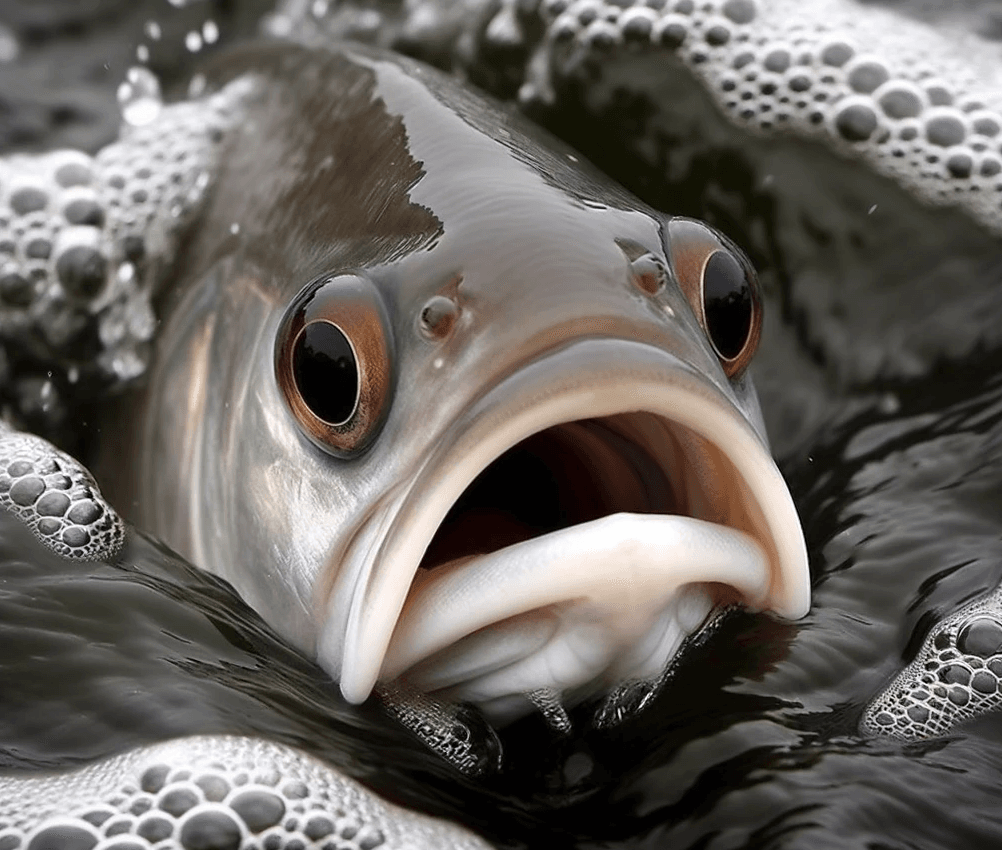
Fish gasp at the surface when oxygen levels are insufficient or when water conditions prevent them from absorbing oxygen efficiently. This is commonly caused by low surface agitation, elevated temperature, ammonia or nitrite presence, or an imbalance in the aquarium system.
This behavior is not random—it is one of the earliest indicators of system instability in an aquarium.
If your fish are gasping at the surface, something in the system has already gone wrong.
Fish gasping at surface aquarium conditions is a clear signal that something in the system has already gone wrong. One of the most misunderstood behaviors in aquariums is fish gasping at the surface aquarium environment and breathing rapidly. It is often mistaken for feeding anticipation or curiosity. In reality, it is neither.
This pattern of fish gasping at the surface aquarium conditions is often the earliest indicator of oxygen imbalance.
When fish rise to the surface and begin to gasp, they are responding to a lack of usable oxygen or an inability to process it properly. This is not a random occurrence. It is a direct signal that the aquarium system has lost balance.
In many cases, this behavior appears before any visible losses occur—making it one of the earliest and most valuable warning signs a system can give.
What “Gasping at the Surface” Actually Indicates
Fish do not breathe air in the way terrestrial animals do. They rely on dissolved oxygen within the water column, extracted through their gills. When that dissolved oxygen becomes insufficient—or when the gills are compromised by toxins—the fish move upward, where oxygen concentration is marginally higher.
This movement is not a preference. It is a response to stress.
If left unaddressed, this often progresses into more severe outcomes, including gradual losses across the tank. In fact, this behavior frequently overlaps with the patterns discussed in “why aquarium fish keep dying”, where environmental instability—not disease—is the underlying cause.
Why This Happens: A System-Level Perspective
It is tempting to treat surface gasping as an “oxygen problem.” But in practice, it is rarely just that. What you are seeing is the result of an imbalance between biological load, water chemistry, and environmental conditions.
In some tanks, the issue is straightforward—there is simply not enough oxygen being introduced into the system. This typically happens when the water surface remains still, with little to no agitation. Oxygen exchange in aquariums occurs primarily at the surface. Without movement, the system becomes effectively sealed off.
In other cases, oxygen may be present, but the fish are unable to use it efficiently. Elevated ammonia or nitrite levels, even in moderate amounts, begin to damage gill tissues. The result is a physiological state similar to suffocation, where fish behave as though oxygen is absent, even when it technically is not.
Temperature plays a more subtle but equally important role. Warmer water holds less dissolved oxygen. In environments like Delhi NCR, where seasonal temperature spikes are significant, this becomes a recurring stress factor—especially in smaller tanks that heat up quickly and lack thermal stability.
Then there is biological demand. Every organism in the tank—fish, bacteria, even decaying organic matter—consumes oxygen. Overfeeding, overstocking, or accumulated waste increases this demand, often faster than the system can compensate.
This is why surface gasping should never be treated as a single-variable problem. It is a system response, not an isolated symptom.
Correcting the Problem Without Destabilizing the System Further
The first step is not action, but identification. Observe the tank as a system. Is the surface moving? Is the temperature elevated? Has there been a recent increase in feeding or stocking? Did the issue begin after a water change?
Once the likely cause is understood, correction becomes more precise.
Improving surface agitation is often the most immediate and effective intervention. Adjusting the filter outflow to create visible movement across the surface can significantly increase oxygen exchange without introducing additional complexity.
In cases where biological load is the driver, restraint is more effective than intervention. Reducing feeding for a short period allows the system to rebalance without adding further stress.
If temperature is contributing, even small reductions can have a meaningful impact on oxygen availability. This is often overlooked, but critical in warmer climates.
Water changes should be approached carefully. While they can dilute toxins, excessive or poorly matched changes can further destabilize the system—especially in regions with variable source water.
What matters most is not how quickly the symptom is suppressed, but whether the system regains stability.
The Delhi Context: Why This Appears More Frequently
Aquariums in Delhi NCR tend to experience this issue more often, not because of user error alone, but because of environmental conditions that are inherently unstable.
Municipal water quality can fluctuate in composition and treatment levels. Mineral content is typically high, and many aquarists attempt to correct this using reverse osmosis without proper remineralization, leading to further instability.
Add to this the seasonal heat variation, and you have a system that is constantly being pushed toward imbalance.
This is why quick fixes—adding an air stone, performing repeated water changes—may provide temporary relief but rarely solve the underlying issue.
A ProHobby™ Perspective on Surface Gasping
Fish gasping at the surface is not an isolated oxygen issue. It is a signal that the equilibrium between biological load, water chemistry, and environmental conditions has been disrupted. Sustainable correction comes from restoring that balance—not from short-term fixes.
Where This Fits in the Larger Pattern
Surface gasping rarely exists in isolation. It is often connected with other early-stage warning signs:
- Water losing clarity or turning hazy
- Fish becoming inactive or clustering
- Subtle changes in feeding behavior
If you are seeing multiple signals together, it is worth reviewing the broader system—particularly in relation to cloudy aquarium water and cycling stability.
Suggested Further Reading
- Why aquarium fish keep dying
- Cloudy aquarium water: causes and fixes
- Understanding the aquarium nitrogen cycle
- Filtration and biological stability in aquariums
Closing Note
Most aquarium problems are not caused by a single mistake. They emerge from systems that are not yet stable—or have been unintentionally pushed out of balance.
Surface gasping is one of the clearest indicators that this has happened.
Correct it at the system level, and the symptom disappears on its own.
About ProHobby™
ProHobby™ is Delhi NCR’s Ecological Systems Authority, specializing in the design of stable, self-regulating aquarium ecosystems that minimize recurring issues such as oxygen imbalance, water instability, and fish loss.