
by ProHobby™ | Ecological Systems Authority
Koi are not simply fish.
That is not a romantic exaggeration — it is a practical statement about what makes koi keeping different from any other aquatic hobby. A well-cared-for koi can live for 25 to 35 years. Some documented specimens in Japan have exceeded 200 years. Koi recognise their keepers by sight and sound, learn feeding schedules, develop individual personalities, and can eventually eat directly from an outstretched hand. They grow to impressive sizes, develop more intricate colour patterns as they mature, and change in ways that still surprise experienced keepers after decades of observation.
In India, koi have an additional dimension of significance. They carry deep cultural weight in both Vastu Shastra and Feng Shui traditions — symbols of wealth, prosperity, and longevity. The sight of large, brightly coloured koi moving through clear water in a well-designed pond is considered one of the most auspicious features a home or business can have.
But koi also demand a specific level of care that most ornamental fish do not. They produce significantly more waste than their size suggests. They are sensitive to water quality in ways that punish inattention. They are susceptible to a range of parasitic and bacterial diseases that are more common in India’s warm, humid climate than in the temperate countries where most koi care literature originates. And India’s seasonal extremes — the 40°C+ summers, the monsoon, the North Indian winters — create care challenges that generic koi guides written for Japan, the UK, or the United States simply do not address.
This guide does. It is written specifically for Indian conditions, drawing on the science of koi biology and the practical realities of keeping these fish in India’s climate.
Table of Contents
- Understanding Koi: Biology and Natural History
- Koi Varieties: A Guide to What Is Available in India
- Water Quality: The Foundation of Koi Health
- Feeding Koi in India: A Complete Seasonal Guide
- Koi Behaviour: Understanding Your Fish
- Koi Health: Recognising a Healthy Fish
- Koi Diseases: Identification, Causes, and Treatment
- Quarantine: The Single Most Important Disease Prevention Tool
- Koi Breeding in India
- Seasonal Care: India’s Four Critical Periods
- Koi and Other Pond Fish: Compatibility Guide
- The Koi Keeper’s Mindset: Long-Term Commitment
- Frequently Asked Questions
1. Understanding Koi: Biology and Natural History
Koi (Cyprinus rubrofuscus, though historically classified as Cyprinus carpio) are ornamental variants of the common carp — a species native to Central Asia and China that has been kept and selectively bred in Japan since at least the early 19th century. The word “koi” is simply the Japanese word for carp, but in the context of the hobby, it refers specifically to the coloured ornamental varieties known in Japan as Nishikigoi — “brocaded carp.”
Understanding koi biology is essential for understanding why they need what they need.
Size and Growth
Koi grow large. Under good conditions in India’s warm climate, a koi will reach 30–40 cm within its first two years and can achieve 50–60 cm within four to five years. The largest recorded koi exceed 1 metre in length, though 60–75 cm is more typical of a well-grown specimen in a home pond. In India’s warmth, koi grow faster than they do in temperate countries — this is both an advantage (more impressive fish, faster) and a challenge (they outgrow inadequate ponds more quickly).
Longevity
With proper care, koi routinely live 20–30 years in India. This is not a statistic to be taken lightly when you acquire a fish. A koi purchased today as a 15 cm juvenile may still be alive when your children are adults. This long life span is one of the defining emotional dimensions of koi keeping — these are not decorative objects but long-term companions.
Senses and Intelligence
Koi have well-developed senses and a genuine capacity for learning. They possess lateral line organs that detect vibrations in the water, enabling them to sense movement and pressure changes across the entire pond. Their vision is good — they can see colour and distinguish shapes, including recognising the faces and silhouettes of regular human visitors. Their memory is long-term: research has demonstrated that koi can remember feeding schedules, navigate simple puzzles, and associate specific humans with food and safety over periods of months and years.
This intelligence has practical implications for the keeper. Koi that are stressed, sick, or living in poor water quality do not interact normally. Changes in a koi’s behaviour — reduced curiosity, failure to respond to the keeper’s presence, reluctance to feed — are often the earliest indicators of a developing health issue, visible before any physical symptom appears.
Thermoregulation
Koi are ectotherms, meaning their body temperature — and therefore their metabolic rate, immune function, and digestion — is controlled by the surrounding water temperature. This has profound implications for feeding, disease management, and seasonal care that run through every section of this guide. The water temperature, not the calendar, governs koi biology.
2. Koi Varieties: A Guide to What Is Available in India
Koi are classified into numerous varieties based on colour, pattern, scale type, and fin form. The traditional Japanese classification system recognises over 100 distinct varieties. In India, the following are the most widely kept and available.
The “Big Three” — Traditional Go-Sanke
Kohaku: White body with red (hi) patterning. The foundational koi variety — in Japanese tradition, “a koi pond begins with Kohaku.” The simplicity of two colours makes pattern quality immediately readable, and a high-quality Kohaku with clean, well-defined hi on a milk-white base is genuinely striking. Available across India at various quality levels.
Taisho Sanke (Sanke): White base with red and black (sumi) markings. The addition of sumi creates a more complex pattern than Kohaku. Sumi in Sanke appears as small, clean spots — unlike Showa, where sumi forms large, sweeping blocks.
Showa Sanshoku (Showa): Black base with red and white patterns. A more dramatic appearance than Sanke — the dominant black creates boldness that reads well even at pond distances. The pattern changes substantially as koi mature, which makes Showa particularly interesting to grow on over years.
Metallic Varieties (Hikarimuji and Hikari Moyo)
Ogon: Solid metallic single-colour koi — gold (Yamabuki Ogon) or silver (Platinum Ogon). Extremely popular in India for their association with prosperity in Vastu and Feng Shui traditions. Very hardy, fast-growing, and visually impressive at any pond depth. An excellent choice for beginners.
Kikusui: Metallic Kohaku — a platinum body with orange-red patterning. Combines the readability of Kohaku with metallic lustre. Striking in any pond.
Unique and Interesting Varieties
Kumonryu: A black-and-white koi often called the “dragon fish” for its pattern, which changes significantly with temperature and season. No two observations of a Kumonryu are quite the same — over months and years, the balance of black and white shifts, driven by water temperature. This dynamism makes it endlessly fascinating. Highly popular in India.
Chagoi: A plain brown or olive-green koi, not immediately spectacular in the way of a vivid Kohaku — but arguably the most valuable fish in any pond for one specific reason: Chagoi are the friendliest koi variety by far. They are the first to investigate a keeper’s hand, the first to feed confidently, and their presence in a pond dramatically accelerates the socialisation of other koi. Experienced koi keepers often keep one Chagoi specifically for this effect.
Asagi: A blue-scaled body with red (hi) on the belly, cheeks, and fins. One of the oldest koi varieties. Distinguished, understated, and very beautiful in clear water.
Butterfly Koi (Longfin Koi): Not recognised in traditional Japanese koi judging but enormously popular in India and globally for ornamental ponds. Long, flowing fins trail through the water like silk ribbons. Hardy, adaptable, and visually dramatic. All standard colour patterns are available in butterfly form.
Quality Grades
Koi available in India fall into three broad quality tiers, based on parentage, body conformation, pattern quality, and skin lustre:
Domestically bred: Produced in India, typically with simple or solid patterns. Hardy and perfectly functional as pond fish. Limited ornamental ceiling as they mature.
Import grade: Imported from Thailand, Singapore, China, or Indonesia. Better pattern development and body quality than domestic fish. Good ornamental potential.
Japanese bloodline: Bred in Japan’s Niigata prefecture, the historic heartland of koi breeding. Superior in every measurable dimension — skin quality, colour intensity, pattern development, and body shape. These are the fish that serious collectors keep. They are also significantly more expensive and require correspondingly careful husbandry to realise their potential.
For a beginner pond, domestic or standard import koi are perfectly appropriate. As you develop experience and confidence in your water quality management, you can progress to higher-quality fish.
3. Water Quality: The Foundation of Koi Health
No aspect of koi care is more important than water quality. This is not a cliché — it is the biological reality of keeping large, high-metabolic-rate fish in a closed system.
The Nitrogen Cycle
Koi produce waste continuously — through respiration (excreting ammonia directly through their gills), through faeces, and through uneaten food decomposing in the pond. This waste breaks down into ammonia (NH₃), which is highly toxic to fish even at very low concentrations. In a functioning pond ecosystem, beneficial bacteria (primarily Nitrosomonas and Nitrobacter species) convert ammonia to nitrite (also toxic), and then to nitrate (far less toxic, manageable through water changes). This conversion cycle — the nitrogen cycle — is the biological process that makes a koi pond safe.
The nitrogen cycle takes 4–6 weeks to establish in a new pond. Adding koi before this cycle is complete — before bacterial colonies are established in the biofilter — exposes fish to rising ammonia and is the most common cause of koi deaths in new ponds.
Water Parameters for Koi in India
| Parameter | Ideal Range | India-Specific Notes |
|---|---|---|
| Temperature | 15–28°C | Koi function best in this range; manage heat in Indian summers |
| pH | 7.0–8.0 | Indian tap water pH 7.5–8.5 is generally acceptable |
| Ammonia (NH₃) | 0 ppm | Any detectable ammonia requires immediate action |
| Nitrite (NO₂) | 0 ppm | Toxic even at 0.1 ppm; sign of biofilter stress |
| Nitrate (NO₃) | Under 40 ppm | Managed by regular water changes |
| Dissolved Oxygen | Above 6 mg/L | Critical — falls dangerously in Indian summer |
| KH (Carbonate Hardness) | 100–200 ppm | High in Indian water; stabilises pH, generally good for koi |
| GH (General Hardness) | 100–250 ppm | High in Indian tap water; koi tolerate this well |
Testing Frequency
Test ammonia, nitrite, and nitrate weekly during the first three months of a new pond. Once the pond is stable and well-cycled, monthly testing is the minimum standard — increasing to weekly during summer and after any significant event (monsoon rain, equipment failure, new fish addition).
A dissolved oxygen meter is a highly valuable additional tool in Indian conditions. Dissolved oxygen is the parameter most likely to cause sudden mass koi deaths in summer, and it is not measured by standard test kits.
Indian Tap Water Considerations
Municipal water across India is treated with chlorine or — in Delhi, Mumbai and most large metros — chloramine. Unlike chlorine, chloramine does not dissipate by leaving water to stand overnight. It remains toxic to fish and to the beneficial bacteria in your biofilter and must be neutralised with a water conditioner rated for chloramine treatment before any tap water contacts the pond.
Indian tap water is also typically hard — high in both KH (carbonate hardness) and GH (general hardness). This hardness is not harmful to koi, and the high KH is actually beneficial because it buffers pH against sudden crashes. However, very high KH (above 200 ppm) combined with high pH (above 8.0) does increase the proportion of ammonia that exists in its more toxic free (NH₃) form, which means that even small ammonia readings become proportionally more dangerous.
Water Changes
Regular partial water changes are essential and irreplaceable. They remove accumulated nitrate, refresh minerals, dilute any pollutants, and replenish the trace elements that koi need for health and colour development. A 10–20% weekly water change is standard for a moderately stocked koi pond. Increase to 20–30% weekly in peak summer when biological activity is highest.
Always add water conditioner to replacement water before it enters the pond. Match the temperature of replacement water to the pond temperature — a sudden large addition of cold tap water is stressful to koi and can trigger immune suppression.
4. Feeding Koi in India: A Complete Seasonal Guide
Feeding is the part of koi care that most new keepers find intuitive — and most new keepers get wrong. The two most common mistakes are overfeeding and failing to adjust feeding to water temperature. Both have direct consequences for fish health and water quality.
The Fundamental Rule
Koi digest food efficiently only within a specific temperature range. Below 10°C, their digestive enzymes essentially stop working — undigested food sits in the gut and rots, causing serious intestinal disease. Above 32°C, the metabolic cost of digestion competes directly with the fish’s ability to oxygenate itself in already oxygen-depleted water.
Feed only what koi consume in 5 minutes. Remove any uneaten food immediately. Uneaten food decomposing in a koi pond rapidly depletes dissolved oxygen and spikes ammonia — a compounding crisis in India’s summer conditions.
Understanding Koi Diet
Koi are omnivores. In their natural habitat they feed on aquatic invertebrates, algae, plant matter, insects, worms, and detritus. Their jaws are positioned slightly downward, with barbels (whisker-like sensory organs) on either side — evolved for searching and rooting through substrate for food.
A complete koi diet includes:
Staple pellets: The foundation of the diet. Quality pellets provide the protein, fat, vitamins, and minerals koi need in balanced proportions. Pellet size should match the fish — small pellets for juveniles, larger pellets for adult fish.
High-protein growth food: During summer peak activity, a protein-rich formulation (35–40% protein) supports rapid growth and energy demands.
Wheat germ food: An easily digestible, lower-protein food used during cooler months when the digestive system is less active. Essential for the transitional periods of spring and autumn.
Colour-enhancing food: Contains carotenoids — specifically spirulina, krill, and astaxanthin — that enhance and intensify the red and orange pigments in koi. Most effective during summer when metabolism is highest and colour development is most active.
Natural supplemental foods: Koi enjoy and benefit from occasional treats including:
- Blanched or raw orange and watermelon pieces (remove any seeds)
- Blanched leafy greens: spinach, lettuce, cabbage
- Cooked plain peas (shells removed) — excellent for digestion
- Earthworms — protein-rich and actively enjoyed
- Small amounts of wholegrain bread (not white bread, which has little nutritional value)
Avoid feeding processed human food, dairy products, anything salted, and meat in quantities that koi cannot consume quickly.
The India-Specific Feeding Calendar
Summer (March–June): Water temperature 28–35°C
This is the period of maximum koi metabolic activity and fastest growth. Koi are hungry, active, and growing rapidly. It is also the period of maximum risk.
Feed: 2–3 times daily, using high-protein growth food supplemented with colour-enhancing food. Offer natural treats 2–3 times per week.
Critical: Feed in the early morning (6–8 AM) when water temperature is lowest and dissolved oxygen is highest. Avoid feeding in the heat of the afternoon — the metabolic demand of digestion depletes oxygen at exactly the time when oxygen availability is most stressed. A koi fed at 2 PM on a 40°C day in May has to simultaneously fight off heat stress, manage reduced oxygen, and digest food — a combination that can be fatal.
Watch: If koi show reduced appetite, lethargy, or surface gasping, stop feeding immediately and address oxygen and temperature before resuming. A koi that will not eat in summer is telling you something is wrong with the water.
Stop feeding if the water temperature exceeds 35°C. Above this temperature, the combination of reduced oxygen and metabolic stress from digestion risks killing fish.
Monsoon (July–September): Water temperature 26–30°C
Temperature remains warm, but koi appetite often drops during monsoon. This is likely related to the barometric pressure changes and water chemistry shifts that accompany heavy rain, which koi detect acutely through their lateral line system.
Feed: Once or twice daily, reducing quantity from summer levels. Switch to a lower-protein staple food. Skip feeding entirely on days following heavy monsoon rains — check water parameters first, and resume only when parameters are stable.
Watch: Monsoon runoff introduces pollutants into outdoor ponds. Any sudden change in koi behaviour (reduced feeding, hiding, increased surface presence) after heavy rain should trigger an immediate water test.
Post-Monsoon / Mild Season (October–November): Water temperature 22–28°C
The best feeding conditions of the year. Temperature is comfortable, oxygen levels are good, and koi have the energy of summer without the stress of heat.
Feed: 2 times daily. Begin transitioning from high-protein growth food toward a staple or wheat-germ blend. This is the time to build up the body condition and fat reserves that koi will draw on through the cooler months.
Winter (December–February): Water temperature 12–22°C (North India)
In most of India, water temperature stays above 15°C through winter. In Delhi, Punjab, Rajasthan, and other northern states, it may drop to 10°–12°C on the coldest nights.
Feed: Once daily maximum, using wheat-germ based or low-protein, easily digestible food. Reduce quantity significantly.
At or below 12°C: Feed every 2–3 days only if koi actively seek food. Below 10°C, stop feeding entirely. Koi in this state obtain what minimal nutrition they need from algae and organic matter in the pond naturally.
Key principle: If you are uncertain whether the water is warm enough to feed, err on the side of not feeding. A koi that misses a few days of food suffers no harm. A koi with undigested food sitting in its gut in cold water can develop fatal intestinal complications.
5. Koi Behaviour: Understanding Your Fish
Observing your koi daily is not merely a pleasure — it is your most important diagnostic tool. Koi communicate their health and wellbeing entirely through behaviour, and a keeper who knows what normal looks like will detect problems days or weeks before they become visible physical symptoms.
Normal Behaviour
Active, purposeful swimming: Healthy koi swim with steady, directional movement throughout the pond at all levels of the water column. They investigate the pond perimeter, interact with each other, and respond to the keeper’s presence with curiosity.
Strong feeding response: Koi learn feeding times quickly. A healthy pond of koi will move toward the surface when their keeper approaches at feeding time, before food is even introduced. This anticipatory behaviour is one of the clearest signs of overall good health.
Normal respiration: Gill covers (operculae) should open and close in a steady, unhurried rhythm. Koi breathe water, not air — rapid or laboured gill movement is an immediate warning sign.
Social cohesion: Koi are social fish. They tend to move in loose groups, especially when exploring or when mildly startled. Persistent isolation of one fish from the others warrants close observation.
Building a Relationship with Your Koi
Koi are capable of genuine individual relationships with their keepers. This is not anthropomorphism — it is documented behaviour rooted in the fish’s long-term memory and ability to associate specific people with food and safety.
The process of building this relationship requires consistency and patience:
Establish a feeding routine: Feed at the same location, at the same time, every day. Stand beside the pond calmly. Koi quickly learn to associate your presence with food.
Move slowly: Sudden movements near the pond trigger alarm responses. Koi that are startled repeatedly never fully relax around their keeper. Approach the pond edge calmly, kneel or sit if possible, and allow the fish to come to you.
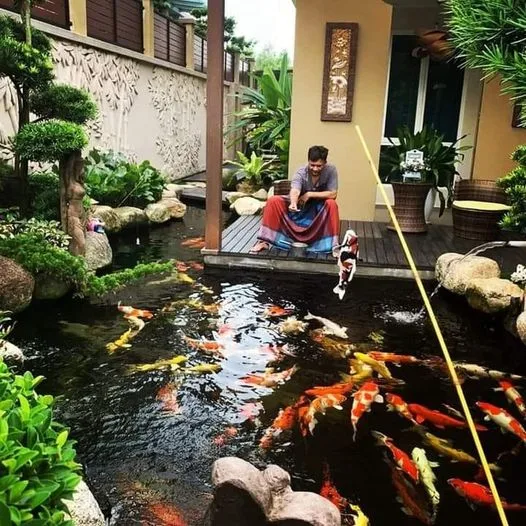
Progress to hand feeding: Once koi consistently approach you at the pond edge, try holding a small amount of food at the water surface with your fingers, remaining perfectly still. This takes days or weeks of patience depending on the individual fish. The Chagoi variety is typically the first to attempt hand feeding and will draw other koi toward the same behaviour.
Individual recognition: Over time, koi in a well-managed pond will recognise their keeper by sight. Many keepers report that their koi visibly distinguish between the regular keeper (approaching with confidence) and strangers (maintaining greater distance).
Behaviour as Diagnosis
Clamped fins: Fins held tight against the body rather than fanned outward. Indicates stress, disease, or poor water quality. Investigate immediately.
Flashing: A fish briefly rolling or rubbing against the pond substrate, rocks, or liner. Occasional flashing is normal. Repeated, frequent flashing strongly suggests external parasites (flukes, ich, fish lice) causing skin irritation.
Surface hanging: Koi congregating at the water surface, or one fish persistently hovering near the surface without feeding. Primary suspects: low dissolved oxygen (emergency in summer), gill disease, or ammonia poisoning.
Bottom sitting: A koi sitting on the pond floor, not moving actively. In winter at low temperatures, this is normal resting behaviour. At warm temperatures, it indicates serious illness — the fish lacks the energy to swim normally.
Jumping: Occasional jumping at dawn or dusk is normal energetic behaviour. Persistent jumping is a sign of skin or gill irritation from parasites or poor water quality.
Spawning chasing: In late spring and early summer, male koi chase females vigorously — sometimes aggressively. This is normal breeding behaviour but can cause significant physical stress and injury to females if it persists without adequate hiding places or separation.
6. Koi Health: Recognising a Healthy Fish
Before you can identify disease, you must know what health looks like.
A healthy koi has:
- Bright, fully saturated colour without fading, bleaching, or darkening
- An intact, undamaged slime coat — the thin mucous layer covering the body that serves as the primary barrier against infection. A healthy koi appears slightly glossy; a damaged slime coat looks dull, patchy, or appears to have a whitish film
- Erect, undamaged fins — fully fanned, with no fraying, discolouration, or blood streaking at the fin edges
- Clear eyes without cloudiness, bulging, or apparent injury
- A smooth, symmetrical body profile — no lumps, lesions, raised scales, or abnormal swellings
- A healthy appetite appropriate to the season and water temperature
- Normal, active swimming at various levels of the pond
Any deviation from these baseline conditions is a signal to investigate.
7. Koi Diseases: Identification, Causes, and Treatment
Disease in koi ponds is rarely random. The overwhelming majority of health problems are caused or enabled by one of four factors: poor water quality, parasites introduced by unquarantined new fish, physical stress from inappropriate temperatures or overcrowding, or sudden water chemistry changes. Understanding this helps both treatment and prevention.
External Parasites
White Spot / Ich (Ichthyophthirius multifiliis)
What you see: Fine white spots distributed across the body and fins, resembling salt or white dust. The fish may flash repeatedly.
What it is: A single-celled protozoan parasite with a complex life cycle. The visible white spots are the mature, encysted stage (trophont) embedded in the skin. After maturation, they detach as free-swimming theronts that must find a host within a limited time window — this is the only stage vulnerable to treatment.
Why it matters in India: This is the most common koi parasite in India, particularly prevalent in the warm, humid monsoon and early post-monsoon period. New fish introductions are the most common source.
Treatment approach: Raising water temperature to 28–30°C accelerates the life cycle, shortening the window between treatment rounds. Salt addition (3–5 g/L) provides mild osmotic stress that inhibits the free-swimming stage. Proprietary ich treatments contain formalin, malachite green, or similar compounds effective against the free-swimming stage. Treat the entire pond, not individual fish — trophonts in the pond substrate will continue hatching. Multiple treatment rounds 3–4 days apart are required to catch successive hatches.
**Anchor Worm (**Lernaea spp.)
What you see: Thread-like parasites attached to the skin, often with a reddened, irritated wound at the attachment point. The adult female (the visible stage) is typically 1–2 cm long, with a bifurcated “anchor” embedded in muscle tissue.
Why it matters in India: Anchor worm is endemic in many Indian fish supply chains, particularly from lower-quality domestic fish farms. Unquarantined new fish are by far the most common introduction route.
Treatment approach: Mature anchor worms can be carefully removed with fine tweezers, grasping as close to the skin as possible and pulling with steady, firm pressure. The wound site should be treated immediately with an antiseptic solution to prevent secondary bacterial infection. Chemical pond treatment targets the larval stages and eggs that cannot be physically removed. Multiple treatments 7–10 days apart are necessary to break the reproductive cycle.
**Fish Lice (**Argulus spp.)
What you see: Disc-shaped, semi-transparent parasites approximately 5–10 mm in diameter, visible on the skin surface. Koi flash repeatedly and may show circular red marks where the parasite has fed.
Treatment approach: Similar to anchor worm — chemical treatment targeting all life stages, with repeated applications to catch hatching eggs. Fish lice can leave the host temporarily, so pond-wide treatment is essential rather than just treating visibly affected fish.
Gill Flukes (Dactylogyrus spp.) and Body Flukes (Gyrodactylus spp.)
What you see: Microscopic worm parasites invisible to the naked eye. Symptoms include rapid gill movement, flashing, lethargy, and increased surface presence. Definitive diagnosis requires a microscopic gill scrape — a mucus sample taken from the gill or body surface and examined under magnification.
Why they matter in India: Fluke infestations are extremely common in India’s warm water conditions and are one of the most frequently missed diagnoses because the parasites themselves are invisible. Any koi showing gill irritation symptoms without an obvious cause should be considered suspect for flukes.
Treatment approach: Targeted fluke treatments (praziquantel-based or formalin-based) are effective. Multiple treatments are needed to catch eggs, which are not always killed by the first round.
Bacterial Diseases
Bacterial Ulcers (Aeromonas hydrophila, Pseudomonas fluorescens)**
What you see: Open sores on the body — initially small red spots or raised scales, progressing to excavated lesions that can penetrate through the body wall in severe cases. Red streaking radiating from the ulcer indicates bacterial spread into surrounding tissue.
The mechanism: Healthy koi maintain a protective slime coat and robust immune response that keeps these common bacteria (present in virtually all pond environments) at bay. Ulcers develop when the slime coat is breached — by parasites, physical injury, or handling — and the immune system is simultaneously compromised by stress, poor water quality, or temperature extremes. The bacteria are opportunistic, not aggressive in a healthy fish.
Treatment approach: Mild superficial ulcers can be treated topically — the fish is carefully netted, held in a wet towel, and the ulcer cleaned with dilute iodine solution before applying an antibacterial wound treatment. The fish is returned to clean, well-oxygenated water. The primary intervention, however, is always water quality improvement — without addressing the underlying stress cause, ulcers will recur regardless of topical treatment. Severe or deep ulcers, or ulcers not responding to topical treatment, require consultation with a veterinarian for systemic antibiotic treatment.
Fin Rot
What you see: Fraying, discolouration, or gradual erosion of fin edges. In early stages, a white or reddened margin appears at the fin tips. In advanced cases, fins degrade significantly.
Cause: Bacterial infection (Aeromonas, Pseudomonas, Flavobacterium) of compromised fin tissue. Almost always secondary to another cause — poor water quality, physical damage, aggressive fin-nipping by other fish, or parasite damage.
Treatment approach: Identify and address the primary cause first. Improve water quality. Salt additions help by improving the fish’s natural osmoregulation and creating a mildly inhospitable environment for the bacteria. Topical treatment of affected fins with appropriate antiseptic during handling. Early fin rot is fully reversible — fins regenerate completely when the underlying cause is addressed.
Columnaris (Cotton Mouth / Cotton Wool Disease)
What you see: White, mould-like patches around the mouth, spreading to the body and fins. Often mistaken for fungal disease due to its appearance — but Columnaris is bacterial (Flavobacterium columnare), which matters because the treatment is different.
Treatment approach: Antibacterial treatment. Distinguish from true fungal disease (which has a similar appearance) by the speed of progression — Columnaris spreads rapidly, within hours to days. If in doubt, treat for bacterial infection first.
Dropsy (Pinecone Disease)
What you see: Pronounced bloating of the body combined with scales standing outward from the body surface (the “pinecone” appearance). Eyes may appear to bulge.
What it means: Dropsy is not a disease itself but a symptom of systemic internal organ failure — typically kidney failure causing fluid accumulation. It is caused by advanced bacterial infection that has overwhelmed the fish’s internal defences. A koi in full pinecone presentation has a poor to very poor prognosis regardless of treatment.
Why prevention matters: By the time dropsy is visible, internal damage is severe and often irreversible. The only effective “treatment” for dropsy is preventing the bacterial infections that cause it — through excellent water quality, proper nutrition, quarantine protocols, and early intervention at the first sign of health problems.
Fungal Disease
**True Fungal Infection (**Saprolegnia spp.)
What you see: White or grey cotton-like tufts on the skin, fins, or around wounds. Unlike Columnaris, true fungal growth has a distinctly fluffy, filamentous texture when examined closely.
When it occurs: Saprolegnia is a secondary pathogen — it colonises damaged tissue, not healthy fish. It is extremely common in India during the monsoon season and the cooler months when post-injury healing is slower. Any physical wound, ulcer, or fin damage is a potential site.
Treatment approach: Salt baths (short-duration high-concentration dips or long-duration low-concentration pond addition) are effective for mild cases. Potassium permanganate is a more powerful option for severe infections. Address any underlying wounds with topical antiseptic treatment.
Koi Herpesvirus (KHV)
What it is: A serious viral disease (Cyprinid herpesvirus 3) that causes mass mortality in koi and common carp. Symptoms include gill necrosis, sunken eyes, respiratory distress, and skin lesions. The disease is most active at water temperatures of 16–25°C — the transitional temperatures of spring and autumn in North India.
Why it matters: KHV has been confirmed in India. It is highly contagious, spreads through water contact and shared equipment, and has no cure. Affected fish either die or, if they survive, become lifelong carriers. Prevention — rigorous quarantine of all new fish, no sharing of water or equipment between ponds, purchase from certified disease-free suppliers — is the only effective strategy.
If you suspect KHV: Report any mass mortality event involving multiple koi with gill and skin symptoms at temperatures of 16–25°C.
Consult us for fish health issues, disease diagnosis, treatment guidance, and customised medication solutions.
8. Quarantine: The Single Most Important Disease Prevention Tool
Every disease discussed in the previous section — anchor worm, fish lice, flukes, ich, KHV — is introduced to an established pond by one primary route: new fish added without quarantine.
Quarantine is not optional. It is the cornerstone of koi health management.
The quarantine setup: A separate tank or pond, ideally 500–1,000 litres, with independent filtration, aeration, heating if needed, and no connection of any kind (shared nets, shared water, shared equipment) to the main pond.
Duration: A minimum of 4 weeks. Six weeks is more thorough. Some diseases — particularly KHV — may not manifest until triggered by the right temperature, and a longer quarantine at transitional temperatures (around 20°C) is more likely to reveal latent infection.
What to observe during quarantine: The new fish should be eating normally within a week of arrival. Observe daily for flashing, abnormal swimming, visible parasites, fin damage, or behavioural changes. Test water quality in the quarantine system every 3–4 days.
Salt in quarantine: A low-level salt addition (1–3 g/L) in the quarantine system provides mild prophylactic benefit — salt reduces osmotic stress on new fish and creates conditions less favourable for many surface parasites.
The rule: No matter how healthy a new koi appears, no matter how reputable the supplier, no matter how eager you are to introduce a spectacular new fish to your pond — quarantine first. Every time. Without exception.
9. Koi Breeding in India
India’s warm climate makes koi breeding relatively accessible compared to temperate countries — koi require no artificial temperature manipulation to trigger spawning, and fry grow quickly in warm water.
Natural Spawning
Koi spawn naturally in spring when water temperatures rise through 18–20°C and remain stable. In North India, this typically occurs in March–April. In South India, where temperatures fluctuate less dramatically, spawning can occur year-round.
What triggers spawning: Rising water temperature, increasing day length, and the physical condition of the fish (well-fed females with mature eggs, well-conditioned males). Heavy rain causing rapid water changes can also trigger spawning — this is relevant in India, where the first strong monsoon rains after a dry period often stimulate spawning activity.
Spawning behaviour: Males chase females persistently and vigorously — sometimes to the point of causing physical injury through scale loss and fin damage. Spawning typically occurs in the early morning, with females releasing eggs among aquatic plants, spawning brushes, or along the pond liner. Males follow closely, releasing milt (sperm) to fertilise the eggs.
Post-spawning: Spawning is physically exhausting and leaves both males and females temporarily stressed and immunocompromised. Check for physical injuries carefully after spawning. Do not feed heavily for 24–48 hours. Do not perform water changes immediately — wait 24 hours.
Egg Incubation
Fertilised koi eggs are small (approximately 1 mm), amber-coloured, and adhesive. They attach to whatever surface they land on. Unfertilised eggs turn white and are colonised by fungus within 24–48 hours. At Indian water temperatures (20–24°C in spring), fertile eggs hatch within 3–5 days.
Parent koi will eat their own eggs and fry readily. Eggs and hatching fry should be moved to a separate fry rearing system or protected by netting if breeding is intentional.
Raising Koi Fry
Newly hatched koi (sac fry) absorb their yolk sac for the first 2–3 days and require no external feeding. Once free-swimming, they require very fine food — infusoria (microscopic organisms cultivated from green pond water), commercial fry powder, or finely sieved hard-boiled egg yolk for the first week. Food size increases as fry grow: from fine powder to micro-pellets over the first 4–6 weeks.
Water quality management in a fry system is demanding — ammonia from waste food accumulates quickly in small volumes of water. Daily or twice-daily partial water changes and very careful feeding discipline are essential. Fry mortality in the first 2–4 weeks is typically high regardless of care quality — this is natural. Focus on the survivors.
Culling: A single spawning can produce thousands of fry, the vast majority of which will carry inferior genes and develop into unremarkable fish. Serious koi breeders cull fry — selectively removing fish with poor body form, weak colour, or undesirable patterns — at multiple stages. This is not cruelty but necessary management. Raising thousands of fry to adult size is impractical in most private pond situations, and crowded fry ponds create water quality problems that harm all fish equally.
10. Seasonal Care: India’s Four Critical Periods
Pre-Summer (February–March)
Water temperature rising from 14–16°C toward 20°C+. Koi emerging from their reduced winter activity. The immune system is not yet at full capacity — this is one of the most disease-vulnerable periods.
Priority actions:
- Begin feeding again with easily digestible wheat-germ food as temperatures rise above 12–13°C consistently
- Perform a thorough water test series after the relative inactivity of winter
- Inspect every koi carefully for wounds, ulcers, or parasites that may have developed without being noticed during winter
- Service all filtration and aeration equipment before the demands of summer
- Consider a prophylactic low-level salt addition to support koi health through the immunologically vulnerable spring transition
Peak Summer (April–June)
The highest-risk period for koi health in India. Primary threats: high water temperature, oxygen depletion, and the compounded effect of ammonia toxicity at higher pH and temperature.
Priority actions:
- Install shade cloth (50–70% shade) over part of the pond surface. This alone can reduce surface water temperature by 3–5°C.
- Run all aeration at maximum capacity. A battery-powered backup air pump for power cuts is not optional in North Indian summer.
- Adjust feeding as described in the feeding section — early morning only, reduced quantity, stop entirely above 35°C.
- Perform water changes in the early morning, not during the heat of the day.
- Test water 2–3 times weekly. Monitor temperature daily.
- Know the emergency protocol: if koi are gasping at the surface, immediately increase surface agitation, stop feeding, perform a 20% water change with cooler water. These are minutes-matter situations in Indian summer.
Monsoon (July–September)
Temperature moderates slightly but new stresses emerge. Rainfall events alter water chemistry, introduce pollutants, and can cause overflow.
Priority actions:
- Ensure the pond overflow system is clear and functioning correctly before the first rains.
- Test water parameters within 24 hours of any significant rainfall.
- Cover the pond or divert roof drainage away from it during heavy rain — urban runoff carries road pollutants, pesticide traces, and debris.
- Remove organic matter from the pond promptly — decomposing monsoon debris depletes oxygen rapidly.
- Increase disease vigilance — the combination of stress, fluctuating parameters, and warm humid conditions creates ideal conditions for parasite proliferation and opportunistic bacterial infections.
Winter (October–February)
For most of India, koi management in winter is a matter of gradual adjustment rather than emergency intervention. In the far north, cooler temperatures require more careful attention.
Priority actions:
- Reduce feeding progressively as temperatures fall through October and November.
- Switch to wheat-germ based food at temperatures below 18°C.
- Stop feeding entirely when water temperature falls below 10–12°C (relevant to North India).
- Maintain aeration — cold water holds more oxygen but ponds with organic loads can still deplete overnight.
- Use the quieter winter months for deeper maintenance: partial drain-down and cleaning of the pond floor, equipment servicing, assessment of any liner or structure issues.
- Inspect koi carefully in good light — the post-monsoon, pre-winter period is an ideal time to check every fish while they are still active and visible.
11. Koi and Other Pond Fish: Compatibility Guide
Koi are peaceful, non-aggressive fish. They do not establish territories, do not harass other fish outside of spawning season, and coexist comfortably with a range of other pond species.
Compatible species:
Common goldfish and Comets: The most natural companions for koi in an Indian pond. They tolerate the same water conditions, are similarly hardy, and coexist without conflict. They will school alongside koi naturally. Goldfish are available everywhere in India and are far less expensive than koi.
Shubunkins: As above. Shubunkins are particularly well-suited as koi companions because their body form (long-tailed, streamlined) gives them the swimming speed to compete for food during feeding time.
Weather Loach: Bottom-dwelling, peaceful, and makes no demands on the upper water column that koi occupy. Useful supplementary scavengers.
Orfe: Fast, surface-swimming fish that add movement at a different level of the water column. Orfe are sensitive to low oxygen — their presence in a pond where they are showing stress is a reliable early indicator of declining dissolved oxygen.
Species to avoid:
Fancy goldfish (Orandas, Ryukins, Ranchus): Their poor swimming ability makes them unable to compete for food with active koi and large goldfish. They will be chronically underfed and stressed.
Small ornamental fish (tetras, guppies, small barbs): Koi will eat any fish small enough to fit in their mouths. As koi grow, the category of “small enough” expands substantially.
Aggressive cichlids: Incompatible in temperament and water temperature requirements.
Shrimp and small invertebrates: Koi are enthusiastic invertebrate hunters. Any shrimp introduced to a koi pond will be consumed promptly.
12. The Koi Keeper’s Mindset: Long-Term Commitment
Koi keeping rewards patience and consistency more than any other single attribute. The hobbyist who tests the water regularly, adjusts feeding thoughtfully, quarantines every new fish without exception, and observes their pond daily will maintain healthy koi through decades. The hobbyist who feeds casually, skips water tests when the water looks clear, and introduces new fish directly to the main pond will encounter disease, losses, and frustration repeatedly.
The other dimension of the koi keeper’s mindset is time horizon. When you acquire a koi, you are potentially acquiring a 25-year relationship. A fish you buy as a 10 cm juvenile will still be in your pond when it is a 60 cm adult. It will be with you through house moves, renovations, seasons of neglect when life is busy, and years of devoted attention. It will recognise you, respond to you, and in its own way form a relationship with you that no other aquatic animal quite matches.
That is what makes koi keeping, at its best, something that transcends the mechanics of water chemistry and filtration. It is one of the few hobbies where the primary subject matter grows, changes, and connects with you across decades.
Frequently Asked Questions
How long do koi live in India? With proper care, koi routinely live 20–30 years in Indian conditions. India’s warm climate enables faster growth but also demands more active management — particularly of water temperature and oxygen in summer — than temperate-country koi keeping.
What water temperature is best for koi in India? Koi function best between 15–28°C. Above 30°C, dissolved oxygen drops to stress-inducing levels. Above 35°C, feeding should stop and emergency aeration measures are required. Below 12°C, feeding should stop or be dramatically reduced.
How often should I feed koi in summer? Two to three times daily during summer in India, in the early morning when oxygen levels are highest. Feed only what koi consume in 5 minutes and remove any uneaten food immediately.
Do koi recognise their owner? Yes. Koi possess long-term memory and can recognise individual humans by sight and sound. Consistent feeding routines and calm interaction build trust over weeks and months, ultimately resulting in fish that respond to their keeper’s presence and can be trained to hand feed.
What is the most common cause of koi disease in India? Poor water quality is the underlying cause of the vast majority of koi disease in India. Parasites and bacteria are present in almost all pond environments, but they only cause disease when the fish’s immune system is compromised by ammonia stress, oxygen depletion, thermal stress, or chronic overcrowding. Maintaining excellent water quality is the most powerful disease prevention measure available.
Why do koi jump out of the pond? Occasional jumping at dawn or dusk is normal energetic behaviour. Persistent jumping — repeated, urgent breaching of the surface — indicates skin or gill irritation from parasites, or poor water quality causing the fish to seek oxygen at the surface. Investigate water parameters and check for parasites immediately.
Can koi survive Indian monsoon conditions? Yes, with proper management. Install an overflow system to prevent flooding. Cover the pond during heavy rain to exclude polluted runoff. Test water parameters after significant rainfall events. Remove debris promptly. The greatest monsoon risk to koi is the rapid parameter fluctuation from dilution — pH and hardness can drop suddenly — and the opportunistic disease that follows stress from these fluctuations.
How do I know if my koi is healthy? A healthy koi swims actively with erect fins, has bright saturated colour, a smooth and intact body surface, clear eyes, and responds eagerly to feeding at appropriate temperatures. Any deviation from this baseline — clamped fins, colour changes, surface hanging, lethargy, loss of appetite, visible skin changes — is a signal to investigate water quality and examine the fish closely.
Can I keep koi with goldfish? Yes. Common goldfish and Comets are among the best koi companions — similarly hardy, compatible water parameter requirements, and non-aggressive. Avoid keeping fancy goldfish varieties with koi, as their poor swimming ability leaves them unable to compete for food effectively.
Is breeding koi easy in India? India’s warm climate makes natural koi spawning relatively accessible — no temperature manipulation is needed. The challenge is not triggering spawning but managing the eggs and fry. A single spawning can produce thousands of fry, most of which will not develop into quality fish. Successfully raising koi fry requires a separate fry rearing system, fine food management, and careful water quality control through the most vulnerable first weeks.
Related articles: [Koi pond setup India: complete guide] · [Garden pond fish India] · [Koi pond vs garden pond: which is right for you?] · [Seasonal pond care India] · [Custom koi pond design and installation Delhi NCR]
Published by ProHobby | Delhi NCR’s ecosystem and pond specialists