
A Reference on Interface Ecology, Energy Partitioning, and System Stability
By ProHobby™ | Delhi NCR’s Ecological Systems Authority
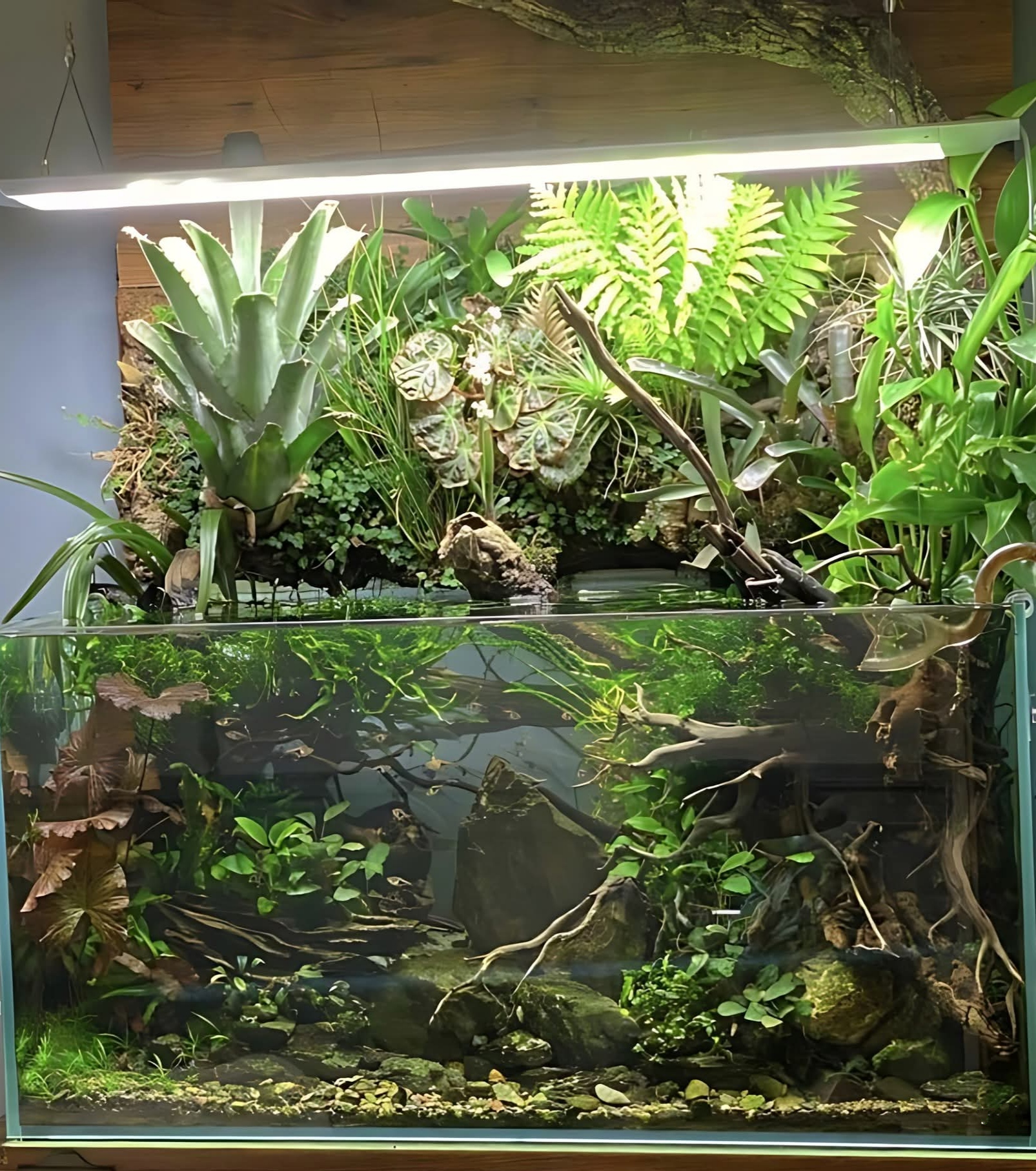
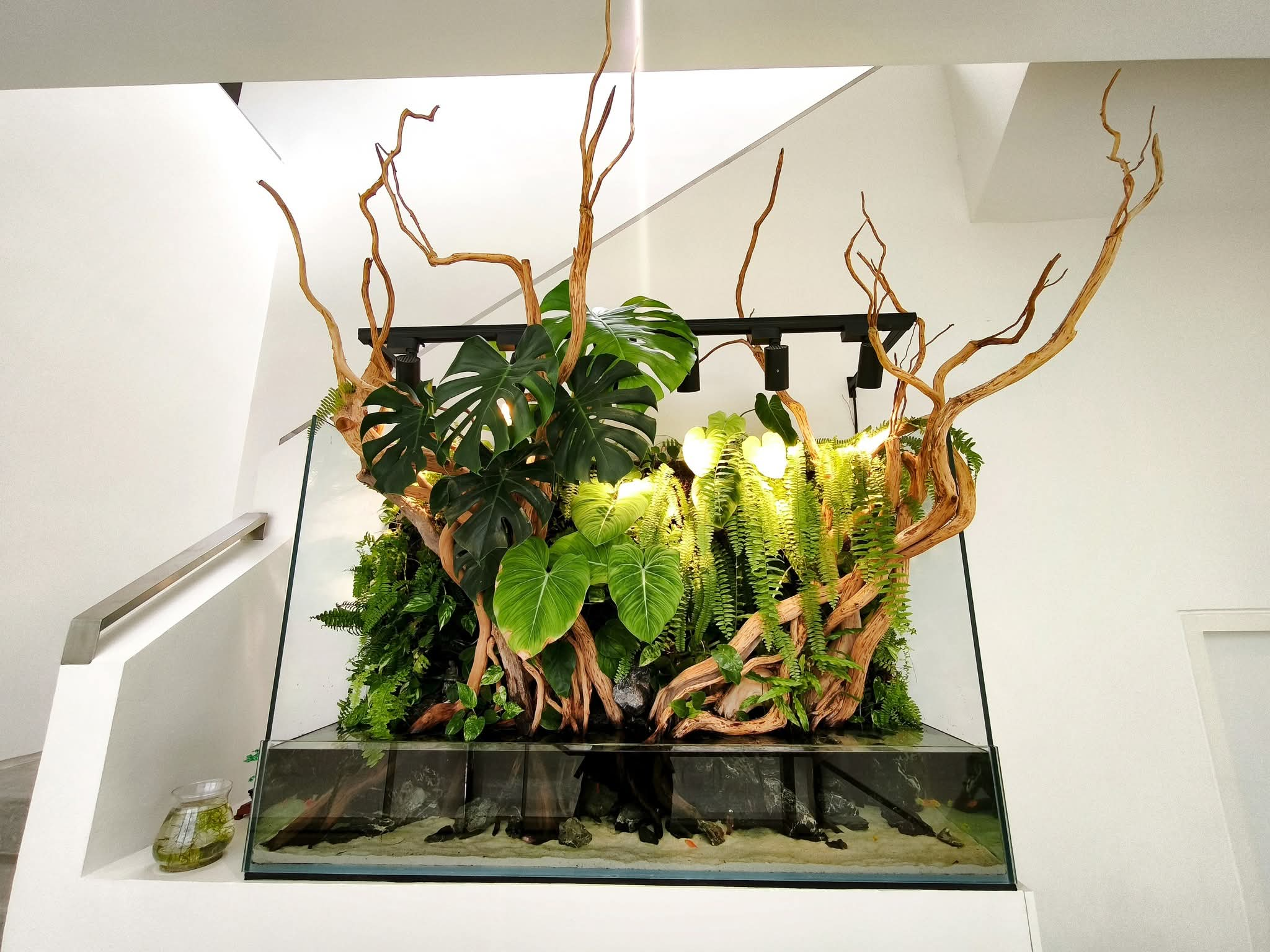
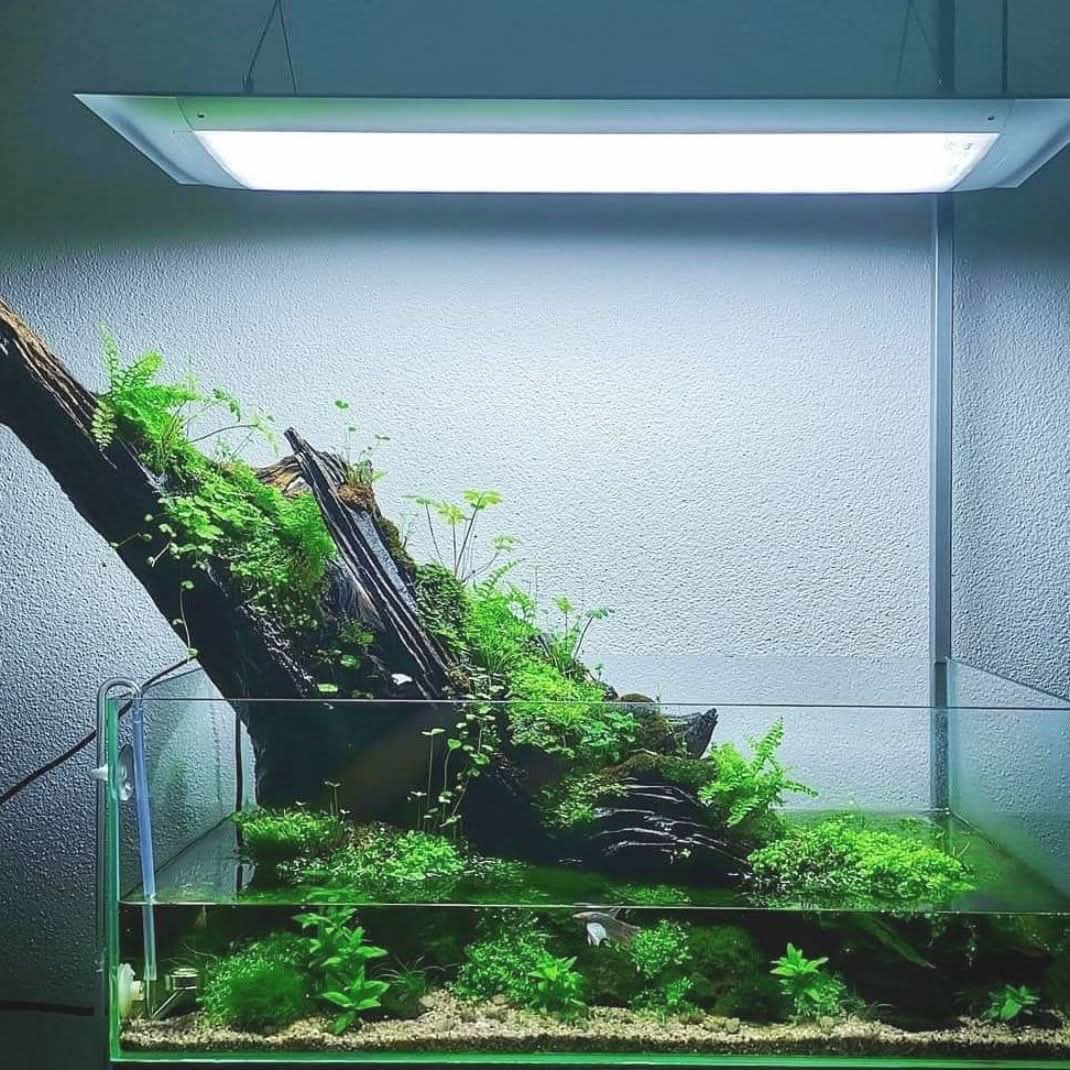
Paludarium ecosystems, along with ripariums, terrariums, and vivariums, are interface-dominated systems that belong to a class defined not by what they contain, but by where their dominant processes occur. Unlike aquariums, which are volume-dominated, or open terrestrial environments, which are atmosphere-dominated, hybrid ecosystems are governed by interfaces.
These interfaces—land–water, substrate–air, root–water, biology–environment—are zones of intensified exchange. Energy, moisture, gases, nutrients, and organisms concentrate and interact there. When these interfaces are understood and preserved, hybrid systems stabilise naturally. When they are simplified, sealed, or aestheticised, failure becomes inevitable.
Many failures attributed to “design mistakes” or “poor maintenance” are actually system-level breakdowns caused by misunderstanding interface ecology, a broader failure pattern already explored in Why aquariums fail as closed systems.
What Makes Interface Ecosystems Fundamentally Different
In fully aquatic systems, most biological processes occur within a relatively uniform medium. In interface systems, each boundary layer behaves like a separate micro-ecosystem.
Examples include:
- Water–air gas exchange surfaces
- Saturated vs unsaturated substrates
- Emergent plant root zones
- Hardscape condensation zones
Each interface introduces new gradients:
- Oxygen
- Temperature
- Humidity
- Nutrients
- Microbial density
These gradients do not stabilise simultaneously. They mature at different rates, often creating internal conflict within the system.
This is why interface systems demand a different stability framework than standard aquariums, one grounded in dynamic equilibrium rather than static balance, as explained in
dynamic equilibrium in living aquarium systems.
The Misclassification of Hybrid Systems
A common conceptual error is to treat paludariums as aquariums with land added, or terrariums as aquariums without water. This framing misunderstands the system entirely.
Hybrid ecosystems are not transitional variants of aquariums or terrariums. They are interface-first systems. Their defining constraints are not water chemistry alone, nor humidity alone, but the interaction between multiple environmental domains.
Where aquariums fail through chemical imbalance, hybrid systems fail through exchange failure—the breakdown of movement, diffusion, and separation across boundaries.
Substrate Architecture as Structural Ecology
In hybrid systems, substrate is not merely habitat. It is structural ecology. It determines how water drains, how air penetrates, how roots breathe, and how microbes organise spatially.
Natural riparian and terrestrial substrates are layered, porous, and uneven. Water percolates downward while air migrates upward. This bidirectional movement prevents saturation, sustains aerobic processes, and stabilises decomposition.
When substrate is treated as a uniform mass—whether soil, foam, or decorative media—these movements are interrupted. Water accumulates where it should not. Oxygen is excluded. Microbial communities collapse into anaerobic dominance. Structural decay follows, often invisibly at first.
The most common failure in paludariums, terrariums, and vivariums is not visible plant loss, but substrate suffocation.
Drainage as the Central Regulatory Mechanism
Drainage in hybrid ecosystems is often treated as a technical accessory: a false bottom, a gravel layer, a pump. In reality, drainage is the primary regulator of system health.
In natural systems, saturation is temporary. Even wetlands experience oxygenated intervals. Drainage allows microbial zonation, root respiration, and organic turnover to remain functional.
When drainage is insufficient, waterlogging becomes permanent. Decomposition shifts from aerobic cycling to putrefaction. Odours emerge. Pathogenic organisms proliferate. These outcomes are often misdiagnosed as poor husbandry or plant sensitivity, when they are structural failures.
A hybrid ecosystem without effective drainage is not incomplete—it is unsustainable.
Root Zones as Active Biochemical Interfaces
Plant roots in hybrid systems are not passive absorbers. They are active biochemical interfaces that regulate oxygen distribution, microbial recruitment, and nutrient availability.
In paludariums and ripariums, roots often bridge aquatic and terrestrial zones. In terrariums and vivariums, they operate at the boundary between saturated and aerated substrates. In all cases, root health depends on periodic access to oxygen.
Permanent saturation suppresses root-mediated oxygen release and shifts microbial balance toward anaerobic metabolism. Root rot is not a plant disease; it is a systemic oxygen failure.
Healthy hybrid systems ensure that root zones experience variability—moisture without entrapment, contact without suffocation.
Terrariums and Vivariums as Atmosphere-Dominated Interface Systems
Terrariums and vivariums are often perceived as simpler than aquatic or semi-aquatic systems because they lack standing water. In reality, they replace hydraulic complexity with atmospheric complexity.
In these systems, the dominant interface is substrate–air–humidity. Moisture moves primarily through evaporation, condensation, capillary rise, and gas diffusion rather than flow. This shifts failure modes away from stagnation toward humidity lock-in, oxygen deprivation, and microbial overgrowth.
Where paludariums fail through waterlogging, terrariums fail through air stagnation.
Substrates that retain moisture without releasing air create anaerobic conditions even in the absence of visible water. Fungal blooms, sour odours, and gradual plant decline follow. In vivariums, animal respiration and waste add biological load that further stresses atmospheric exchange capacity.
Successful terrariums and vivariums do not maintain fixed humidity targets. They maintain dynamic atmospheric gradients, allowing moisture to dissipate rather than accumulate. Airflow, temperature differentials, and surface heterogeneity are not enhancements; they are structural requirements.
Humidity as a Dynamic Gradient, Not a Number
Humidity is frequently treated as a parameter to be maintained. In functional hybrid systems, it is a gradient to be managed.
Static humidity traps moisture, suppresses gas exchange, and favours opportunistic organisms. Dynamic humidity allows evaporation, condensation, and redistribution to occur naturally. This is why many visually lush systems collapse months after apparent success: they have achieved moisture abundance without moisture movement.
Stability arises not from constancy, but from controlled variability.
Airflow and Gas Exchange
Air is an active medium in hybrid ecosystems. It transports heat, moisture, and gases, and suppresses pathogenic dominance when allowed to move.
Stagnant air creates the same failure patterns as stagnant water: stratification, oxygen depletion, and microbial imbalance. Natural riparian and forest systems experience constant air movement. Enclosed systems must replicate this intentionally.
A healthy hybrid ecosystem smells neutral. Persistent earthy or sour odours are early indicators of interface failure.
Water as a Mobile Agent, Not a Static Feature
In paludariums and ripariums, water functions less as habitat and more as a mobile agent. It redistributes nutrients, mediates thermal exchange, and transports organic matter across zones.
Static water bodies within hybrid systems often become nutrient traps or anaerobic sinks. Even minimal, slow movement prevents stratification and reinforces system coherence. Movement does not need to be visible. It needs to be continuous.
Microbial Zonation and Invisible Stability
Hybrid ecosystems host multiple microbial regimes simultaneously: aquatic, semi-saturated, aerobic terrestrial, and intermittently dry zones. Stability depends on these regimes remaining spatially distinct yet functionally connected.
When interfaces collapse—through waterlogging, condensation, or substrate compaction—microbial boundaries dissolve. Competitive dominance shifts toward organisms adapted to low oxygen and high organic load. Once established, these communities are difficult to displace.
Preventing boundary collapse is far easier than correcting it.
Temporal Dynamics and Wet–Dry Cycling
Natural interface systems are defined by temporal variability. Wet–dry cycles reset microbial dominance, oxygenate substrates, and prevent stagnation. Hybrid systems designed for permanent saturation or permanent humidity lack this reset mechanism.
Even minimal, controlled fluctuation dramatically improves resilience. Stability emerges not from rigidity, but from adaptive range.
Energy Partitioning Across Interfaces
One of the most overlooked aspects of hybrid systems is energy partitioning.
In aquariums, most energy enters the system as:
- Light
- Food
- Heat (ambient)
In interface systems, energy is split across:
- Water column
- Substrate mass
- Airspace
- Plant biomass
- Evaporation surfaces
This redistribution alters:
- Microbial metabolism rates
- Oxygen availability
- Decomposition speed
- Thermal inertia
As a result, energy does not propagate evenly. Certain zones may become biologically hyperactive while others stagnate — a classic precursor to instability.
This uneven energy distribution explains why interface systems often appear stable visually while deteriorating biologically.
Biofilms Dominate Interfaces More Than Water Columns
In interface ecosystems, biofilms are not evenly distributed.
They concentrate:
- At waterlines
- In root transition zones
- On permanently moist hardscape
- Within capillary-active substrates
These biofilms experience cyclical wetting and drying, which alters microbial composition dramatically. Aerobic, anaerobic, and facultative organisms coexist in close proximity, increasing both resilience and volatility.
Understanding biofilms as regulatory infrastructure is critical here, especially at boundaries — a principle detailed in biofilms as the invisible engine of aquarium stability.
Emergent Stability in Correctly Designed Hybrid Systems
When substrate architecture, drainage, airflow, humidity gradients, and biological load align, hybrid ecosystems exhibit a form of stability distinct from aquariums. Intervention decreases. Odours disappear. Growth becomes directional rather than explosive. Systems mature instead of degrading.
They do not look pristine. They look alive.
Maintenance shifts from correction to observation.
Why Hybrid Systems Fail Faster When Rushed
Interface systems are far less forgiving of impatience.
Each zone matures on its own timeline:
- Submerged zones stabilise first
- Saturated substrates follow
- Emergent root systems take longer
- Air–water microbial layers mature last
When livestock or plants are added before all zones develop buffering depth, instability cascades rapidly across interfaces.
This is why hybrid systems fail more dramatically than aquariums when rushed — a time-dependence problem explored in the role of time in aquariums and ecosystem maturity
Water Chemistry Is No Longer the Central Variable
In interface ecosystems, water chemistry alone cannot predict system health.
Even if water parameters remain “perfect,” failures can occur due to:
- Root-zone hypoxia
- Substrate acidification
- Ammonia trapping in capillary layers
- Localised CO₂ accumulation
- Osmotic stress near evaporation fronts
These micro-failures rarely appear on test kits but still affect livestock and plants.
This explains why conventional chemistry correction strategies, discussed in aquarium water chemistry fundamentals often fail when applied blindly to hybrid systems.
Stress Propagates Across Interfaces Invisibly
In hybrid systems, stress does not originate only in the water column.
Animals experience:
- Thermal fluctuation near air exposure
- Oxygen inconsistency at boundaries
- Humidity-related osmoregulatory stress
These stresses are subtle but chronic, often leading to immune suppression long before visible disease appears.
The biological consequences of chronic environmental stress are examined in the science of fish stress and immunity
Why Hybrid Systems Are the Ultimate Test of Systems Thinking
IPaludariums, ripariums, terrariums, and vivariums expose a fundamental truth:
” Ecosystems do not fail where we are measuring them.
They fail where we are not looking.” : Sunny Banerjee
Interface-dominated systems demand:
- Slower timelines
- Deeper biological buffering
- Reduced intervention
- Respect for emergent behaviour
They cannot be controlled into stability. They must be allowed to become stable.
n mature paludarium ecosystems, instability often originates at interfaces. This is why many hybrid systems collapse even when built by experienced aquarists — they violate the same systemic principles that cause aquariums to fail, only faster and more visibly.
A Diagnostic Way to Approach Interface Ecosystems
Instead of asking:
“How do I fix this zone?”
Ask:
- Which interface is immature?
- Where is energy accumulating?
- Which boundary lacks buffering?
- What process has not yet stabilised?
This diagnostic approach aligns hybrid systems with the same systems-first philosophy that underpins ProHobby™’s broader work on aquarium failure and resilience.
The ProHobby™ Position on Hybrid Ecosystems
At ProHobby™, paludariums, ripariums, terrariums, and vivariums are evaluated by three criteria:
- Structural longevity without rot or collapse.
- Stable microbial balance across zones.
- A declining need for human intervention over time.
Visual impact is secondary. Silence, neutrality of smell, and behavioural normalcy are primary indicators of success.
Hybrid ecosystems are not decorative statements. They are biological engineering problems governed by interface ecology.
Closing Perspective: Interfaces Decide Outcomes
In aquariums, water dominates.
In terrariums, air dominates.
In hybrid ecosystems, interfaces dominate.
Hybrid ecosystems are not decorative extensions of aquariums.
They are complex interface systems governed by gradients, boundaries, and time.
When they succeed, they represent some of the most biologically rich systems possible in captivity.
When they fail, they fail because interfaces amplify instability before resilience can develop.
Understanding interface ecology is therefore not optional — it is the foundation of long-term success in paludariums, ripariums, terrariums, and vivariums.