
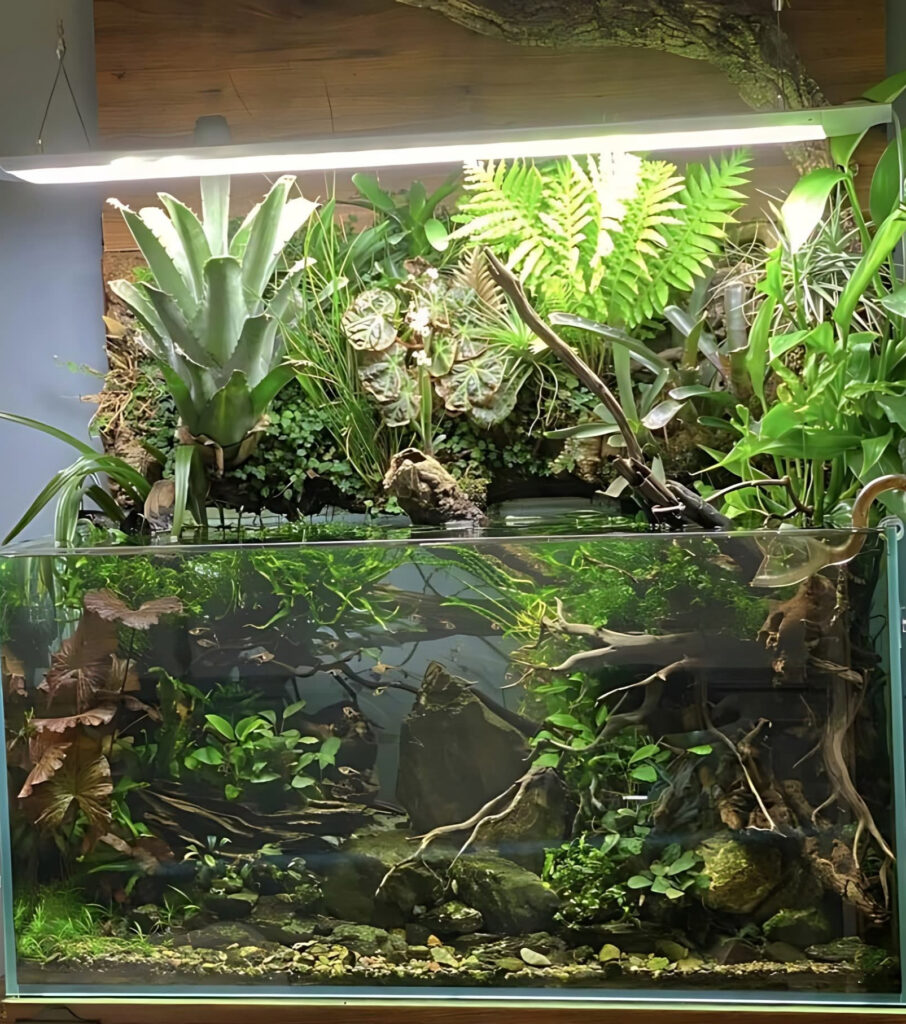
Our Custom Hybrid Build Capabilities
Every hybrid system we build is designed from the ground up. There are no templates, no pre-made kits, and no compromises.
Equipment selection is goal-driven, not specification-driven.
Flow, filtration, and lighting are matched to biological load, planting strategy, and visual depth — not brand checklists.
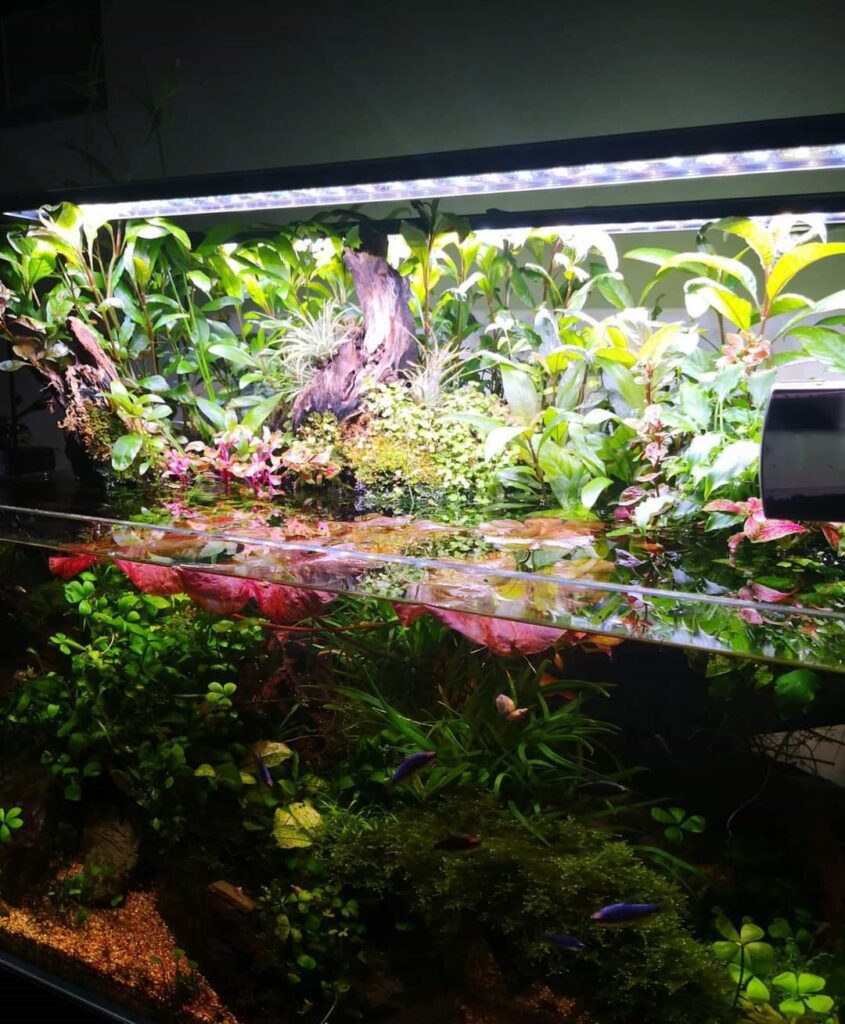
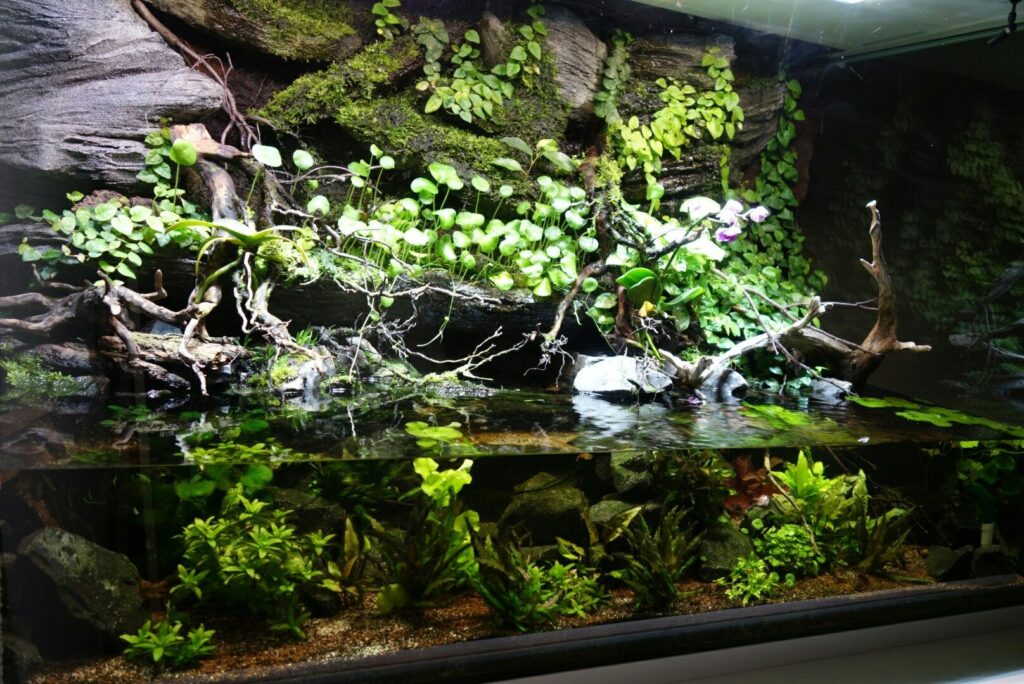
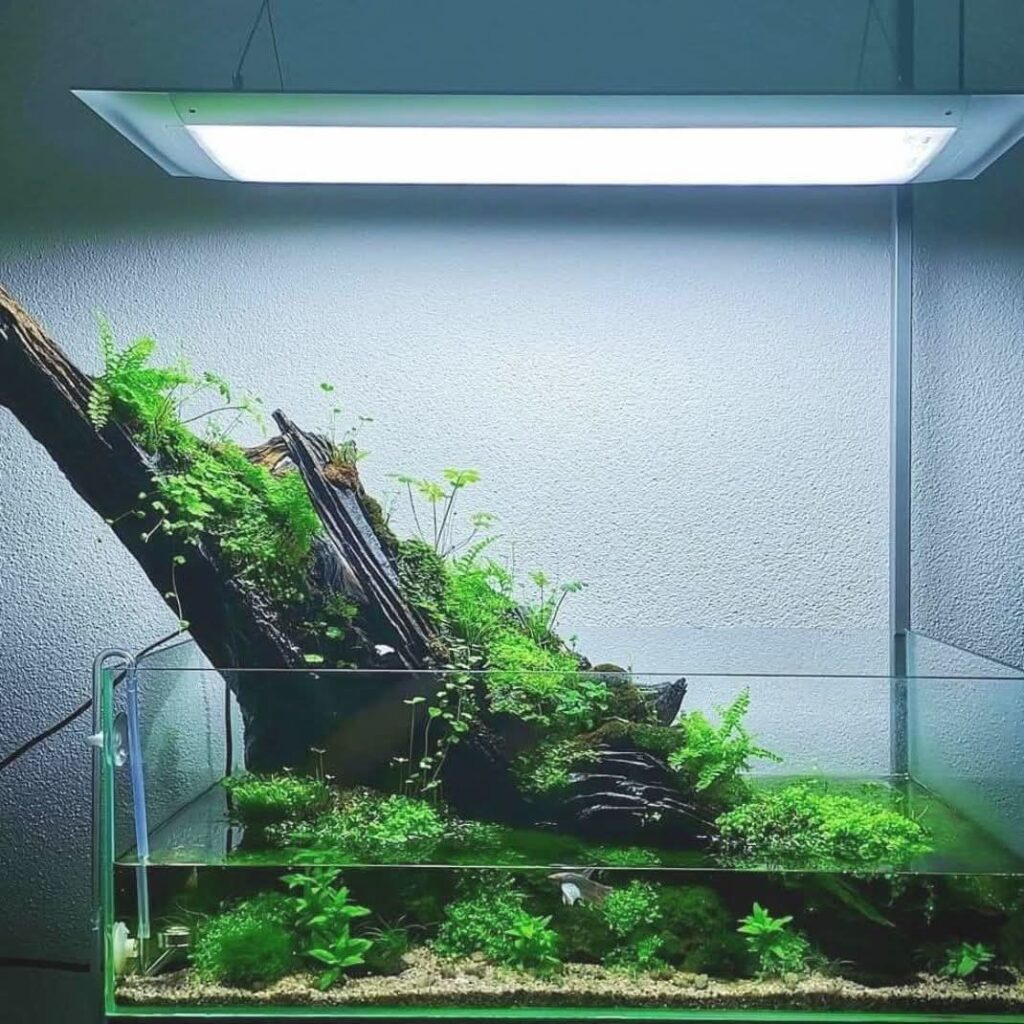
Each system is designed around your space, your expectations, and long-term sustainability.
Why Hybrid Systems Fail Without Proper Design
Most failed paludariums and ripariums are not maintenance issues — they are design failures.
Most failures occur at the land–water interface.
Incorrect elevation planning, unstable substrates, or unmanaged capillary action inevitably lead to plant loss, algae, or system collapse.
Common problems we correct:
- Inadequate drainage leading to root rot
- Poor water level planning destabilizing substrates
- Incorrect lighting causing algae or plant collapse
- Humidity mismanagement damaging cabinetry and interiors
- Filtration systems not designed for mixed environments
Hybrid systems demand engineering thinking, not decoration-first builds.
Technical Capabilities That Define Stable Hybrid Systems
Hybrid systems succeed or fail based on how well their technical layers work together. At ProHobby™, every build is engineered as a unified system — not a collection of parts. Our custom paludarium builds are engineered to mature over time, not degrade due to poor interface planning.
Our hybrid build capabilities include:
- Multi-layer drainage and capillary control to protect root zones and prevent saturation failures
- Precision water-level and overflow planning to stabilise land–water interfaces
- Flow and turnover optimisation for mixed aquatic and marginal planting zones
- Lighting penetration mapping across submerged, emergent, and terrestrial areas
- Material selection for long-term moisture exposure, not short-term aesthetics
- Humidity gradient management in semi-enclosed and open hybrid environments
Each decision is made for long-term biological stability, not just visual impact.
This is the difference between a hybrid system that survives — and one that matures.
Land–Water Interface — Engineered vs Improvised Builds
| Aspect | Improvised / DIY Hybrid Builds | ProHobby™ Engineered Hybrid Systems |
|---|---|---|
| Land–Water Elevation | Arbitrary or visually driven | Precisely planned for stability |
| Drainage Layers | Often missing or insufficient | Multi-layer drainage with capillary breaks |
| Root Zone Health | Roots remain waterlogged | Aerated, moisture-balanced root zones |
| Water Level Control | Fixed or unmanaged | Designed overflow and level stability |
| Substrate Stability | Shifting, collapsing over time | Structurally supported landforms |
| Algae Risk at Waterline | High due to imbalance | Controlled through system design |
| Long-Term Outcome | Progressive failure | Gradual maturation and stability |
Most hybrid system failures originate at the land–water interface.
Long-term success depends on engineering this boundary, not decorating it.
Why ProHobby™ — Not Generic Builders or DIY
Hybrid systems are often handed to general aquarium installers or attempted as DIY projects. Most failures we encounter stem from this mismatch.
Local Aquarium Builders:
Most aquarium builders are skilled with water-only systems. Hybrid builds demand additional expertise in land–water integration, moisture behaviour, and environmental stability — areas outside standard aquarium expertise.
DIY Builds:
DIY hybrid systems rely on trial-and-error learning. Without precise control of drainage, elevation, and environmental interactions, small mistakes compound into long-term failures.
ProHobby™ Hybrid Builds:
ProHobby™ approaches paludariums, ripariums, and vivariums as engineered living systems. Our experience of 35+ years with planted aquariums, biotopes, and advanced system design allows us to plan interactions — not just components.
The result is a system designed to settle, stabilise, and mature, not one that requires constant correction.
Custom paludarium builds require precise control of land–water integration, drainage, lighting, and long-term system stability.
When a Custom Aquarium Is No Longer Enough
Many of our hybrid build clients start with planted or biotope aquariums.
Over time, they want:
- Greater depth and realism
- More natural transitions between elements
- A stronger visual and environmental presence
Hybrid systems are the natural evolution of advanced aquarium keeping.
If you have outgrown traditional aquariums, paludariums and ripariums represent the next level — combining aquascaping knowledge with environmental design.
Is a Hybrid System Right for You?
Ideal for:
- Experienced aquarium owners upgrading their systems
- Design-focused homes and premium interiors
- Offices, studios, and hospitality spaces
- Clients seeking long-term, stable displays
Not ideal for:
- Temporary or short-term installations
- Budget-first builds
- Zero-maintenance expectations
Hybrid systems do not eliminate maintenance — they redefine it.
Properly designed systems require predictable, low-intervention upkeep rather than constant correction.
Hybrid systems reward commitment with longevity.
Custom Hybrid Builds Across Delhi NCR
ProHobby™ designs and installs custom paludarium, riparium, and vivarium systems across Delhi, Gurgaon, Noida, Faridabad, Ghaziabad, and surrounding NCR areas.
We provide:
- On-site consultation
- Custom design and installation
- Post-installation guidance
Every system is built specifically for the local environment.
FAQs
Q1: Are paludariums and ripariums difficult to maintain?
A1: Properly designed hybrid systems require predictable, low-intervention maintenance rather than constant correction — weekly checks and occasional water/top-up or small water changes are typical; ProHobby provides post-installation tuning and care guidance.
Q2: Can my existing aquarium be converted into a paludarium or riparium?
A2: Sometimes — conversion depends on tank depth, rim/hood structure, and whether you can add drainage/landforms safely; ProHobby performs an on-site feasibility assessment before recommending conversion or a new build.
Q3: Do hybrid systems require CO₂ or advanced equipment?
A3: Equipment is chosen to match the design goals — some planted zones benefit from CO₂, while many marginal and emergent plants do not; ProHobby selects flow, filtration, and lighting based on biological load and planting strategy.
Q4: What causes most hybrid system failures?
A4: Failures typically originate at the land–water interface — inadequate drainage, unstable substrates, poor water-level control, or mismatched lighting cause algae, rot, or substrate collapse; engineering that boundary is critical.