
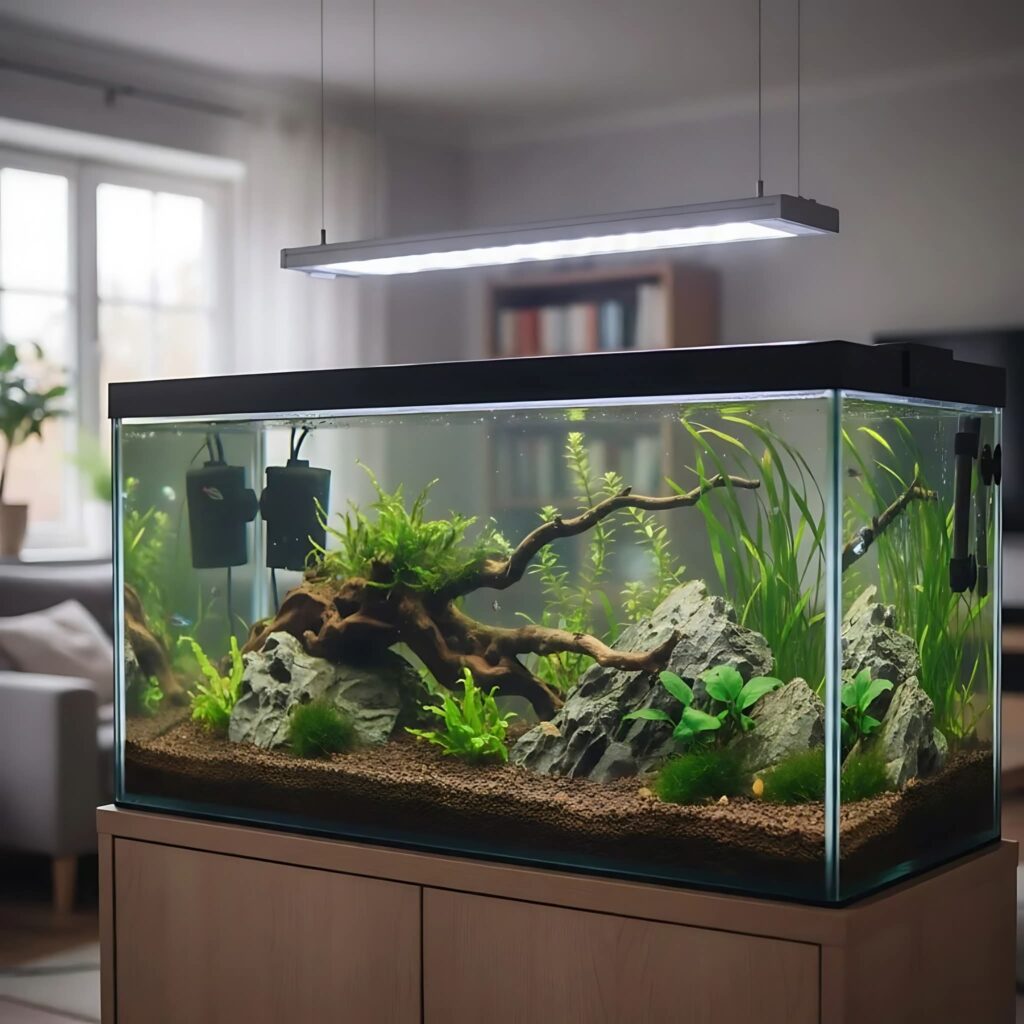
Aquarium Problems & FAQs: Honest Answers for Real Hobbyists
Most aquarium problems are not caused by neglect or lack of effort. They arise from misunderstanding how aquatic and hybrid systems actually function. These answers reflect real beginner confusion and point toward system-level causes rather than quick fixes. Where deeper explanation is needed, we guide you to our reference material.
Q1. Why does my aquarium keep failing?
A1. Most aquariums fail not because of neglect, but because biological stability has not yet developed. Early clarity or initial plant growth often hides imbalance that only appears weeks later as algae, plant decline, or fish stress. Without biological maturity, small changes trigger big problems. This pattern is explained in detail in our reference article: Why Aquariums Fail.
Read our guide on why aquariums fail.
Q2. My aquarium was perfect and now it’s a mess — why?
A2. Delayed instability is one of the most common aquarium patterns. As biological load increases and microbial dynamics shift, underlying weaknesses surface. What looked stable was only temporarily balanced. Why aquariums crash after early success?
Q3. Why did everything suddenly go bad in my tank?
A3. Most visible collapses are tipping points. Small stresses accumulate invisibly until the system crosses a threshold and symptoms appear all at once.
Q4. Is my aquarium dying?
A4. Most tanks are not dying; they are transitioning through imbalance. Decline usually reflects environmental stress, not irreversible failure.
Q5. Why does my tank never stay stable?
A5. Stability emerges from balance between light, nutrients, biological load, and maturity. Constant intervention usually delays stability rather than creating it.
Q6. Is it normal for aquariums to fail at first?
A6. Yes. Early failure is common because aquariums mature slowly. Visual clarity does not mean stability. Most problems emerge during the first biological adjustment phase.
Q7. Why do aquariums fail even with maintenance?
A7. Maintenance cannot compensate for flawed system design or imbalance. Cleaning symptoms does not correct causes.
Q8. Why was my aquarium fine and then crashed?
A8. Imbalance often takes time to manifest after initial visual success. Many systems fail weeks or months after setup for this reason. Delayed aquarium failure explained
Q9. Am I doing something wrong if my tank keeps failing?
A9. Repeated failure usually reflects a system mismatch, not personal error. Understanding the system matters more than effort. Why repeated aquarium failures aren’t your fault
Q10. Why does something new go wrong every week?
A10. Unstable systems respond to small changes with large symptoms. This creates a cycle of constant new problems. Why unstable aquariums create endless new problems
Q11. Should I give up on this tank?
A11. Most tanks can recover once root causes are understood. Abandonment is rarely necessary.
Q12. Should I restart my aquarium if it keeps failing?
A12. Restarting often repeats the same mistakes without diagnosis. Understanding why it failed is more effective than starting over. Why restarting rarely fixes aquarium failures
Q13. Why does this hobby feel so hard?
A13. Most advice ignores system biology and focuses on products. This creates confusion and unrealistic expectations. Why aquariums fail even when you do everything right
Q14. Why do my tanks always fail after a few weeks?
A14. Early clarity masks delayed biological instability. This timing pattern is extremely common. Why aquariums collapse weeks after setup
Q15. Is my aquarium cursed?
A15. No. Repeated patterns indicate the same unresolved imbalance, not bad luck.
Q16. Why did my fish die suddenly?
A16. Sudden fish deaths usually result from cumulative stress rather than a single event. Oxygen fluctuations, immature filtration, rapid parameter shifts, or hidden toxins often reach a tipping point before symptoms are visible. See the biological explanation in Why Aquariums Fail.
Q17. Why did my fish die overnight?
A17. Oxygen depletion or ammonia spikes often peak at night. These changes can be fatal before morning.
Q18. Why do fish die in new aquariums?
A18. New aquariums lack stable biological filtration. Even when water tests appear acceptable, the ecosystem may not yet process waste safely. Fish are often added before the system can support them.
Q19. Why are my fish gasping at the surface?
A19. Surface gasping indicates oxygen stress. This often occurs due to poor circulation, high biological load, bacterial activity consuming oxygen, or temperature-related oxygen loss.
Q20. Why are my fish hiding all the time?
A20. Persistent hiding suggests environmental or social stress, not shyness.
Q21. Why are my fish acting weird all of a sudden?
A21. Sudden behavior change usually signals invisible environmental stress.
Q22. Why are my fish not eating?
A22. Loss of appetite reflects stress more than hunger.
Q23. Why do fish die after water changes?
A23. Large or poorly matched water changes can cause temperature, pH, or TDS shock.
Q24. Why do fish die after adding new fish?
A24. New fish increase biological load and introduce stress into an unprepared system.
Q25. Why do my fish die one by one?
A25. Chronic instability weakens fish sequentially.
Q26. Can fish die even if water tests are normal?
A26. Yes. Test kits measure numbers, not biological stability.
Q27. Why are my fish always stressed?
A27. Chronic imbalance suppresses normal behavior.
Q28. Why does my tank kill fish?
A28. The system cannot yet support livestock safely.
Q29. Is my tank toxic?
A29. Most toxicity is biological instability, not poison.
Q30. Is algae a bad sign in aquariums?
A30. No. Algae is an environmental signal, not a failure. It indicates imbalance in light, nutrients, carbon availability, or system maturity. Why algae is a signal, not a problem
Q31. Why does algae keep coming back?
A31. Algae returns when root causes remain uncorrected. Killing algae without correcting imbalance leads to cycles of relapse. Why algae keeps coming back in aquariums
Q32. Why is my aquarium water green?
A32. Green water results from suspended algae due to excess light and nutrients in an immature system.
Q33. Why is my aquarium water cloudy?
A33. Cloudiness often reflects bacterial blooms during biological adjustment, not dirt.
Q34. Why do I get brown algae in new tanks?
A34. Brown algae commonly appears in young aquariums due to silicates and low biological competition.
Q35. Why did algae suddenly explode?
A35. Sudden algae growth usually follows changes in lighting, feeding, fertilisation, or biological load. Why algae blooms happen suddenly
Q36. Why does algae grow faster than plants?
A36. Algae exploits imbalance faster than plants. Why algae outcompetes plants
Q37. Does algae mean my tank is dirty?
A37. No. It means imbalance, not poor cleaning. Why algae doesn’t mean your tank is dirty
Q38. Why does my aquarium look worse after cleaning?
A38. Cleaning disturbs biological stability. Why cleaning makes algae worse
Q39. Why does my tank never look like Instagram tanks?
A39. Online tanks show peak moments only. Real aquariums go through instability phases.
Q40. Is green water dangerous?
A40. It indicates instability but rarely harms fish directly. Why green water happens in aquariums
Q41. Why are my aquarium plants melting?
A41. Many aquatic plants are grown emersed. When submerged, they shed old leaves and grow new ones. This transition is normal, not failure. Why aquarium plants melt after planting
Q42. Are my plants dying or just melting?
A42. Most are transitioning, not dying. Why plant melt is usually a transition
Q43. Why did all my new plants melt?
A43. Normal emersed-to-submerged transition. Why new aquarium plants collapse after planting
Q44. Is plant melt normal after planting?
A44. Yes. Is aquarium plant melt normal?
Q45. Why are my plants turning yellow?
A45. Yellowing usually indicates nutrient imbalance, not deficiency alone.
Q46. Why are my plants growing very slowly?
A46. Growth depends on balanced light, nutrients, carbon, and stability.
Q47. Why do plants grow and then suddenly die?
A47. Initial reserves run out under imbalance.
Q48. Why are my plants covered in algae?
A48. Stressed plants allow algae colonisation.
Q49. Why do my plants never survive long-term?
A49. Chronic instability suppresses recovery. Why aquarium plants fail long-term
Q50. Are emersed-grown plants bad for aquariums?
A50. No. They need patience during transition. Why emersed plants melt underwater
Q51. Are these plants defective?
A51. No. System mismatch is the issue. Why aquarium plants aren’t defective — the system is
Q52. Should I remove melting plants?
A52. Usually no. Removing plants often delays recovery. Why removing melting plants makes it worse
Q53. What is the best fertilizer for aquarium plants?
A53. There is no universal best fertilizer. Each system’s demand differs based on light, plant mass, substrate contribution, carbon availability, and local water chemistry.
Q54. How much fertilizer should I dose?
A54. Dosing depends on system demand, not bottle instructions alone.
Q55. Can fertilizer cause algae?
A55. Yes, if nutrients exceed what plants can use.
Q56. Why is my fertilizer not working?
A56. Fertilizer cannot compensate for missing light, carbon, or stability.
Q57. Is liquid fertilizer enough for plants?
A57. Sometimes. Substrate contribution and plant type matter.
Q58. Do different tanks need different fertilizers?
A58. Yes. No two systems behave identically.
Q59. Why did fertilizer make my algae worse?
A59. Nutrients exceeded plant uptake.
Q60. Did CO2 kill my fish?
A60. Improper CO2 use can cause oxygen stress or pH shock.
Q61. Why did my tank get worse after upgrades?
A61. Upgrades often increase demand without increasing stability.
Q62. Why does nothing work in my tank?
A62. Root imbalance remains unresolved.
Q63. I followed instructions and it still failed.
A63. Instructions ignore system context.
Q64. Do these products even work?
A64. Not without balance.
Q65. Why does every new thing I add make it worse?
A65. Each change destabilises an immature system.
Q66. Do I need better equipment to fix my aquarium?
A66. Equipment often amplifies imbalance rather than fixing it. Understanding limiting factors is more effective than upgrading hardware.
Q67. Which filter is best for aquariums?
A67. The best filter is one matched to system needs, not size alone.
Q68. Do I need CO2 for a planted tank?
A68. CO2 increases growth potential but also instability if misused.
Q69. Does more filtration mean a healthier tank?
A69. Not necessarily.
Q70. Why does equipment advice differ so much?
A70. Context is ignored.
Q71. Why does everyone give different advice?
A71. Tanks behave differently.
Q72. Why does online advice make my tank worse?
A72. Fragmented changes destabilise systems.
Q73. Why do shops give conflicting advice?
A73. Sales bias and simplification.
Q74. Why do influencers make this look easy?
A74. Failures are not shown.
Q75. Is there a right way to do this hobby?
A75. There is only a biologically coherent way.
Q76. Is Delhi NCR tap water safe for aquariums?
A76. Yes, if the system is designed to match its properties. Problems arise when its characteristics are ignored. See our detailed water explanation in Why Aquariums Fail.
Q77. Is Delhi water bad for aquariums?
A77. No. Mismatch causes problems, not the water itself.
Q78. Why is my TDS so high?
A78. High TDS reflects mineral content and evaporation, not immediate danger.
Q79. Is hard water bad for aquariums?
A79. No. Hard water is not bad; mismatch is.
Q80. Should I use RO water for aquariums?
A80. RO water is a tool, not a requirement.
Q81. Why does my aquarium behave differently in summer?
A81. Temperature affects oxygen, metabolism, and biological stability.
Q82. Why does my tank crash in summer?
A82. Oxygen drops and biological demand rises.
Q83. Why does my tank smell more in hot weather?
A83. Bacterial activity increases.
Q84. Why do Indian planted tanks fail more?
A84. Hard water and heat amplify imbalance.
Q85. Is this hobby harder in India?
A85. Climate and water add complexity.
Q86. What is a true biotope aquarium?
A86. A biotope aquarium replicates a specific natural habitat using geographic accuracy, natural water chemistry, and species selection based on ecology rather than appearance. See Biotope Aquariums: An Ecological Reference.
Q87. Why do biotope aquariums look messy?
A87. Natural systems are not symmetrical or sterile.
Q88. Can biotope aquariums be stable long-term?
A88. Yes, when environmental constraints are respected.
Q89. Why is leaf litter important in biotopes?
A89. It drives microbial ecology and natural chemistry.
Q90. Can I mix fish from the same river in a biotope?
A90. Not always. Microhabitats differ even within the same river.
Q91. Are biotopes better for fish health?
A91. Usually, because stress is reduced.
Q92. Why do most biotope attempts fail?
A92. Constraints are ignored.
Q93. Are paludariums harder than aquariums?
A93. They are different, not harder. Interfaces matter more than volume. See Hybrid Ecosystems: Interface Ecology & Stability.
Q94. Why do paludariums and terrariums fail after some months?
A94. Most fail due to poor drainage, trapped humidity, and stagnant air.
Q95. Why does my paludarium smell bad?
A95. Anaerobic decomposition from interface failure.
Q96. Why is my terrarium rotting?
A96. Trapped moisture and air stagnation.
Q97. Why is there mold everywhere?
A97. Humidity lock-in.
Q98. Why does my vivarium smell bad?
A98. Excess biological load.
Q99. Why do my paludarium plants keep rotting?
A99. Root oxygen deprivation.
Q100. What is the difference between a paludarium, terrarium, and vivarium?
A100. They differ by dominant interface and biological load. Understand hybrid ecosystem failures.
Q101. Why does my aquarium fail after a few months of looking stable?
A101. Most aquariums appear stable before biological limits are reached. Problems surface later when the system can no longer absorb small imbalances. Read: Why Aquariums Fail
Q102. Why does my tank look clear and healthy before it crashes?
A102. Visual clarity does not equal biological stability. Many failures begin long before visible symptoms appear. Why Aquariums Fail
Q103. Is early clarity in a new aquarium misleading?
A103. Yes. Early clarity often masks immature biology that has not yet been tested by load or time. Why Aquariums Fail
Q104. Why does fixing one aquarium problem create another?
A104. Each correction alters the system. When changes happen faster than biology can adapt, new problems emerge. Why Aquariums Fail
Q105. Can over-correcting an aquarium cause failure?
A105. Yes. Frequent adjustments prevent stability from forming and keep the system in constant stress. Why Aquariums Fail
Q106. Why does frequent adjustment make aquarium problems worse?
A106. Because stability depends on consistency. Repeated changes reset biological adaptation repeatedly. Why Aquariums Fail
Q107. Why does following YouTube or forum advice keep breaking my tank?
A107. Most advice works in isolation but ignores system timing and context. Applying multiple fixes destabilises the tank. This confusion is why aquarium myths vs reality explained scientifically is an important reference — it shows how advice without context or constraint awareness leads to contradictory recommendations that fail outside narrow conditions.
Q108. Can low oxygen cause aquarium failure even if tests look normal?
A108. Yes. Oxygen stress often goes undetected but affects fish, plants, and microbes continuously.
→ Why Aquariums Fail
Q109. Why do fish gasp or behave oddly at night?
A109. At night, oxygen drops while respiration continues. This can stress fish even in “healthy” tanks.
→ Why Aquariums Fail
Q110. Why do aquarium problems worsen after lights go off?
A110. Photosynthesis stops at night but biological demand does not, revealing hidden instability. Why Aquariums Fail
Q111. Why does my aquarium behave differently in Delhi NCR?
A111. Local tap water chemistry strongly influences stability. Ignoring it often leads to recurring problems. Why Aquariums Fail
Q112. Is it better to design an aquarium around tap water than fight it?
A112. Yes. Systems stabilise better when designed around existing water conditions rather than constantly corrected. Why Aquariums Fail
Q113. Why does RO water sometimes make aquarium problems worse?
A113. RO removes stability along with impurities. Without proper remineralisation, systems become fragile. Why Aquariums Fail
Q114. Why are my corals dying even when ammonia and nitrate are zero?
A114. Reef decline often begins long before test kits show problems. Stability involves more than numbers. Why Reef Tanks Fail After Early Success
Q115. Why do reef tanks fail after initial success?
A115. Early success hides delayed biological stress. Reef systems fail when adaptation lags behind change. Why Reef Tanks Fail After Early Success
Q116. Why does changing things to fix reef problems make them worse?
A116. Reef systems are highly sensitive to disturbance. Each change disrupts adaptation further. Why Reef Tanks Fail After Early Success
Q117. Why don’t brackish aquariums ever feel stable?
A117. Brackish systems sit between freshwater and marine chemistry, making stability harder to maintain. Brackish Aquarium Ecology & Stability
Q118. Why do brackish fish survive but not thrive?
A118. Survival does not equal optimal conditions. Subtle imbalance affects long-term health and behaviour. Brackish Aquarium Ecology & Stability
Q119. Why do paludariums fail after initial success?
A119. Hybrid systems fail at the land–water interface where biological demands conflict over time. Hybrid Ecosystems Ecology & Stability
Q120. Why do paludariums develop odor or mold over time?
A120. Poor gas exchange and trapped moisture allow decay processes to dominate slowly. Hybrid Ecosystems Ecology & Stability
Q121. Are hybrid aquariums harder to stabilise than normal tanks?
A121. Yes. Managing multiple ecosystems simultaneously requires far greater balance and restraint. Hybrid Ecosystems Ecology & Stability