
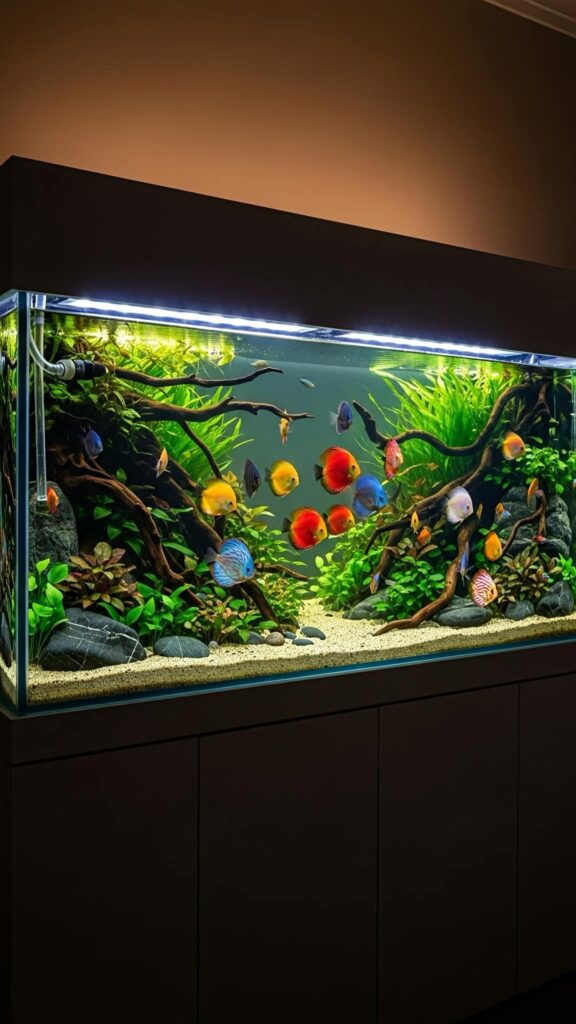
Understanding the Causes Behind Common Aquarium Problems
Most aquariums do not fail because the hobbyist didn’t care enough.
They fail because the system was never understood.
Across freshwater, planted, biotope, brackish, reef, and even paludarium setups, the same pattern repeats itself: early excitement, brief success, followed by algae, plant decline, livestock losses, or unexplained instability. Eventually, frustration sets in, and the hobby is abandoned.
This page exists to explain why that happens — calmly, clearly, and without blame.
At ProHobby™, we believe aquarium success is not about chasing products or copying routines. It is about understanding aquariums as living ecosystems with limits, timelines, and predictable behaviours.
Our Purpose
ProHobby exists to raise the standard of aquarium keeping by:
- Sharing accurate, experience-based knowledge
- Creating region-specific guidance
- Challenging harmful myths
- Encouraging responsible system design
- Helping hobbyists succeed long-term
Knowledge before commerce. Systems before sales.
Why Beginners Struggle So Much (And Why It’s Not Your Fault)
The problem
Most beginners enter the aquarium hobby with genuine excitement — and very quickly run into confusion.
In a typical aquarium shop, a beginner may experience one of two extremes:
a) No real advice at all:
They are sold a tank, filter, fish, soil, plants, and a few bottles of medicines with minimal explanation beyond “do weekly water changes.”
OR
b) Too much conflicting advice:
One staff member suggests frequent water changes, another suggests additives. One recommends more light, another says reduce it. Online advice – Google search, YouTube, and social media – contradicts shop advice. Friends recommend forums. Forums contradict YouTube – nothing aligns!
This confusion is why aquarium myths vs reality explained scientifically is an important reference — it shows how advice without context or constraint awareness leads to contradictory recommendations that fail outside narrow conditions.
Why this fails
Very quickly, beginners are unsure of:
- what actually matters
- what can be ignored
- what problems are urgent
- what problems are normal
When something goes wrong, the response is usually panic: change something, add something, remove something. This constant reaction is one of the fastest ways to destabilise an aquarium. The confusion leads to early failures, livestock losses, algae outbreaks, and eventual abandonment of the hobby.
The problem is not effort.
The problem is lack of a clear framework.
How ProHobby™ Thinks About Aquariums
The ProHobby™ Approach: Clarity Before Complexity
- Provide a clear system-based framework instead of scattered opinions
- Explain what is normal, what is adjustable, and what truly needs intervention
- Simplify early decisions to protect stability
Before looking at specific problems, it is important to understand the framework we use.
Every setup, regardless of type, follows the same basic logic:
- Understand the ecosystem – an aquarium is an ecosystem, not a container
- Identify limiting factors – every system has limiting factors (light, nutrients, biology etc.)
- Problems appear when balance is disturbed – correct the imbalance, not the symptoms
- Most issues are predictable and reversible
- Design for long-term stability – stability is built slowly, not forced quickly
- Educate before selling
This way of thinking applies to:
- planted aquariums
- biotopes
- brackish systems
- reef tanks
- terrariums and paludariums
With this framework in mind, most “mystery problems” stop being mysterious. Clarity replaces confusion, allowing beginners to build confidence instead of frustration.
This consistency allows beginners to:
- evaluate advice independently
- recognise bad information
- make confident decisions
- avoid unnecessary purchases
Common Aquarium Problems: Typical Shop vs ProHobby™ Approach
| Common Problem | Typical Aquarium Shop Approach | ProHobby’s Solution-Driven Approach |
|---|---|---|
| Plant melt after planting | Sells “emersed grown” plants and TC Pots without explaining growth form. Hobbyist is told “plants will adjust” or blamed for poor care. | Preference for 100% submerged-grown plants. Clear explanation of emersed-to-submerged transition when unavoidable, with guidance on nutrients and expectations. |
| Plants growing slowly or melting despite fertiliser | Recommends increasing dosage or switching brands. Same fertilizer suggested for all tanks. | Fertilization tailored to tank type, plant mass, light, CO₂ availability, substrate age, and local water chemistry. No one-size-fits-all dosing. |
| Algae outbreaks | Offers algaecides, UV sterilisers, or blackout methods. Focus is on killing algae. Algae is attacked aggressively with chemicals, blackouts, or equipment changes. | Algae treated as an environmental signal. Root causes identified (light imbalance, nutrient excess/deficiency, carbon instability, immature biology) and corrected first. |
| Fish dying despite “good” test results | Suggests more frequent water changes or medication. Passes on un-quarantined “bad stock.” | Focus on species-specific environmental needs, habitat compatibility, stress factors, and system maturity. Water numbers are interpreted, not just read. |
| Being pushed to buy stronger lights or bigger filters | Equipment upgrades suggested as universal solutions to most problems. | Systems are designed around biology first. Equipment is recommended only when it genuinely addresses a limiting factor. Often, simplification improves stability. |
| Confusion about which fertilizer or supplement to use | Multiple bottled products sold separately with little explanation. | Custom fertilizer strategies designed around actual consumption and tank goals, reducing excess dosing and instability. |
| Initial success followed by gradual decline | Considered “normal” or blamed on maintenance inconsistency. | Viewed as a system maturity or imbalance issue. Long-term nutrient, substrate, and biological timelines are addressed proactively. |
| Biotope and habitat tanks that never feel stable; tanks treated as décor | Visual design prioritised over ecological accuracy. Driftwood, plants, and fish mixed for visual appeal, regardless of origin. Water chemistry ignored, removing essential organic matter. Habitat tanks look natural but fail to behave naturally. | Biotopes built as geographically accurate ecosystems, respecting natural water chemistry, substrate, leaf litter biology, and native species coexistence. |
| Brackish tanks handled like diluted marine tanks | Generic salinity advice, limited understanding of estuarine biology. | Brackish systems designed with correct salinity bands, mud/mangrove biology, and Indian estuarine species requirements. |
| Saltwater tanks failing after early months | Focus on equipment upgrades or frequent chemical corrections. | Emphasis on stable biological cycling, nutrient availability, coral placement logic, and gradual system maturity rather than constant correction. |
| Paludariums, terrariums & hybrid systems that decline over time | Designed for appearance without understanding drainage, airflow, substrate layering, or land–water balance. Hybrid systems start strong but develop rot, mold, stagnation, and plant loss. | Design hybrid systems as functional ecosystems; correct separation and interaction of wet and dry zones; proper drainage and substrate stratification; plant and lighting choices matched to humidity and exposure. |
| Beginner overwhelmed with conflicting advice | Advice varies by salesperson, brand, or stock availability. | Decisions guided by a clear system-based framework: understand the ecosystem, identify limiting factors, then act deliberately. |
Why the Typical Shop Approach Fails Beginners
Most aquarium shops are what they are – just ‘shops’. They operate transactionally. Advice provided by them is:
- product-dependent
- staff-dependent
- brand-influenced
- inconsistent
Beginners are often:
- sold equipment without understanding why
- given maintenance routines without context
- advised reactively instead of systematically
When problems appear, the solution is usually:
- “try this product”
- “increase/decrease something”
- “everyone does it differently”
None of this builds confidence or understanding.
ProHobby™ – Simplifying Decisions for Beginners
Beginners are often overwhelmed because they are given too many choices too early.
ProHobby Simplifies
- limiting unnecessary equipment recommendations
- matching plant and livestock choices to beginner-friendly environments
- avoiding high-maintenance setups unless explicitly requested
- designing tanks that forgive mistakes
A beginner’s first tank should teach stability, not test endurance.
Normalising Learning, Not Failure
At ProHobby, beginners are not judged for mistakes. We clearly differentiate between:
- normal learning phases (diatoms, mild algae, plant adjustment)
- true system issues (imbalance, overstocking, unsuitable design)
This prevents beginners from:
- tearing down tanks prematurely
- overdosing products
- constantly changing variables
Stability is protected. Because their foundation is built correctly.
The Result
Beginners guided through ProHobby’s approach experience:
- fewer early losses
- less algae-driven frustration
- clearer understanding of cause and effect
- confidence instead of confusion
- long-term engagement with the hobby
Why This Difference Matters
Most people don’t leave the aquarium hobby because they lack interest or it is difficult.
They leave because they feel incompetent and misled.
Aquariums fail when understanding is replaced with guesswork.
ProHobby’s role is not to make aquariums look easy — it is to make them understandable.
And understanding is what keeps hobbyists for life.